We know the feeling of holding a perfect sample in our hands. The stitching is clean. The fabric feels premium. The shape is exactly what you wanted. But as experienced consultants, we also know that a great sample is only the start. The real challenge begins when we move to the factory floor for thousands of units. Many buyers face unexpected hat production issues that only appear during the transition from a single prototype to bulk manufacturing. We see these gaps happen because a sample is often made in a controlled lab, while bulk production is a fast-moving industrial process. We wrote this guide to help you identify these risks before they cost you money.

Key Takeaways for Procurement Managers

  • The Process Gap: Samples are often made by senior artisans on single-head machines, while bulk orders use high-speed multi-head equipment that increases the risk of variance.
  • Material Drift: Fabric dye lots and accessory batches change between seasons, which means your bulk order might not 100% match the color or texture of your original sample.
  • Standardization is King: Success depends on locking in technical specifications and “Limit Samples” rather than just relying on a single “Golden Sample” to guide the factory.

1. Why is the “Golden Sample” often a trap?

We often see buyers make the mistake of thinking a perfect sample guarantees a perfect bulk run. But we have to look at how a factory actually works. Most large facilities have a dedicated sample room. This room is quiet. It has the best lighting. Most importantly, it is staffed by the most senior workers in the company. These people have 20 years of experience. They spend a whole day making just one or two hats for you. They can adjust the thread tension by hand. They can trim every loose end perfectly. But these experts do not work on the mass production line. When your order of 5,000 hats starts, it goes to the main workshop. The workers there are fast. They have strict daily targets. They do not have the time to treat every hat like a piece of art.

And we must talk about the machinery. A sample is usually made on a single-head embroidery machine. These machines are very stable. They do not vibrate much. Because they only have one needle set, the technician can calibrate it perfectly for your logo. Bulk production uses machines with 20 or even 50 heads. These machines are loud and they vibrate a lot. This vibration can cause “registration shift.” This means your logo might move by a millimeter or two during the process. On one hat, you might not notice. On 5,000 hats, it becomes a major quality issue.

So, why does this happen? It happens because factories use samples as a sales tool. They want to show you their best possible work to get your deposit. But we tell our clients that the sample is just a proof of concept. It shows the factory is capable of the work. It does not prove their mass production line is set up for it. We solve this by asking for a “Pilot Run” or a “Pre-Production Sample” (PPS). This sample must be made on the actual bulk machines by the actual bulk workers. If the PPS looks different from the original sample, we know there is a problem with the process. We use this stage to fix the settings before the big machines start running.

FeatureSample Room EnvironmentBulk Production Floor
Worker SkillSenior Artisans (15+ years)General Operators (Target-driven)
EquipmentSingle-Head (High Precision)Multi-Head (High Speed/Vibration)
Time Spent2-4 Hours per hat5-10 Minutes per hat
FocusAesthetics and ApprovalEfficiency and Output

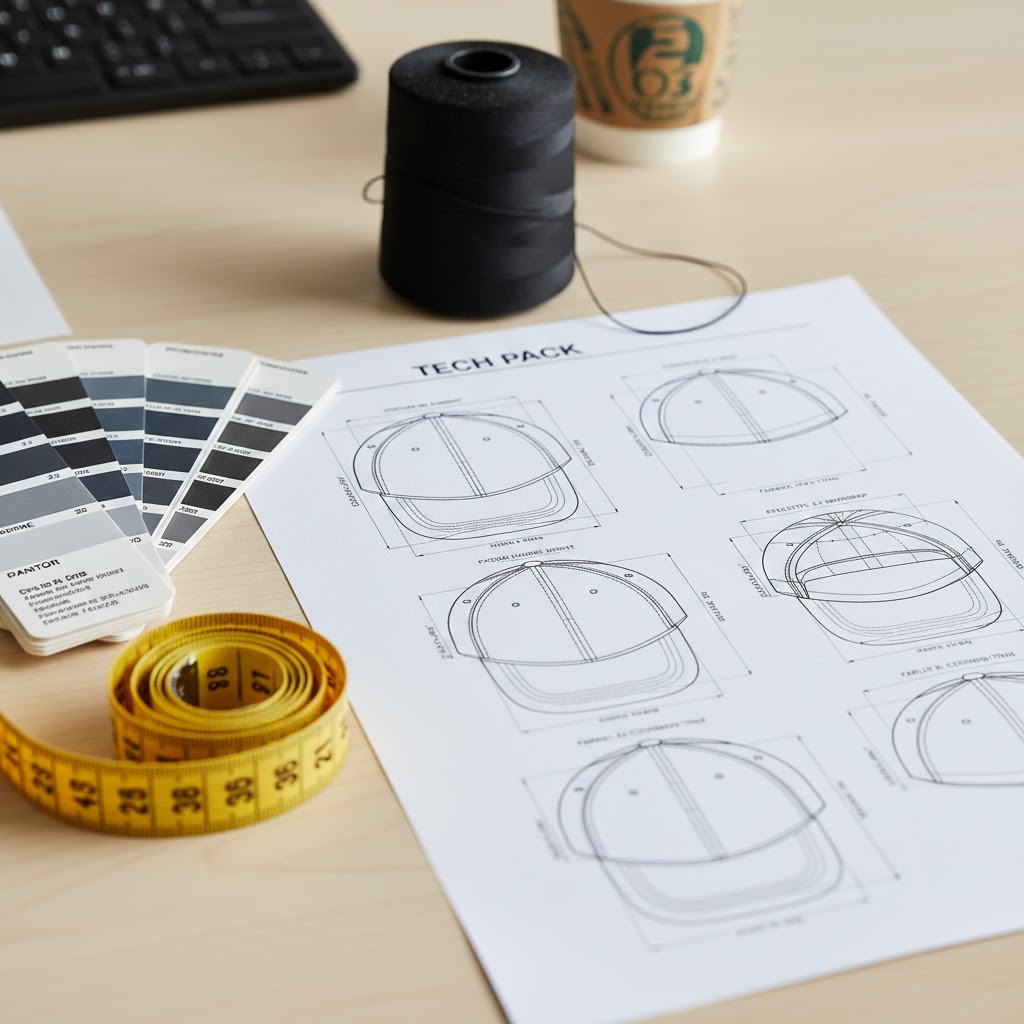
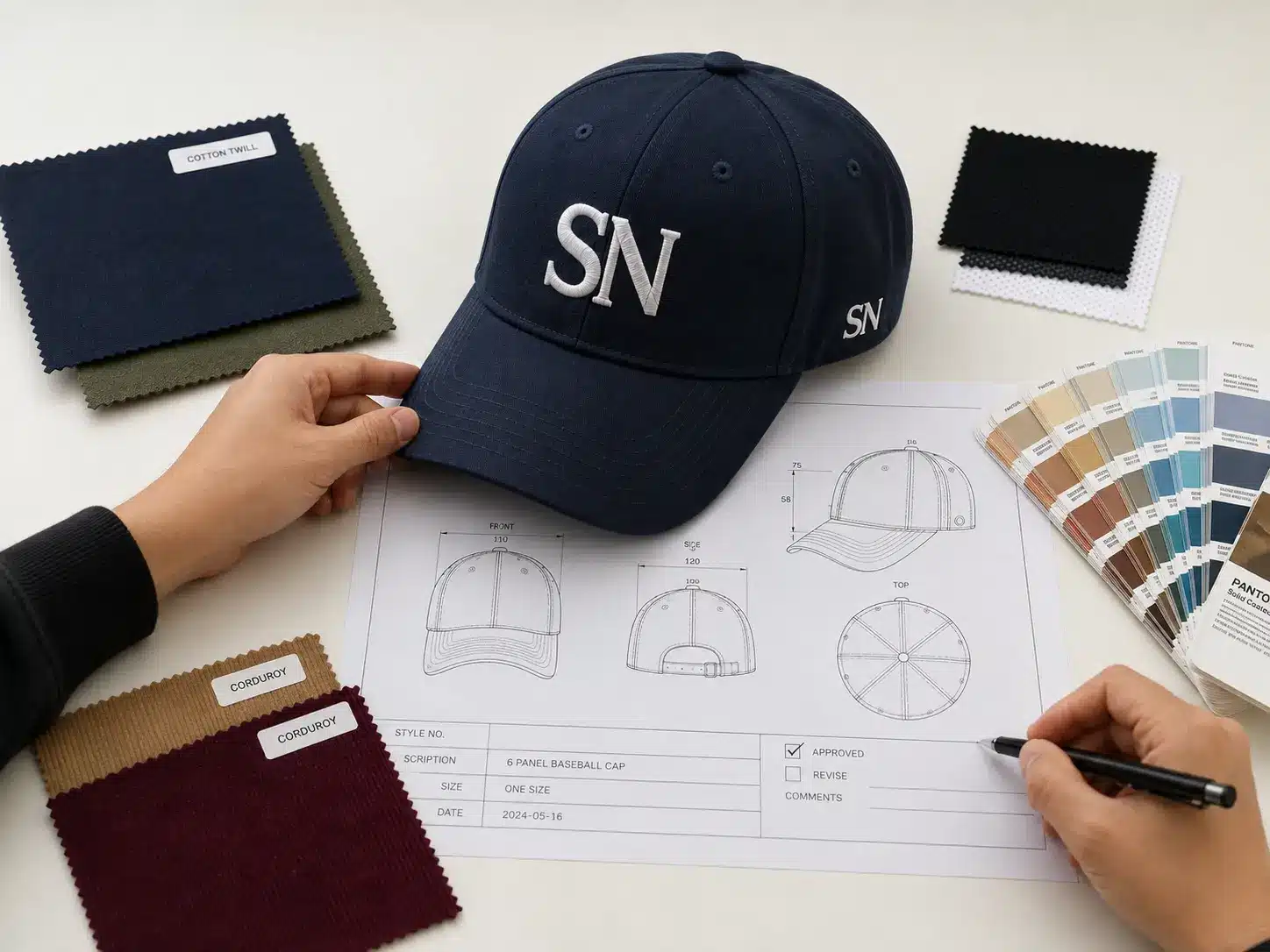
We also find that communication often breaks down during the hand-off. The sample maker knows all the “tricks” to make the hat look good. But they might not write those tricks down. When the production manager takes over, they only see the final hat. They do not know that the sample maker had to use a specific heat setting or a special backing material to get that result. Because the information is missing, the bulk production fails. We prevent this by requiring a “Tech Pack” that records every single parameter used during the sample stage. This includes thread weight, needle size, and even the temperature of the room. Without this data, the factory is just guessing. And in B2B procurement, guessing leads to rejected containers.


2. How does dimensional drift ruin the fit of your hats?

We have seen many cases where a sample fits a head model perfectly, but the bulk shipment feels too tight or too loose. We call this “Dimensional Drift.” This is a silent killer in hat production because you cannot see it until the hats are finished and boxed. The main cause is how fabric is cut. When we make a sample, we cut the fabric pieces one by one with a small blade or scissors. This is very accurate. But in bulk production, the factory stacks 50 or 100 layers of fabric on top of each other. They use a heavy vertical cutting machine to cut through the whole stack at once.

But here is the problem. The blade is flexible. As it pushes through 100 layers of heavy cotton twill, the blade can bend. The top 10 layers are perfect. The middle 40 layers start to drift. The bottom 20 layers might be 3mm wider than they should be. In the world of headwear, 3mm is a huge difference. It is the difference between a “Medium” and a “Large.” If the crown pieces are too wide, the hat will look floppy. If they are too narrow, the hat will be uncomfortable. We follow strict industry standards to limit “stack height.” We tell our factories to never cut more than 40 layers at a time for structured caps. It takes more time, but it keeps the size consistent.

Cutting FactorImpact on QualityRisk to Buyer
Stack HeightBlade deflection in thick layersInconsistent sizing across the batch
Fabric TensionFabric stretches during unrollingPanels shrink after being cut
Knife SharpnessFrayed edges on bottom layersWeak seams that rip easily

Because fabric is a soft material, it also reacts to the environment. We find that humidity is a big factor. If the factory stores the fabric in a damp warehouse, it absorbs moisture. When it goes under the hot embroidery needles or the heat press, it shrinks. The sample was likely made with “fresh” fabric from a small roll. The bulk order uses massive rolls that have been sitting in storage. If the factory does not “relax” the fabric for 24 hours before cutting, the pieces will change shape after they are sewn.

And we must look at the “Buckram.” This is the stiff mesh used to make the front of a hat stand up. In a sample, the factory uses a nice, crisp piece of Buckram. But for the bulk order, they might buy a cheaper batch that is less stiff. Or, the heat from the bulk sewing machines might soften the glue in the Buckram. Suddenly, your “Structured” hats look “Unstructured.” We help our buyers avoid this by specifying the exact weight (in GSM) of the Buckram. We do not just say “make it stiff.” We say “use 250GSM double-layer Buckram.” This gives the QC inspector a real number to check. If the factory tries to swap the material to save money, we catch them immediately because we have a data point to measure.

3. Why does complex embroidery distort when you scale up?

We often see logos that look sharp on a sample but look “bunched up” on the bulk order. This happens because high-speed embroidery machines treat fabric differently than a slow sample machine. When we make a sample, the technician can slow the machine down to handle small text or tight corners. But in bulk production, the factory runs the machines at maximum speed to meet their daily targets. At high speeds, the needle creates more friction and heat. This pulls the fabric toward the center of the logo. We call this “Puckering,” and it can make your expensive custom hats look cheap.

Another big factor is the backing material. We use backing to stabilize the fabric so the stitches stay flat. In the sample room, they often use a heavy, “cut-away” backing that stays inside the hat forever. It provides great support. But to save a few cents, some factories swap this for a thin “tear-away” backing during bulk production. Because the thin backing is weaker, it cannot fight the tension of the thousands of stitches in your logo. The result is a distorted, wavy logo that does not sit flat against the cap.

Embroidery IssueTechnical CauseOur Risk Mitigation
PuckeringHigh thread tension at high speedsAdjust “Pull Compensation” in the file
Logo DistortionWeak or thin backing materialMandate 2.0oz Cut-away Stabilizer
Bird-nestingThread breaks and poor knottingSet maximum RPM limits for complex designs

So, how do we stop this? We do not just send a picture of the logo to the factory. We provide a digitized embroidery file with specific “Pull Compensation” settings. This tells the machine to stitch slightly wider than the logo to account for the fabric pulling inward. And because we care about the long-term look of your brand, we require the factory to use the same backing weight for the bulk order as they did for the sample. We tell our clients to check the inside of the hat first. If the backing feels different than the sample, the logo will likely fail after a few wears. We use these technical details to ensure your brand stays crisp on every single unit.


4. How does light and dye lots ruin your brand colors?

We know how important color is to your brand identity. But we must be honest: fabric dyeing is not a perfect science. When we make a sample, the factory might use “stock fabric” that they already have on the shelf. This fabric was dyed months ago in a small batch. When you place a bulk order for 10,000 hats, the factory has to buy new fabric or dye a fresh batch of yarn. This is where “Dye Lot Variance” happens. Even with the same formula, the water pH, the temperature, and the humidity in the dye house can change the final shade.

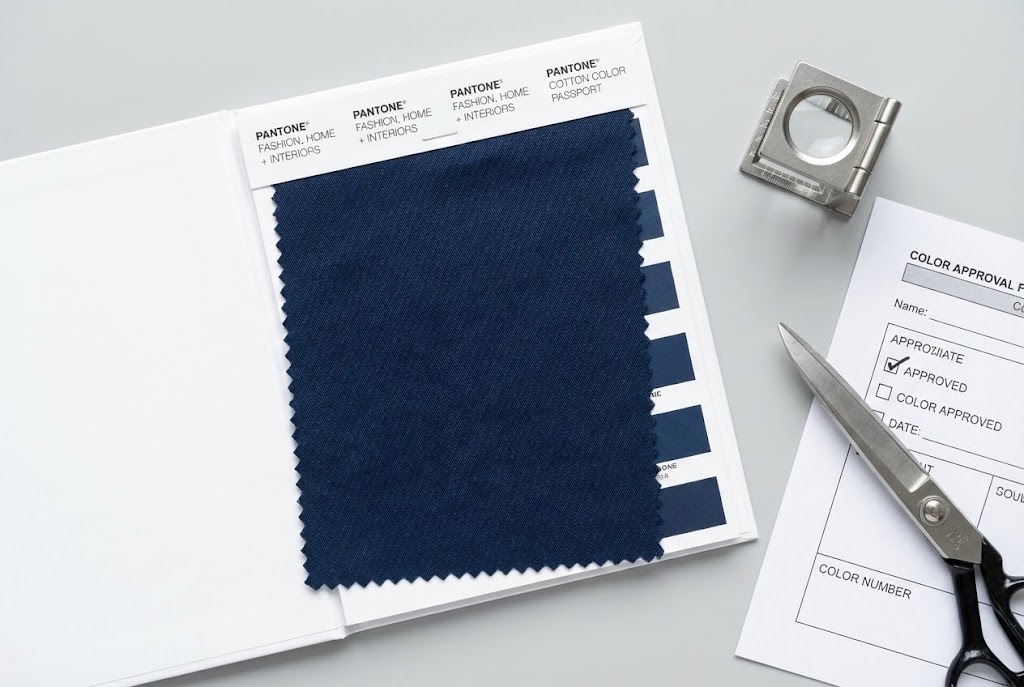
But the biggest danger is actually the light in the room. We have seen buyers approve a blue fabric in their bright office, only to find it looks purple in a retail store. We call this “Metamerism.” It happens because different light sources have different wavelengths. A factory worker checking your hats under a cheap yellow bulb will see a different color than a QC inspector standing near a window. Because eyes are subjective, we do not rely on them for final approvals.

Color StandardTolerance LevelWhy it Matters
Delta E (dE)< 1.5Human eyes cannot see the difference
Lab Dips3 Options (A, B, C)Allows you to choose the best match under D65 light
Light BoxD65 / TL84 / CWFTests color under sun, store, and office light

And we solve this by using data instead of opinions. We follow industry standards by using a Spectrophotometer to measure the “Delta E” (dE) of the fabric. This device gives us a mathematical number for the color. If the dE is higher than 1.5, we know the color is drifting too far from your brand standard. We also require our factories to use a “Light Box” for all inspections. This box lets us see the hat under “Daylight” (D65) and “Store Light” (TL84). We do this because we want your hats to look consistent whether the customer is outside or inside a mall. By locking in a dE number in your contract, you give the factory a clear boundary. They cannot argue with a machine.

5. Are hidden component substitutions draining your long-term value?

We often see buyers receive bulk hats that look correct from the outside, but fail after a few weeks of use. This happens because the factory made small, quiet changes to the hidden components of the hat. When a factory creates a sample, they often use premium trims to pass your inspection. They might use a genuine YKK metal buckle or a soft, 100% cotton sweatband. But during a 5,000-unit bulk run, the production manager might face tighter margins. To save money, they might substitute the branded buckle for a generic plastic clip or use a polyester-blend sweatband that scratches the skin.

And we must look at the legal risks of these substitutions. Cheap plastic snaps and PVC patches often contain high levels of phthalates or lead. These are dangerous chemicals that are strictly regulated under laws like California’s Proposition 65. If your sample was tested and passed, but the factory used a cheaper chemical oil to make the bulk PVC patches pliable, your entire shipment becomes a major legal liability. You cannot rely on visual checks alone to spot these chemical changes.

Component PartApproved Sample SpecificationBulk Production SubstituteBrand Risk Level
Rear ClosureYKK Antique Brass BuckleGeneric Plated Iron ClipHigh (Rust & Failure)
Internal Sweatband100% Wicking Cotton Tech60/40 Poly-Blend MeshMedium (Skin Irritation)
Front Logo PatchEco-Friendly Certified PVCLow-Cost Phthalate PVCCritical (Legal Non-Compliance)

So, how do we protect your supply chain from these hidden switches? We solve this by creating a binding Bill of Materials (BOM) before we sign the final contract. The BOM lists the exact brand, weight, and supplier for every single part of the hat, including the internal taping and sewing threads. We explicitly state that any material changes must be approved by our team in writing. We align our quality process with third-party testing labs. We pull random samples from the active bulk line and send them for chemical analysis. This tells the factory that we are tracking more than just look and feel. It makes them realize that a cheap substitution will lead to a rejected order.


6. Why does the heat-press process create a bulk production nightmare?

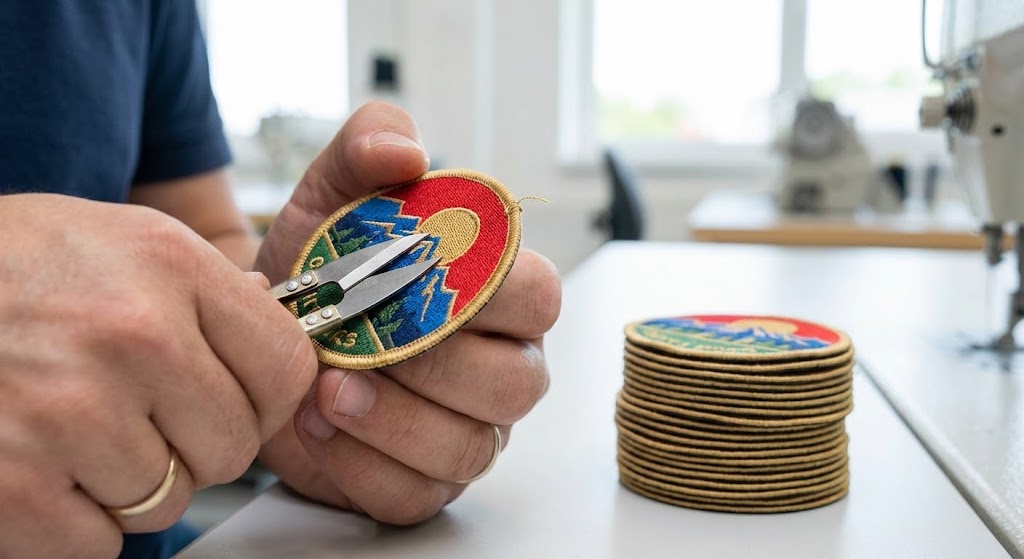
We have managed many projects featuring rubber patches, leather labels, and heat-pressed graphics. These decoration styles look incredibly modern, but they are very hard to execute consistently across a large order. In the sample room, a worker takes their time with a single heat-press machine. They check the timer. They ensure the pressure is perfectly balanced. But on the main production floor, workers run multiple heat-press stations at the same time. They have to process hundreds of hats an hour to hit their targets. This speed introduces human error into the three critical metrics of heat pressing: temperature, pressure, and dwell time.

If a worker is rushing, they might pull a hat out of the press two seconds early. This causes “Under-Curing.” The patch will look perfectly fine during the packing stage, but the adhesive will dry out and peel off after the customer wears the hat a few times. But if the worker leaves the hat in the press for too long, or sets the temperature too high to melt the glue faster, they create a “Scorch Ring.” This is a shiny, melted mark around the patch that permanently damages the fabric. It is especially common on synthetic performance materials.

Heat-Press MetricSample Room ExecutionBulk Production PitfallProduct Result
Dwell TimeExact sensor countdownManual guesswork by tired operatorsPatches peel off early
TemperatureCalibrated and steadyTurned up high to speed up workMelted fabric and scorch marks
Stacking LogicCooled individually on tablesStacked while hot into boxesDye migration and color bleeding

And we must also watch out for “Dye Migration.” This is a chemical reaction where the wet dye from a polyester hat rolls up into the heat-pressed patch. If you put a white heat-transfer logo on a black or red hat, the heat from the press liquefies the fabric dye. In bulk production, workers often stack these hot hats directly into shipping boxes before they cool down. The trapped heat causes the red or black dye to bleed into the white logo over the next 48 hours. Your clean white logo arrives looking cloudy and pink. We mitigate this risk by mandating the use of “Low-Bleed” barriers in our transfers and setting an exact maximum cooling time in the production specifications.

7. Why do your hats arrive “crushed” even with a perfect sample?

We have seen this tragedy many times: the sample was sent in a small, sturdy box and arrived looking beautiful. But when the container of 10,000 hats arrives, half of them are flattened or deformed. This happens because “Industrial Blocking” is often ignored during bulk production. A structured cap gets its shape from a combination of steam and heat. In a sample room, a worker uses a hand-steamer and a wooden block to shape each hat. But in bulk production, if the factory does not use automatic blocking machines, they simply cannot handle the volume.

Shipping is also a physical battle against gravity. Most factories try to save money on shipping costs by squeezing as many hats as possible into a single carton. If the cardboard is too thin, the boxes at the bottom of the stack will collapse under the weight of the boxes above. We call this “Carton Compression.” Once the cardboard fails, the pressure goes directly onto the hats. If a structured hat is crushed for 30 days in a hot shipping container, the plastic inserts or the buckram will take a “set” in that crushed position. They will never return to their original shape.

Logistics FactorSample ShippingBulk Ocean FreightRisk Level
PackagingDouble-wall small box5-ply large master cartonsMedium (Box Collapse)
ProtectionPlastic air bags/bubblesInternal cardboard crown insertsHigh (Loss of Shape)
StackingTop of the pile (Express)Bottom of the container (Sea)Critical (Crushed Crowns)

So, how do we make sure your investment survives the journey? We solve this by setting strict packaging rules in our production contract. We mandate that the factory must use 5-ply double-wall cartons with a specific burst strength. We also require “Cardboard Inserts” for every single hat. These inserts act like a skeleton inside the crown to fight against the pressure of stacking. But we do not stop there. We also specify the “Stacking Height” for the warehouse. If the factory stacks boxes 10-high, the bottom box will always fail. We limit this to 5-high. We know that shipping air is expensive, but shipping crushed hats is even more expensive because you cannot sell them to your customers.


8. How do you close the gap with a Strategic Quality Agreement?

We have spent years learning that a better sample is not the solution to these problems. The real solution is a data-driven Quality Agreement. You must move away from the idea of the “Golden Sample” as your only reference. In our world, the “Golden Sample” is just the goal. The Quality Agreement is the reality of what you will actually accept. We tell our buyers to establish AQL (Acceptable Quality Level) standards before the first dollar is paid. If you do not define what a “Critical Defect” is, the factory will decide for you.

We use a “Limit Sample Set” to create clear boundaries. Instead of one perfect hat, we ask the factory to produce three hats that show the “limit” of what is okay. One hat shows a perfectly centered logo. The second hat shows a logo that is 1mm off-center (this is a Minor Defect, we accept it). The third hat shows a logo that is 3mm off-center (this is a Major Defect, we reject it). By giving the factory these physical examples of what is “out of bounds,” you remove the guesswork from their QC team. They know exactly when to stop the machines.

QC StrategyTraditional MethodOur Risk-Mitigation MethodResult
ReferenceOne “Golden Sample”Three-point “Limit Sample Set”Clear rejection boundaries
InspectionEnd-of-line check20% Inline InspectionCatch errors before they scale
Final Sign-offPhoto approvalPhysical “Red Label” bulk sampleZero surprises at delivery

And we recommend one final safety step: the “Red Label” sample. This is a hat pulled directly from the bulk production line when it is about 10% finished. The factory sends this to you by express mail. You check it to ensure the embroidery, the fit, and the components match your original vision. If something is wrong, we stop the production immediately. It is much easier to fix 500 hats than it is to fix 5,000. We find that this “Inline” check is the most powerful tool in B2B procurement. It shifts the power back to the buyer and ensures that the quality you saw in the sample room is the same quality that arrives at your warehouse.

Conclusion

We know that moving from sample to bulk production feels like a gamble. But as we have shown, most “accidents” are actually predictable technical failures. By focusing on dimensional drift, material consistency, and standardized QC processes, we can eliminate the “surprises” that ruin your margins. We do not believe in luck; we believe in technical specifications and strict process control. If you are tired of getting hats that don’t match your samples, we invite you to start a conversation with us. We can help you lock in your tech packs and secure your supply chain so your brand always looks its best.

FAQ

FAQ 1: How can we guarantee that our brand colors will not shift across different custom hat reorders over a 12-month period?

Fabric dye lot variance is an inevitable part of textile manufacturing, so we cannot promise a 100% identical liquid dye mix every time. However, we mitigate this risk by moving away from human eye approvals and locking in mathematical color data. We establish a strict Delta E (dE) variance threshold of less than 1.5 using a digital Spectrophotometer for every batch.

Insider Tip: Never rely on Pantone swatches alone for reorders. Fabric texture alters color perception. Request a 10cm x 10cm fabric “swatch cutting” from the new bulk roll and review it inside a standardized Light Box under both D65 (Daylight) and TL84 (Store Light) settings before authorizing the sewing stage.

FAQ 2: What specific technical metrics should we look for in a factory’s equipment profile to ensure our heavy 3D embroidery does not pucker?

You need to verify the age, brand, and maintenance schedules of their multi-head machinery. High-speed bulk embroidery requires stable framing and precise needle tension that cheap or aging machines cannot sustain. We look for factories utilizing Tajima or Barudan multi-head machines that are under five years old.

Insider Tip: Ask the factory for their “Digitizing Pull Compensation” standard for heavy structured caps. If their digitizer uses the same file settings for a soft dad hat as they do for a structured 6-panel trucker hat, your bulk embroidery will distort. A structured cap requires a minimum pull compensation setting of 0.3mm to 0.4mm to fight the high-speed machine tension.

FAQ 3: If we find a 5% defect rate during a third-party inline inspection, what is the most cost-effective way to enforce correction without killing our launch timeline?

Stopping production completely or rejecting a shipment at the US port destroys your retail timeline. If an inline inspection shows a 5% defect rate at the 20% production mark, we implement an immediate “Sort and Repair” protocol at the factory’s expense. We do not allow them to continue sewing until the current batch is fixed and re-inspected.

Insider Tip: Your purchase agreement should include a tiered AQL (Acceptable Quality Level) financial clause. If the defect rate exceeds your AQL 2.5 limit during production, the factory must cover the cost of the secondary third-party inspection ($300-$500 per day) and apply a pre-negotiated percentage discount per unit for the delayed batch to offset your air freight rushes.

FAQ 4: How can we verify that our bulk PVC patches and plastic closures are fully compliant with California Proposition 65 without trusting factory paperwork?

Factory-issued chemical certificates are frequently outdated or copied from raw material suppliers who are not making your actual components. The only way to ensure compliance is to manage the testing loop yourself. We do not accept verbal promises; we pull random component samples directly from the mold before bulk assembly starts.

Insider Tip: Send these raw component samples to an independent, certified lab (such as SGS, Intertek, or BV) specifically for a “Phthalates and Heavy Metals Total Content Test.” This test costs around $150 to $200, which is a tiny investment compared to a million-dollar lawsuit or a customs seizure at a US port.

Sally - SN International

About the Author

Sally is the Co-founder of SN International, a U.S.–China supply chain company specializing in custom headwear and promotional products. With over 15 years of experience in headwear manufacturing, she has helped promotional product distributors and brands source reliable custom caps from global factories. Her expertise focuses on production quality control, sourcing strategy, and cost optimization for large-scale B2B headwear programs.