
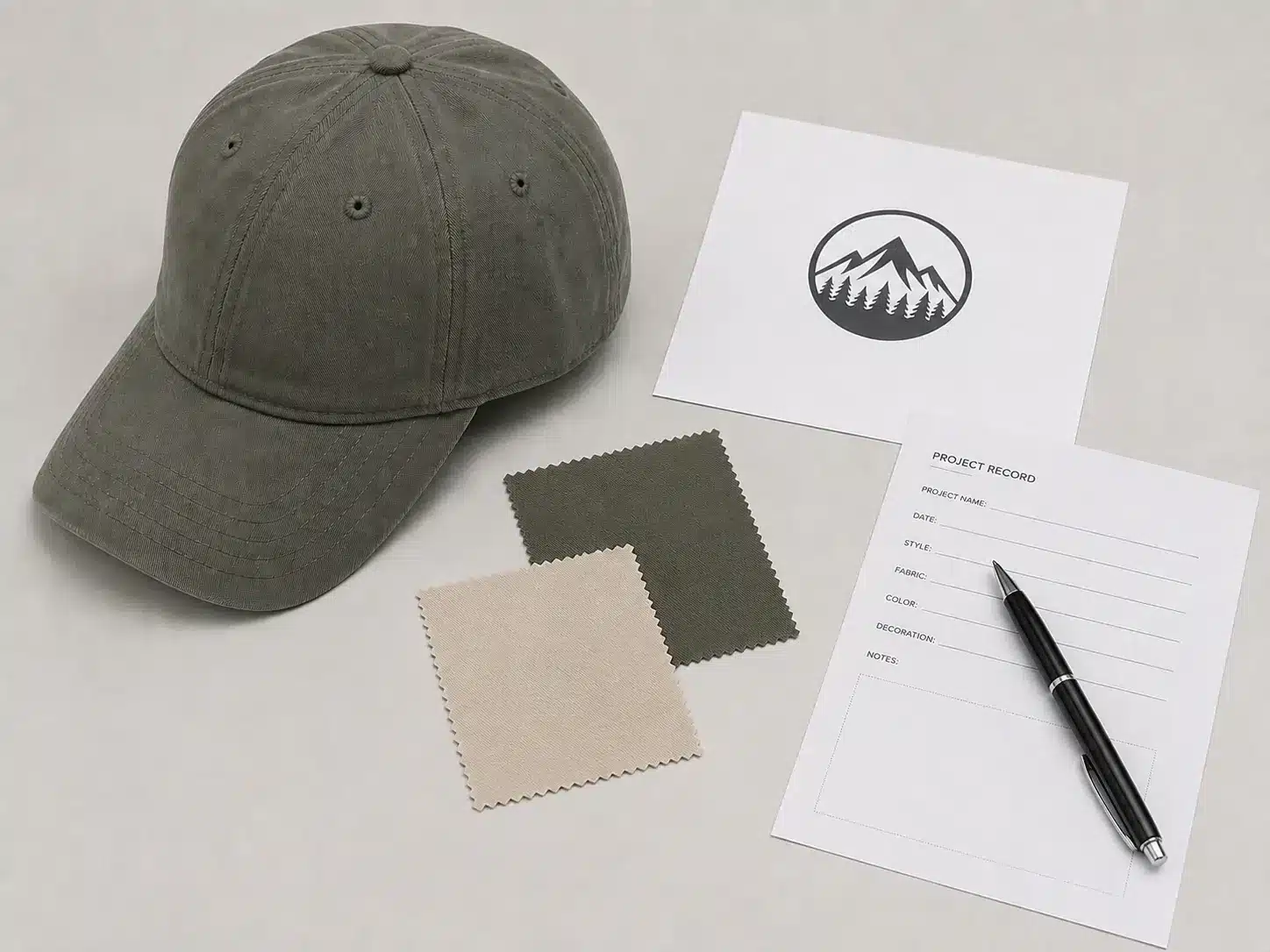
The main types of baseball caps can look similar at first, but their shapes are created by several separate choices: panel construction, crown height, front structure, brim shape, closure, fabric, and decoration. Two caps described with the same style name can fit and look very different when any of those details change.
For a custom project, the most useful starting point is not choosing a fashionable name. It is deciding how the cap should fit, where the logo will sit, and how the finished hat will be used. This guide explains the common terms so you can describe the product more clearly before sampling.
What Is a Baseball Cap?
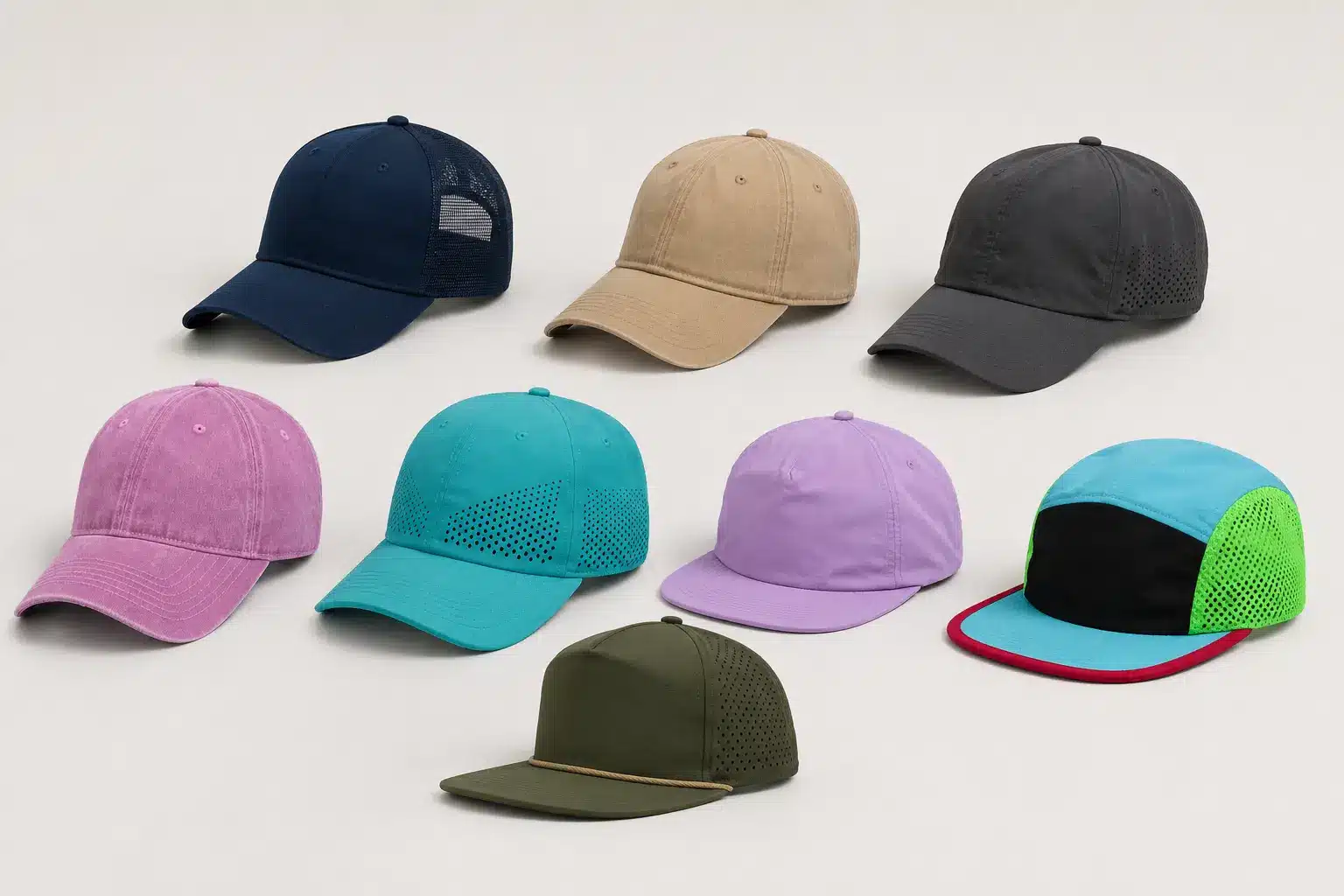
A baseball cap is a soft-sided cap with a crown that covers the head and a projecting brim at the front. Most versions use five or six fabric panels, although other constructions exist. The category includes classic six-panel caps, dad hats, snapbacks, trucker hats, fitted caps, and many performance styles.
These names sometimes overlap. For example, a cap can be six-panel, structured, mid-profile, flat-brimmed, and fitted at the same time. Each term describes a different part of the design.
Parts of a Baseball Cap
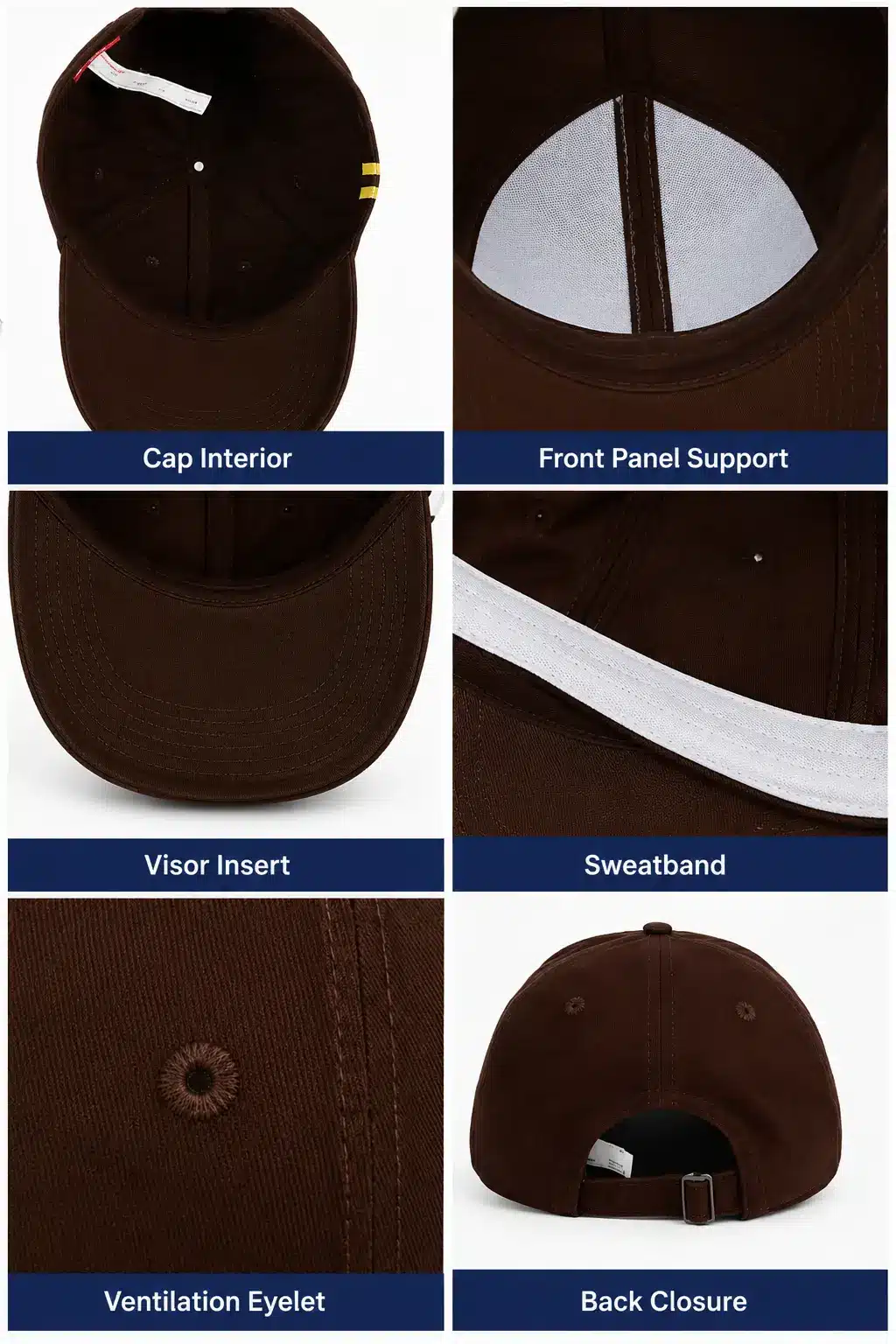
Understanding the main parts makes it easier to compare samples and communicate changes.
| Part | What it is | Why it matters |
|---|---|---|
| Crown | The body of the cap that covers the head | Controls the overall silhouette and fit |
| Panels | Fabric sections sewn together to form the crown | Affect shape, seams, and the front decoration area |
| Front support | Buckram or another reinforcement behind the front panels | Helps the crown hold its shape and supports some embroidery styles |
| Brim or visor | The projecting front section | Changes the look, shade coverage, and packing requirements |
| Closure | The adjustment or fastening system at the back | Affects sizing, comfort, and appearance |
| Sweatband | The band around the inside base of the crown | Affects comfort and moisture management |
| Eyelets or ventilation | Openings in the crown panels | Allow airflow and can become a design detail |
| Seam tape | Tape covering the inside panel seams | Creates a cleaner interior and can carry printed branding |
| Top button | The covered button where crown seams meet | Usually decorative and can be color-matched or contrasted |
Common Types of Baseball Caps
Classic Six-Panel Cap
The six-panel cap has two front panels divided by a center seam, plus four side and rear panels. This construction creates the familiar rounded baseball-cap shape and works for a wide range of structured and unstructured designs.
Because the front seam passes through the main decoration area, very small lettering or artwork that must remain perfectly continuous may need adjustment. A production sample is the best way to check how a particular logo crosses the seam.
Five-Panel Cap
A five-panel construction usually provides an uninterrupted front panel. That can be useful for wider patches, screen printing, heat transfers, or artwork that should not cross a center seam. Five-panel caps can be sporty, outdoor-focused, or streetwear-oriented depending on the crown shape and materials.
Five-panel does not automatically mean low-profile or flat-brimmed. Those are separate design decisions. See our custom 5-panel hats page for the main construction possibilities.
Dad Hat
Dad hats are generally unstructured, low-profile caps with a curved brim and an adjustable fabric strap. Washed cotton is common, but the relaxed silhouette—not a single required fabric—is what buyers usually mean by “dad hat.”
This style suits casual merchandise and lifestyle collections. Softer crowns require careful logo sizing because a large or heavy decoration can change how the front panel drapes.
Snapback Cap
“Snapback” describes the plastic snap closure at the rear, although the term is also associated with structured crowns and flatter brims. A snapback closure provides an adjustable size range and a recognizable casual or streetwear look.
Trucker Hat
A trucker hat combines a front crown with mesh side and rear panels. It is commonly made with a structured fabric front or a foam-backed front, but these constructions should not be treated as identical. The front material, mesh, crown profile, and closure all need to be specified.
For mesh, foam-front, and structured options, visit custom trucker hats.
Performance Cap
Performance caps are designed around active use. Lightweight woven fabrics, stretch materials, moisture-management sweatbands, and laser-cut or mesh ventilation are common options. The appropriate combination depends on the activity, climate, desired fit, and decoration method.
Explore possible constructions on our custom performance hats page.
Fitted and Stretch-Fit Caps
A fitted cap is produced in defined sizes and has no adjustable rear opening. A stretch-fit cap uses elastic or stretch components to cover a size range while maintaining a closed-back appearance. Both require more attention to circumference, crown depth, and size grading than a typical adjustable cap.
Five-Panel vs. Six-Panel: Which Is Better for a Logo?
Neither construction is universally better. The artwork and desired shape should guide the choice.
| Requirement | Five-panel may suit | Six-panel may suit |
|---|---|---|
| Wide front patch or print | Uninterrupted front panel offers a continuous area | Front seam may limit some layouts |
| Traditional baseball-cap shape | Available in selected constructions | The most familiar option |
| Centered embroidery | Good when the front panel has suitable support | Common, but artwork must account for the center seam |
| Soft lifestyle silhouette | Possible with suitable patterns and fabrics | Common in unstructured six-panel caps |
Logo dimensions, stitch direction, panel curvature, seam position, and front reinforcement all affect the result. Approve the decoration on an actual cap sample rather than evaluating it only as a flat digital mockup.
Structured vs. Unstructured Crowns
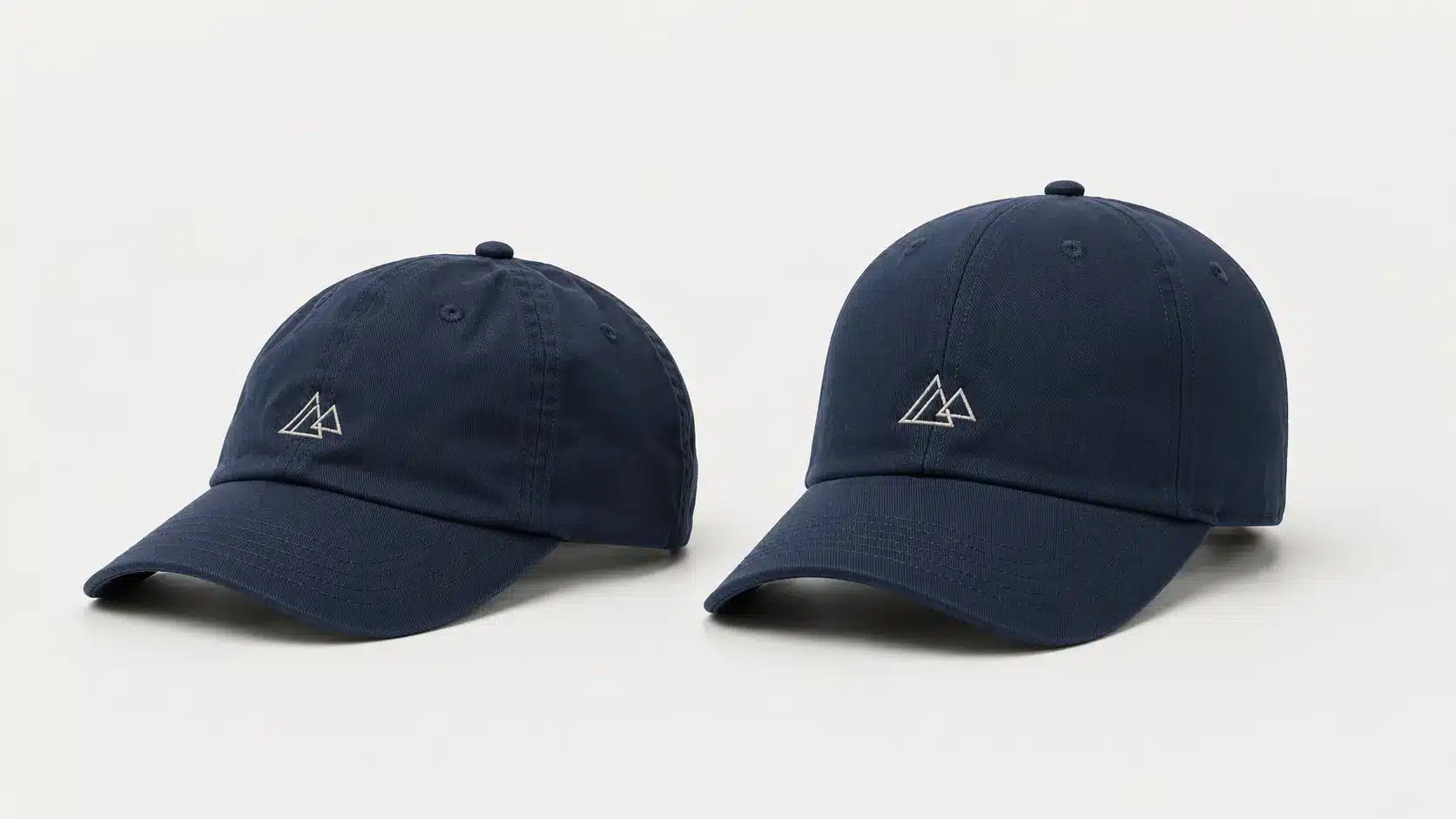
A structured cap uses reinforcement behind the front crown to help it keep a defined shape. This can provide a stable surface for embroidery and create a cleaner, more upright presentation.
An unstructured cap has little or no rigid front support, so the crown follows the wearer’s head more closely and collapses when not worn. It is not automatically lower quality; it is a different construction and aesthetic. Fabric weight, pattern, seams, and decoration still need to work together.
Crown Profile and Brim Shape
Profile describes how high or deep the crown sits. Low-, mid-, and high-profile are useful categories, but measurements and fit blocks can vary between suppliers. If fit is important, compare a physical reference sample or provide target measurements instead of relying only on the profile name.
Brims may be flat, slightly curved, or pre-curved. Their length, width, internal insert, stitching, edge shape, and underside color can also be customized. A brim that works for a fashion cap may not be the best choice for running, golf, workwear, or compact shipping.
Common Closure Options
- Plastic snap: adjustable, recognizable, and common on trucker and snapback styles.
- Fabric strap with metal buckle: a clean option frequently used on casual cotton caps.
- Hook-and-loop: simple to adjust and practical for some uniforms and sports applications.
- Webbing strap with clip buckle: often used on outdoor and five-panel designs.
- Stretch fit: creates a closed-back look with a limited flexible size range.
- Fitted: clean rear construction but requires accurate sizing and size planning.
The closure should be evaluated together with the rear opening, sweatband, crown depth, and intended wearer—not selected in isolation.
Fabric Choices for Custom Baseball Caps
Cotton twill is widely used for casual caps, while polyester and nylon constructions are common when low weight, quicker drying, or weather-related performance matters. Mesh can improve airflow; stretch-woven fabrics can support closer athletic fits; washed fabrics create a softer appearance.
Fabric names alone are not enough for production. A useful specification may also include composition, weight, weave, color reference, surface finish, stretch direction, and any required performance characteristics. Avoid assuming that every fabric described as “performance” provides the same result.
How Construction Affects Logo Decoration
Choose the decoration method after considering the cap structure and artwork.
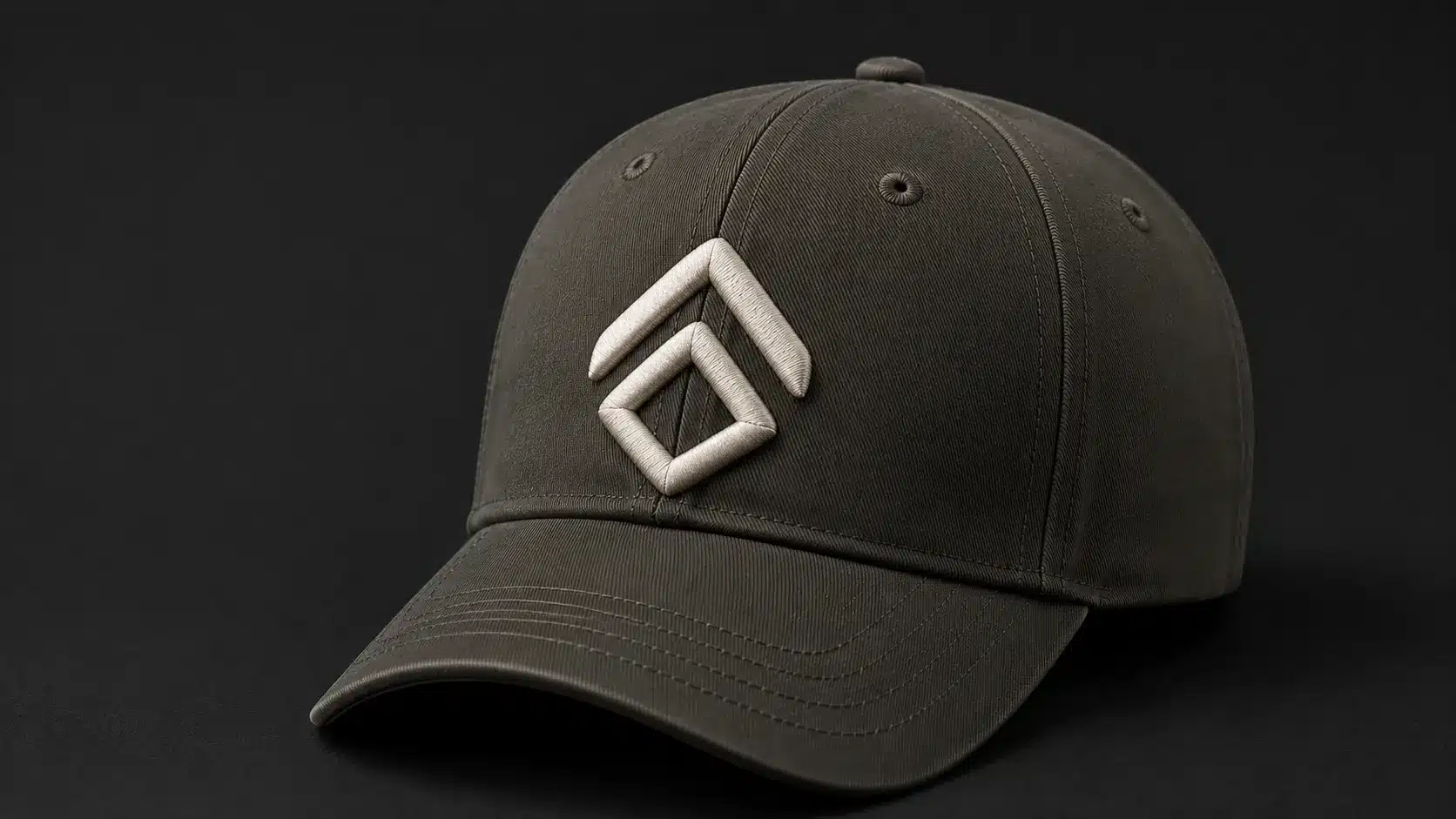
- Flat embroidery suits many logos but very small text may need simplification.
- 3D puff embroidery needs suitable letter width, spacing, and front support.
- Woven patches can retain finer graphic details than some direct embroidery.
- Printed or sublimated patches can reproduce color transitions that thread cannot.
- Heat-transfer and printed methods require compatibility testing with the fabric and surface shape.
Our customization options page shows the main exterior and interior branding areas available for a full custom hat.
How to Prepare a Custom Baseball Cap Brief
Before requesting a sample or quotation, define the following:
- Reference style or physical sample
- Panel construction and crown profile
- Structured or unstructured front
- Brim shape and dimensions
- Closure type and target size range
- Fabric composition, color, and finish
- Logo files, dimensions, placement, and decoration method
- Interior details such as sweatband, seam tape, and labels
- Estimated quantity and required delivery date
- Packaging requirements and destination
If some details are still undecided, start with the wearer, use case, target appearance, and artwork. Those four inputs help narrow the construction choices without inventing specifications too early. Learn more about the sampling and production stages in how it works.
Frequently Asked Questions
Is a five-panel cap the same as a trucker hat?
No. Five-panel describes the crown’s panel construction. Trucker describes a style that normally uses mesh at the sides and back. A trucker cap can use different front-panel constructions.
Is a snapback always a flat-brim cap?
No. Snapback refers to the rear plastic closure. It is often paired with a flatter brim, but the brim can be curved or pre-curved.
Are structured caps better for embroidery?
They often provide a firmer embroidery surface, but the correct choice depends on the artwork, fabric, panel seams, stabilizer, and desired silhouette. An unstructured cap can also be embroidered successfully when the design and construction are compatible.
What information is most important for an accurate quotation?
The reference style, fabric, quantity, logo method and size, custom interior details, packaging, destination, and required timing have the greatest effect on quotation accuracy.
Build the Cap Around the Product You Actually Need
The best baseball cap is not defined by one fashionable style name. It is the combination of fit, structure, material, decoration, and details that works for your customer and brand.
SN International develops full custom hats from the construction outward. Review our custom baseball caps and full custom OEM hats capabilities, or send us your reference cap and artwork to discuss a sample.