
Cotton twill and polyester can both make an excellent custom hat, but they solve different problems. Cotton twill is usually the better starting point for a soft, matte, everyday cap. Polyester is usually the stronger option when fast drying, low water absorption, shape retention, or all-over sublimation printing matters.
The fiber name alone is not a complete specification. Fabric weight, weave, finish, crown backing, sweatband, and decoration method can change how either material looks and performs. Use this guide to build a better sampling brief—not to choose fabric from a label alone.
Cotton Twill vs Polyester Hats at a Glance
| Decision factor | Cotton twill | Polyester |
|---|---|---|
| Typical hand feel | Soft, natural, usually matte | Smooth, light, or technical depending on construction |
| Moisture behavior | Absorbs more moisture and dries more slowly | Absorbs little water; suitable constructions dry faster |
| Shape and wrinkle resistance | Can soften, crease, or change with washing | Generally more dimensionally stable and wrinkle resistant |
| Surface appearance | Casual, heritage, lifestyle | Clean, uniform, athletic, or technical |
| Embroidery | A stable twill can support embroidery well | Works well when fabric, backing, needle, and tension are matched |
| Sublimation | Not suitable for conventional dye sublimation | The standard choice, especially on light-colored polyester |
| Color and finish | Garment washing can create a broken-in look | Often selected when consistent, saturated color is important |
| Best-fit programs | Lifestyle, retail, uniforms, merchandise | Performance, outdoor, golf, team, travel, all-over print |
Short answer: choose cotton twill when natural touch and a classic cap appearance lead the brief. Choose polyester when the hat must manage sweat, dry quickly, pack easily, or carry a sublimated design. Consider a blend when you want a middle ground, but sample it because blend ratio and fabric construction matter.
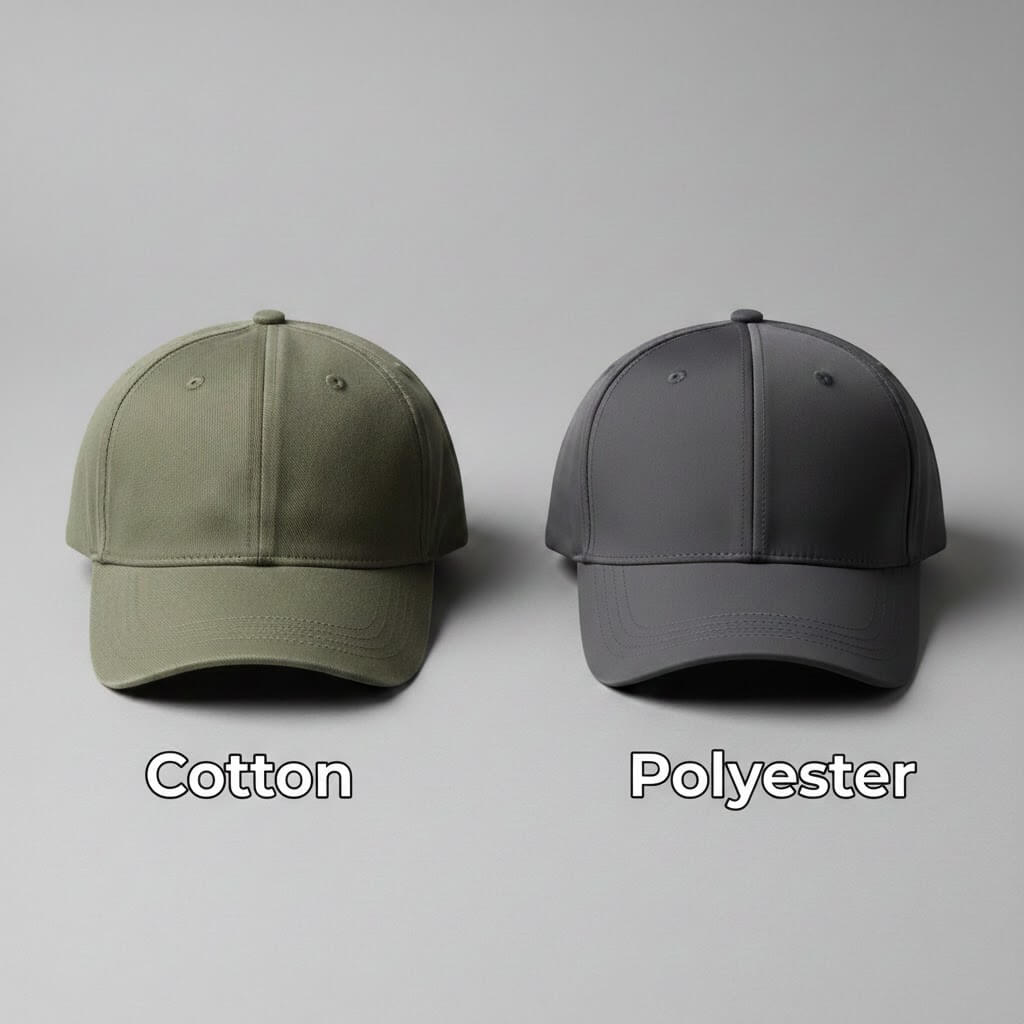
What Is Cotton Twill?
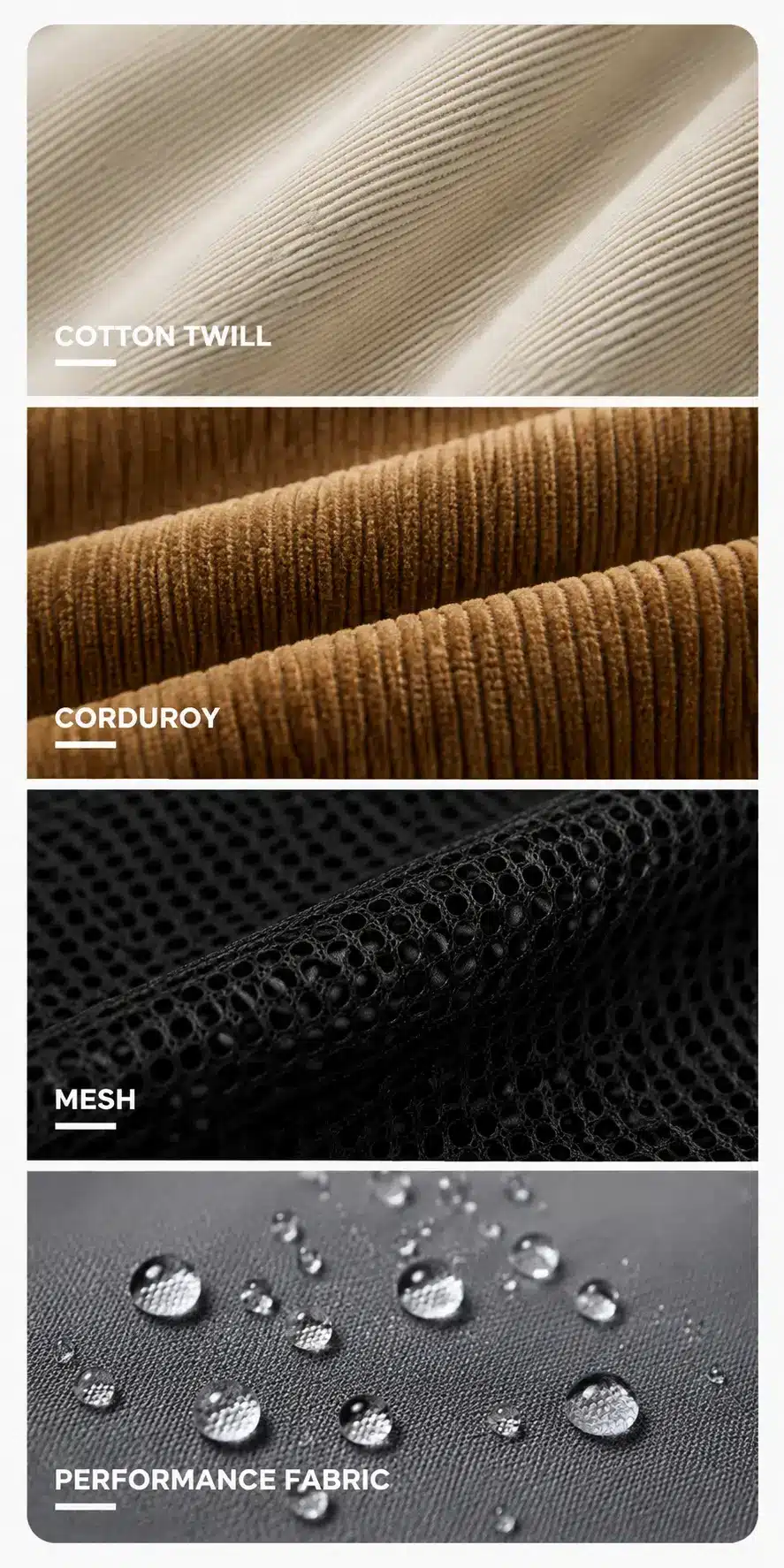
Cotton describes the fiber; twill describes the weave. A twill fabric has diagonal ribs created by the yarn interlacing pattern. The weave can produce a useful balance of flexibility, surface texture, and durability for baseball caps, dad hats, five-panel hats, and workwear-inspired styles.
Not every cotton twill feels the same. A lightweight, tightly woven twill will behave differently from a heavy brushed or garment-washed version. Ask the supplier to identify:
- Fiber content and any blend percentage
- Fabric weight or a reference swatch
- Brushed, peached, washed, coated, or other finish
- Color method and expected shade variation
- Whether the crown is structured with backing or left unstructured
- Care instructions used for the finished hat
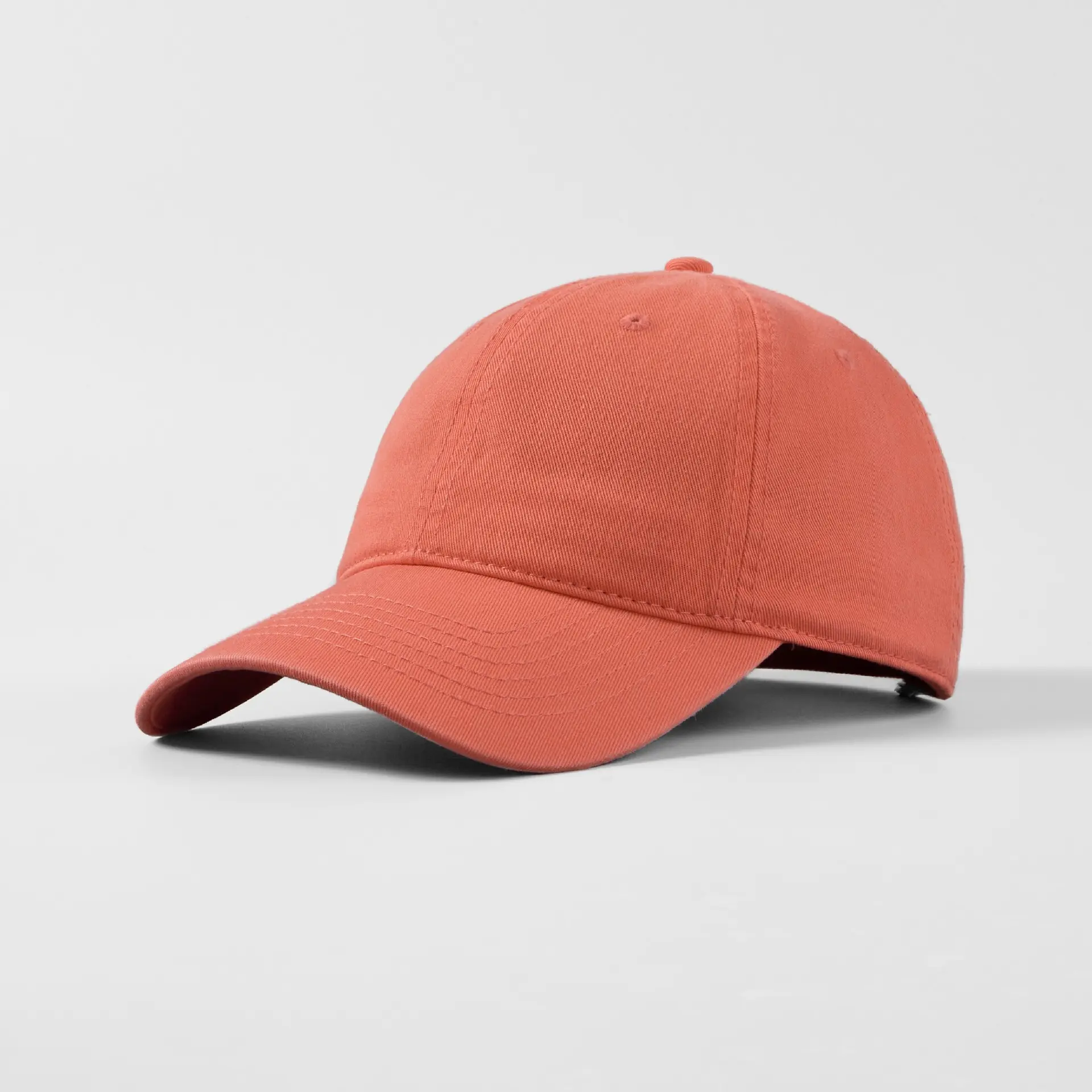
For a classic retail look, cotton twill works especially well with muted colors, curved visors, fabric straps, and flat embroidery. Washed cotton can create a softer, vintage appearance, but the wash should be approved on a finished sample because seams, embroidery thread, and panels may react differently.
What Is Polyester Hat Fabric?
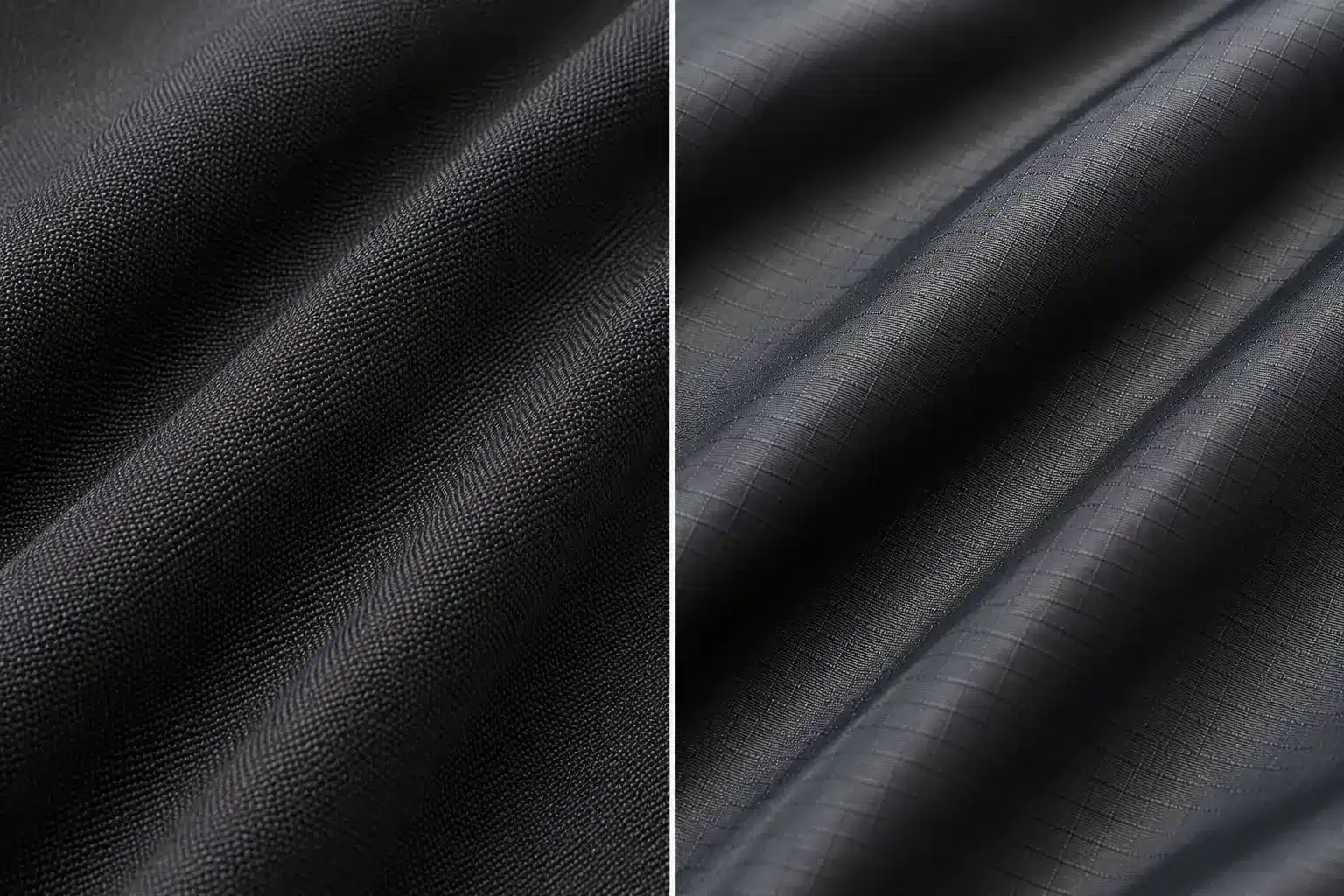
Polyester is a synthetic fiber, but “polyester cap” covers many different fabrics: plain weave, twill, microfibre, stretch woven, ripstop, mesh, and fabrics with mechanical or chemical finishes. A smooth golf-cap fabric and a heavy polyester twill may share the same fiber content while feeling completely different.
Polyester fibers absorb little water compared with cotton. That can help a suitable hat dry faster, but moisture-wicking performance is not guaranteed by the fiber name. Wicking also depends on yarn shape, knit or weave structure, ventilation, and applied finishes. If moisture management is part of the product promise, test the actual fabric and finished cap rather than relying only on “100% polyester” in the specification.
Polyester is often selected for custom performance hats because it can support lightweight construction, laser-cut ventilation, perforated panels, and technical-looking surfaces. It is also the practical base for conventional dye sublimation.
Which Fabric Is More Comfortable?
Comfort depends on climate, activity, fabric construction, and the parts touching the wearer.
Cotton twill usually offers a familiar, soft hand and absorbs perspiration. That can feel comfortable for casual use, but a saturated cotton cap may remain damp longer. Polyester takes up less water, so a lightweight or ventilated construction can be more practical for running, golf, outdoor crews, or humid conditions. A dense polyester fabric without ventilation may still feel warm.
Do not evaluate the crown fabric in isolation. The sweatband has direct contact with the head and can change the wearing experience. During sampling, compare the same crown shape with alternative sweatbands and wear the samples in the intended environment.
Which Material Holds Its Shape Better?
Polyester is generally less prone to shrinking and wrinkling than cotton. Cotton twill may soften, crease, fade, or change dimensions depending on the fabric, treatment, washing, and drying method. None of those outcomes can be reduced to a universal percentage.
Hat structure also comes from construction. Front-panel backing, seam allowance, visor shape, panel pattern, and pressing affect the silhouette. A structured cotton twill cap can hold a firmer crown than an unstructured polyester cap. Specify the desired profile and backing instead of asking the material to create the shape by itself.
For bulk orders, approve a finished sample after any wash or finish has been applied. If customers are expected to clean the hat, add a practical care instruction and test the cleaning method on the finished cap.
Cotton or Polyester for Embroidery?
Both fabrics can be embroidered successfully. The correct choice depends more on the complete fabric-and-logo combination than on fiber content alone.
A stable cotton twill often provides a forgiving base for flat embroidery and bold 3D puff designs. Lightweight or stretch polyester may require careful digitizing, backing, hooping, needle selection, and thread tension to prevent rippling. Heavy stitch coverage can distort either material when the artwork or setup is unsuitable.
Before approving production, review:
- Logo size and placement on the curved crown
- Minimum line widths and open spaces after digitizing
- Stitch direction and density
- Backing visible inside the hat
- Puckering around the design
- Alignment across a center seam
- How the embroidered panel recovers after handling
If the logo contains tiny text, gradients, or fine detail, a woven patch, printed patch, or another customization option may reproduce it more clearly than dense direct embroidery.
Cotton or Polyester for Printing?
Printing method can decide the fabric before style does.
Conventional dye sublimation bonds most effectively with polyester and is commonly used on light-colored polyester fabric. It is suited to gradients, repeated patterns, photographic detail, and all-over artwork. It is not the correct process for a standard 100% cotton twill cap.
Screen printing, heat transfers, and direct-to-film applications can work on a wider range of fabrics, but each combination requires testing. Heat can affect coatings or cause dye migration from some polyester fabrics into a light-colored transfer. Curved panels and seams also limit usable print areas.
Approve a decorated sample made from the production fabric. A flat fabric strike-off can confirm color, but it cannot show how artwork crosses seams or how a finished crown handles heat and pressure.
How to Choose by Use Case
Lifestyle and Fashion Collections
Start with cotton twill when the brief calls for a soft, matte, familiar cap. It works naturally with washed finishes, tonal embroidery, fabric straps, and unstructured profiles. If repeated color consistency is more important than a broken-in appearance, compare an unwashed cotton twill with a polyester or blend.
Performance, Golf, and Outdoor Programs
Start with a lightweight polyester construction when quick drying, ventilation, packability, or sublimation is required. Specify the actual performance feature—such as perforation, mesh, stretch, or a tested moisture-management finish—rather than using “performance polyester” as the entire brief.
Uniforms and Workwear
The decision depends on the job. Cotton twill can suit customer-facing uniforms that need a classic look. Polyester may be easier to manage for outdoor teams or repeated distribution. For either option, test color, crown recovery, sweatband comfort, and cleaning instructions.
Promotional Merchandise
Choose for expected use, not lowest fabric cost alone. A comfortable cap that matches the brand is more likely to be worn. Simplifying colors, trims, or decoration often controls cost more safely than selecting an unsuitable fabric.
When a Cotton-Polyester Blend Makes Sense
A blend can combine some of cotton’s touch with some of polyester’s stability and faster drying. It is not automatically “the best of both.” A 65/35 blend, a 60/40 blend, and a fabric with the same ratio but a different weave may perform differently.
Ask for composition, construction, weight, and finish, then compare physical samples. If sublimation is required, confirm the polyester content and test color output; if a washed vintage effect is required, confirm how each fiber and the sewing thread react to the wash.
A Better Fabric Approval Checklist
Before placing a full custom OEM hat order, put these points in the development brief:
- Use case: casual retail, uniform, golf, running, outdoor work, or event merchandise.
- Target appearance: matte, washed, crisp, technical, or high-color print.
- Fabric specification: composition, construction, weight/reference, color, and finish.
- Crown specification: hat style, profile, structured or unstructured front, and ventilation.
- Decoration: method, dimensions, placement, thread or print colors, and approved artwork.
- Comfort components: sweatband material, closure, size range, and fit sample.
- Approval method: fabric swatch, decorated sample, wear check, and written change log.
- Care and packing: cleaning instruction and packing method that protects the crown.
Follow the custom hat development process from feasibility review through sampling and production approval. Compare materials on the same hat shape whenever possible; otherwise, construction differences can make a fabric comparison misleading.
Frequently Asked Questions
Is cotton twill better than polyester for hats?
Neither is universally better. Cotton twill is often preferred for a natural, matte, casual cap. Polyester is often preferred for quick-drying, stable, technical, or sublimated hats. The intended use and finished sample should decide.
Is twill always cotton?
No. Twill is a weave, not a fiber. Twill fabric can be cotton, polyester, a cotton-polyester blend, wool, or another material. A sourcing brief should state both fiber content and fabric construction.
Are polyester hats breathable?
They can be, but polyester content alone does not guarantee breathability. Fabric weight, weave, perforations, mesh panels, crown structure, and sweatband design all affect airflow and comfort.
Does cotton twill shrink?
It can. The amount depends on the fabric, pretreatment, wash finish, hat construction, and care method. Approve the finished sample and provide suitable care instructions instead of relying on a universal shrinkage claim.
Can both cotton and polyester hats be embroidered?
Yes. Stable fabric, appropriate backing, good digitizing, and correct machine settings matter for both. Always approve embroidery on the actual production fabric and crown construction.
Which fabric is best for custom baseball caps?
For a classic everyday custom baseball cap, cotton twill is a strong starting point. For an active or all-over printed cap, polyester is often more suitable. A sample comparison is the safest final decision.
Choose the Fabric After Defining the Hat
The best material is the one that supports the wearer, design, decoration, and care expectations of the finished product. Start with the use case, specify the construction, and approve a decorated sample before bulk production.
If you are comparing cotton twill, polyester, or blended fabrics for a new program, send us your hat style, quantity, target use, artwork, and reference images. We can review feasibility and help turn those requirements into a sample-ready specification.