
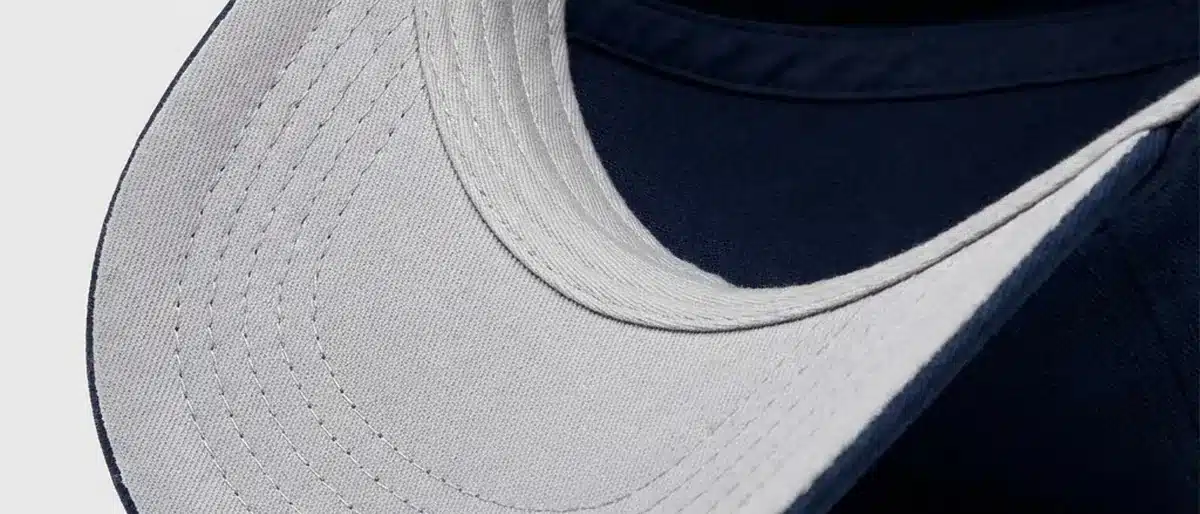
A hat brief becomes easier to quote and sample when the buyer and developer use the same words. “Six-panel,” “structured” and “high profile” describe different things; none is a complete product specification. Use this short glossary to describe the hat you want, then confirm the details on a physical sample.
Do not treat these terms as universal measurements. Two suppliers can use the same label for hats that look and fit differently. When fit or appearance matters, pair the term with a photograph, a measured reference or an approved sample.
Shape and construction terms
| Term | What it describes | What to specify |
|---|---|---|
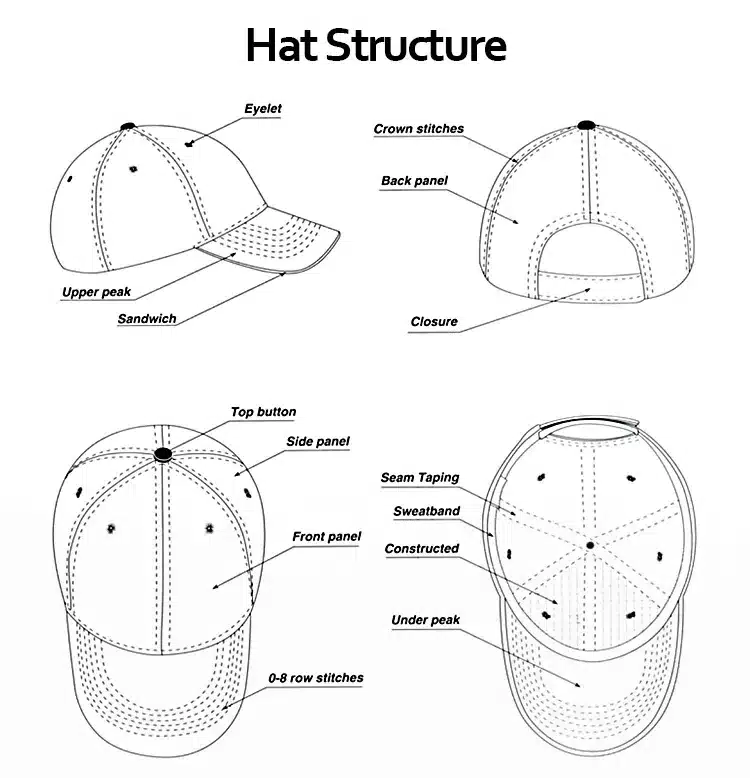
| Panel count | The number and arrangement of crown pieces | Five- or six-panel layout, seam positions and front shape |
| Crown profile | How tall and full the crown looks on the head | Reference photo, fit target and approved sample |
| Structured front | A reinforced front panel that holds more shape | Desired firmness and how the panel supports decoration |
| Unstructured front | A softer front that follows the head more closely | Fabric feel and the amount of collapse you accept |
| Visor | The brim that extends from the crown | Shape, length, curve, stitching and any rope or sandwich detail |
| Closure | The back adjustment system | Snap, buckle, hook-and-loop or another approved option |
Material terms buyers often confuse
Fabric composition tells you the fibers used; it does not by itself tell you how the cap will feel or hold its shape. Fabric weight is one input, but weave, finishing and construction also affect the result. Mesh describes an open structure, not one fixed level of airflow or durability. Ask for the actual material swatch and judge it in the finished cap.
Twill names a diagonal weave, not a guarantee that two fabrics share weight or finish. Ripstop describes a reinforcing grid pattern; it does not make every hat waterproof. Buckram is one way to reinforce the front, but the final stiffness depends on the chosen material and construction. These terms help start a conversation; they should not replace a sample.
Sweatband is the strip inside the lower crown that contacts the forehead. Its width, seams and feel matter in active use. Inside taping covers seams and can carry branding, but placement and material should be checked on the sample rather than selected from a mockup alone.
Decoration and branding terms
Flat embroidery places stitched artwork close to the cap surface. 3D or puff embroidery adds raised material under selected stitches; it is best assessed with the actual artwork and crown fabric. A woven patch is a separately made label with fine woven detail, while an embroidered patch has a more textured stitched surface. Neither is automatically the better choice: line detail, desired texture, patch size and application method decide.
Appliqué places a separate material shape onto the hat before it is secured. Heat transfer applies artwork with heat and pressure where the material and process allow it. Decoration placement should identify both the panel and the reference point used to measure position. “Front center” may not be precise enough when a seam runs through the panel.
Private label usually refers to brand-specific interior or packaging details. Full custom goes further: the buyer defines the hat’s construction, materials and branding as a coordinated product. See the available customization choices and the full-custom OEM development page.
Approval terms that prevent confusion
A tech pack collects the drawings, measurements, material references and artwork placement needed to develop the product. A pre-production sample is a physical reference approved before bulk work starts. A revision changes that reference; even a small fabric or logo change can affect fit, appearance or cost. Keep the final approved specification and sample together so a later reorder starts from the same reference.
MOQ means minimum order quantity, but buyers should ask whether it applies to the whole order, each style, each color or a special component. Lead time is meaningful only with a stated starting point, such as final sample approval. Colorway is the approved combination of body, visor, mesh, trim and decoration colors; one color name may not describe it completely.
Turn the vocabulary into a useful first brief
A buyer might say: “We want a six-panel, medium-profile cap with a softly structured front, curved visor, fabric strap and a small embroidered front mark. Here is a reference hat; we need to review the actual crown fit and material.” That is more actionable than “premium baseball cap,” but still leaves room to evaluate the sample. Record the open decisions instead of filling them with assumptions.
Separate what has already been decided from what still needs development. For example, the panel count and closure may be fixed, while the crown firmness, visor curve and fabric remain open for sampling. This prevents a descriptive word such as “classic” or “premium” from being mistaken for an approved technical requirement.
When a visual reference is important, identify exactly what should be taken from it. You may like the crown shape of one cap, the visor of another and the closure of a third. Saying this directly is safer than asking a supplier to “make the same hat,” especially when the reference product cannot be copied or its internal construction is unknown.
For a first inquiry, you do not need a perfect technical vocabulary. Send a reference hat, intended use, artwork and the changes you want. The development process explains how those inputs become a reviewed specification.
Common questions about custom hat terminology
Is a six-panel hat always structured?
No. Panel count describes how the crown pieces are arranged, while structure describes how the front is reinforced. A six-panel cap can be structured or unstructured, so both details should be stated and checked on the sample.
Does “high profile” have one standard measurement?
No. Suppliers may use profile labels differently. If crown height and shape are important, provide a reference image or hat, discuss the measuring points and approve the resulting physical sample.
What information is more useful than calling a hat “premium”?
Describe the intended wearer and use, crown profile, structure, material direction, visor, closure, decoration, labeling and packing. Add a reference and identify which details it represents. Those inputs give the development team decisions it can actually evaluate.