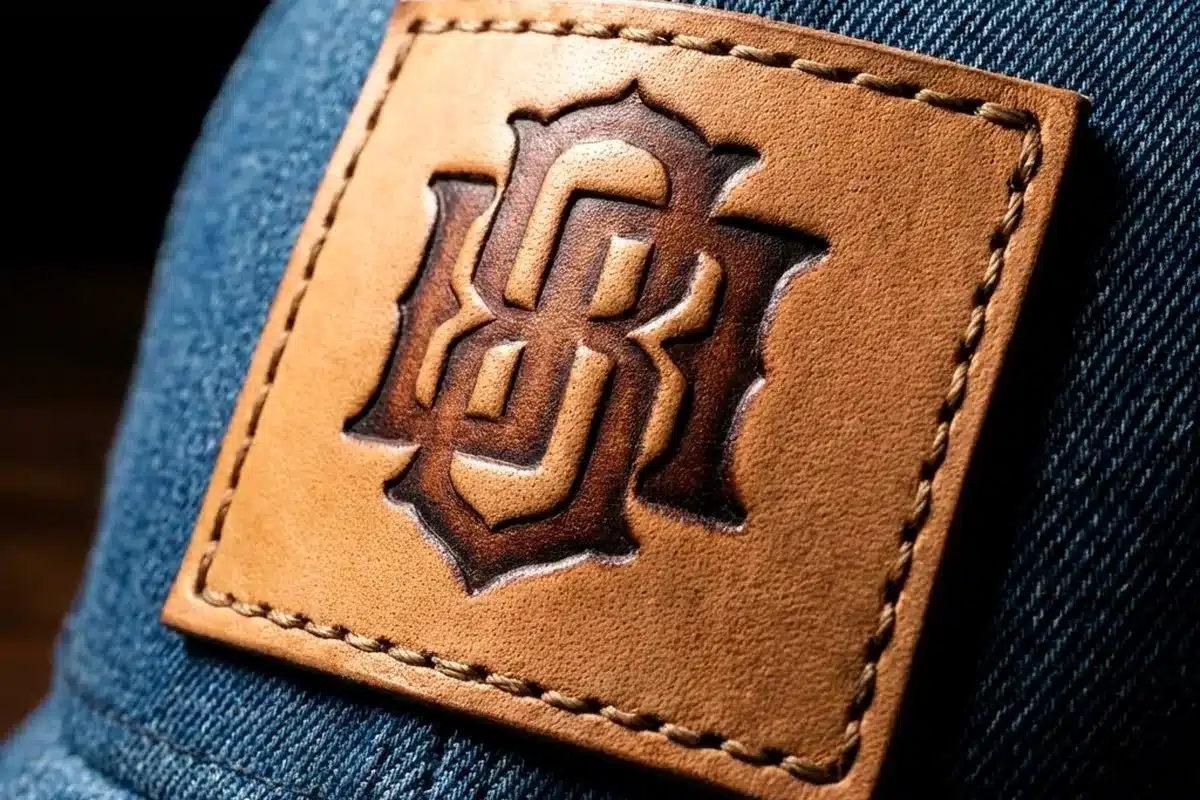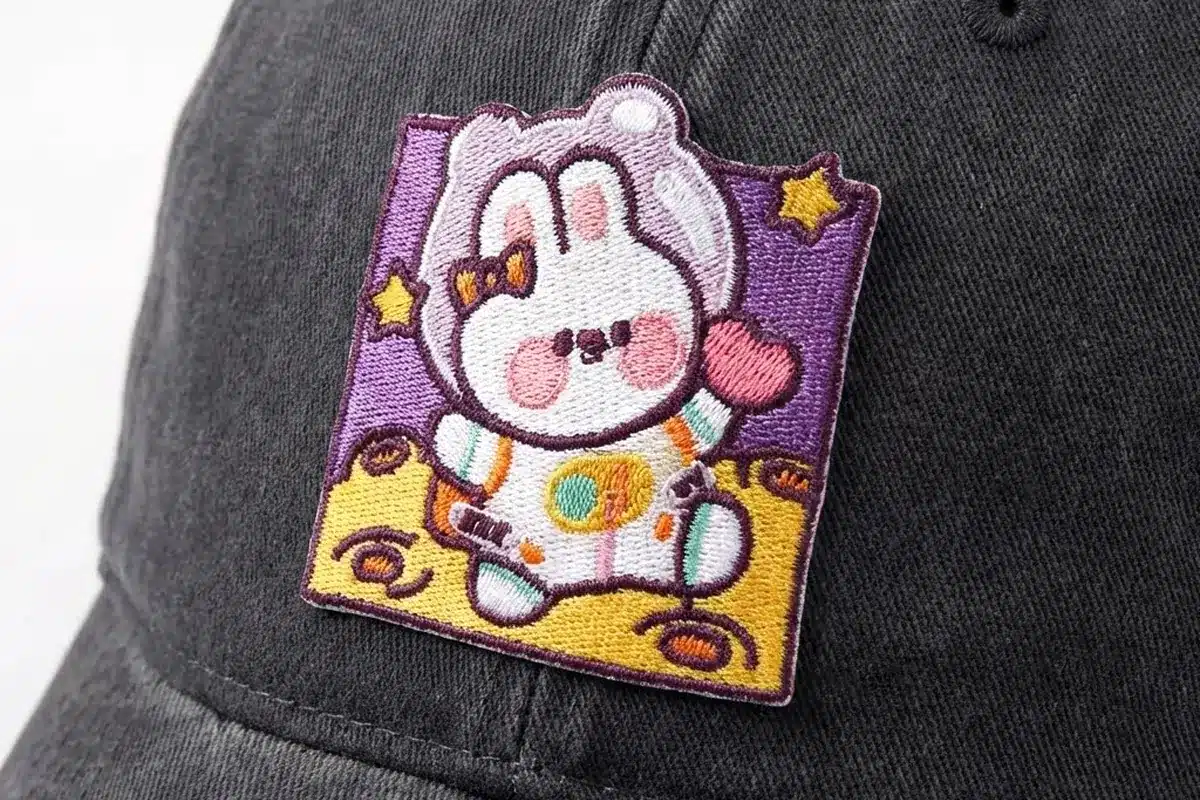
Choosing the right hat patch shape is not just a design choice. It is a critical procurement decision. If you pick the wrong shape, the hat looks unbalanced. This makes your brand look cheap. We see many buyers focus only on the logo design and ignore the outline. But the shape of the patch is the first thing a customer notices. It creates the “visual gravity” of the headwear.

Key Insights for Procurement Managers:

  • Horizontal shapes widen the visual field. This makes brand names easier to read but requires specific crown heights to avoid looking cramped.
  • Circular patches create a “badge” feel. They are the safest choice for durability because they distribute fabric tension evenly across all edges.
  • Custom shield or irregular shapes increase brand “prestige” but carry higher risks for edge-lifting and production rejects if the corner radius is too sharp.

We have managed global supply chains for over 15 years. We know that a small change in geometry can change your total cost. A shape that looks good on a screen might fail during bulk production. In this guide, we will show you how to choose a shape that balances style, cost, and risk.


1. Beyond Aesthetics: Why Patch Geometry Impacts Brand Equity?

You spend a lot of money to build a brand image. But a patch that does not fit the hat crown will ruin that image. We see this problem often. A brand wants a high-end look but chooses a patch shape that fights the hat’s structure. This creates a disconnect. The customer sees a “cheap” product even if the materials are expensive. We call this the impact of geometry on brand equity.

The shape of a patch dictates where the eye goes first. For example, a square patch on a high-profile trucker hat creates a strong, stable look. It feels bold and industrial. But if you put that same square on a low-profile dad hat, it looks too heavy. It overpowers the soft fabric. This is because every hat has a “visual center.” The patch must sit in this center without crowding the seams or the bill.

We use a rule called the Patch-to-Panel Ratio (PPR). We calculate how much of the front panel the patch covers. If the shape is a tall rectangle, it draws the eye up and down. This makes the wearer’s face look longer. If the shape is a wide rectangle, it draws the eye side-to-side. This makes the hat look more “streetwear” or “sporty.” But you must be careful. A wide patch on a six-panel hat must cross the center seam. If the patch shape is too stiff, it will create a gap at the seam. This gap makes the hat look defective.

We also look at the “weight” of the shape. A circle feels light and friendly. A shield shape feels traditional and “workwear.” If your brand sells to outdoor workers, a shield or a hexagon shape builds trust. It looks like a uniform. If you sell to a younger, fashion-focused crowd, irregular shapes or “floating” text patches work better. But these shapes are harder to apply. We always tell our clients to think about the “first-look judgment.” The shape tells the customer what kind of brand you are before they even read the name. Because of this, we help buyers test multiple shapes on physical prototypes. This step reduces the risk of a bad “first impression” for the final consumer.

2. Structural Integrity and the “Dished” Effect: Engineering for Durability?

A hat patch is more than just a decoration. It is a structural element that must sit on a curved surface. We see many procurement managers make the mistake of choosing large, flat rectangles for highly curved caps. This leads to the “dished” effect. This happens when the center of the patch stays flat while the corners lift away from the fabric. It looks bad and ruins the user experience. But you can avoid this by understanding how shape affects physical tension.

When we apply a flat patch to a sphere, the material wants to return to its flat state. Circular and oval patches are the best solution for this problem. Because they have no corners, the tension is spread evenly around the entire edge. There is no single point where the stress is high. We have found that round shapes reduce corner-peeling by about 40% in long-term use. This is very important if your hats are used in hot or humid weather. Heat can soften the glue. If the patch has sharp corners, those corners will be the first thing to pop up.

If your brand must use a rectangle, you should use a “rounded corner” design. We recommend a minimum radius of 2mm. Even this small curve helps the patch follow the shape of the hat. It also makes the stitching process much easier. When a sewing machine hits a sharp 90-degree corner, it often creates a tiny “bunch” of thread. This bunch can catch on things and pull loose. A rounded corner allows the needle to move in a smooth arc. This results in a much cleaner finish.

Fabric weight also changes how the shape behaves. If you use a heavy leather patch on a light mesh hat, the weight will pull the fabric down. This creates a “dip” in the crown. It makes the hat look old even when it is new. For light fabrics, we suggest using smaller shapes or shapes with more open space. We always test the “bond strength” of different shapes during the sampling phase. We want to make sure the patch shape you choose can survive at least 50 wash cycles. By choosing a shape that works with the physics of the hat, you lower your return rates and keep your customers happy.


3. Total Cost of Ownership (TCO): Shape Complexity vs. Production Throughput?

Every decision you make about a patch shape affects your bottom line. We want to help you lower your “Total Cost of Ownership.” This means looking at more than just the price per unit. You have to look at the speed of production and the cost of waste. Simple shapes like circles and squares are cheap because they are easy to make. Complex or irregular shapes are expensive because they require more work and better technology.

Standard shapes are usually cut with a metal die. This is like a cookie cutter. It is fast and very precise. But if you want a shape with many cut-outs or sharp “v-shapes,” a die might not work. We have to use a laser cutter instead. Laser cutting is great for detail, but it is much slower. If a laser takes 30 seconds to cut one patch instead of 2 seconds for a die, your costs go up. Also, lasers can leave a “burn mark” on the edges of some fabrics. This requires an extra cleaning step.

Application speed is another big cost driver. Think about the person at the factory who has to sew or heat-press the patch. A round patch is very forgiving. If it is turned by 2 degrees, nobody will notice. But if a “shield” shape or a “triangle” is slightly crooked, it is very obvious. The worker has to move slower to make sure every patch is perfectly straight. If you are ordering 10,000 hats, an extra 15 seconds per hat adds up to over 40 hours of extra labor. You will pay for that time in the final quote.

[Image comparing simple vs complex patch shapes for manufacturing efficiency]

Waste is the final part of the cost equation. When we cut patches from a large sheet of material, we want to fit as many as possible. Circles and squares fit together well. Irregular shapes leave large gaps of “scrap” material. In some cases, we see up to 40% waste with custom shapes. You are paying for the material that ends up in the trash. We help our buyers “nest” their designs to reduce waste. Sometimes, shrinking a patch by just 2mm can save you thousands of dollars in material costs across a large order.

FeatureStandard (Round/Square)Complex Custom Shape
Tooling CostLowMedium-High
Material Waste10-15%25-40%
Labor SpeedFastSlow
Risk of DefectsLowHigh

4. The Golden Ratio of Hat Branding: Defining Visual Balance?

Finding the right spot for your patch is just as important as the shape itself. We see many buyers struggle with placement because they do not account for the “visual mass” of the shape. A patch that is perfectly centered by a ruler can still look like it is falling or floating. This is because different shapes carry weight differently. For example, a triangle patch with the wide base at the bottom feels heavy. If you place it at the exact geometric center, it might look like it is sagging. We adjust the placement based on how the eye perceives the shape.

[Diagram of Five-Panel vs. Six-Panel “Safe Zones”]

We use a specific formula to help our clients find the “Golden Ratio” for their branding. You must look at the front panel as a restricted grid. For a standard six-panel cap, the center seam is a physical obstacle. If you use a thin, vertical rectangle, the seam can split your logo in a way that looks messy. For these caps, circular or hexagonal shapes work best because they bridge the seam naturally. For five-panel caps, you have a flat canvas. This allows for wider, more aggressive horizontal shapes that can stretch across the forehead.

How to Determine the Ideal Patch Size for a Standard Hat:

  1. Measure the Height: Measure from the top of the bill to the crown’s top button.
  2. Apply the 60% Rule: Multiply that height by 0.6. This is your maximum vertical limit. Anything taller will make the hat look crowded.
  3. Check the Seams: Keep at least a 0.5-inch gap from all seams. This prevents the sewing needle from hitting thick fabric folds and breaking.
  4. Balance the Mass: Align the patch based on its heaviest part, not just its corners.

Orientation also changes the “vibe” of the product. Vertical shapes are great for tall, structured hats because they emphasize the height. This is common in high-end sports team gear. Horizontal shapes are better for lifestyle brands because they make the brand name the hero. We often suggest horizontal rectangles for tech companies or outdoor brands. But remember, a very wide patch can wrap too far around the sides. If the shape curves past the temples, the logo becomes unreadable from the front. We help you find the “break point” where the curve ruins the visibility.


5. Material Selection and Compliance: The Hidden Procurement Risks?

Not every shape can be made with every material. We often have to tell buyers that their dream design is a high-risk gamble because of the material they chose. For instance, PVC and Silicone are very popular right now. These materials are molded in a liquid state. This allows for amazing detail and complex 3D shapes. But they are also rigid once they cool down. If you design a Silicone patch with very thin, pointy edges, those edges become “stress points.”

During shipping, hats are packed tightly in boxes. Thousands of pounds of pressure press down on the bottom layers. If your patch shape has sharp 90-degree corners, the pressure will cause the material to crack. In cold-weather shipping, this risk is even higher because the material gets brittle. We always recommend a minimum 1mm radius on all corners for molded patches. This small change makes the patch almost impossible to snap. It is a simple way to protect your investment before the goods even leave the factory.

Compliance is another area where shape and material meet. We follow industry standards to ensure all adhesives used on our patches are safe. Many procurement managers worry about REACH or Prop 65. If you use a very large, solid shape with a heavy adhesive backing, you have more surface area that must meet these standards. We test our materials to ensure they do not off-gas or cause skin irritation.

Quality consistency is the final challenge. Leather, for example, is a natural material. It reacts to moisture and heat. A large, square leather patch might shrink slightly differently than a round one. This can cause the hat fabric to pucker or wrinkle around the edges. We manage these batch variations by sourcing high-quality, stabilized materials. We want to make sure that the shape you approve in the sample is exactly what you get in the bulk order. If we see a material that will not hold a specific shape well, we tell you early. We would rather lose a design than ship you a defective product.

6. Supply Chain Resilience: Sourcing for Consistency at Scale?

When you order 5,000 or 10,000 hats, consistency is your biggest challenge. We see many buyers accept a perfect sample only to receive a bulk shipment where the patches look slightly different. This is often caused by “shape drift.” If a factory uses old equipment or manual cutting methods, the patch shape can change over the course of a long production run. For a procurement manager, this is a nightmare. It leads to sorted rejections and wasted time. We focus on vetting factories that use automated precision tools to keep your brand looking the same on every single unit.

The risk of inconsistency grows if you use more than one factory. For example, if you source your patches from one vendor and your hats from another, the “fit” might not be perfect. We have seen cases where a patch shape was cut 1.5mm too wide because the die-cutting blade was dull. On a computer screen, 1.5mm looks like nothing. On a hat, it makes the logo look lopsided. To solve this, we use a “Master Sample” protocol. We create one set of approved patch shapes and send physical templates to every production line. This ensures that a circle is a perfect circle and a shield has the exact same curves, no matter where it is made.

[Logic Flowchart: Digital Mockup → Precision Tooling → Master Sample → Bulk QA]

We also look for “stability” in the manufacturing process. Heat is a major variable. When we apply a patch using a heat press, the fabric can shrink slightly. If your patch shape is a long, thin rectangle, the fabric shrinkage might cause the patch to bow or bend. We align our processes with industry best practices by pre-shrinking certain fabrics or adjusting the patch shape to account for this movement. We do not just look at the patch as a piece of plastic or thread. We look at it as part of a living manufacturing system. By controlling these small variables, we build a resilient supply chain that delivers the same high quality from the first hat to the last.


7. Strategic SKU Rationalization: Balancing Variety and Complexity?

Managing a large inventory is hard. If you have ten different hat styles with ten different patch shapes, your supply chain is fragile. Every unique shape requires a new tool, a new quality check, and a new storage slot. We help our B2B clients practice “SKU Rationalization.” This means we look for ways to simplify your patch shapes without losing your brand’s unique look. If you can use one “hero” shape—like a standard 2.5-inch circle—across five different hat styles, you save money and reduce your risk.

Standardizing your shapes allows for better bulk pricing. If you order 5,000 patches in one shape, the unit price is much lower than if you order five different shapes of 1,000 each. It also makes your inventory more flexible. If one hat style sells out faster than expected, you can move your existing patch stock to a different hat style quickly. This prevents “dead stock” from sitting in your warehouse. We call this a modular approach to headwear branding. You keep the brand consistent while keeping your operations lean.

[Comparison Table: Impact of Shape Standardization on Unit Cost and Lead Time]

Data shows that classic shapes also have a longer life in the market. Trends change fast. An irregular, “trendy” shape might look great today but feel dated next year. If you have a warehouse full of hats with a shape that is no longer popular, you have to discount them. Classic circles, squares, and shields carry a sense of “heritage.” They stay relevant for years. We help you choose shapes that offer the best long-term value. Our goal is to help you build a headwear program that is easy to manage, easy to scale, and highly profitable.

8. Risk Mitigation: The “Patch Shape Checklist” for Quality Assurance?

A high-quality sample does not guarantee a high-quality bulk order. We know the pressure you face during final inspections. To help you manage this, we use a strict “Visual Rejection” framework. You need objective rules to tell a factory if a batch is acceptable. If your rules are vague, the factory will push back on your quality claims. We recommend focusing on “Symmetry and Seam Clearance” as your two primary metrics.

We provide our clients with a pre-production checklist. This helps you catch errors before they cost you money. For example, if you are using a hexagonal patch, you must check the corner alignment against the center seam of a six-panel cap. If the corners are not perfectly mirrored across that seam, the entire hat will look crooked. We call this “Geometric Drift.” It is a common reason for bulk rejections. By setting a 1.5mm tolerance limit, you give your QC team a clear tool to use.

[Comparison Table: Visual Balance Rating for Common Patch Shapes]

Patch ShapeHigh-Crown (Trucker)Mid-Crown (Snapback)Low-Crown (Dad Hat)
Square9/107/104/10
Round8/109/1010/10
Hexagon7/108/106/10
Shield10/108/105/10

Post-consumer durability is the final part of risk management. A hat that looks great in the warehouse but fails after three wears will destroy your brand reputation. We look for “Edge Integrity.” If the patch shape has sharp “internal” cuts (like the inside of a ‘V’ shape), the fabric underneath is under high stress. We check the stitch density at these points. If the stitching is too loose, the patch shape will warp over time. If it is too tight, it will cut through the fabric like a knife. We help you find the “sweet spot” for every shape to ensure the hat lasts for years, not weeks.


9. Conclusion: The Pivot to Strategic Headwear Branding?

Managing a headwear program is about more than just buying merchandise. You are managing a piece of your brand’s physical identity. We believe that hat patch shape is the bridge between engineering and art. When you choose a shape, you are making a choice about cost, durability, and customer perception. We have shown you that circles are safer, rectangles are bolder, and custom shapes are premium but risky.

As we look to the future, we see more technology entering the patch space. We are already helping brands integrate NFC chips into their patches. The shape of the patch is critical here because it must protect the internal antenna. A round shape is almost always the best choice for these “smart patches” because it prevents the antenna from bending or breaking during use.

FAQ

1. How can we ensure patch shape consistency across multiple production batches or different factories? We use a “Master Template” protocol to prevent geometric drift. In mass production, cutting blades dull and laser calibrations shift, causing shapes to vary by 2-3mm. For a procurement manager, this is a major QC failure. To mitigate this, we provide every factory with a standardized physical gauge.

Insider Tip: Always demand a “Fit-Test Report” during the pre-production sample (PPS) phase. This report should confirm that the patch orientation remains consistent within a 1.5mm tolerance across the center seam of the cap.

2. Are custom geometric shapes more likely to fail compliance testing for international shipping? The shape itself is rarely the issue, but the “stress points” are. Sharp, non-standard shapes in materials like PVC or TPU are prone to “cold-cracking” during high-altitude air freight or winter transit. If a corner snaps, the whole shipment is at risk. We align our manufacturing with REACH and Prop 65 standards to ensure material flexibility.

Insider Tip: If you choose a complex shape, specify a “radius of curvature” of at least 1mm for all external corners. This small adjustment significantly reduces the risk of physical breakage during the stress of logistics.

3. Will choosing an irregular patch shape significantly increase our lead times? Yes, complexity usually adds 7 to 10 days to the timeline. Standard circles and rectangles are processed using high-speed mechanical dies. Irregular shapes often require CNC laser cutting, which is slower and requires extra post-production cleaning to remove singe marks from the fabric edges.

Insider Tip: If you are on a tight deadline, use a standard shape for the outer patch border and use internal embroidery or printing for the “irregular” design elements. This gives you the custom look without the manufacturing bottleneck.

4. How do we prevent the “Dished Effect” where patch corners lift after the hats are delivered? This is a failure of geometry, not just glue. When a flat, rigid shape is forced onto a curved crown, the tension naturally pulls the corners away. We solve this by matching the patch stiffness to the fabric’s GSM (grams per square meter).

Insider Tip: For high-curvature caps like “Dad Hats,” avoid large rectangular patches. If you must use them, choose a “Soft-Hand” backing instead of a rigid heat-seal film. This allows the patch to flex with the wearer’s head rather than fighting the hat’s structure.

Sally - SN International

About the Author

Sally is the Co-founder of SN International, a U.S.–China supply chain company specializing in custom headwear and promotional products. With over 15 years of experience in headwear manufacturing, she has helped promotional product distributors and brands source reliable custom caps from global factories. Her expertise focuses on production quality control, sourcing strategy, and cost optimization for large-scale B2B headwear programs.