Running out of stock is a nightmare when demand spikes. As your brand begins to grow, your small-scale operations may struggle to keep up, leading to lost revenue and frustrated customers who may never return.
To scale seamlessly, transition from small, local manufacturing to global, small-batch custom hat production. Along the way, you’ll need to implement scalable production workflows, such as finding reliable factory partners, automating logistics with 3PL, and mastering unit economics to protect your margins.
Growing a brand is a significant challenge, but it’s easier with a proven roadmap. I’ve helped numerous brands like yours scale, and I’m here to show you how to do it without sacrificing quality or burning out. Let’s make sure your growth is smooth, scalable, and sustainable.
How to Move Beyond the “Boutique” Mindset?
You started small—buying blank hats and taking them to a local stitcher for customization. But now, with higher order volumes, the manual process is no longer sustainable. The result? Shrinking profit margins due to rising per-unit costs.
To scale your brand effectively, consider transitioning to “Cut & Sew” manufacturing. This approach allows you to control the fabric and design from the ground up, significantly reducing your cost per unit. At the same time, it opens up opportunities to collaborate with local embroidery shops, offering them the chance to work on even more intricate and unique customizations that go beyond basic designs. By embracing this shift, you’ll lower production costs while continuing to build strong partnerships with your local collaborators.
From Local Embroidery to Global Manufacturing
When you only need 25 blank hats, a local embroidery shop is your best friend. But once your order volumes hit the hundreds or thousands, that model becomes unsustainable. Local shops often charge a premium because they source blanks through intermediaries and add high labor costs. If you want to grow, you need to go straight to the source. Global manufacturing opens doors to specialized machinery and wholesale fabric pricing that simply aren’t available at the retail level.
By transitioning to a custom hat manufacturer, you unlock the ability to create “Cut & Sew” products. This means the hat is built from flat panels of fabric rather than using pre-made blanks. You gain the flexibility to customize the interior taping, buckle hardware, and even the brim stiffness. This level of detail is what differentiates a “merch” brand from a true “fashion” brand. It also allows you to scale effectively because these factories are designed for high-speed, high-volume production.
Redefining Your Unit Economics
Understanding your numbers is the key to transforming a hobby into a business. At 25 pieces, you might pay $20 per hat, but when you scale up to 5,000 pieces, that price could drop to $5 or $6. This is known as the “Price-Volume Curve.” However, it’s important to factor in hidden costs like import duties, freight, and insurance. If you neglect these, your “cheap” hats could become very expensive once they reach your doorstep.
| Feature | Small Batch (25-100 pcs) | Scaled Production (1,000-5,000 pcs) |
|---|---|---|
| Cost Per Unit | High ($15 – $25) | Low ($4 – $8) |
| Customization | Limited to Embroidery | Full Cut & Sew / Custom Fabric |
| Lead Time | 1-2 Weeks | 8-12 Weeks |
| Risk Factor | Low Financial Risk | High Inventory Risk |
| Profit Margin | 20% – 30% | 50% – 70% |
How to Master Your Supply Chain for Big Orders?
Finding a factory that says “yes” is easy, but finding one that delivers consistent quality at 5,000 pieces is a different challenge. Many buyers face communication gaps and struggle with samples that look nothing like the final bulk order.
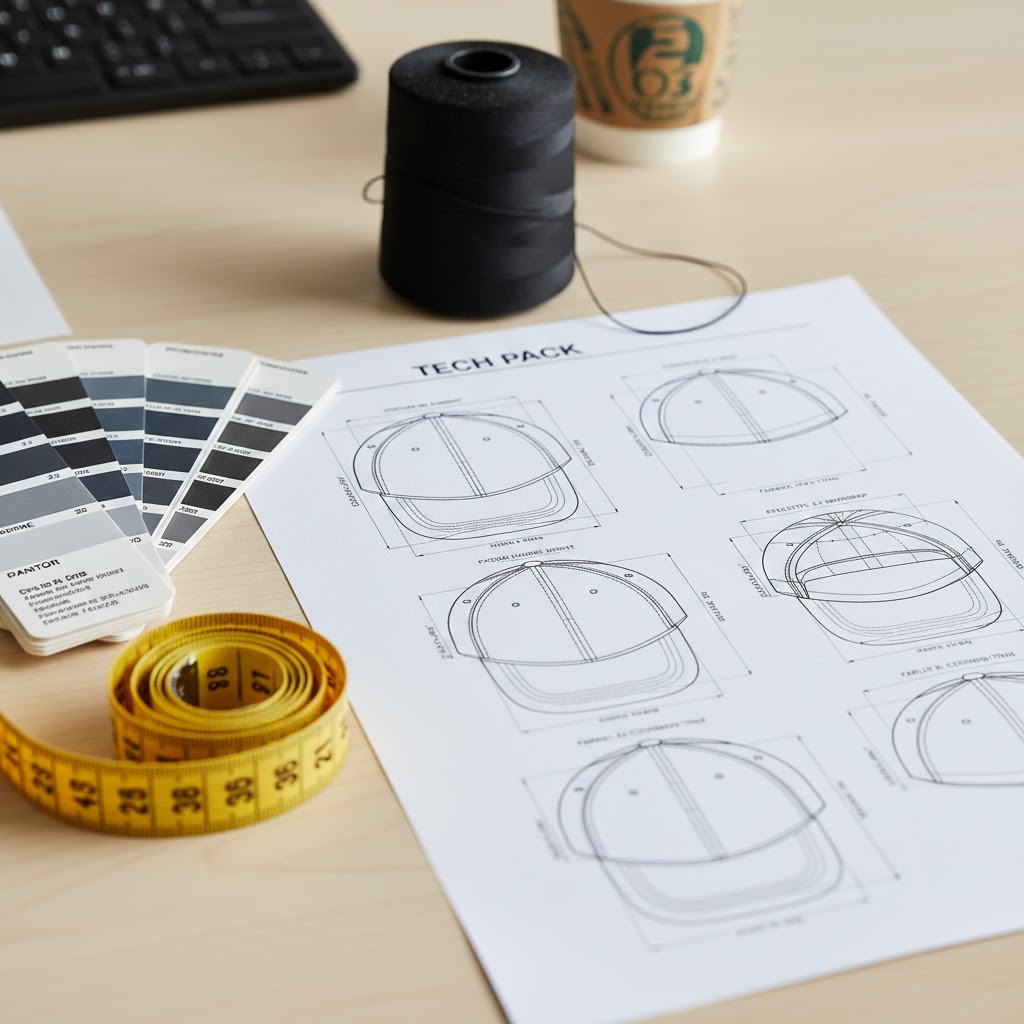
Your success lies in selecting the right manufacturing partners and using professional “Tech Packs” to define every measurement. Never skip the pre-production sample phase—this is your final chance to catch errors before mass production starts.
Sourcing the Right Factory Partner
Not all factories are created equal. Some are great at making 50 hats but may not be able to handle a larger order of 5,000. Others may only work with high-volume orders of 10,000 or more. As a U.S.-based company, you need a factory partner that can offer flexible manufacturing options and grow with your brand.
Our factory in China is equipped with specialized machinery and quality control teams to meet your needs. Whether you’re working with small embroidery shops locally or scaling your operation globally, we provide a seamless supply chain solution. We focus on ensuring your 5,000th hat looks exactly like your first one.
A “Tech Pack” is crucial in this process. Think of it as a blueprint for your hat—it should include fabric specifications, stitch count, Pantone color codes, and logo dimensions. Without a clear Tech Pack, both you and the factory are guessing, which can lead to costly mistakes.
Sampling: The “Measure Twice, Cut Once” Rule
The biggest mistake I see brands make is rushing the sampling process. They approve a sample too quickly, only to find that 5,000 hats arrive with errors. You must insist on a Pre-Production Sample (PPS). This sample is made using the exact materials and equipment that will be used for the full order. It serves as your “Golden Sample.” Once you approve it, the factory is legally and professionally bound to match that quality.
If a sample doesn’t meet expectations, be specific about the issues. Use photos and arrows to highlight what’s wrong—whether it’s too thin embroidery or a too-high crown. Clear, technical feedback will ensure the factory respects you as a professional buyer and minimizes “lost in translation” errors.
Step-By-Step Guide to Sampling
| Step | Action | Why it Matters |
|---|---|---|
| 1. Tech Pack | Create a 2D/3D blueprint | Eliminates guesswork for the factory |
| 2. Prototype | Order first rough sample | Tests the basic shape and fit |
| 3. Revision | Provide feedback and adjustments | Fixes aesthetic or technical errors |
| 4. PPS | Final production sample | Sets the standard for the bulk order |
How to Manage Logistics Without the Stress?
Storing 5,000 hats in your living room isn’t feasible, and shipping them one by one is incredibly time-consuming. As you scale, your physical infrastructure becomes the biggest bottleneck.
Transitioning to a Third-Party Logistics (3PL) provider is key. A 3PL company can handle storage and shipping, allowing you to focus on growing your brand rather than fulfilling individual orders. They also provide data-driven inventory management, tracking “lead times” to ensure you order your next batch well before your current stock runs out.
The 3PL Leap
When you’re shipping 25 hats, it’s manageable to go to the post office yourself. But when you’re shipping 5,000, a warehouse is a must. A 3PL is a company that stores your hats and ships them automatically whenever a customer places an order from your website. They integrate directly with your online store, so you never have to touch a box. This streamlined process not only improves your shipping times but also reduces the strain on your physical space.
Integrating your online store with a 3PL dashboard gives you real-time data, which allows you to track which styles are selling fastest and which ones are sitting on the shelf. This is vital for B2B buyers, especially when they need to report turnover rates. If you want to scale successfully, you need to stop thinking like a “shipper” and start thinking like a “CEO.”
Inventory Management 101
Inventory is just cash sitting on a shelf. If you have too much, your cash is tied up. If you have too little, you risk losing sales. You need to understand the Lead Time Equation. For example, if it takes 60 days to produce hats and 30 days to ship them, you need to place your order at least 90 days before running out of stock. Many brands forget this, leading to stockouts that kill their momentum.
Logistics Component
| Feature | Self-Fulfillment | 3PL Partner |
|---|---|---|
| Storage Cost | Free (but limited space) | Monthly pallet fee |
| Shipping Speed | Slow (depends on you) | Fast (same-day processing) |
| Scalability | Very Low | High |
| Labor | Your personal time | Professional warehouse staff |
How to Scale Your Marketing for Large Volume?
Buying 5,000 hats is a huge risk if you don’t have customers ready to buy them. Traditional marketing often fails at this scale because you need a high “velocity” of sales to keep your cash flowing.
Use a “Drop” strategy to create urgency and build a VIP early-access list to move 30% of your stock on the first day. Combine this with User-Generated Content (UGC) from your early customers to build social proof for a larger audience.
Building “Hype” via Pre-Orders and Drops
The best way to sell 5,000 hats is to make people feel like they might miss out. Instead of just listing them on your site, create a launch event. Use a countdown timer, email teasers, and let your audience know exactly when the hats will be available. This surge of interest can help you sell a significant portion of your inventory in just a few hours, providing a cash influx to support your growth.
Creating a VIP list for repeat customers or email subscribers is another great tactic. Let them access the hats one hour before the general public. This rewards your loyal customers and ensures social proof (like “Sold Out” tags on popular colors) before the rest of your audience even sees the collection.
Leveraging User-Generated Content (UGC)
You don’t need a million-dollar photoshoot to sell 5,000 hats—you need 5,000 photos of real people wearing them. Ask for permission to use their photos when your first customers post pictures on Instagram. Real people wearing your hats boosts trust and feels more authentic than a professional model in a studio.
The “Unboxing Experience” is another marketing tool. If your hats arrive in a beautifully branded bag with a thank-you note, customers are more likely to film an unboxing video, providing you with free advertising. Even as you scale, keep that personal touch with sustainable, premium packaging that reflects the quality of your hats.
How to Avoid the Most Common Scaling Pitfalls?
Many brands grow too fast and lose quality or run out of money by over-investing in the wrong stock. These mistakes can end a business, even if the sales numbers look good on paper.
Prevent Quality Fade by hiring third-party inspectors to check the factory before shipping. Protect your cash flow by using smart financing, rather than spending every cent of your profit on a single massive production run.
| Risk Factor | Impact | Mitigation Strategy |
|---|---|---|
| Quality Fade | Customers return products or leave bad reviews | Independent 3rd-party inspections |
| Cash Crunch | Cannot pay for ads or shipping | Use credit lines or staggered payments |
| Overstock | Cash is trapped in slow-moving items | Use data to pick “winning” styles only |
| Shipping Delays | Missed launch dates or angry customers | Add a 2-week buffer to all timelines |
Conclusion
Scaling from 25 to 5,000 hats is a journey of professionalization. By focusing on the right factory partnerships, efficient 3PL logistics, and smart inventory management, your brand can grow profitably and sustainably.
FAQ
1. How do I choose the right factory for large orders?
When selecting a factory, make sure it can handle large-scale production. Check if they have specialized equipment, a robust quality control team, and experience producing your specific product. It’s also essential to create a detailed Tech Pack and request a Pre-Production Sample (PPS) to ensure your factory can meet your standards before mass production begins.
2. What is a Pre-Production Sample (PPS), and why is it so important?
A Pre-Production Sample (PPS) is a sample produced using the same materials and equipment that will be used for the bulk order. It’s your “Golden Sample.” Approving the PPS ensures the final product matches your expectations. Skipping this step can result in costly mistakes once production starts, so it’s crucial to insist on this before moving forward with a full order.
3. Why should I use a Third-Party Logistics (3PL) provider instead of handling logistics myself?
As your business scales, fulfilling orders by yourself becomes increasingly impractical. A 3PL handles warehousing and shipping, allowing you to focus on growing your brand while they handle the logistics. Using a 3PL provider also improves shipping speed, offers real-time data on inventory, and ensures better customer satisfaction with faster deliveries.
4. How do I prevent “Quality Fade”?
“Quality Fade” occurs when a manufacturer cuts corners on materials or quality after the initial few orders. To prevent this, always use independent third-party inspectors to verify that your factory is meeting quality standards. If defects are found, the factory must address them before you make the final payment, ensuring consistency across production runs.
5. How do I balance inventory levels to avoid overstock or stockouts?
Accurate inventory management is key. Use data-driven tools to track which products are selling the fastest and adjust your orders accordingly. Make sure to factor in lead times—production and shipping times—so you can place your next order well before your stock runs out. This proactive approach helps you maintain healthy inventory levels without tying up cash in excess stock.
6. What should I do if I run out of stock?
Running out of stock can be damaging to your business, both financially and in terms of customer loyalty. Always plan ahead by monitoring inventory levels and forecasting demand. If you do run out, communicate transparently with customers about restock timelines and offer them incentives to come back once new stock is available.
7. How can I make sure my factory will meet my quality standards over time?
You should establish a strong partnership with your factory and use third-party inspections regularly to ensure that quality is maintained throughout the production process. By keeping open communication and making quality checks a routine part of your process, you help prevent issues down the line.