
Introduction
Does Your Headwear Vendor Master the Science of the Perfect Vintage Fade?
Are you struggling with inconsistent “vintage” finishes that look more like manufacturing defects than premium styling? For high-volume buyers, the gap between a “stiff, cheap cap” and a “luxury distressed piece” lies entirely in the mastery of the garment wash process.
Achieving the perfect vintage fade for vintage washed caps is a precise chemical and mechanical calibration. It involves controlled fiber erosion through enzyme baths and stone abrasion to ensure every batch meets your brand’s specific “lived-in” aesthetic without compromising fabric strength.
Navigating the complexities of textile finishing can be the difference between a product that sits on the shelf and a best-seller. In this guide, I will take you inside our factory’s washing lab to show you how we use science to guarantee consistency in every bulk order. If you want to see our technical capabilities in action, explore our advanced headwear manufacturing process to see how we handle high-capacity washing.
Why the Right Wash Process is the Key to Your Product’s Market Value?
For B2B buyers, the “feel” of a fabric is just as important as the fit. If you are sourcing for a premium brand, you know that a standard cap often feels too aggressive or “raw.” The secret to transforming basic heavy twill into a retail-ready masterpiece lies in the transition from basic garment washing to specialized enzyme treatments.
A garment wash process is not just about cleaning; it is about “destressing” the fibers to achieve a specific hand-feel. By utilizing cellulase enzymes in a controlled environment, we can chemically “shave” the micro-fibers of the cotton. This results in a softer touch and a more sophisticated, authentic vintage look that justifies a higher price point for your end consumers.
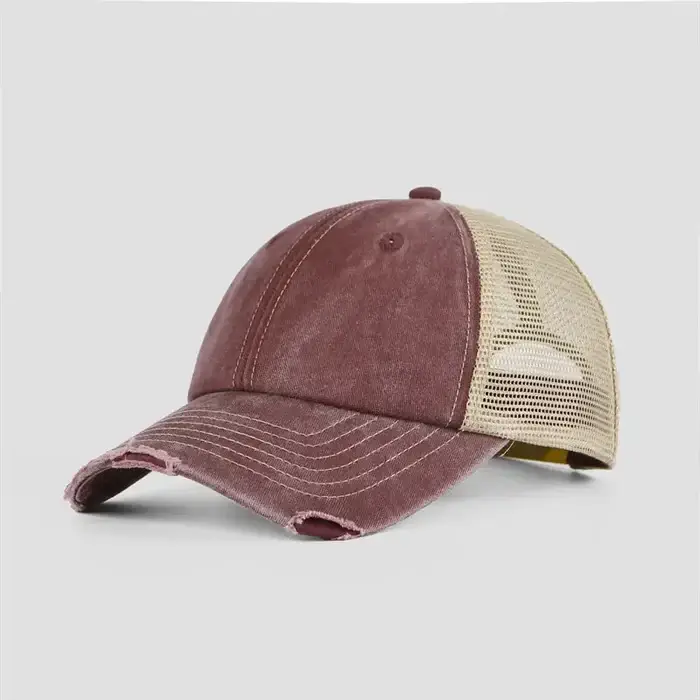
Decoding the Factory Floor: Garment Wash vs. Enzyme Wash
In bulk production, “one size fits all” does not apply to washing. Basic garment washing uses water and softeners to remove shrinkage and slight stiffness. However, if your brand demands a high-contrast look—where the seams are lighter than the panels—we must use Enzyme Washing. The enzymes target the cellulose in the cotton, eating away at the surface dye without the harshness of traditional chemicals. This creates the “high-low” color depth that is essential for high-end vintage washed caps. We manage these variances in our fabric treatment lab to ensure your brand’s DNA is preserved across every SKU.
The Technical Breakdown: Choosing the Right Treatment for Your Order
| Process Type | Primary Benefit | Best For… | Impact on Lead Time |
| Basic Garment Wash | Dimensional stability (no shrinkage) | Corporate promos & basic merch | Fast (1-2 days) |
| Enzyme Wash | Superior softness & “peach skin” feel | Boutique retail & high-end streetwear | Moderate (3-4 days) |
| Stone + Enzyme | Extreme vintage look & heavy abrasion | Heritage brands & rugged outdoor style | Long (5+ days) |
When you are planning your next seasonal drop, choosing the right wash is a strategic financial decision. While an enzyme wash adds a small cost per unit, the increase in perceived value often allows for a significantly higher retail margin. If you’re unsure which process fits your target price point, you can look at our customization options to compare different finishes we have produced for international brands.
How Does the Physics of Brushing Create That Premium “Sueded” Texture?
For bulk buyers, the most common frustration is receiving a product that looks right but feels “thin” or “scratchy.” When your customers pick up a hat in a retail environment, the tactile experience is what closes the sale. This is where Brushing (also known as Sueding or Emerizing) becomes your brand’s secret weapon.
While washing is a chemical process, brushing is a mechanical one. We use specialized machinery equipped with oscillating abrasive rollers to gently lift the surface fibers of the fabric. For your vintage washed caps, this creates a “peach skin” effect—a microscopic nap that mimics the texture of expensive suede or aged moleskin. This physical modification significantly increases the perceived luxury of the garment without the high cost of premium raw materials.
The Science of Controlled Abrasion: Brushing vs. Sanding
In our factory, we don’t just “rough up” the fabric. We calibrate the tension and grit of the rollers based on the GSM (grams per square meter) of your fabric choice. If the brushing is too aggressive, it weakens the tensile strength, leading to durability issues. If it’s too light, the “vintage” effect is lost after the first wash. By precisely controlling this garment wash process and subsequent brushing, we ensure that the fabric remains durable enough for heavy daily use while feeling incredibly soft from the very first wear. This consistency is vital for maintaining your quality control standards across thousands of units.
Comparative Analysis: Why Brushing Matters for B2B Margins
| Feature | Standard Twill (Unbrushed) | Brushed/Sueded Twill | Buyer Impact |
| Tactile Feel | Crisp, flat, slightly abrasive | Soft, “fuzzy,” warm touch | Higher customer “try-on” conversion |
| Color Depth | Uniform and shiny | Matte and diffused | Hides minor fabric imperfections |
| Insulation | Low | Higher (traps air) | Ideal for Fall/Winter collections |
| Retail Positioning | Budget/Mass Market | Premium/Boutique | Supports 20-30% higher MSRP |
When you source vintage washed caps from us, we often recommend a “Double Finish”—an enzyme wash followed by a light carbon brushing. This combination delivers a product that looks like a 20-year-old thrift find but possesses the structural integrity of a brand-new high-performance accessory. You can see examples of these textured finishes in our materials guide, which helps buyers understand the synergy between fiber and friction.
Why is Precise Temperature Control the Invisible Anchor of Your Sizing Consistency?
One of the most expensive “hidden costs” in B2B apparel procurement is size variance. Nothing damages a retail partnership faster than a shipment of vintage washed caps where a “Large” fits like a “Small” due to uncontrolled shrinkage. In our factory, water temperature isn’t just a setting; it is a critical scientific variable used to “lock” the dimensions of your product.
During the garment wash process, we use the kinetic energy of heated water to deliberately collapse the cotton fibers before they are cut and sewn, or during the final wash stage. This ensures that the residual shrinkage is minimized. When your customers wash their hats at home, the fabric has already reached its “equilibrium state,” meaning no more surprises and far fewer returns for your business.
The Kinetic Energy of Hot Water vs. Cold Water Stability
Thermal energy at $60°C$ or higher serves two purposes: it accelerates dye release for that perfect fade and forces the cotton cellulose to contract. If a factory skips this step to save on energy costs, the product will shrink the first time your end-user gets caught in the rain or washes it. However, we balance this with “Cold Water Preservation” ($20°C$) in the final cycles to rinse away loose particulates and stabilize the pH level. This dual-temperature approach is a cornerstone of our quality control standards, ensuring that the “vintage look” doesn’t come at the cost of a ruined fit.
Buyer’s Checklist: Thermal Processing and Shrinkage Control
| Feature | Low-Temp Wash (Eco-only) | High-Temp Industrial Wash | Value to the Buyer |
| Shrinkage Risk | High (5-8% remaining) | Negligible (<1-2% remaining) | Reliable sizing for bulk inventory |
| Color Fastness | Poor (bleeds later) | High (bleeds are pre-removed) | Protects brand reputation |
| Fiber Density | Loose and thin | Compact and durable | Enhanced premium “hand-feel” |
| Production Cost | Lower | Slightly Higher | Reduced return rates and higher LTV |
By managing the “Shrink-to-Fit” science in-house, we eliminate the guesswork for your design team. Whether you are ordering structured 6-panel caps or relaxed “dad hats,” our temperature-controlled washing ensures that the tech pack measurements you send are the measurements your customers receive. You can learn more about how we maintain these tolerances in our detailed sizing and fit guide.
How Do Detergent Chemistry and pH Balance Protect Your Bulk Investment?
For a procurement manager, “chemical damage” is a silent profit killer. If a factory uses aggressive, high-alkaline detergents to speed up the garment wash process, it can weaken the cotton fibers at a molecular level. This results in “shelf-rot”—garments that look great in the sample room but develop holes or tear easily after only a few weeks in a retail environment.
The science of a perfect vintage fade requires a delicate pH balance. We use neutralized detergent systems and specific surfactants that lift only the surface-level indigo without attacking the core integrity of the yarn. This ensures that your vintage washed caps maintain their rugged, durable feel while exhibiting the soft, faded aesthetic that high-end consumers demand.
The Role of Cellulase and pH Stability
In our facility, we treat the wash bath like a laboratory. If the pH level climbs too high (becoming too alkaline), the cotton fibers swell and become brittle. We utilize bio-engineered cellulase enzymes that operate within a strict “acid-neutral” window. These enzymes literally “digest” the loose micro-fibrils on the fabric surface—the fuzz that makes a hat look “pilled” or cheap—leaving a clean, crisp finish. This level of chemical precision is why our products pass rigorous third-party quality testing for tensile strength and colorfastness.
Chemical Safety and Performance Table: What Buyers Need to Know
| Chemical Agent | Function in Vintage Fading | Risk of Mismanagement | Benefit to Your Brand |
| Neutral Surfactants | Removes oils and loose dye | Excessive stripping (dull color) | Vibrant, “clean” vintage tones |
| Cellulase Enzymes | Removes pilling/fuzz | Fabric thinning (holes) | Premium “peach-skin” texture |
| Organic Acids | Neutralizes pH after wash | Yellowing of white fabrics | Long-term fabric durability |
| Ozone (O3) | Eco-friendly bleaching | None (gas-based) | Sustainable “eco-vintage” marketing |
Sustainability as a Selling Point
Modern American consumers are increasingly focused on the environmental impact of their clothing. Traditional fading often uses thousands of gallons of water and harsh bleaches. To help our B2B clients meet their ESG (Environmental, Social, and Governance) goals, we offer Ozone Laundering. This process uses ozone gas to mimic the bleaching effect of sunlight and water, reducing chemical waste by up to 60%. Incorporating these sustainable methods into your custom headwear orders not only protects the planet but also provides a powerful marketing story for your retail partners.
Conclusion: Is Your Supply Chain Ready for the Science of Vintage Perfection?
Mastering the garment wash process is what separates high-performance retail brands from basic merchandise. By balancing enzyme chemistry, mechanical brushing, and thermal stability, we deliver headwear that drives sell-through and minimizes returns.
Don’t leave your brand’s “touch and feel” to chance. Contact us today to request a technical sample kit and see how our factory’s precision can elevate your next bulk order of vintage washed caps.
FAQ
1. How do you ensure color consistency across a large-scale order of 5,000+ vintage washed caps?
Consistency in vintage fading is achieved through our “Master Batch” protocol. We use computer-controlled industrial washers that regulate the exact stone-to-garment ratio and chemical dosage for every cycle. By monitoring the pH levels and water temperature ($60°C$) in real-time, we ensure that the first cap in the production line looks identical to the last. We also provide TOP (Top of Production) samples for your final approval before the full run is completed.
2. Does the enzyme wash or brushing process significantly weaken the fabric’s durability?
While these processes involve controlled abrasion, we prioritize structural integrity. We adjust the cellulase enzyme concentration and the grit of our brushing rollers based on the fabric’s GSM (weight). This “controlled erosion” removes only the surface fuzz to create a soft hand-feel without compromising the tensile strength. Our washed products regularly pass ASTM and ISO standards for tear resistance and durability.
3. What is the typical lead time impact for adding a “Stone + Enzyme” wash to a bulk order?
Adding a specialized garment wash process usually extends the production timeline by 5 to 7 working days. This allows for the multi-stage washing, pH neutralization, and specialized drying required to prevent fabric distortion. However, this small investment in time significantly increases the retail value and marketability of your headwear collection.
4. Can you achieve a vintage look on synthetic or blended fabrics?
The most authentic vintage fades are achieved on 100% natural cotton because of the “ring dyeing” effect. While we can apply a garment wash to cotton/polyester blends to improve softness and reduce shrinkage, the visual “fade” will be more subtle on the synthetic portions. For high-contrast vintage styles, we always recommend a high-cotton content base (95% or above).
5. How does your factory handle shrinkage issues during the washing process?
We eliminate sizing surprises through industrial pre-shrunk processing. By subjecting the fabric to high-temperature washes and tension-free drying during the production phase, we “lock” the dimensions. This means the 58cm circumference you specify in your tech pack is exactly what your customers will receive, even after multiple home washes.