
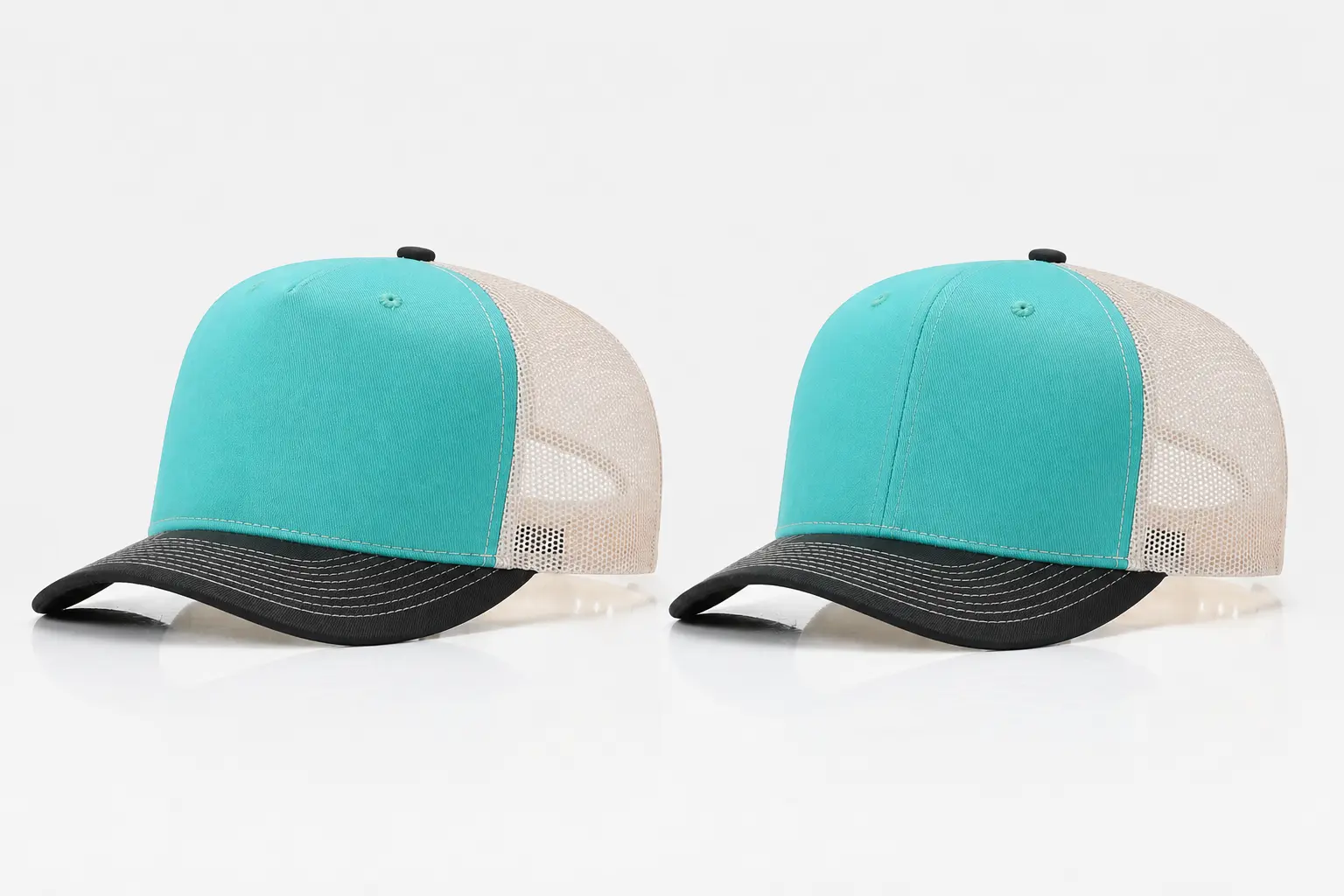
Custom trucker hat embroidery depends on more than the digitized logo. Front-panel material, crown structure, center seams, profile, and the point at which decoration is applied all affect how the artwork sits on the finished hat.
For a full custom program, buyers can choose the hat construction around the branding instead of accepting a finished blank and adapting every logo to it. The goal is not to declare one trucker style “best.” It is to match the front construction, decoration method, and desired fit before sampling.
Start with the finished logo, not a generic trucker hat
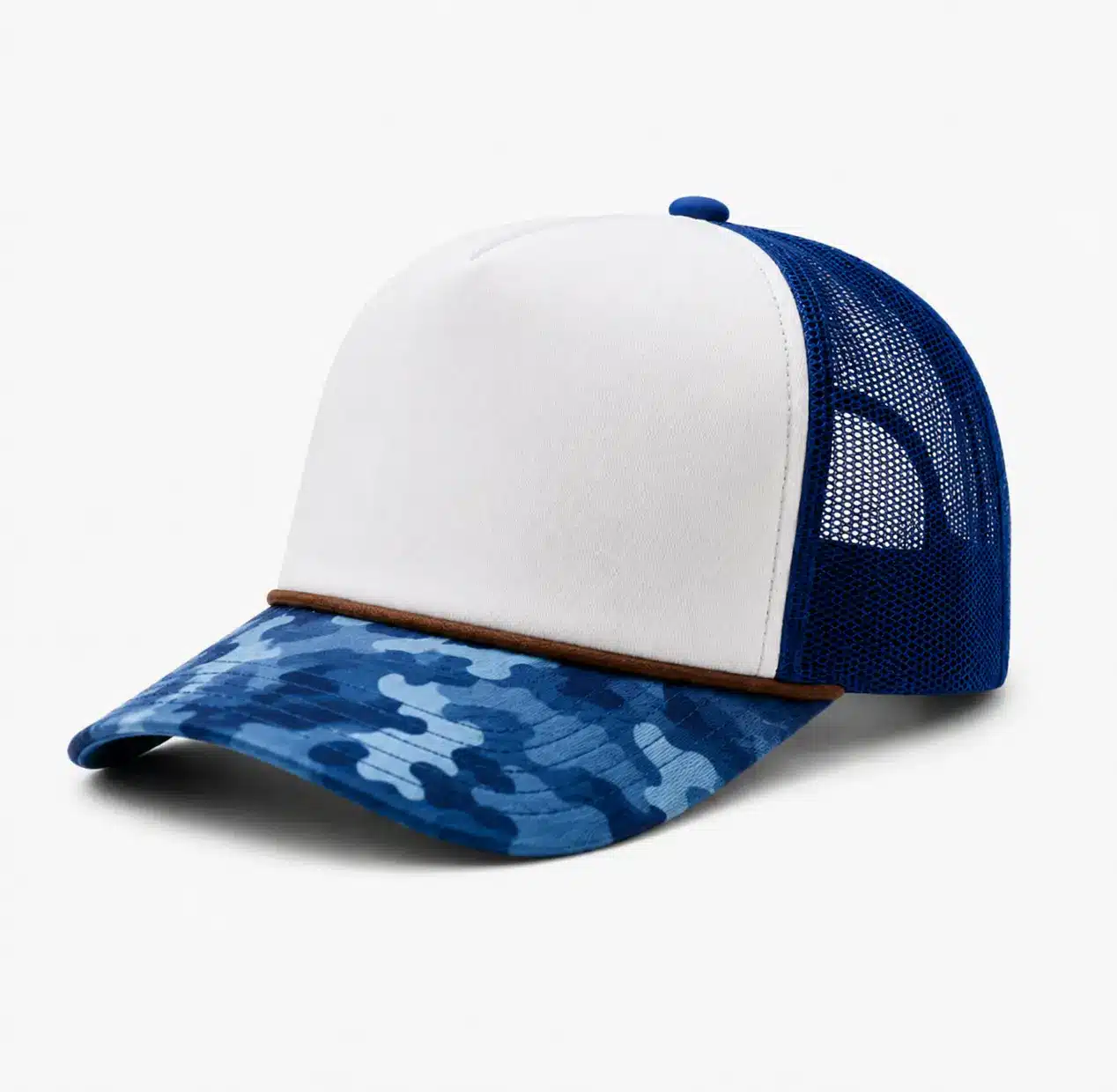
A trucker hat is usually defined by a front section combined with mesh back panels and an adjustable closure, but that description covers many constructions. The front may use foam, twill, canvas, performance fabric, or another material. It may be one broad panel, two front panels, or part of a six-panel crown.
Before selecting the construction, define the artwork:
- finished logo width and height;
- flat embroidery, 3D puff, a patch, or a combined method;
- small text and narrow negative spaces that must remain readable;
- the intended position on the front, side, or back;
- whether the logo may cross a seam;
- the overall brand look: workwear, outdoor, promotional, streetwear, or retail lifestyle.
These choices determine what the crown must support. A wide wordmark, compact badge, and raised 3D design do not need the same front-panel shape.
Foam-front and fabric-front trucker hats behave differently
Foam-front trucker hats provide a broad, continuous display area and a distinctive promotional or retro look. The foam thickness, surface fabric, lamination, and crown shape influence how direct embroidery or an applied patch appears. Dense or highly detailed embroidery can change the way a soft foam front sits, so the complete sample matters more than the material name alone.
Fabric-front trucker hats can use cotton twill, polyester, canvas, ripstop, performance fabric, or other textiles. The panel may include internal support or remain relatively soft. This route offers more control over hand feel and structure, but the buyer still needs to match the material and support to the artwork.
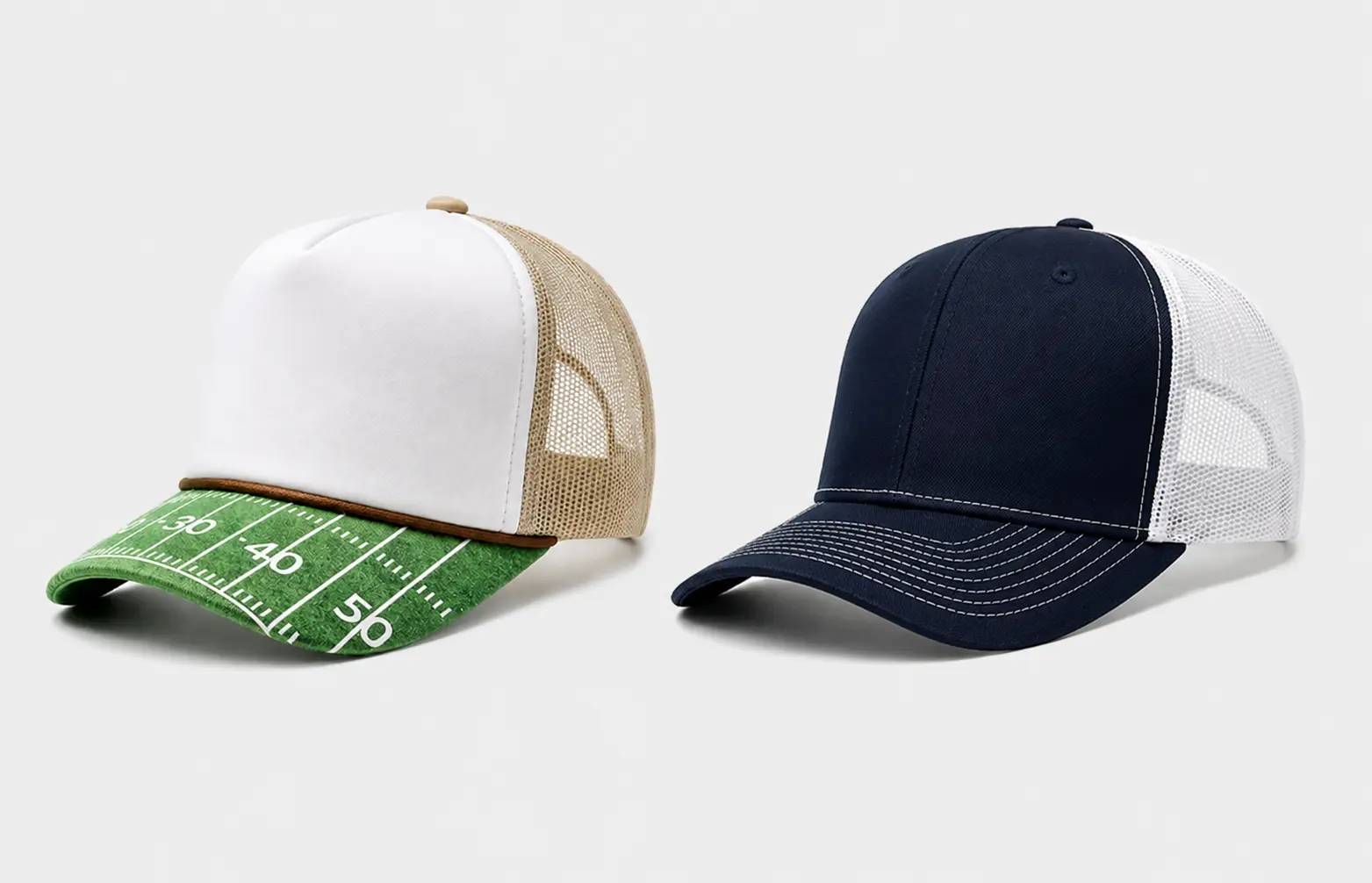
Neither construction is automatically higher quality. The better choice is the one that delivers the planned silhouette, decoration, comfort, and price position.
Five-panel and six-panel fronts change the logo area
A five-panel trucker construction can provide an uninterrupted front area, which is useful for wide artwork or designs that should avoid a center seam. A six-panel construction commonly has a vertical seam at the center front. That seam can become part of the traditional cap look, but it also changes how some artwork should be positioned.
This does not mean embroidery can never cross a center seam. Results depend on the seam bulk, front support, digitizing, artwork, production sequence, and desired finish. Small text or narrow 3D elements may be less forgiving than a bold flat-embroidered shape.
When the logo and crown both matter, compare them together:
| Construction choice | Potential advantage | What to review on the sample |
|---|---|---|
| Five-panel front | Continuous area for wide or centered branding | Panel shape, upper crown angle, logo position, and how the front stands when worn |
| Six-panel front | Classic paneled appearance and familiar fit options | Center-seam effect, logo balance, front symmetry, and stitch behavior near the seam |
| Foam front | Large visual surface and recognizable trucker character | Foam recovery, surface distortion, edge shape, and decoration weight |
| Supported fabric front | Structured retail or workwear appearance | Support stiffness, fabric puckering, crown shape, and wearer comfort |
| Softer fabric front | Relaxed silhouette and softer hand feel | Logo stability, panel collapse, stitch tension, and how the hat fits on the head |
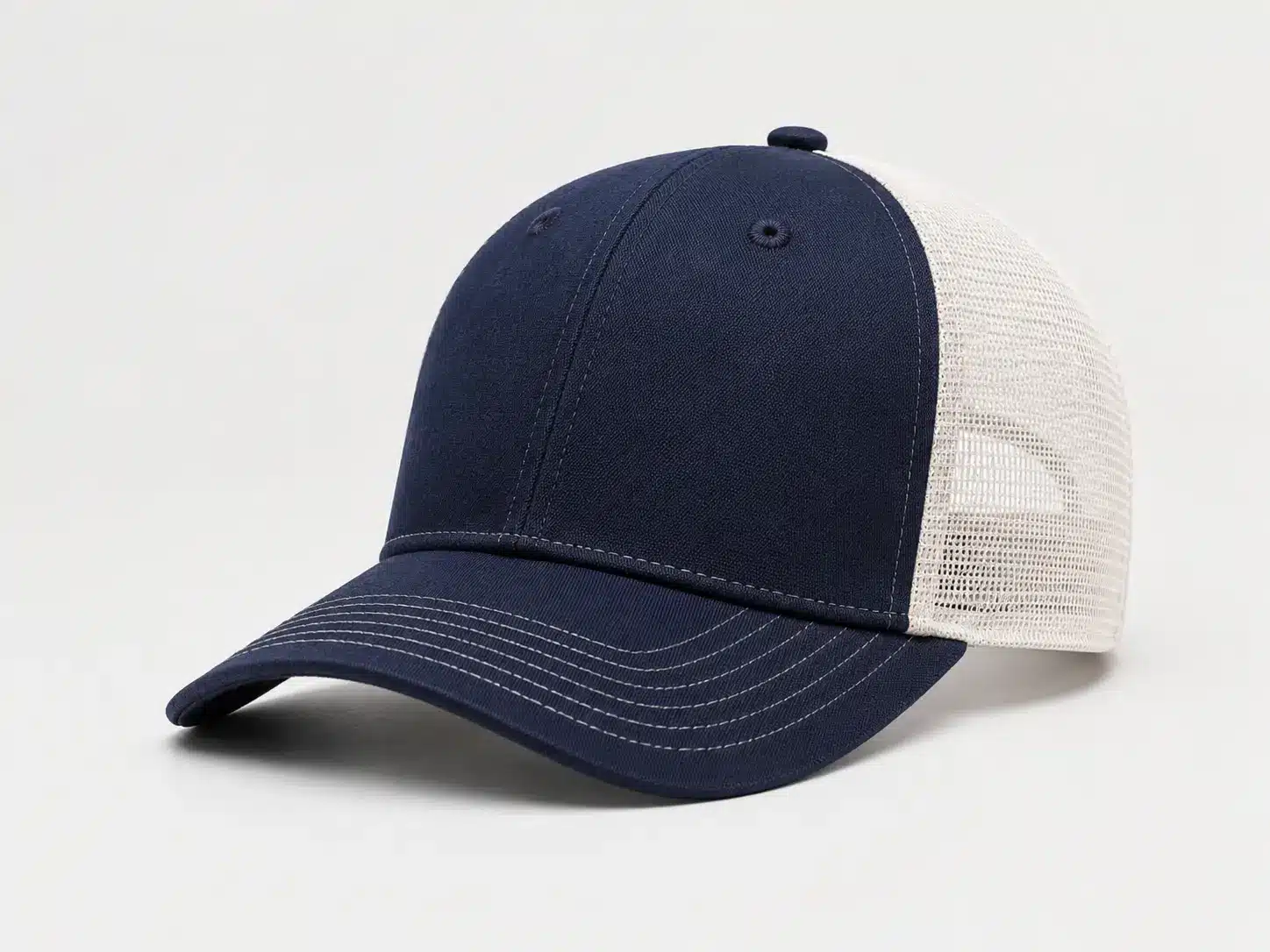
Front support should match the decoration
Internal support helps a trucker crown hold its intended shape, but “more rigid” is not always better. A firm front may suit a tall structured profile, while a softer design may be part of a lifestyle collection. The support must work with the outer fabric, seam construction, decoration, and comfort target.
For direct embroidery, review how the support controls the panel during stitching and how the crown behaves after the machine releases it. For patches, review the attachment method and whether the patch follows the curved surface without lifting or pulling the front out of shape.
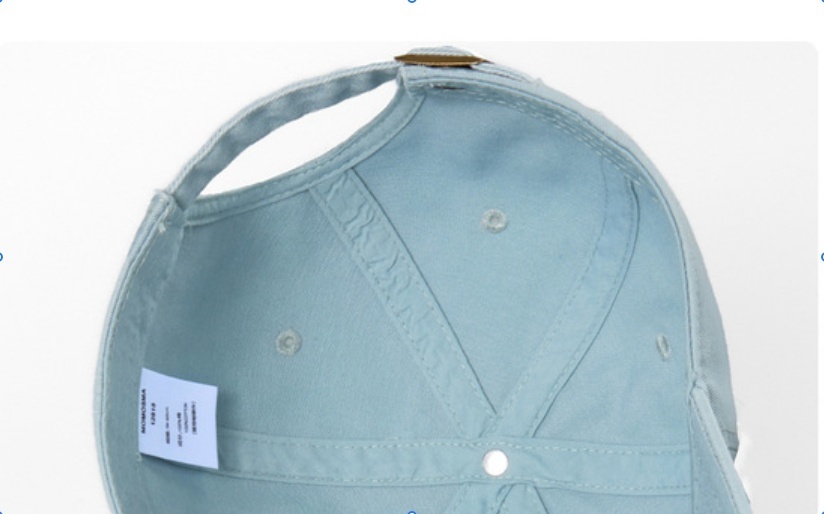
Do not reduce this decision to one fabric weight, stiffness number, or backing formula. Those values only make sense within a defined construction and test sample.
Full custom production changes when embroidery can be applied
An embroidery shop decorating finished caps must work around the assembled crown, visor, seams, and available hooping area. In a full custom manufacturing program, decoration may be applied to a cut panel before the crown is assembled. This can improve access to the decoration area and allow the production sequence to follow the approved design.
Pre-assembly embroidery does not remove every constraint. The team still needs to account for seam allowances, final panel curvature, crown assembly, logo placement after sewing, and the way stitching changes the panel. The sample should show the finished hat, not only an embroidered flat panel.
Some designs may still use decoration after assembly, particularly when the process or placement requires it. The right sequence depends on the hat construction and branding method. Buyers should ask when the decoration is applied and which production reference controls its final position.
Match the embroidery style to the trucker construction
Flat embroidery
Flat embroidery supports text, mixed line weights, and many detailed logos. It can work on both foam and fabric fronts when the digitizing and support suit the construction. Review small lettering, edge definition, fill coverage, and visible puckering on the actual hat.
3D puff embroidery
3D puff is most effective on bold shapes with enough width to cover and define the raised areas. Fine text, sharp internal corners, and narrow gaps may need simplification or a combination of flat and raised stitching. The front panel also needs to support the intended volume without losing its shape.
Embroidered and woven patches
Patches separate the artwork construction from the front fabric and can create a strong badge-like appearance. Embroidered patches emphasize thread texture; woven patches generally reproduce finer graphic detail. Patch dimensions, edge finish, curvature, and attachment method should be reviewed on the selected crown.
Side and back embroidery
Trucker hats often reserve the front for the main logo, but side branding can add another identity point. Placement near mesh, panel seams, or closure openings needs a construction-specific review. The available area varies by crown and panel design.
Our flat embroidery vs 3D puff guide compares the two direct-embroidery effects in more detail. You can also review broader custom hat decoration options.
What to check on the physical sample
A sample should confirm both decoration quality and the complete trucker hat. Review it on a head form or wearer as well as on a table.
- Does the crown have the intended height, angle, and front shape?
- Is the logo visually centered on the finished construction?
- Does the center seam affect lettering, outlines, or raised areas?
- Does the front remain smooth around the embroidered area?
- Are small details readable at normal viewing distance?
- Does the mesh transition cleanly into the fabric or foam front?
- Does the closure provide the intended fit range?
- Are side branding, labels, and interior details positioned correctly?
- Does the visor shape balance the crown and logo?
Record the approved artwork version, logo dimensions, placement reference, front construction, materials, colors, and decoration sequence. Our custom trucker hat sample checklist covers the broader pre-production review.
Questions to include in a trucker hat development brief
- Do you want a foam front or fabric front?
- Should the crown be structured, semi-structured, or relaxed?
- Does the artwork need an uninterrupted front panel?
- Which embroidery or patch method creates the intended look?
- Will decoration happen before or after crown assembly?
- What finished logo dimensions and placement should the sample use?
- Which mesh, closure, visor, sweatband, labels, and interior branding are required?
- Which details must stay consistent in bulk production?
These answers give the development team enough context to propose a coherent product rather than treating the logo, crown, and materials as separate choices.
Plan the trucker hat around the branding
Strong custom trucker hat embroidery comes from matching the artwork with the front-panel construction, support, crown profile, and production sequence. A five-panel front, six-panel crown, foam front, and supported fabric front can all work well when they serve the design and fit target.
Explore our custom trucker hat capabilities or send us your artwork, target style, quantity, and project requirements for a construction review.
Frequently asked questions
Is a five-panel trucker hat always better for embroidery?
No. A five-panel front removes the center seam from the main decoration area, which can help some designs. A six-panel construction may still be the better choice for the intended fit and appearance. Review the actual artwork on the actual crown.
Can 3D puff embroidery cross a trucker hat center seam?
Some bold designs can cross a seam, but the result depends on seam bulk, artwork, digitizing, support, and production method. Narrow raised elements and small details may need another placement or a mixed embroidery approach.
Is foam-front trucker hat embroidery durable?
Durability depends on the foam construction, surface material, digitizing, stitching, use, and care. Test the finished sample rather than assuming every foam front will perform the same way.
Can a full custom factory embroider panels before sewing the hat?
Yes, many full custom projects can decorate cut panels before crown assembly. The team must still plan seam allowances, final curvature, and placement on the finished hat. Confirm the production sequence during development.