
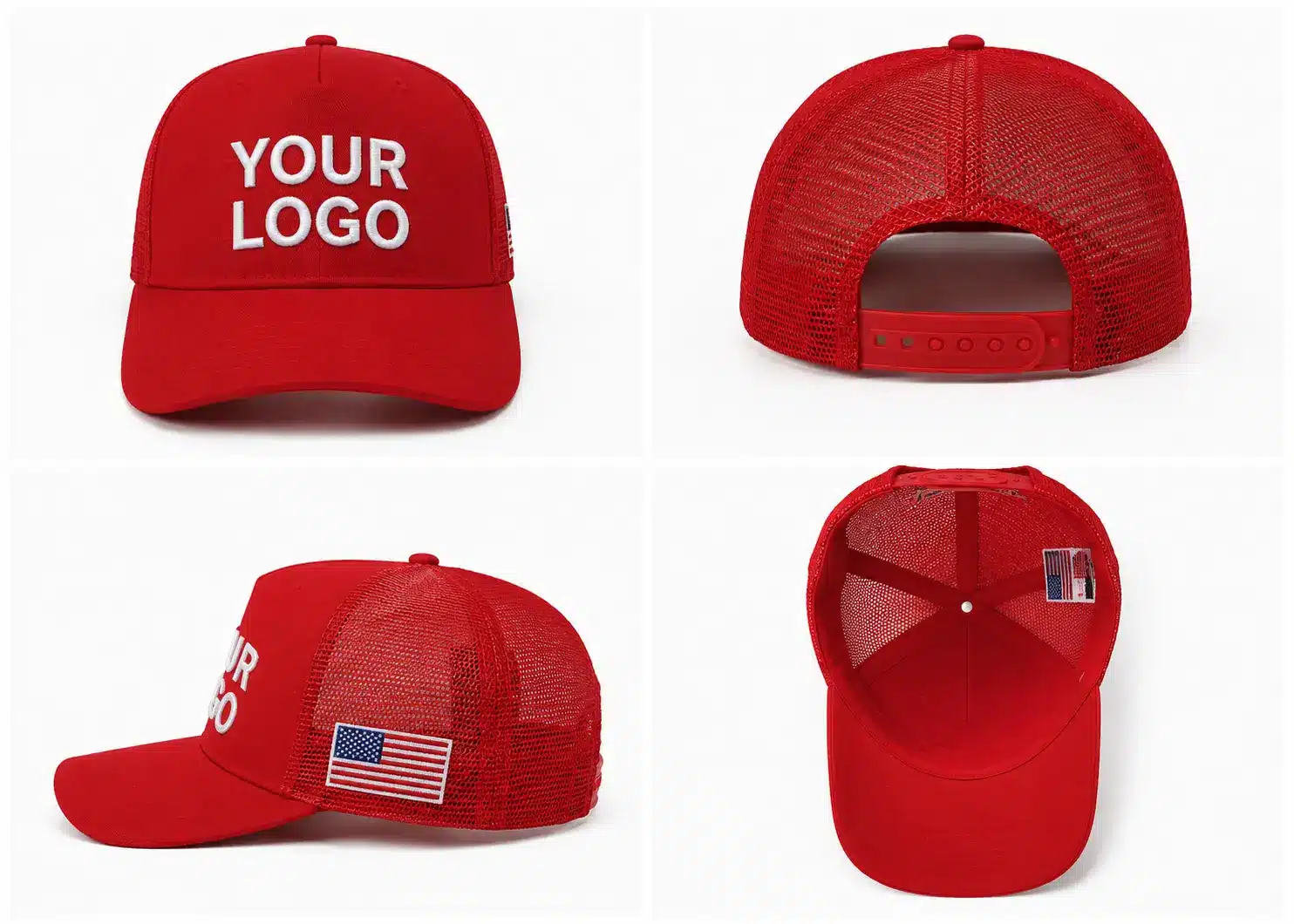
Trucker hat fit cannot be reduced to one circumference or one crown height. Two caps with the same opening measurement can feel different because the crown depth, front-panel angle, mesh tension, sweatband, visor curve and closure all change how the hat sits on the head.
For a full custom program, the practical goal is to define the intended wearer and silhouette, measure an approved reference, and test a physical sample before bulk production. This gives the factory a repeatable fit target without presenting one size as a universal industry standard.
What does trucker hat fit actually include?
Buyers often use “size” and “fit” as if they mean the same thing. Size describes measurable dimensions. Fit describes the combined experience of those dimensions when the cap is worn.
| Fit element | What it changes | What to review |
|---|---|---|
| Opening and circumference | How tightly the cap surrounds the head | Measurement method, sweatband position and closure setting |
| Crown depth | Whether the cap feels shallow, balanced or deep | Side view, top contact and space above the ears |
| Profile and front angle | How tall or forward the crown looks | Front and side silhouette on the intended wearer |
| Front-panel width | Forehead coverage and logo presentation | Panel shape, center seam and pressure points |
| Mesh volume and tension | Rear crown shape and flexibility | Mesh recovery, seams and how the back follows the head |
| Closure and back opening | Adjustment range and pressure at the rear | Comfort across several settings and intended head sizes |
| Visor shape | Balance, field of view and perceived crown proportion | Length, width, curve and position relative to the crown |
| Sweatband | Inside feel and usable opening | Width, thickness, stretch, seams and edge comfort |
A useful trucker hat fit brief therefore describes the whole cap, not only the inside circumference. The same principle applies to other adjustable caps; our custom hat sizing and measurement guide explains how to document measurements for repeat orders.
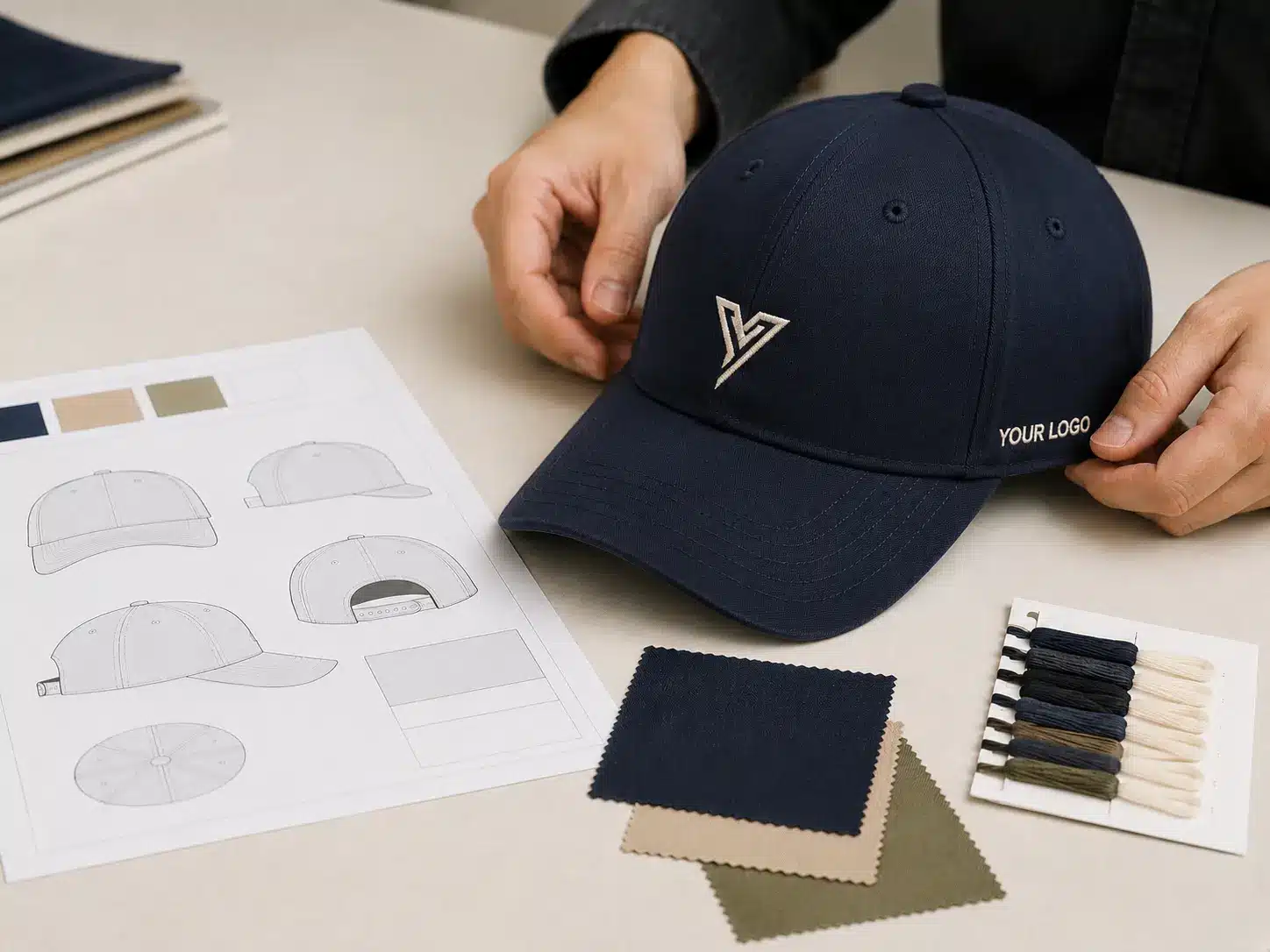
Why one “standard” measurement does not fit every program
An adjustable closure does not make every trucker hat universally suitable. Head shapes vary, and a comfortable fit range depends on more than the length of the closure. A deeper crown can feel loose above the head while the opening feels tight. A shallow crown may technically close around the wearer but sit too high. A thick sweatband can also reduce usable space.
Instead of copying a single number from another product, define the target market and intended look. A workwear program may prefer a stable mid- or high-profile crown. A lifestyle collection may want a softer silhouette. A performance program may prioritize low weight, a secure opening and materials that remain comfortable during movement.
If the brand already has a cap that fits well, send that physical reference and explain what should remain unchanged. If there is no approved reference, select representative wearer profiles and use the first sample to establish the baseline. Measurements support that decision; they do not replace an on-head review.
Start with the target wearer and wearing context
Before drawing the crown, answer a few commercial questions:
- Who is expected to wear the cap: retail customers, employees, event attendees or a specialist outdoor audience?
- Is the intended fit close and secure, relaxed, deep, low-profile or deliberately tall?
- Will the cap be worn for long periods, during movement or mainly as lifestyle merchandise?
- Does the range need one adjustable size, more than one size group, or a separate youth option?
- How should the cap look from the front and side when the closure is near its normal setting?
These answers guide the product brief. They also prevent the factory from making decisions based only on a product photo, which may communicate color and shape but not actual dimensions or wearer expectations.
Use an approved reference cap without copying it blindly
A physical reference is valuable because the development team can examine relationships that are difficult to communicate in isolated numbers. These include how the crown meets the visor, how far the front stands from the forehead, where the side panels sit above the ears and how the back opening behaves at different closure settings.
Mark what you like and what must change. For example, the opening may feel right while the crown is too tall, or the side profile may be suitable while the visor needs a different curve. Treating the reference as a collection of decisions is more useful than asking for an undefined “same fit.”
Specify how each measurement will be taken
A dimension is useful only when both parties measure it the same way. The tech pack should identify the start point, end point, cap condition and closure setting for each measurement. It should also state whether the cap is placed flat, held in shape or measured on a form.
Opening or inside circumference
Record the closure position and the path followed by the tape. The sweatband and back opening affect the result, so “circumference” without a method can lead to different readings.
Crown height and depth
Define the seam or edge used as the lower reference and the crown point used as the upper reference. For a trucker hat, also review the depth from the front to the rear and the way the mesh forms around the head.
Front-panel and side-panel proportions
Panel width and angle affect both fit and visual balance. A wider front can change forehead coverage, while the side-panel geometry influences where the crown sits relative to the ears.
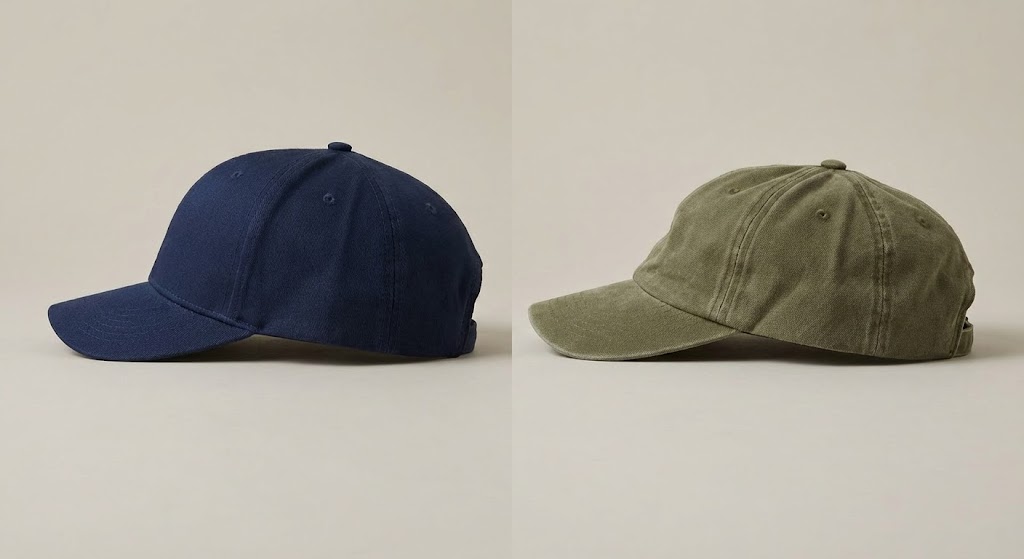
Visor dimensions and curve
The visor changes the apparent size of the crown. Measure its length, width and intended curve, then judge the complete cap in profile rather than approving the visor as a separate component.
For full custom projects, these details belong in the product specification. Our development and production process shows where specifications, samples and approvals fit into the project.
Profile changes how a trucker hat feels and looks
Low, mid and high profile are useful directional terms, but they are not complete specifications. Factories and brands may use the labels differently. The physical result depends on crown height, panel curvature, front support, seam pattern and the position where the crown joins the visor.
A tall front can provide a strong presentation for a patch or bold embroidery, but it may feel too deep for the intended audience. A lower crown can look more understated, yet a design that is too shallow may reduce logo space or sit high on some wearers. The answer should come from the brand brief and sample, not from a universal rule.
Fit and decoration also interact. If the branding changes the stiffness or pull of the front panels, review it on the decorated sample. The separate guide to trucker hat construction and embroidery covers this production relationship in more detail.
Mesh, seams and sweatbands affect comfort
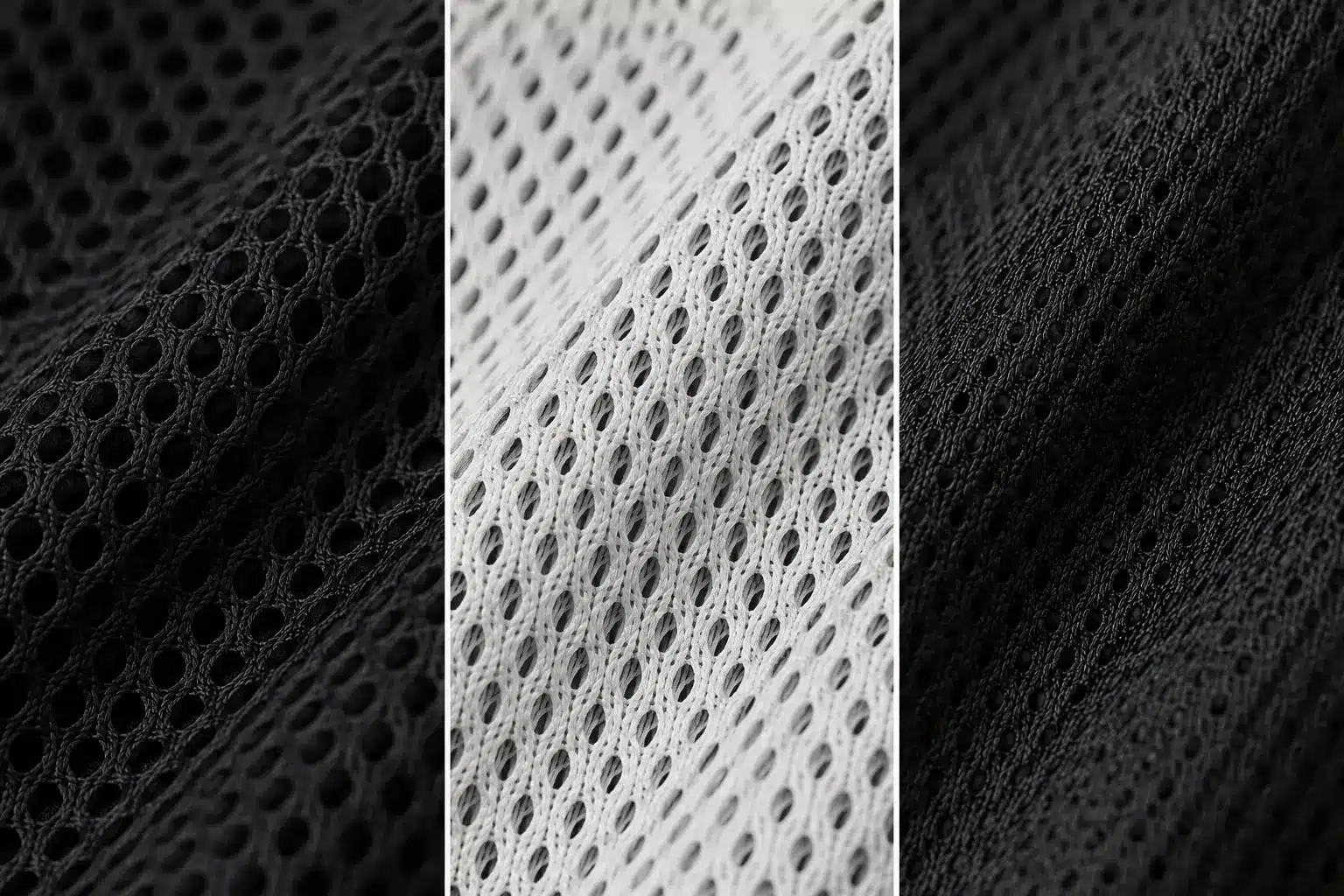
Rear mesh is part of the crown structure. Hole pattern, yarn, hand feel, recovery and panel geometry all influence how it follows the head. A mesh that feels soft in the hand may still create an uncomfortable seam or lose the intended shape after assembly. A firmer mesh may hold the silhouette well but feel different at the edge.
Inspect where the mesh panels meet, how the binding and seam allowances feel inside, and whether the rear crown pulls evenly when the closure is adjusted. Do not judge breathability or comfort from a close-up material photo alone; test the assembled cap.
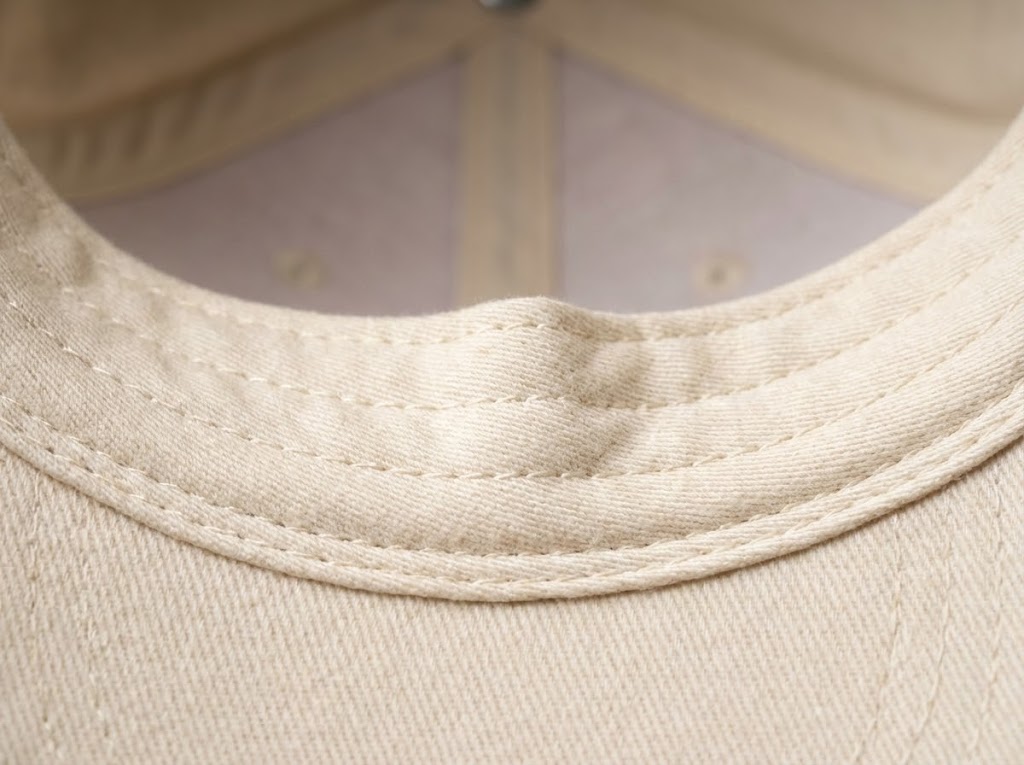
The sweatband is equally important. Its material, width, thickness, elasticity and joining seam affect the usable opening and long-wear comfort. A sweatband change can alter the way an otherwise identical crown feels. Review its inside edge, seam position and interaction with labels before approval.
The closure provides adjustment, not a complete fit solution
Plastic snaps are common on trucker hats, but the number of engaged positions is only one part of the decision. The strap length, hole spacing, back-opening shape and attachment position affect adjustment and rear pressure. A closure may technically fasten across a broad range while looking awkward or feeling uncomfortable at the extremes.
Test the intended closure near the center of its useful range and at the smaller and larger settings expected for the program. Check whether the back opening spreads cleanly, whether the sweatband ends create pressure points, and whether the rear crown keeps a balanced shape. Compare other options in our hat closure types guide.
Approve trucker hat fit on a physical sample
A digital mockup can show color, logo position and general proportions, but it cannot confirm pressure, depth or balance on the head. Fit approval should use a physical sample made with the intended construction, including the planned front support, mesh, sweatband, closure and visor.
- Measure the sample using the documented method and closure setting.
- Compare its front, side, rear and inside views with the approved brief.
- Try it on representative wearers rather than relying on one person.
- Record the closure setting used by each wearer and the reason for any discomfort.
- Check crown depth, ear clearance, forehead pressure, rear pressure and visor balance.
- Review the decorated sample because embroidery or patches can affect the front shape.
- Photograph the approved fit views and update the specification before bulk production.
A simple comment such as “too big” does not tell the developer what to change. Note whether the issue is the opening, crown volume, depth, front angle, mesh tension or closure. Specific feedback shortens the next revision and protects the aspects that already work.
Control fit consistency during bulk production
Once the sample is approved, keep the measurement method, reference images and approved sample together. Bulk checks should compare the same points under the same conditions. Material lots, cutting, panel sewing, sweatband attachment, visor setting and finishing can all influence the final shape.
Not every soft-textile measurement will be identical. The specification should identify which dimensions and visual relationships matter most and define project-specific tolerances with the factory. Those tolerances should reflect the construction and measurement repeatability; they should not be copied from an unrelated cap.
For reorders, preserve the approved specification and sample record. Do not rely only on the previous purchase order number, especially if materials, decoration or factory conditions have changed.
What to include in a trucker hat fit request
- Target wearer, market and wearing context
- Desired profile and front/side silhouette
- Reference cap, wearer photos or clear fit direction
- Opening, crown, panel and visor measurements with methods
- Mesh structure and hand-feel direction
- Sweatband material and comfort requirements
- Closure type and expected useful adjustment range
- Decoration method, dimensions and placement
- Fit-test feedback and approved closure settings
- Approved sample photos and reorder reference
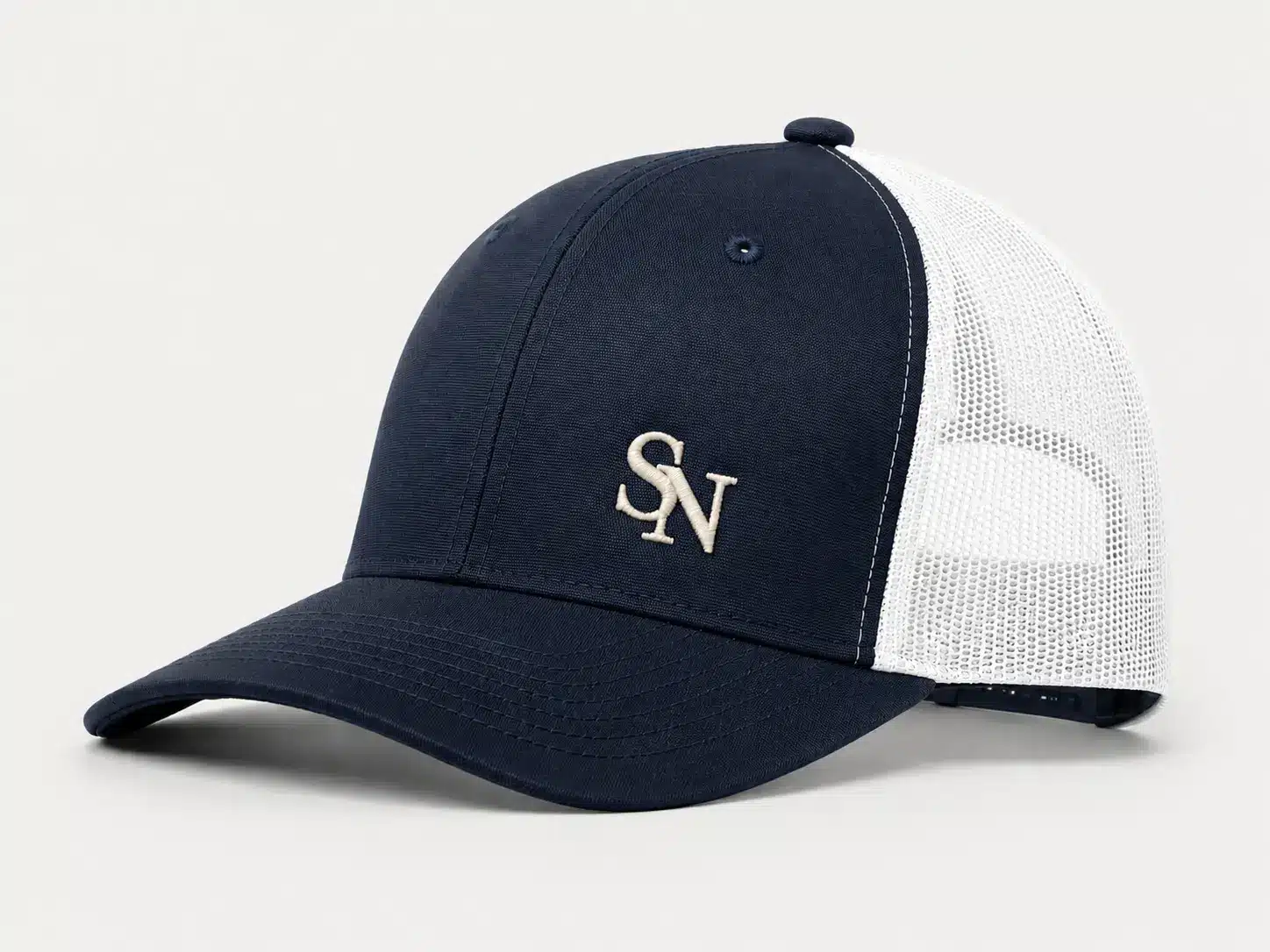
These details allow a custom trucker hat supplier to develop the crown around the wearer and branding rather than guessing from a generic style name.
Frequently asked questions
Is there one standard trucker hat size?
No single measurement guarantees the right fit for every wearer or construction. Define the intended size range, measurement method, crown shape and closure, then approve a physical sample.
Does an adjustable snapback fit everyone?
An adjustable closure increases the usable range, but crown depth, volume, sweatband and back-opening geometry still determine comfort and appearance.
Should buyers approve fit from a digital mockup?
No. A mockup is useful for visual direction, but fit requires an assembled physical sample tested on representative wearers.
What is the most important trucker hat fit measurement?
There is no single decisive measurement. Opening, crown depth, profile, panel geometry, visor and closure must work together. Use the approved reference and project brief to rank what matters most.
Can changing the mesh or sweatband change the fit?
Yes. Mesh recovery and panel behavior affect the rear crown, while sweatband thickness, stretch and seams affect the inside opening and comfort. Recheck the sample when these materials change.
Turn the preferred fit into a production specification
A commercially useful trucker hat is not defined by a universal number. It is defined by a clear wearer target, measurable construction, an approved physical sample and a repeatable bulk inspection method.
If you are developing a full custom trucker hat, share your reference cap, intended wearer, logo and preferred silhouette through our project inquiry form. We can help translate that direction into a sample-ready specification and appropriate customization choices.