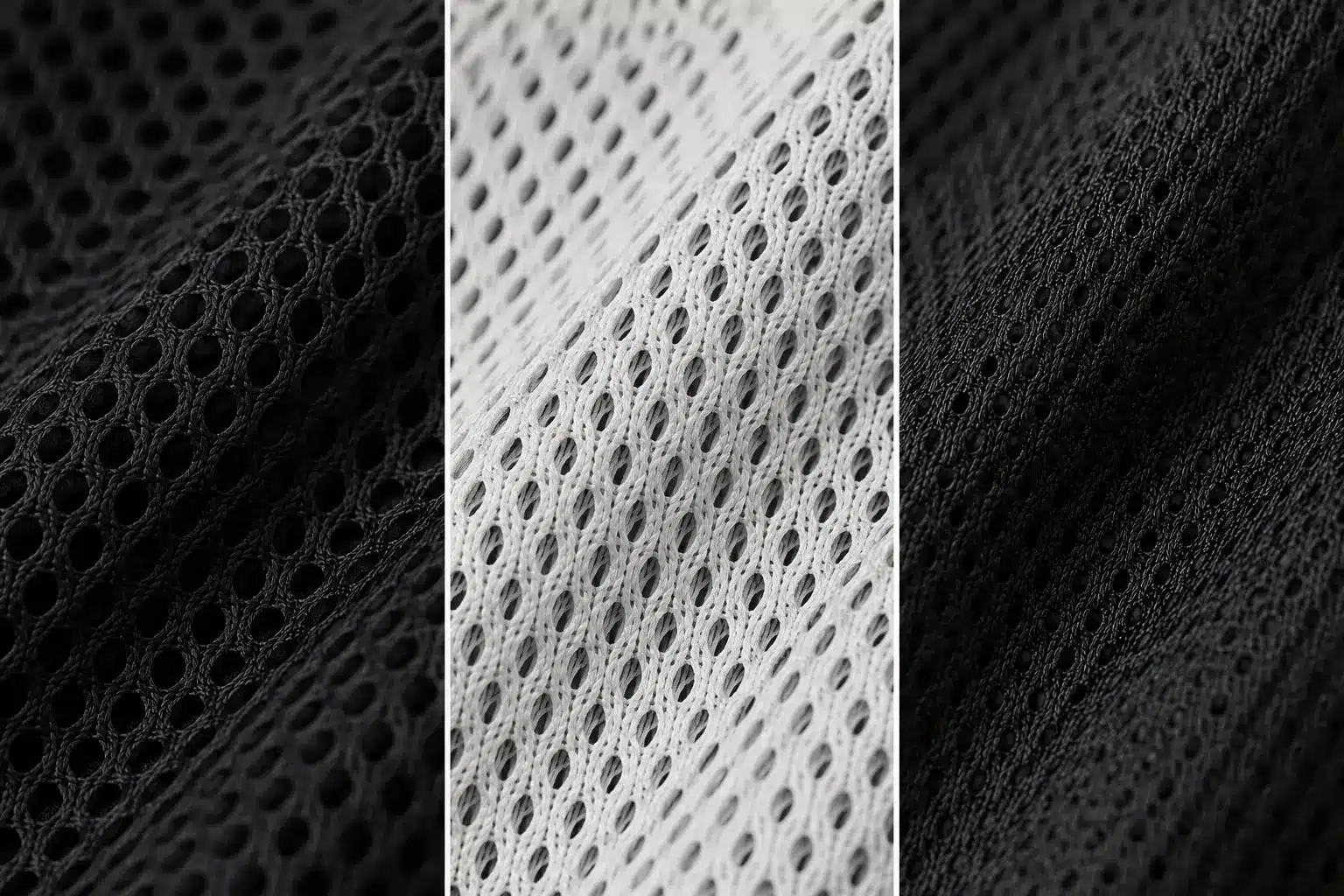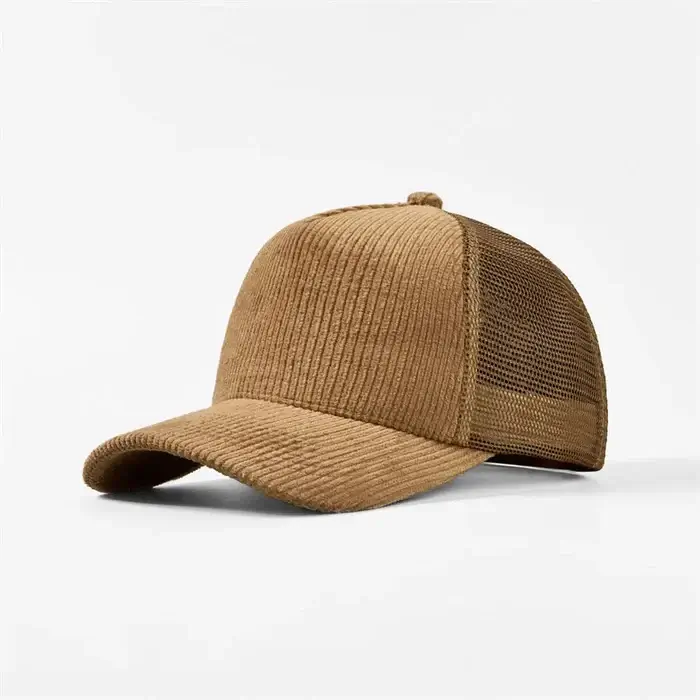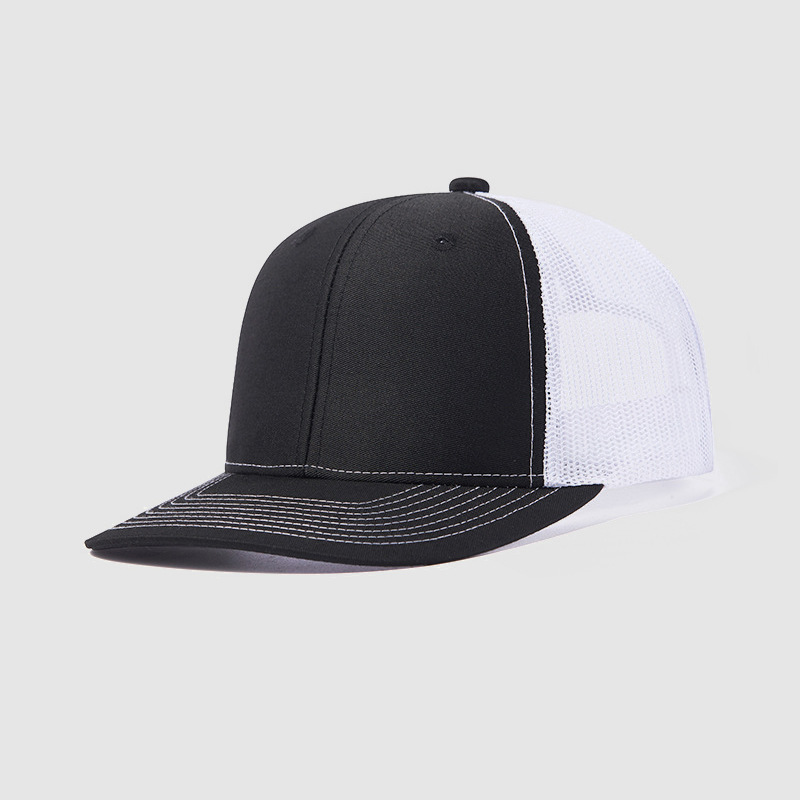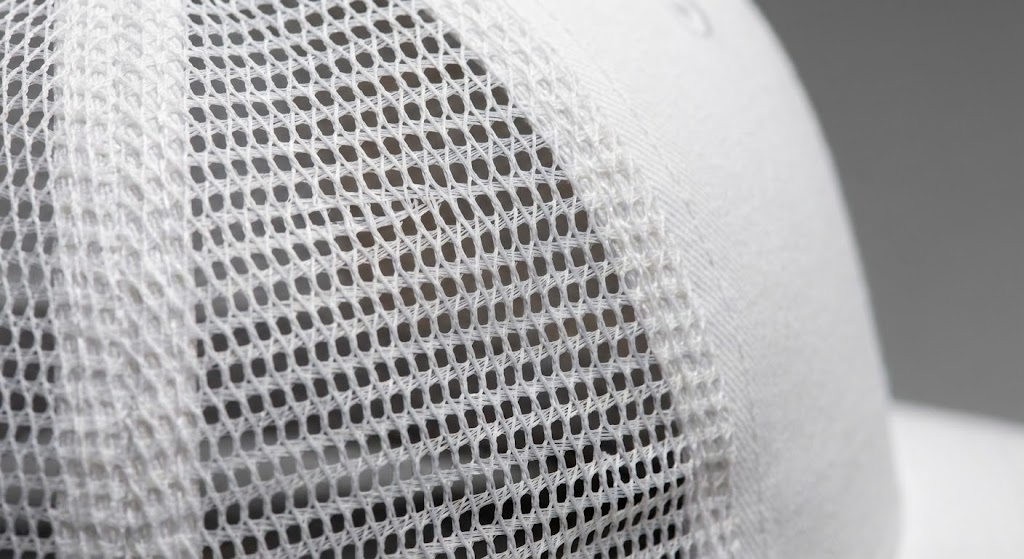
Many procurement managers spend all their time looking at the front panel and the logo. But the mesh back makes up half the hat. If the mesh is bad, the whole hat feels cheap. Choosing the right trucker hat mesh quality is a major business decision. It directly affects your shipping costs, your return rates, and how much customers trust your brand.
Key Takeaways for Buyers:
- Shape Retention: High-quality nylon mesh has better “memory” than cheap polyester, so it stays upright and does not sag after shipping.
- Cost Management: Better mesh reduces customer returns by up to 15% because it prevents the common “itchy scalp” complaint.
- Risk Reduction: Using certified, tested mesh helps you avoid chemical compliance issues like Prop 65 or REACH violations.
We see this mistake every year. A brand orders thousands of hats based on a nice-looking digital mockup. When the hats arrive, the mesh is thin. It feels like rough plastic. After two weeks of wear, the mesh loses its shape and the hat starts to sag. This is not just a small design flaw. It is a failure in procurement. In this guide, we will show you how to audit mesh quality like a pro. We want to help you pick a material that lasts, looks great, and keeps your customers coming back.
1. Why is Mesh Quality a Tier-1 Procurement Risk?
If the mesh is bad, the customer experience is bad. It is that simple. Most buyers think the mesh is just a way to save money on fabric. But cheap mesh creates a lot of hidden problems. First, it feels scratchy on the skin. If a customer puts on a hat and feels sharp plastic edges, they will return it. Second, cheap mesh gets permanent creases. We call this “mesh memory loss.” If the hats are packed tightly in a shipping container, poor mesh will stay flattened. You cannot steam these creases out.
We have managed supply chains for 15 years. We know that many factories use a heavy chemical starch to make thin mesh feel thick. When you get the sample, it feels stiff and strong. But this is a trap. After a few days of sun and sweat, the starch breaks down. The mesh becomes limp. The hat then loses its structural support. This leads to a “collapsed crown.” When the crown collapses, your brand logo looks crooked and wrinkled. This ruins the look of the product on the shelf.
You also have to think about the return rates in e-commerce. Most returns happen because the product feels “cheaper than the photo.” Low-quality polyester mesh is the main reason for this. It looks shiny and plastic-like under studio lights. High-quality nylon mesh has a matte finish. It looks like a premium retail product. We always tell our B2B clients to look at the “total cost of ownership.” You might save ten cents per hat on cheap mesh. But you will lose two dollars per hat on returns and bad reviews.
We help our clients set a “Golden Sample” standard. This means we test the mesh for “snap-back” ability before we start the big production run. We pull the mesh hard to see if it returns to its flat shape. If it stays wavy, we reject the batch. This saves our clients from the nightmare of receiving 5,000 defective hats. You need a partner who looks at the back of the hat just as closely as the front. If you want to see what retail-grade mesh feels like, you should reach out to us for a physical sample kit.
2. What is the Technical Difference Between Nylon and Polyester?
When we talk about material choice, we are talking about how the hat performs over time. Most factories will offer you polyester mesh because it is the cheapest option. It works for low-end giveaways. But if you are building a premium brand, you need to understand the fibers. We usually categorize mesh into nylon monofilament and polyester. They look the same from five feet away, but they act very differently when a customer actually wears the hat.
The main issue with polyester is that it is a very stiff, brittle fiber. To make it comfortable, factories have to weave it loosely, which makes it feel flimsy. Nylon is naturally more flexible and strong. It has what we call “high tensile strength.” This means it can take a lot of tension without snapping or stretching out of shape. Because nylon is a more “elastic” polymer, it contours to the shape of the wearer’s head much better than polyester does.
| Feature | Premium Nylon Mesh | Standard Polyester Mesh |
| Fiber Feel | Soft, cloth-like touch | Hard, plastic-like touch |
| Elastic Recovery | High (returns to shape) | Low (stays stretched) |
| Durability | Resists cracking and UV | Becomes brittle in sun |
| Best Use | Retail, high-end brands | Giveaways, one-time events |
We also look at the “denier” of the mesh. Denier is just a word for the thickness of the individual threads. Many cheap hats use a 100D or 120D polyester. It feels thin and you can almost see through it too easily. We prefer to use 150D to 180D nylon. It has a “dense” look that feels expensive. And because it is nylon, it does not trap heat as much as polyester. It allows air to move through the holes better because the threads are smoother.
Another thing we check is the melting point and dye stability. Polyester mesh can sometimes “bleed” its color onto the white front panel if it gets too hot during shipping in a metal container. Nylon holds dye much better. We use a specific heat-test to make sure the black mesh will not turn your white front panels grey during the summer. If your current supplier is not talking about fiber types and denier counts, they are likely just buying the cheapest stock available. We believe you should know exactly what goes into your product before you pay for it.
3. How Does Mesh Impact the “Collapsed Crown” Problem?
A trucker hat needs a clean, tall profile to look professional. When the front of the hat caves in, it looks like a cheap rag. Many buyers blame the buckram—the stiff mesh inside the front panels—for this problem. But they are missing half the science. The mesh back acts as the tension system for the whole hat. If the mesh is too weak or too light, it cannot pull the front panels back. This causes the crown to sag and lose its shape.
We always check the GSM (Grams per Square Meter) of the mesh. This is a simple way to measure how much material is actually in the weave. Cheap mesh usually falls below 150 GSM. It is too thin to provide structural support. We aim for a higher weight that feels substantial but still stays breathable. When you use a heavier mesh, it acts like a backbone. It keeps the front panels pushed forward so your branding always stays visible.
There is also a big risk in how the mesh is sewn to the front. We have seen many factories cut corners here to save time. They might use a simple 4-thread stitch to join the mesh to the cotton front. This is a bad idea because mesh is mostly holes. A 4-thread stitch does not have enough surface area to grab the plastic fibers tightly. Over time, the mesh will start to pull away from the seam. We prefer a reinforced 5-thread overlock. It costs a tiny bit more in thread and labor, but it prevents the hat from falling apart after a few months of use.
You also need to think about dimensional stability. This is just a technical way of saying “how much it shrinks.” If you use a cheap polyester mesh with a heavy cotton front, they will react differently to moisture. If the customer gets caught in the rain, the cotton might shrink while the plastic mesh stays the same size. This creates ugly puckering and waves along the seam line. We solve this by matching the tension and quality of the mesh to the front panel fabric. This balance ensures the hat stays symmetrical and upright for its entire life. If your hats look “tired” after a few weeks, the mesh tension is likely the culprit.
4. How Can You Audit Mesh Quality in 5 Steps?
You do not need a fancy laboratory to spot a bad batch of mesh. You just need a consistent inspection process. Most procurement managers only look at the color of the mesh. But color is the easy part. You need to test the physical integrity of the material before it leaves the factory floor. We use five simple steps to make sure the mesh meets our standards every single time.
First, we do the “Transparency Test.” Hold the mesh up to a strong light. You are looking for uneven gaps or “streaks” in the weave. If the light passes through unevenly, it means the knitting machine had bad tension. This creates weak spots where the mesh will eventually tear. Second, we use the “Stretch and Snap” test. Pull the mesh firmly in both directions. It should resist your pull and snap back to its original shape instantly. If it stays wavy or loose after you pull it, it will sag on your customer’s head.
- Transparency Check: Look for consistent hole size and weave density under light.
- Recovery Test: Pull and release to see if the mesh retains its flat profile.
- The Scratch Test: Run your hand over the inside of the mesh to check for sharp plastic burrs.
- The Snag Test: Use a small tool or fingernail to see if the threads pull out easily.
- Colorfastness: Rub a wet white cloth on the mesh to check for dye transfer.
The “Scratch Test” is the most important for customer experience. Cheap mesh is often cut with dull blades, or the plastic is too brittle. This leaves sharp, needle-like edges where the mesh meets the sweatband. If a customer feels that scratching their forehead, they will never wear the hat again. We also check for “snags.” High-quality mesh uses smooth monofilament that does not catch on hair or clothing. Finally, we rub a damp cloth on the mesh to check the dye. If the cloth turns black or blue, that dye will end up on your customer’s face when they sweat. We catch these problems during the QA phase so you don’t have to deal with them after the sale.
5. What are the Compliance Risks in Synthetic Fibers?
Synthetic mesh is essentially a plastic product. Because it is made from petroleum-based polymers, it can carry hidden chemical risks. Many buyers do not realize that the mesh on a hat is subject to strict safety laws. If you sell products in the United States, especially in California, you must worry about Prop 65. This law limits harmful substances like lead and phthalates. If your mesh supplier uses cheap stabilizers to keep the plastic from breaking down, they might be using banned chemicals.
We take compliance very seriously because a legal fine can wipe out your entire profit margin. Some low-cost dye houses use Azo dyes to get bright colors. These dyes are banned in many countries because they can be absorbed through the skin and are linked to health issues. We always ask our material partners for an MSDS (Material Safety Data Sheet). This document shows us exactly what chemicals were used during the knitting and dyeing process. If a factory cannot provide this, it is a sign that they are not monitoring their Tier-2 suppliers.
Another big topic today is sustainability. Many brands want to use recycled polyester (rPET) to meet their ESG goals. But there is a lot of fraud in the recycled fabric market. A factory might show you a “Scope Certificate” for the Global Recycled Standard (GRS). But this only means the factory is allowed to handle recycled yarn. It does not prove that your specific order actually contains it. To be safe, you must ask for a Transaction Certificate (TC). A TC links the recycled material directly to your invoice.
We help our clients navigate these risks by vetting the mills before the first stitch is sewn. We do not just trust a logo on a website. We look for proof of testing for formaldehyde, heavy metals, and pH balance. Buying compliant mesh might cost a few cents more, but it protects your company from massive lawsuits and brand damage. It also gives your customers peace of mind. When they see that your brand cares about safety, they are more likely to stay loyal to you for the long term.
6. What is the Total Cost of Ownership (TCO) of Quality Mesh?
A low unit price is often a trap in the custom headwear business. If you save 50 cents on a hat by using inferior mesh, you might feel like you won the negotiation. But as a B2B buyer, you must look at the “Total Cost of Ownership.” This includes the price of the hat, plus the cost of shipping damage, customer returns, and the loss of future sales. When you add these up, that “cheap” hat usually ends up being the most expensive item in your inventory.
The biggest hidden cost is shipping damage. Trucker hats are mostly air, so they are packed in large boxes. During ocean freight, these boxes are stacked high in a container. If the mesh is low-grade polyester, it has no structural “memory.” When the box at the bottom of the stack gets squeezed, the hats get crushed. A high-quality nylon mesh will pop back into shape when the customer takes it out of the box. A cheap mesh will stay flat and wrinkled. You cannot sell a crushed hat at a retail price. You either have to mark it down or throw it away.
| Cost Factor | Low-Grade Mesh Hat | Premium Mesh Hat |
| Quoted Unit Price | $1.80 | $2.40 |
| Shipping Damage Rate | 8% ($0.14) | 1% ($0.02) |
| Customer Return Rate | 5% ($0.09) | 0.5% ($0.01) |
| Brand Reputation Risk | High (Low Trust) | Low (High Trust) |
| Effective Total Cost | $2.03 + Brand Damage | $2.43 + Brand Equity |
We also have to talk about customer churn. In the B2B world, we know it costs five times more to find a new customer than to keep an old one. If a customer buys your hat and the mesh starts to fray or lose its color after two months, they will not buy from you again. They might not even tell you why; they just leave. We help our clients build products that last for three years, not three months. By spending that extra 60 cents on the mesh, you are essentially buying an insurance policy for your brand’s future.
Finally, consider the cost of QA and rework. If you receive a shipment of 5,000 hats and find that the mesh is scratchy or inconsistent, what do you do? You have to pay workers to inspect every single piece, or you have to deal with the logistics of a mass return to the factory. We eliminate this headache by getting the mesh right at the source. We believe that quality is not an expense—it is a saving. If you want a breakdown of how premium materials can actually save your budget, we are ready to show you the math.
7. How Do You Vet Tier-2 Mesh Suppliers?
Most hat factories do not knit their own mesh. They buy it from a secondary mill. This is a critical point that most procurement managers miss. If you only talk to the assembly factory, you are only seeing half the supply chain. We believe in “Tier-2 Transparency.” This means knowing exactly where the mesh comes from, how the yarn is sourced, and how the dye house manages its waste. If your factory cannot tell you the name of their mesh mill, they are likely buying “market stock.”
Market stock is the biggest enemy of brand consistency. It is whatever is available in the local fabric market on that specific day. Imagine you order a batch of navy blue hats in January and they look perfect. You re-order in June, but the mesh is a slightly different shade of blue, or the holes are a different size. This happens because the factory bought from a different market stall for the second batch. We avoid this by building long-term contracts with specific mills. We ensure that the “Navy Blue” we use today is the exact same specification as the one we use next year.
The “Secret Trap” in the industry involves lead times. Custom-dyeing high-quality nylon mesh usually takes 25 to 30 days. If a factory tells you they can produce a custom-color mesh hat in 10 days, they are using market stock. They are picking whatever is closest to your color from a shelf. This often leads to “Delta-E” issues—the technical term for color variance. To the naked eye, the mesh might look okay in the office, but under sunlight, it will clearly mismatch the front panel. We manage this by planning ahead and securing dedicated dye slots for our clients’ specific brand colors.
We also vet the mechanical standards of the knitting mills. We look at the machines they use. Modern German or Japanese knitting machines produce a much more consistent mesh than older, poorly maintained equipment. Consistent tension in the knitting process means fewer “thin spots” that lead to tears. We ask for “Batch Reports” from the mill for every large order. This shows us the break strength and the color consistency scores. If you want a supplier who manages every layer of the product, not just the final sewing, you need to look at the Tier-2 level. We are happy to show you our mill audit reports to prove our commitment to quality.
8. Can Mesh Customization Become a Competitive Moat?
Most people think of mesh as a utility. They see it as a way to provide ventilation and nothing more. But in a crowded market, every detail is a chance to stand out. Customizing your mesh is one of the best ways to prove that your brand is not just another “off-the-shelf” product. We help our clients use mesh as a design tool to create a look that competitors cannot easily copy. When a customer sees a unique mesh pattern, they immediately know the hat is high-end.
One way we do this is through “Pattern Innovation.” Most trucker hats use a standard square or diamond hole. We can help you source hexagonal “honeycomb” mesh or micro-mesh with very fine holes. Micro-mesh is a great choice for lifestyle or corporate brands because it looks more like fabric and less like a plastic net. It provides a smoother surface for the back of the head and feels much more premium. Because these patterns require specific knitting setups, they act as a “moat” for your brand. A competitor cannot just buy your hat and find the exact same materials at a local market.
- Custom Textures: Using soft-touch coatings like silicone washes to make the mesh feel like suede.
- Sublimation Printing: Printing camo or brand patterns directly onto high-density mesh for a layered look.
- Contrast Taping: Using high-visibility or branded interior tape that shows through the mesh holes.
We also offer specialized branding techniques like sublimation on mesh. Because we use high-density nylon, the surface is flat enough to hold a detailed print. You can print a subtle tonal logo or a complex pattern across the entire back of the hat. This creates a 3D effect that is very popular in the outdoor and streetwear markets. It is a small upgrade in the production process, but it adds significant perceived value for the end-user.
If you want to move away from the “standard” look, you need a partner who understands the limits of the machinery. We know which coatings will last and which prints will fade. We can guide you through the technical side of customization so you don’t end up with a product that looks good but fails in the field. Custom mesh tells your customers that you care about every square inch of your product. If you are ready to build a unique silhouette, we can show you the latest material innovations in our catalog.
9. Conclusion: The Procurement Manager’s Checklist for Success
Managing a large-scale headwear order is about controlling the small variables before they become big problems. The mesh is often the most overlooked variable in the entire supply chain. As we have discussed, the difference between a high-performing retail product and a pile of warehouse returns usually comes down to material integrity, structural tension, and chemical compliance. By focusing on these technical details during the sourcing phase, you protect your brand’s reputation and your company’s bottom line.
We want to help you simplify this process. You do not need to be a textile scientist to get great results, but you do need to ask the right questions. Before you sign your next purchase order, run through this final checklist to ensure your mesh standards align with your brand’s promises.
- Finalize the RFQ with Technical Specs: Do not just ask for “mesh.” Specify “150D Nylon Monofilament” and a minimum of “160 GSM.” This forces the factory to quote on quality rather than the cheapest available stock.
- Establish the Golden Sample Protocol: Never start bulk production until you have a physical sample in your hand that passes the “Stretch and Snap” and “Scratch” tests. Sign and date this sample and send a twin back to the factory as the binding quality standard.
- Demand Transparency: Ask for the name of the Tier-2 knitting mill and a current Transaction Certificate (TC) if you are paying a premium for recycled materials.
- Audit the Stitching: Explicitly request a 5-thread overlock stitch for the mesh-to-panel connection to prevent seam failure under stress.
FAQ
1. How can we guarantee that the mesh quality in the mass production batch matches the approved “Golden Sample”?
The most common risk in high-volume orders is “material substitution,” where the factory uses a cheaper mesh for the bulk run to increase their margin. We mitigate this by including the specific GSM (Grams per Square Meter) and Denier count in the formal Purchase Order (PO). When the shipment arrives, our QC team performs a random weight-check of the mesh panels. If the bulk mesh is more than 5% lighter than the approved sample, it indicates a lower thread count and is grounds for a batch rejection.
Insider Tip: Always keep two identical, signed “Golden Samples.” Keep one in your office and send the other to an independent third-party inspection firm. This prevents the factory from claiming “sample drift” during production.
2. We sell in California; how do we protect our brand from Prop 65 lawsuits regarding the plastic mesh?
Plasticizers and heavy-metal stabilizers used in low-grade synthetic fibers are high-risk factors for Prop 65 violations. We do not rely on generic factory promises. Instead, we require our Tier-2 mesh mills to provide a Level 3 OEKO-TEX certification or a recent lab report from an accredited firm like SGS or Intertek. We specifically look for Lead, Phthalates, and Cadmium levels.
Insider Tip: A “Scope Certificate” is not enough. Ask for the Testing Report linked to the specific batch number of your fabric. This creates a clear legal paper trail that proves you performed due diligence in your sourcing process.
3. Why does the mesh color sometimes appear different from the front panel under retail lighting?
This is a technical phenomenon known as Metamerism. Because the mesh (nylon/polyester) and the front panel (usually cotton/twill) are different materials, they absorb dye differently. Cheap factories use “standard” dye formulas that might match under office lights but “clash” under the LED lights used in retail stores. We manage this by using a D65 Light Box for color matching and requiring a Delta-E (color variance) score of less than 1.5.
Insider Tip: If you are ordering a custom color, always request a “Lab Dip” for both the fabric and the mesh. They should be approved together as a set, not separately, to ensure they look harmonious in all lighting conditions.
4. Is recycled (rPET) mesh truly durable, or will it impact the product’s lifespan?
Recycled polyester has improved significantly, but it can be more brittle than virgin nylon if not processed correctly. When we source rPET, we prioritize “G-grade” yarns that maintain high tensile strength. From a procurement standpoint, the risk isn’t just the durability; it’s the Chain of Custody. Without a Transaction Certificate (TC), you are paying a premium for a “sustainable” story that you cannot legally prove to your customers.
Insider Tip: If a supplier offers you recycled mesh at the same price as standard polyester, it is almost certainly a fake claim. Expect a 10-15% price premium for genuine, TC-verified recycled mesh.