
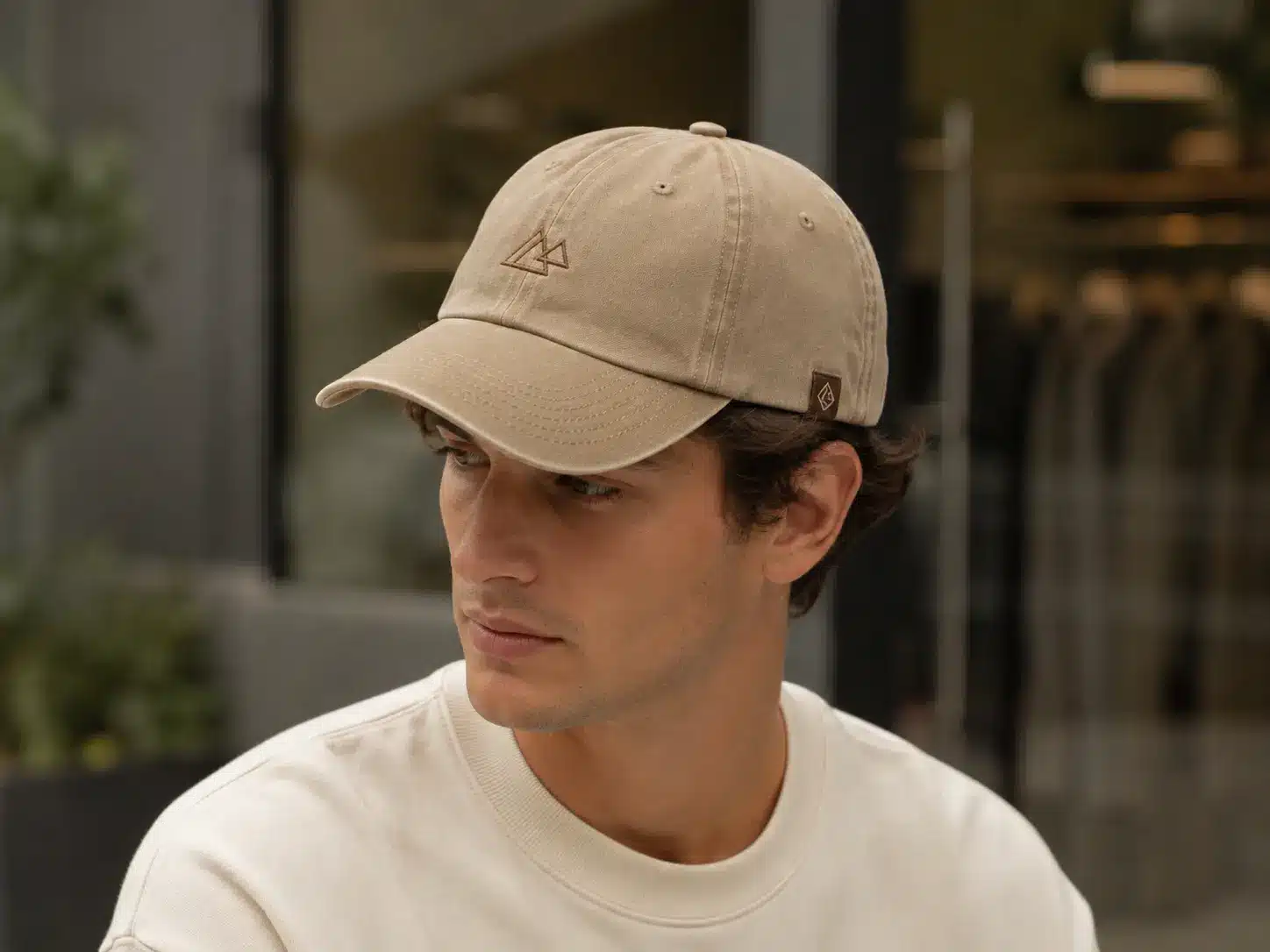
Private label hats give retailers control over the product instead of limiting the assortment to generic caps that other sellers can also buy. The crown shape, fabric, color, closure, decoration, inside labels, and packaging can all be developed around a defined customer and price position.
That control is useful only when the collection is planned as a retail product. A successful program begins with the customer, selling channel, fit, and assortment—not with a long list of available decorations. This guide explains the decisions retailers should make before sampling and bulk production.
Private Label Hats vs. Decorated Stock Hats
A decorated stock hat starts with an existing finished cap. A logo, patch, or label is added afterward. It can be useful when the hat body does not need to be exclusive, but the available fit, colors, fabrics, closures, and interior details are determined by the stock style.
A full custom private label hat is developed for the buyer. The retailer can specify the construction and brand details before the cap is produced. This approach is better suited to stores and brands that need a recognizable product, controlled fit, coordinated colors, retail-ready labeling, or a repeatable seasonal program. See the difference in our full custom and OEM hat capabilities.
| Decision | Decorated stock hat | Full custom private label hat |
|---|---|---|
| Hat shape and fit | Chosen from an existing style | Developed or adjusted to the approved specification |
| Fabric and color | Limited to stocked options | Selected for the product and confirmed during development |
| Branding | Mainly exterior decoration | Exterior decoration, inside labels, seam tape, closures, hangtags, and packaging |
| Product exclusivity | The same base cap may be sold by other businesses | The completed combination can be specific to the retailer |
| Best use | Simple programs with minimal construction requirements | Retail collections, private-label lines, and repeat programs |
Start With the Retail Customer and Selling Channel
Before choosing a hat style, define who will wear it and where it will be sold. A structured trucker hat for a workwear store, a lightweight cap for an outdoor brand, and a washed unstructured cap for a lifestyle boutique do not need the same construction.
- Customer: age range, typical use, preferred fit, and style expectations
- Sales channel: physical retail, e-commerce, subscription box, event, or wholesale distribution
- Product role: core replenishment style, seasonal color, limited release, or promotional item
- Price position: the level of fabric, decoration, trims, and packaging the product needs to support
- Launch timing: the date stock must be available, including sample approval and transport planning
This information gives the manufacturer a useful development brief. It also prevents a common problem: creating an attractive sample that does not fit the retailer’s customer, margin structure, or replenishment plan.
Build a Focused First Assortment
A first private-label collection does not need many unrelated styles. A smaller assortment is easier to sample, present, stock, and evaluate. Retailers can create variety through controlled changes while keeping the underlying product architecture consistent.
| Assortment role | Practical approach | What may stay consistent |
|---|---|---|
| Core style | The fit and color with the broadest expected use | Crown pattern, visor, closure, labels, and packaging |
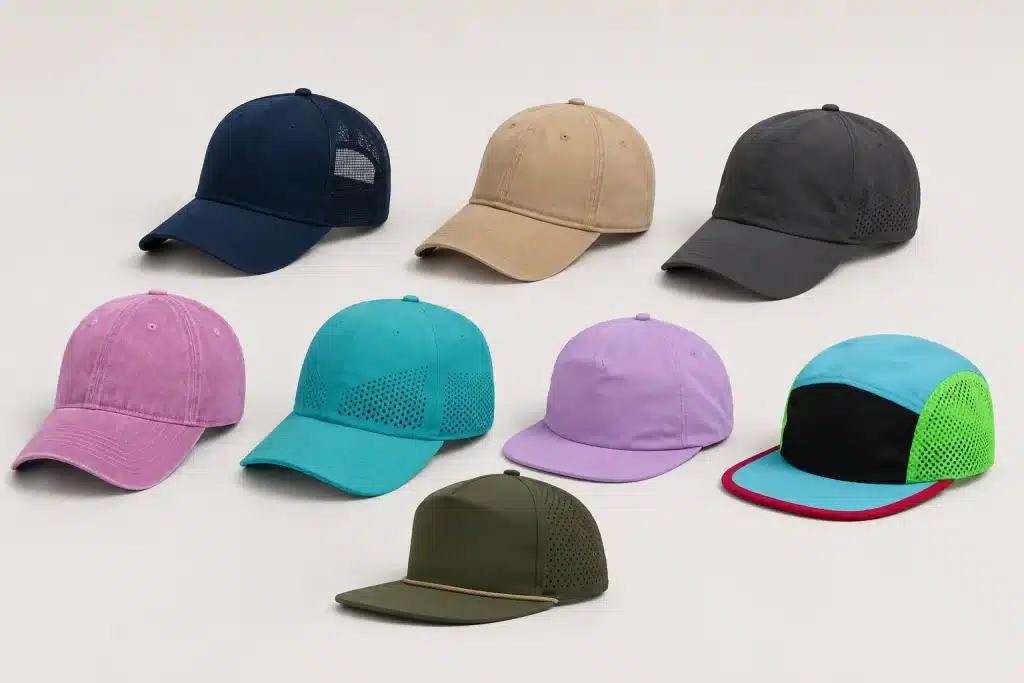
| Color extension | The same approved construction in another color combination | Fit, materials, decoration size, and trim layout |
| Statement option | A different patch, embroidery treatment, contrast visor, or rope detail | Core crown and size specification |
| Seasonal or performance option | A material or construction selected for a particular climate or activity | Brand language and retail presentation |
Use the custom hat style overview to compare baseball caps, trucker hats, 5-panel hats, and performance hats before deciding which silhouettes belong in the range.
Write a Product Brief Before Requesting a Quote
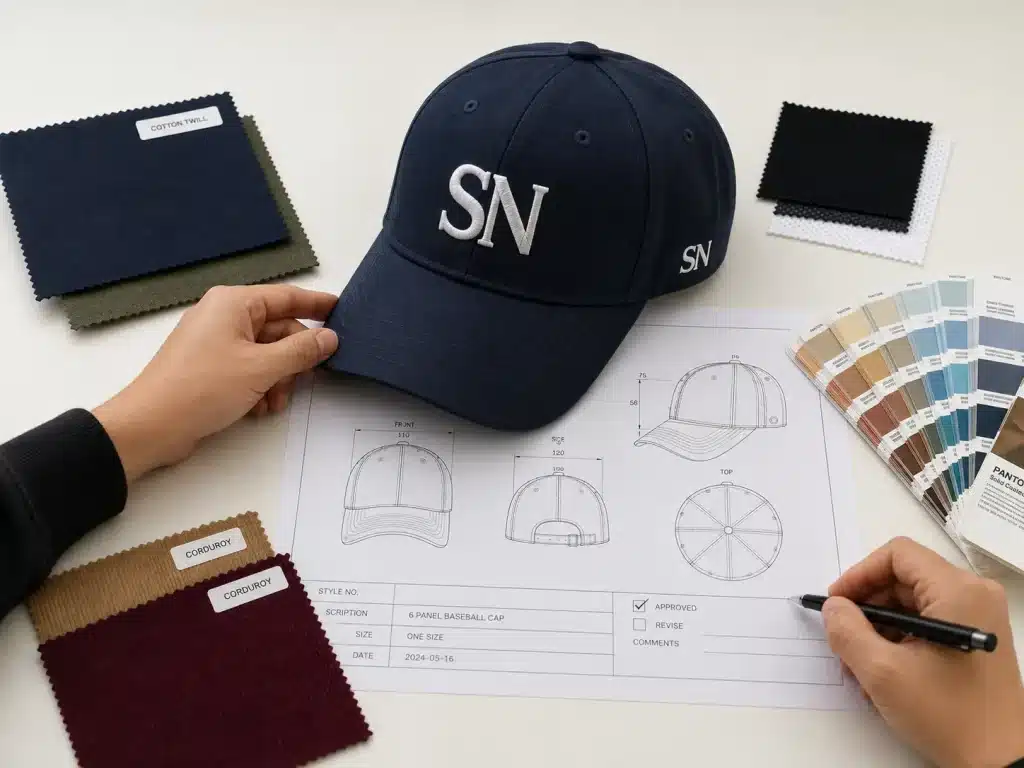
A useful request contains enough information to identify what must be developed. A logo file and a photo reference are a starting point, but they do not define a production-ready hat.
- Preferred hat style, panel construction, crown depth, and structured or unstructured build
- Shell fabric, mesh or lining requirements, color references, and intended end use
- Visor shape, curve, rows of stitching, and underside treatment
- Closure type and the intended finished size range
- Decoration method, artwork dimensions, placement, and color references
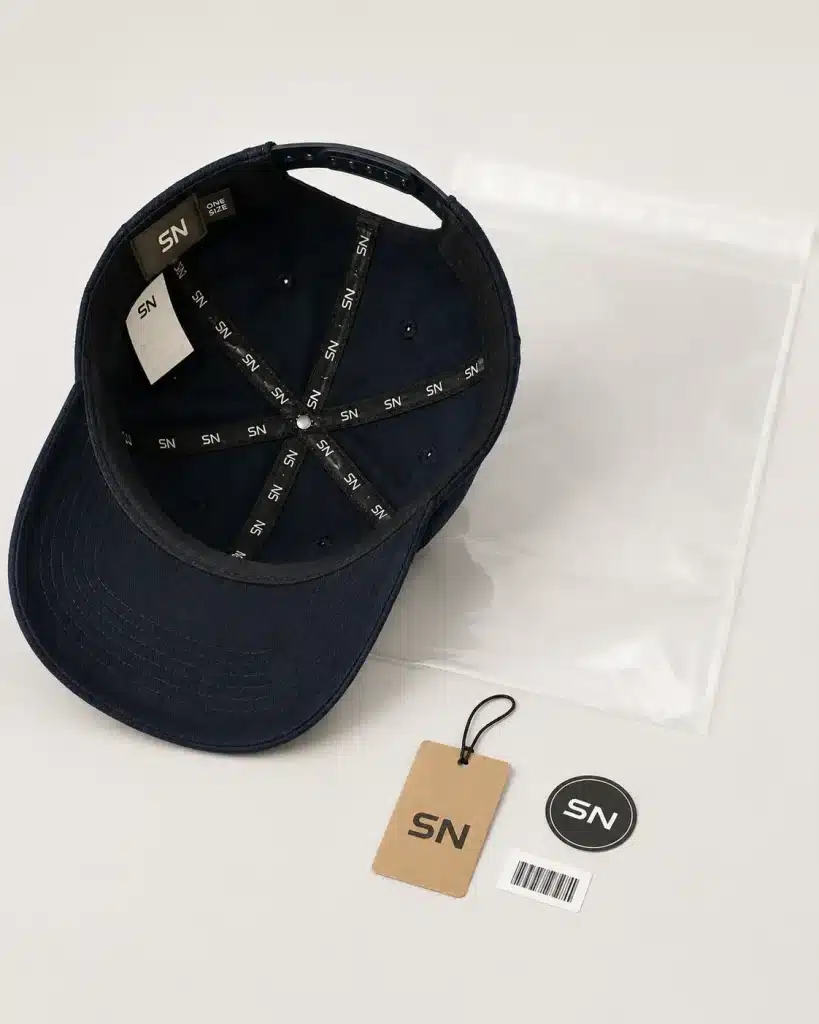
- Inside woven or printed labels, seam tape, care information, and country-of-origin requirements
- Hangtags, barcode or sticker needs, polybag instructions, assortment, and carton marks
- Quantity by style and color, target delivery window, and destination
Not every detail has to be final at the first discussion. The purpose of the brief is to separate confirmed requirements from decisions that still need recommendations or sampling.
Design the Brand Into the Whole Hat
Private labeling is more than sewing a name label inside a generic product. The exterior and interior should feel like one product. The main logo, side or rear detail, crown shape, closure, sweatband label, seam tape, hangtag, and packaging should support the same brand position.
Decoration also needs to match the construction. Fine lettering may work better as flat embroidery or a woven patch than as heavy 3D puff. A leather patch, PVC patch, print, or appliqué changes the surface weight and visual balance. Compare practical choices on our customization options page.
Evaluate the Sample as a Retail Product
The sample is the point where drawings and specifications become a physical product. Review it in the same way a customer will experience it, then record revisions clearly. Do not approve only from a front-view photograph.
- Overall crown shape, profile, symmetry, and fit
- Visor width, length, curve, and transition into the crown
- Fabric hand feel, color, structure, mesh, sweatband, and reinforcement
- Logo scale, placement, edge quality, surface distortion, and color
- Closure operation and rear opening appearance
- Inside labels, seam tape, stitching, loose threads, and wearer comfort
- Hangtags, stickers, folding, bagging, and shelf or shipping presentation
When changes are requested, use one consolidated revision list. The final approved sample and written specification should describe the same product before bulk production begins. Our development and production process explains the approval sequence.
Plan Cost, Quantity, and Inventory Together
The lowest unit quote is not automatically the best retail decision. The buyer needs to understand what is included: sample development, materials, decoration, labels, packaging, inspection, transport terms, and any one-time tooling. Compare quotations against the same written specification.
Quantity should also be planned by sellable SKU. A total order may look reasonable until it is divided across several styles, colors, and fitted sizes. Adjustable hats simplify size inventory, but color and decoration variants can still fragment the order. Keep the first assortment focused enough to collect useful sell-through information.
Prepare for Reorders Before the First Production Run
A retail program becomes easier to manage when the first order creates a clear reference for later orders. Keep the approved sample, specification, artwork versions, color references, label files, packaging instructions, size plan, and final quantity breakdown together.
- Identify which style is intended to become the core replenishment product.
- Use stable names or codes for every fabric, color, trim, and artwork version.
- Record approved measurements and how they were taken.
- Confirm whether any material or component may vary between production lots.
- Review proposed substitutions before they are used.
- Compare reorder samples or production references with the original approved product.
Questions to Ask a Private Label Hat Supplier
- Can the supplier develop the required crown, fit, material, and decoration rather than only decorate stock caps?
- What information is needed before sampling and quoting?
- Which details will be recorded in the product specification?
- How are sample revisions approved and transferred to bulk production?
- Which labels, trims, packaging, and retail information can be incorporated?
- How are colors, measurements, workmanship, quantities, and packing checked?
- How are material changes or production questions communicated before approval?
- What records are retained to support repeat orders?
Private Label Hats FAQ
Are private label hats the same as hats with a custom logo?
Not always. A logo can be added to a finished stock cap. A full custom private-label program can also control the cap construction, materials, colors, closure, interior branding, and packaging.
What should a retailer prepare before requesting samples?
Prepare the customer and channel, preferred hat style, visual references, artwork, required branding details, estimated quantities, destination, and target launch timing. Unknown details can be identified for development.
How many styles should be included in a first collection?
There is no universal number. The right assortment depends on the customer, budget, order quantities, selling channels, and launch plan. A focused range usually provides clearer feedback than many unrelated products.
What needs approval before bulk production?
Approve the physical sample and the written details covering construction, measurements, materials, colors, artwork, decoration, labels, closure, quantities, packaging, and shipping information.
Develop a Retail-Ready Hat Program
Private label hats work best when the product, assortment, branding, inventory, and reorder plan are developed together. Start with the customer and a buildable brief, use sampling to confirm the physical result, and keep the approved references organized for production.
If you are planning a private-label hat collection, send us your project requirements. We can review the intended customer, styles, quantities, branding details, and development needs before preparing the next steps.