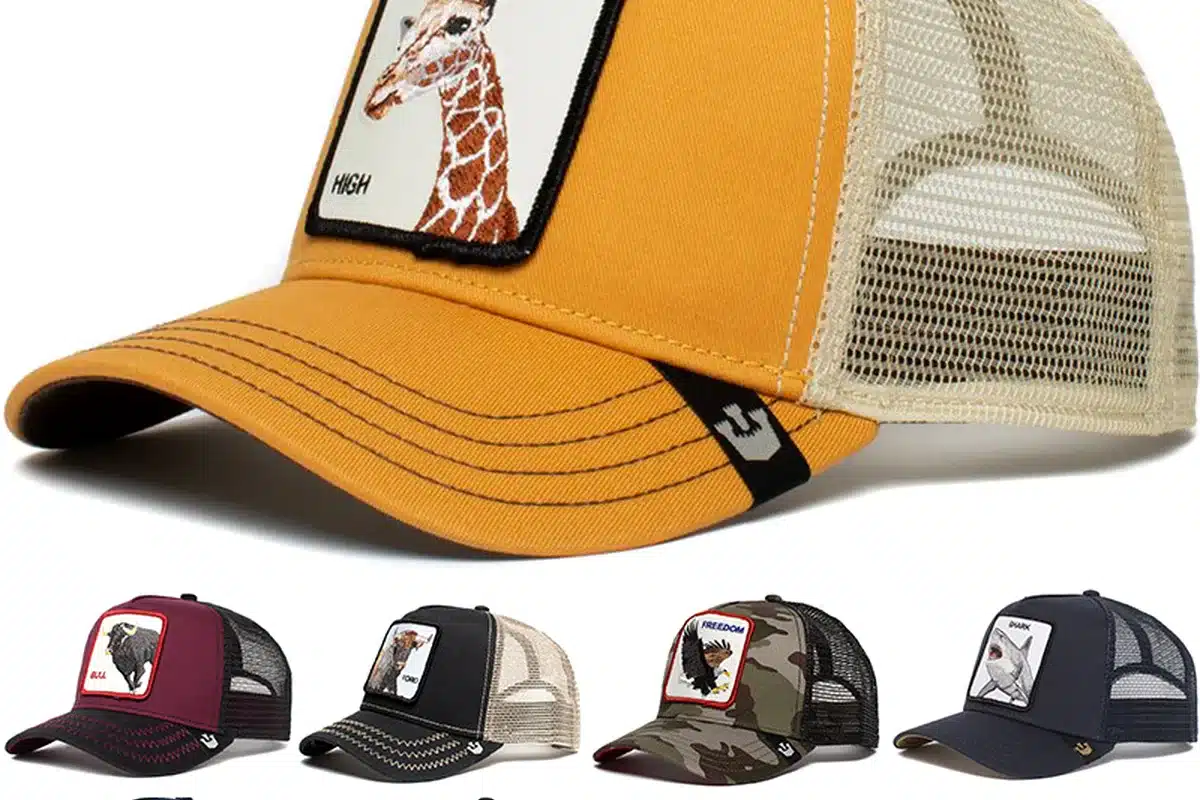
I’ve spent 15 years in headwear factories. I have seen every trend come and go. But custom trucker hats
are different. They stay at the top of the list for my B2B clients year after year. Why? Because they balance cost and brand exposure better than any other cap. So, when my clients ask how to avoid high sizing returns and low visibility, I tell them to start with a trucker.

Key Takeaways for Procurement

  • Maximized Branding ROI: The 5-panel foam front provides a seamless, high-contrast canvas that ensures maximum logo legibility from a distance.
  • Inventory Risk Mitigation: The adjustable snapback design creates a “One Size Fits Most” (OSFM) standard, reducing SKU complexity by 66%.
  • Superior Landed Costs: Lightweight mesh construction significantly lowers volumetric weight, reducing air and sea freight expenses compared to all-cloth alternatives.
A dynamic fanned-out arrangement of multi-colored blank trucker hats (neon, orange, grey, black) on a white background, demonstrating US stock variety.

Does the Total Cost of Ownership Favor Trucker Hats?

I often see procurement teams focus only on the “Ex-Works” price. But this is a mistake. To find the real value of custom trucker hats, you must calculate the Total Cost of Ownership (TCO). This includes durability, shipping density, and marketing value.

Lowering Your Freight Costs

The technical logic favors the trucker shape. For example, traditional cotton caps use heavy fabric to stay stiff. This adds a lot of weight to every box. In contrast, trucker hats use light foam and mesh. This hybrid build reduces the weight of a standard 144-unit master carton. So, in my experience, switching to mesh-back designs can lower your landed freight costs by 15% to 20%. This is a huge advantage during peak shipping seasons.

Efficiency in Material and Production

Also, the material yield for foam is much higher than for natural fibers. Natural cotton often has weave defects. Because of this, cotton can have an 8% scrap rate during cutting. However, our foam-cutting process is nearly 100% efficient. We pass these savings directly to you. The result? You get a better price without losing quality.

Performance MetricTrucker Hat (Foam/Mesh)Dad Hat (Cotton Twill)Premium Snapback
Unit Weight72g – 78g85g – 95g100g – 110g
Freight EfficiencyHighMediumLow
Material StabilityHigh (Memory Foam)Low (Fades easily)Medium
Landed Cost Index100 (Baseline)125 – 135160 – 180

Protecting Your Marketing ROI

I advise my clients to target a landed cost that stays 40% below the price of premium fitted caps. By doing this, you protect your budget even if shipping rates spike. In addition, we ensure the foam has “shape memory.” This means it survives sea freight without permanent creasing. In short, it protects your investment from our dock to your warehouse.

How Do Mesh-Backs Win the Lead Time Race?

In the current global logistics climate, lead time is as important as price. I have seen many marketing campaigns fail because the headwear arrived two weeks after the event. Choosing custom trucker hats is a strategic move to insulate your timeline from supply chain disruptions. The simplicity of the 5-panel construction allows for a much more agile manufacturing cycle.

The primary reason for this speed is “Standardized Component Sourcing.” Unlike bespoke 6-panel caps that often require custom-dyed cotton twill, the foam and mesh used in trucker hats are industrial staples. Most high-capacity factories in global hubs maintain a massive inventory of “Ready-to-Ship” (RTS) panels in a wide spectrum of pantone colors. When we start a production run, we often skip the 14-day fabric weaving and dyeing phase entirely. We simply pull high-density foam and performance mesh from existing stock to begin assembly.

This agility is crucial for the “Scalability Factor.” I often help clients move from a 50-unit prototype run to a 10,000-unit mass production. Because trucker hats use standard-sized panels and a single-front construction, the risk of technical error during scaling is minimal. There is no middle seam to align, and the foam substrate provides a stable surface for rapid machine embroidery or heat-press applications.

I advise my peers to consider the 14-day advantage. By choosing stock mesh and foam, you typically shave two full weeks off the standard production calendar. This buffer is your insurance policy against port congestion or customs delays. In a B2B environment, a hat that arrives on time is worth significantly more than a “perfectly custom” hat that arrives late.

Why Is Quality Consistency a Major Risk Factor?

Bad quality ruins a B2B deal. I have inspected thousands of hats and the biggest issue is always the same: a “soft crown.” This happens when a factory uses cheap, low-density foam. To fix this, we only use 5mm High-Density (HD) foam. It keeps the hat upright. Also, we do a “3-second squeeze” test on every batch. If you press the foam and it doesn’t bounce back fast, it’s junk. Don’t let a factory send you hats that look wrinkled before they even reach your customer.

The industry trap involves “material fatigue.” Cheap foam loses its molecular memory when subjected to the heat and humidity of a shipping container. To mitigate this risk, I demand a “3-Second Recovery” test. When you receive a production sample, compress the front panel firmly for ten seconds. A high-quality HD foam must spring back to its original silhouette within 3 seconds. If the indentation remains, the material will fail in the field.

Furthermore, you must evaluate the mesh resilience. Low-grade plastic mesh is rigid and “scratchy,” leading to poor user adoption and brand resentment. We use soft-touch performance polyester mesh that maintains its color fastness under UV exposure. Many factories skip the UV-stabilization process to cut costs, resulting in mesh that turns brittle and yellow within six months.

Technical ComponentSpecification BenchmarkRisk of Non-Compliance
Foam Substrate5mm – 6mm High-Density (HD)Permanent creasing/Crown collapse
Mesh Density180 GSM (Grams per Square Meter)Tearing at the snapback junction
Bridge StitchingDouble-needle lockstitchBrim separation from the crown
Color FastnessGrade 4 (AATCC Standard)Premature fading in retail environments

I advise my clients to look closely at the “bridge”—the junction where the foam meets the visor. This area sustains the most tension. If the stitch density is lower than 8 stitches per inch, the hat will lose its shape after just a few wears. To ensure consistency across a 10,000-unit run, we implement a three-tier QC inspection protocol. Every batch undergoes a template-based alignment check and a manual stitch-count verification before heat-sealing. By combining skilled craftsmanship with rigorous physical benchmarks, we ensure the first hat off the line matches the last.

custom hats

What Makes a “High-Quality” Trucker Hat?

Procurement managers often struggle to objectively define quality beyond “it looks good.” In the headwear industry, a premium custom trucker hats build is defined by specific geometric ratios and component performance. To ensure you receive a retail-ready product, you must evaluate the five structural pillars: the crown, the visor, the mesh, the sweatband, and the closure.

The “High-Quality” Trucker Hat Checklist:

  1. Crown Height (The Golden Ratio): The front panel height must be between 9cm and 10cm. This provides the classic “mid-to-high profile” look without appearing oversized or like a costume.
  2. Panel Alignment: The vertical center of the front panel must align within a 2mm tolerance of the center of the visor. Misalignment is the most common sign of a low-tier factory.
  3. Brim Integrity: A premium visor uses a multi-layered plastic core, not cardboard. It should hold a pre-curved shape but remain flexible enough to adjust without cracking.
  4. Snapback Tension: The plastic closure must feature at least 7 adjustment points with a distinct “locking click.” It should require 5-7 lbs of force to pull apart.
  5. Moisture Management: The internal sweatband should be four-row stitched with a moisture-wicking polyester or brushed cotton lining to prevent forehead irritation.

In my experience, the most overlooked technical detail is the interlining. High-quality foam fronts require a light tricot or non-woven backing. This layer prevents the embroidery or patch glue from “bleeding” through the foam, maintaining a crisp, clean interior.

I advise my clients to always request a “Pre-Production Sample” (PPS) to verify these benchmarks. If a factory cannot provide a crown height measurement or refuses to specify the sweatband material, they are likely cutting corners on the assembly line. By holding your supplier to these specific metrics, you move from subjective “quality” to objective “compliance.”

How Can You Mitigate Compliance and ESG Risks?

Chemical safety is a mess if you don’t know what to look for. I’ve seen customs seize entire containers because a factory used cheap, illegal plasticizers in the snapbacks. For custom trucker hats, the danger is usually in two places: the PVC in the back closure and the chemicals in the foam.

To protect your brand, you need to follow REACH and Prop 65 rules. These laws stop heavy metals and lead from ending up in your products. Even a small factory should have the MSDS (Material Safety Data Sheets) for the materials they buy. I always tell my clients: ask for a lead-free report for the plastic snaps. We don’t guess here. We only buy from material suppliers who give us a fresh chemical report for every batch. This keeps your shipment moving and keeps you out of legal trouble.

Ethical sourcing is just as important, but don’t get distracted by expensive certificates like BSCI or Sedex. Often, those audits only cover the front office, not the actual sewing line. I believe real trust comes from Documented Proof.

That’s why we use a “Transparent Factory” model. We don’t just show you a badge on a wall. Instead, we send you a Production Transparency Package. This includes real photos and videos of your specific hats being cut, sewn, and packed. Combined with our daily QC logs, this proves the workers are treated fairly and the factory is safe. It’s honest, it’s documented, and it’s the only way to be 100% sure you aren’t buying from a sweatshop.

Does “One Size Fits Most” Really Solve Inventory Issues?

Inventory deadstock is a silent drain on corporate liquidity. When you purchase fitted headwear, you are forced to guess the size distribution of your audience. If you over-order “Small” or “Extra-Large,” those units sit in a warehouse, representing wasted capital. Choosing custom trucker hats is a strategic move for SKU Rationalization. By standardizing on a single adjustable SKU, you eliminate the logistical nightmare of size forecasting.

The technical advantage of the adjustable snapback is its universal fit range. A standard trucker hat closure typically covers head circumferences from 54cm to 62cm. This “One Size Fits Most” (OSFM) model allows procurement managers to reduce their warehouse management complexity by approximately 66%. You no longer need to track five different size variants for a single design. This consolidation increases your “stock velocity” because every unit in the box is a viable product for any recipient.

Furthermore, the physical construction of the trucker hat makes it a superior canvas for versatile branding. The seamless foam front is compatible with a wider range of decoration methods than 6-panel alternatives. Whether you require 3D embroidery, PVC patches, or high-definition sublimation, the foam substrate remains stable.

Decision Tree: Selecting the Right Decoration for Trucker Hats

  • Complex Full-Color Logos? Use Sublimation or Heat Transfer for photographic clarity.
  • Premium Brand Positioning? Use 3D Puff Embroidery or Custom PVC Patches.
  • Outdoor or Rugged Workwear? Use Genuine or Faux Leather Patches for durability.
  • High-Volume/Low-Budget? Use Screen Printing for maximum cost efficiency.

I advise my clients to leverage this versatility to maximize their bulk purchasing power. You can order 5,000 “blank” units to secure the lowest tier of manufacturing costs and then apply different decoration methods for various departments—saving money without sacrificing design variety.

The Pivot to Custom Branding: From Commodity to Corporate Asset

A plain hat is a generic commodity; a strategically designed custom trucker hats is a high-value corporate asset. The goal of any procurement manager should be to increase the “Utility-to-Discard” ratio. If a recipient keeps and wears the hat for years, the cost-per-impression drops to near zero. To achieve this, you must move beyond the basic logo and invest in retail-quality detailing.

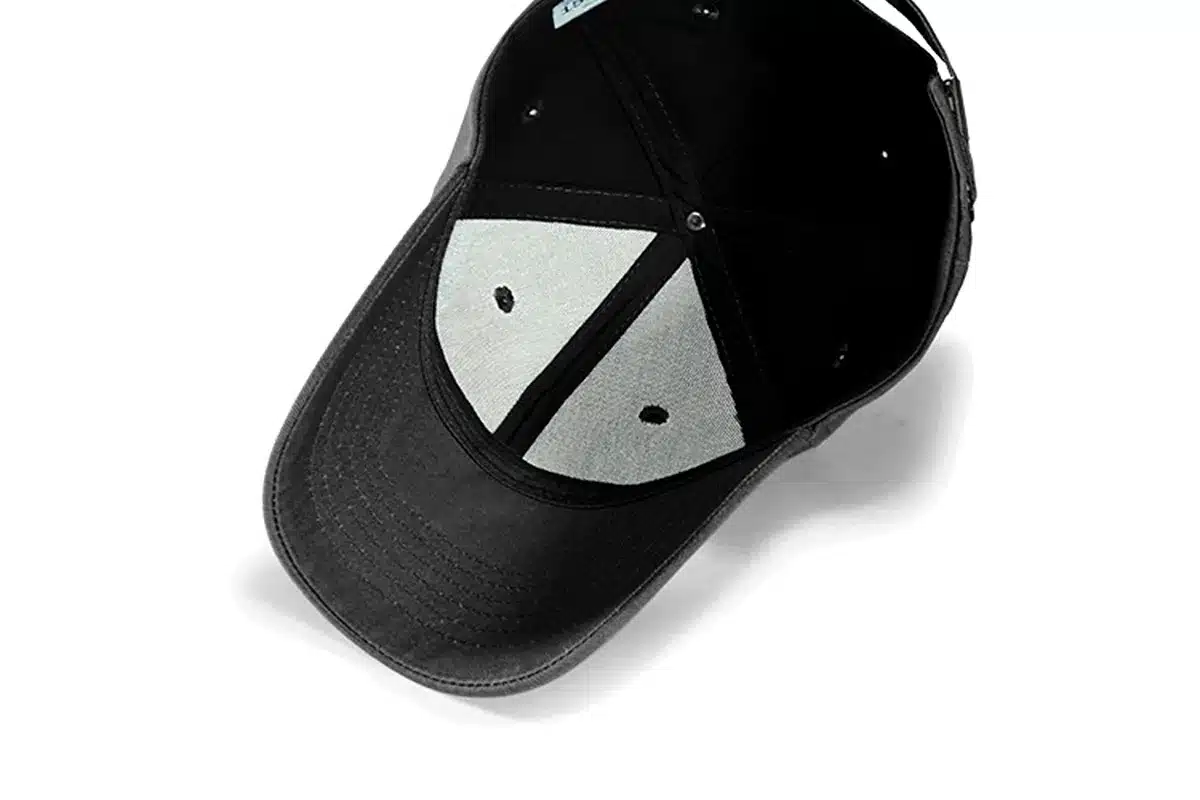
In my 15 years of manufacturing, I have found that the most effective way to increase perceived value is through Internal Customization. Adding custom-printed seam tape (the fabric strips covering the internal joins) costs only an additional $0.05 to $0.12 per unit. However, this small detail signals to the wearer that the product is a bespoke, premium item rather than a cheap giveaway. When an employee flips the hat over and sees branded interior taping, the perceived value of the gift immediately increases by several dollars.

Strategic “Color Blocking” is another technical tool for brand recognition. Because the front panel and the mesh are separate components, you can use high-contrast colorways to make your logo stand out. I often advise my clients to use a neutral “Corporate Charcoal” or “Deep Navy” for the mesh to ensure everyday wearability, while using a vibrant brand-specific color for the foam front to capture attention.

Customization DetailEstimated Cost Adder (USD)Perceived Value Increase
Custom Interior Seam Tape$0.05 – $0.12High (Retail Look)
Woven Private Label$0.08 – $0.15Medium (Brand Identity)
Sandwich Visor Detail$0.10 – $0.20Medium (Premium Feel)
Embossed Snapback Buckle$0.15 – $0.25High (Exclusive Detail)

I suggest that you prioritize Private Labeling. Replacing a generic manufacturer’s tag with your own woven brand label transforms the merchandise into an official piece of gear. This subtle shift in branding logic moves the hat from the “promotional” category into the “retail” category, ensuring your brand is associated with quality and exclusivity.

Conclusion: Securing Your Headwear Supply Chain

The decision to integrate custom trucker hats into your brand merchandise strategy is a decision to prioritize financial logic and supply chain resilience. As we have explored, the popularity of this silhouette is rooted in its ability to solve the most persistent B2B procurement pain points: inconsistent quality, high volumetric shipping costs, and inventory deadstock. By leveraging the standardized components and high-contrast branding surfaces of the trucker hat, you ensure a high-impact marketing tool with a low total cost of ownership.

Looking toward the remainder of 2026 and beyond, the industry is shifting toward sustainable materials. I recommend that forward-thinking procurement teams begin exploring rPET (Recycled Polyethylene Terephthalate) mesh. Shifting to recycled plastics in your headwear not only aligns with corporate ESG goals but also resonates deeply with modern consumers who demand environmental accountability. This transition is the next evolution in moving from a simple commodity to a purposeful brand asset.

My final advice for any procurement professional is to focus on the technical benchmarks we have discussed. Demand high-density foam, verify the “Golden Ratio” of the crown, and insist on transparent production documentation. When you hold your supplier to these objective standards, you remove the guesswork from your global sourcing.

FAQ

I understand that for a procurement manager, the biggest risk isn’t just the price—it is the uncertainty that arises after the deposit is paid. Here are the most critical questions I receive from professional buyers looking to secure reliable custom trucker hats.

1. How do you prevent the foam front from wrinkling during long-term sea freight?

The “collapsed crown” syndrome is usually caused by using low-density foam that fails under heat and stacking pressure. We mitigate this by using High-Density (HD) Memory Foam (5mm-6mm thickness).

  • The Reality: Instead of relying on hope, we enforce a strict “nesting” protocol during packing to ensure the weight of the master carton is distributed across the brims, not the foam crowns.
  • Insider Tip: Always ask for a “Recovery Test.” A quality foam front should bounce back to its original shape within 3 seconds of being compressed. If it doesn’t, the material will likely fail during the 30-day transit to the US.

2. We must comply with Prop 65. How do you guarantee chemical safety if a full factory audit is unavailable?

I will be direct: Many factories use generic certificates that don’t apply to your specific order. We focus on Material-Level Compliance rather than just “buying” a factory badge.

  • The Reality: We source our plastic snapbacks and internal stiffeners only from long-term partners who provide Lead-Free and Phthalate-Free Material Declarations.
  • Insider Tip: Don’t chase a 50-page factory audit that might be outdated. Instead, ask for the Raw Material Batch Report for the plastic components. We keep these on file to ensure your shipment won’t be flagged by customs for chemical violations.

3. How do you maintain design consistency across a high-volume order?

The biggest fear in mass production is that the 10,000th hat looks different from the pre-production sample. This usually happens due to “manual drift” in the stitching department.

  • The Reality: We use Physical Alignment Jigs for every order. By using fixed templates during the bridge-stitching phase (where the visor meets the foam), we ensure the center-point alignment stays within a strict 2mm tolerance.
  • Insider Tip: Request a “Mid-Production Photo.” Seeing a photo of the 5,000th unit on the assembly line is more valuable than any marketing brochure. It proves the quality remains stable throughout the entire run.

4. Why is your “One Size Fits Most” (OSFM) better for my inventory than fitted hats?

Inventory deadstock is wasted capital. Fitted hats require you to guess a size distribution (S/M/L/XL), which is a high-risk gamble.

  • The Reality: Our custom trucker hats use a standardized 7-hole snapback that covers 95% of the US adult head circumference (54cm – 62cm).
  • Insider Tip: By consolidating into one SKU, you reduce your warehouse management complexity by 66%. This increases your “Stock Velocity,” as every hat in the box is a viable product for any recipient, eliminating “size orphans” that never sell.
Sally - SN International

About the Author

Sally is the Co-founder of SN International, a U.S.–China supply chain company specializing in custom headwear and promotional products. With over 15 years of experience in headwear manufacturing, she has helped promotional product distributors and brands source reliable custom caps from global factories. Her expertise focuses on production quality control, sourcing strategy, and cost optimization for large-scale B2B headwear programs.