Procurement managers face a constant battle with gear that fails in the field. If a hat falls apart, it ruins your brand image and wastes your budget. We know that workwear trucker hats must be more than just a giveaway. They are a tool for your crew. We have spent 15 years in global supply chains. We know how to spot the difference between a fashion cap and a rugged industrial staple. This guide helps you understand the technical logic you need to protect your business and your brand.
Key Takeaways
- Durability Standards: Industrial hats need high-denier polyester and UV-stabilized dyes to stop color bleeding in the sun.
- Cost Efficiency: Quality gear lasts 12 months, but cheap caps fail in 4 weeks, which makes the cheap option more expensive over time.
- Risk Management: We use AQL 2.5 standards and factory audits to stop quality fade and protect your brand from supply chain scandals.
1. The Heritage of Utility: Why the “Feed Cap” is a Workwear Staple?
Your workers wear their gear in dirt, grease, and high heat. Low-quality hats tear and fade fast. This forces you to buy more often and ruins your yearly budget. We want to help you avoid this cycle.
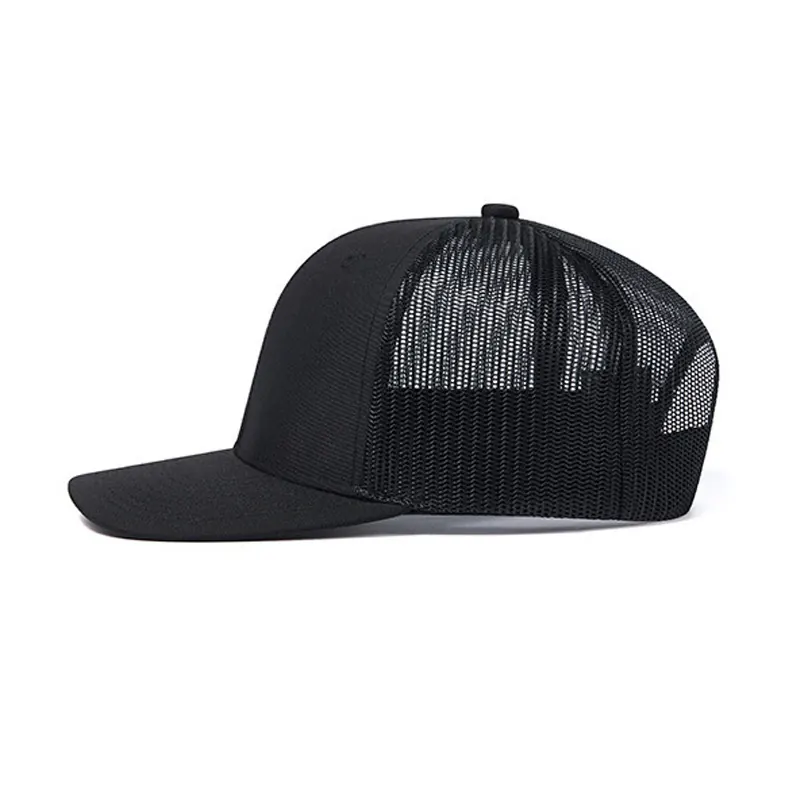
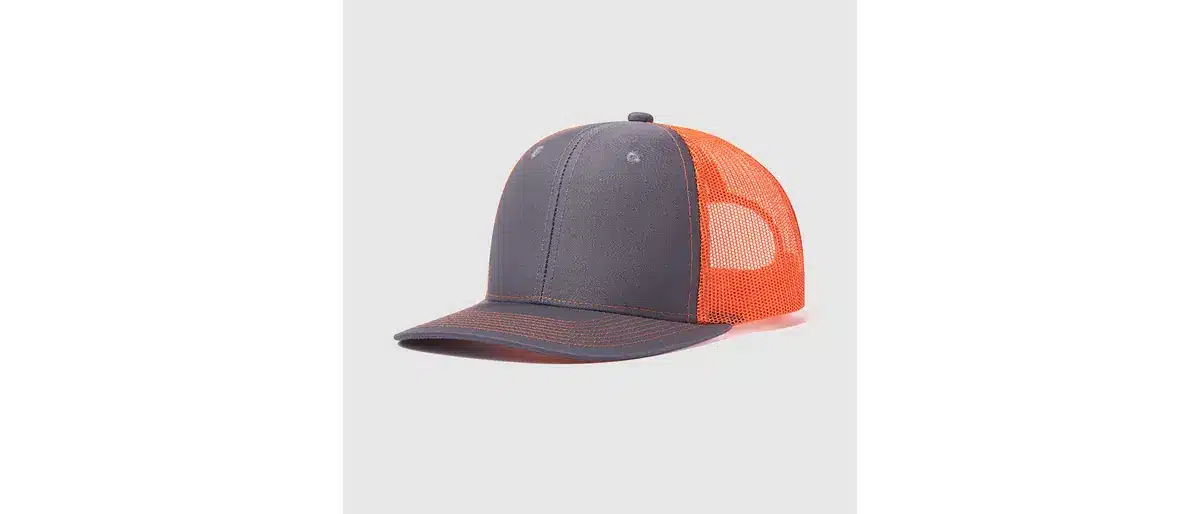
Trucker hats became a workwear staple because the mesh back lets heat out. The stiff front foam protects the head and shows company logos clearly. It is a simple design that works in the toughest spots.
This item started as the “feed cap” in the 1970s. Agricultural companies gave them to farmers at supply stores. These caps were functional and cheap to make. They had a high crown so the hat did not touch a sweaty scalp. They had a plastic snap so one size fit every worker. Today, the move from agriculture to brand identity is complete. These hats are now a key part of a modern crew’s gear. A worker might forget their gloves, but they rarely forget their hat. It keeps the sun out of their eyes and sweat off their face.
Your branding must survive the field to work well. We see many brands try to save money with printed t-shirts. But t-shirts hide under jackets or safety vests. A hat is always on top. It is always visible. We use heavy embroidery because it handles sun and rubbing better than ink. Ink cracks when the sun hits it for 10 hours a day. Thread stays bright. We suggest a “High-Profile” crown for work brands. High-profile crowns let us use thicker, 3D foam-backed embroidery. This branding stays visible even when a worker looks down at a machine or a tool. If the crown is too low, the logo wrinkles. A high-profile foam front stays flat and professional. It is a mobile billboard that does not quit. If you want your team to look consistent, you need a hat that keeps its shape for a full season.
2. Technical Anatomy: Materials that Withstand 60+ Hour Work Weeks?
Field crews treat hats roughly. They throw them on truck dashboards, drop them in the mud, and wash them with garden hoses. If the materials are weak, the hat loses its shape in days. This makes your team look unprofessional and forces you to spend more money on replacements.
Professional workwear hats use high-denier polyester and rigid nylon mesh. These materials ensure the cap keeps its structure and breathability during long, grueling shifts.
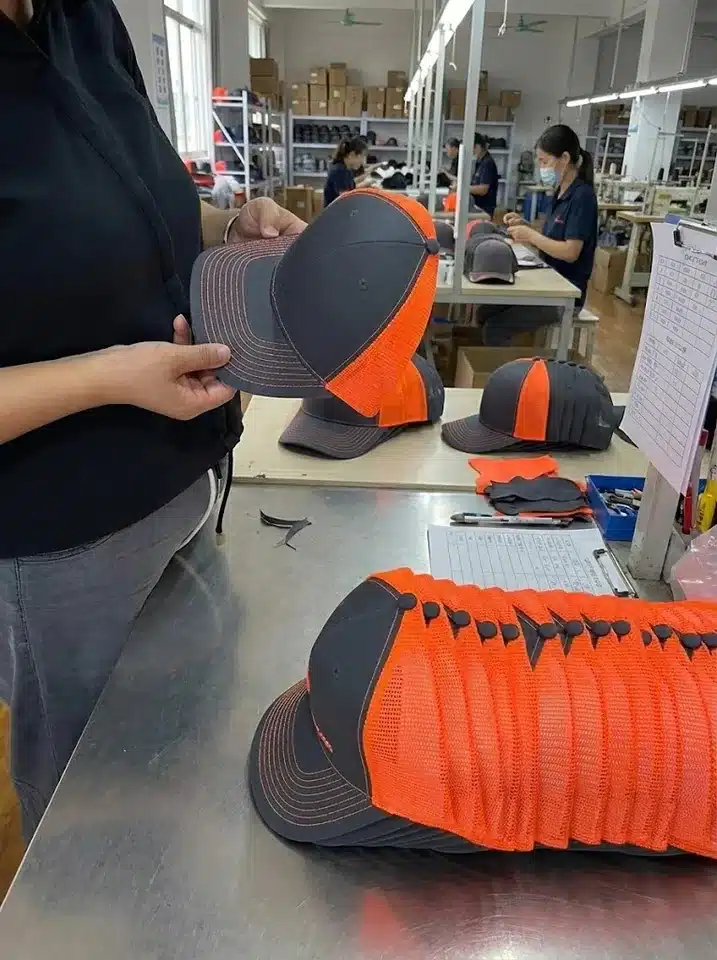
We look at breathability versus durability. Fashion hats often use soft mesh. It feels nice to the touch, but it snags on equipment and branches. We use heavy-duty nylon mesh. It is stiff. It keeps its shape even when wet. For the front panels, we use high-denier polyester (300D or 500D). Polyester is much better than cotton for heavy labor. It resists stains from oil and grease. It also dries very fast. If a worker gets caught in a rainstorm, a polyester hat is dry by lunch. A cotton hat stays wet, gets heavy, and starts to smell.
Moisture management is the next step for a good work hat. We evaluate sweatband textiles based on the work environment. Cotton twill is the standard choice. But for farm environments, we suggest moisture-wicking synthetic blends. These fabrics pull salt and water away from the skin. This prevents “sweat sting” in the eyes, which is a big safety issue when operating machinery.
We always perform a “Snapback Stress Test” before we approve a batch. For B2B procurement, you should request a “pull-test” rating for the plastic closure. Many factories use recycled plastics to save a few cents. These plastics become brittle very fast. They snap in cold weather or when pulled tight over a winter liner. Our process uses virgin plastic resins. These stay flexible even in freezing temperatures. We want to make sure the closure lasts as long as the fabric. If the snap breaks, the whole hat is garbage.
| Feature | Workwear Grade | Promotional Grade |
| Front Fabric | 300D+ Polyester | 100D Polyester or Thin Cotton |
| Mesh Type | Rigid Nylon (Anti-snag) | Soft Polyester (Flimsy) |
| Sweatband | Multi-layer Wicking Poly | Single-layer Cotton |
| Snap Closure | Virgin PE Plastic | Recycled PVC |
3. Total Cost of Ownership (TCO): More Than Just a Unit Price?
Low unit prices look great on a spreadsheet, but they are a trap. If your hats fail in a month, you spend more on shipping and admin time than the product is worth. This hidden cost eats your profit and frustrates your team.
Total Cost of Ownership (TCO) measures the true cost of a hat over its entire lifespan. Durable gear is always cheaper than frequent replacements when you look at the full year.
We want you to think about the ROI. A “rugged” workwear hat might cost $6.00. It lasts a worker a full 12 months. That means your cost is only $0.50 per month. A “promo” hat costs $3.00, but it fails in 4 weeks because the internal lining collapses or the snap breaks. You have to buy 12 of them to last the year. Now you have spent $36.00 on one worker. You also paid for shipping 12 times and spent hours processing 12 invoices. Quality saves you money and time.
We also focus on freight and logistics optimization to help your bottom line. We help farm cooperatives and large brands consolidate their bulk orders. Buying 5,000 hats once is much cheaper than buying 500 hats ten times. You save on “landed cost” because ocean freight per unit drops a lot at higher volumes.
There is also a big hidden cost in UV degradation. Many low-cost factories use cheap, non-stabilized dyes. For farm brands, this causes “color bleeding.” When a worker sweats in the sun, the blue or red dye runs down their forehead. This ruins the worker’s skin and your brand’s reputation. We follow industry standards by testing our dyes for 40+ hours of intense UV exposure. It costs a few cents more per hat, but it prevents a massive blow to your image. You want a partner who knows these risks before the hats reach the field.
| Cost Factor | High-Quality Trucker (TCO) | Cheap Promo Trucker (TCO) |
| Unit Price | $6.00 | $3.00 |
| Lifespan | 12 Months | 1 Month |
| Annual Product Cost | $6.00 | $36.00 |
| Annual Shipping Cost | Low (1 shipment) | High (12 shipments) |
| Brand Impact | Professional/Consistent | Faded/Broken |
4. How to Audit a Trucker Hat Factory: Beyond the Gold Supplier Tag?
Online marketplaces give almost every factory a “Gold” badge. But a digital icon does not mean the factory follows safety laws or uses clean materials. A scandal in your supply chain can kill your brand reputation overnight. You need to know exactly who is sewing your gear and what their standards are.
Auditing a factory requires checking social compliance, quality control protocols, and physical health standards. This ensures your supply chain is stable and your brand is protected from legal or ethical risks.
Social compliance is a major risk for US-based brands. We suggest looking for factories with WRAP or BSCI certifications. These documents show that the factory pays fair wages and provides a safe working space. This protects you from forced labor scandals. If a factory refuses to show these audits, we do not work with them. It is not worth the risk to your business. We want a process that aligns with global ethical standards.
Quality Control (QC) is the next pillar of a good audit. We define AQL (Acceptable Quality Level) at 2.5 for our clients. AQL 2.5 means we have a very low tolerance for mistakes like crooked stitching or loose threads. Most “cheap” factories operate at AQL 4.0 or higher. That means they allow more defects in every box. You do not want a worker wearing a hat where the logo is tilted or the panels do not line up.
We also use the “Stink Test.” This is an insider secret. When you open a fresh carton of hats, it should not smell like a chemical plant. A heavy chemical smell means the factory used “anti-mildew” agents or cheap glues that did not off-gas properly. These chemicals can cause skin rashes for workers who sweat in the heat. If the hats smell bad, they are a liability. We ensure our factories use water-based glues and give the products enough time to dry and air out. We want your crew to be safe from the moment they put the hat on.
| Vetting Step | Tier 1 Manufacturer (Preferred) | Tier 3 Manufacturer (Avoid) |
| Audit | Third-party WRAP/BSCI | No external audits |
| QC Level | AQL 2.5 (Strict) | AQL 4.0 (Loose) |
| Samples | Physical “Golden Sample” provided | Photos only |
| Chemistry | REACH compliant / No odor | Heavy chemical odors |
5. Customization Mastery: Avoiding Common OEM Design Pitfalls?
A logo looks great on a computer screen, but it can become a mess when it hits a thick workwear hat. If the factory does not understand heavy fabrics, the embroidery will pucker or the patches will fall off. This makes your brand look cheap and wastes the money you spent on design.
Customization mastery means choosing the right application method and density for dirty work environments. You need a logo that stays sharp and attached even when it gets covered in mud or grease.
Embroidery density is a common trap for many buyers. If the stitch count is too high on a heavy buckram front, the needles will break and damage the fabric. But if the stitch count is too low, the foam or fabric shows through the logo. This looks unprofessional. We use specialized machinery with high-torque motors built for industrial gear. These machines push through thick workwear materials without losing precision. We ensure the thread density is high enough to cover the base fabric completely, so your logo pops and stays bright for months.
You also have to choose between Direct-to-Film (DTF) and traditional patches. In greasy or dusty shops, we prefer patches. A patch is a separate piece of fabric that holds detail better than direct stitching on rough surfaces. But you must watch out for the “Merrowed Edge” trap. Many buyers use patches with only a heat-seal (glue) backing to save time. This is a mistake. The high heat of a truck dashboard in July or a commercial dryer will melt that glue. The patch will peel off and leave a sticky mess. We always specify a “heat-seal plus stitch” combo. We glue the patch down to hold it straight, then we sew the edge. This ensures the patch stays on forever, no matter how much heat or dirt it sees.
6. How to Choose a Trucker Hat Manufacturer for Workwear?
Choosing a manufacturer is the most important part of your procurement strategy. If you pick a factory that only makes fashion caps, your workwear will fail in the field. You need a partner who understands industrial specs and knows how to manage the US customs process without causing delays.
To choose the right manufacturer, you must verify material reports, test physical prototypes, and check their shipping capabilities. This process helps you avoid middle-men who do not control the production line.
We suggest you start with Material Verification. Do not just take a salesperson’s word for it. Ask for SGS or Intertek reports for fabric colorfastness and lead content. This proves the hat will not turn from navy blue to light purple after one week in the sun. It also keeps you safe from importing restricted chemicals. Our process involves checking these reports for every new fabric batch we use.
Next, you must perform a Prototype Evaluation. We call this the “Crush Test.” When you get a sample, squeeze the front panel ten times. If the internal buckram stays dented or cracks, the hat is too weak for workwear. A real work hat should pop back into its original shape every time. You should also check the “Sample to Production” variance. A factory might send you one perfect hat but then ship 5,000 bad ones. We require a “Golden Sample” that is held by an independent inspector. They check the final shipment against that one hat. If they do not match, we do not pay. This prevents “quality fade” during the long production run.
Finally, check their logistics. You want a manufacturer that can handle DDP (Delivered Duty Paid) shipping. This means they take care of the taxes, duties, and trucking from the port to your warehouse. You are a procurement manager, not a customs broker. You should not have to deal with paperwork at the border. A good manufacturer makes the process simple. They give you one final price that includes everything. This helps you plan your budget with no surprises.
7. Mitigating Global Supply Chain Risks in 2026?
The world moves fast, and the supply chain is more unstable than ever. Port strikes, plastic shortages, or sudden freight spikes can ruin your seasonal launch. If your hats are stuck on a boat during the peak harvest season, your brand loses visibility and your workers lose protection. You need a sourcing plan that accounts for these risks before they happen.
Mitigating risk in 2026 requires balancing where you buy and how you buy. You cannot rely on a single factory or a single country anymore. You need a strategy that offers both low costs and fast backup options.
We help our clients compare Nearshoring versus Offshoring constantly. Vietnam and China still offer the best prices for large bulk orders because their raw material ecosystems are huge. But if you need 500 hats in a hurry for a sudden company event, Mexico or local US-based finishing is often better. The shipping time from Mexico is days instead of weeks. We help you split your risk. You can buy your “core” seasonal stock from Asia to save money, and use a nearshore partner for “emergency” refills. This ensures you never run out of stock when the sun is beating down on your crew.
We also help you manage currency and raw material volatility. We follow the price of polyester and cotton futures very closely. In 2026, we expect material prices to jump because of energy costs. We help you lock in your unit pricing six months early by securing material contracts. This protects your budget from rising mid-season.
Another smart move is the “Secondary Mesh” strategy. We suggest sourcing hats with “interchangeable mesh” specs. If the main mesh supplier in Asia goes offline, the factory should have a pre-approved second option ready to go. This simple backup plan prevents a three-month delay caused by a plastic shortage. You do not want to tell a farmer his hats are delayed because of a single mesh factory. We make sure there is always a Plan B for every component of the hat.
| Sourcing Location | Lead Time | Cost Level | Best For |
| China / Vietnam | 8-12 Weeks | Low | Large annual bulk orders |
| Mexico | 3-5 Weeks | Medium | Mid-season refills / Quick turn |
| USA (Domestic) | 1-2 Weeks | High | Small events / Emergency stock |
8. The Pivot to Strategic Branding: From Utility to Lifestyle?
A great work hat does not stay at the job site. If the quality is high, your workers will choose to wear that hat to the grocery store, the gym, or the lake on weekends. This turns a simple piece of safety gear into a lifestyle brand. When people see your logo in their daily lives, it builds trust and makes your company look like a leader in the industry.
Strategic branding is about building loyalty through quality. When your farm hat feels like a $30.00 premium retail product, your employees and customers feel valued. They see that you do not cut corners on the things they wear every day. This creates a deep connection to your brand that cheap, disposable caps can never achieve.
[Image showing a worker wearing a clean, high-quality branded trucker hat in a social setting outside of work]
High-quality trucker hats turn your employees into brand ambassadors for free. Most marketing costs money every time someone sees it. But a hat is a one-time cost that generates “off-clock” brand impressions for years. We aim for retail quality for all our industrial clients. We use the same fabrics, stitching, and fit found in high-end outdoor or surf brands. This makes the hat something people actually want to own. If the hat fits perfectly and looks sharp, it stays on their head. If it is itchy, stiff, or ugly, it ends up in the trash.
We also study “Hat Curve” psychology to help you choose the right style for your specific group. A pre-curved visor is seen as “traditional workwear.” It appeals to older farmers, warehouse managers, and legacy crews. It says your brand is reliable and established. A flat bill suggests “youth, tech, or lifestyle.” If you are hiring younger, tech-savvy workers or want to look modern, a flatter bill might be the right move. Choosing the wrong curve can alienate your team. We help you match the style to the person behind the machine. When the fit is right, the brand loyalty follows.
Choosing the right headwear is a high-stakes decision for your brand. A hat is the first thing a customer sees when your team arrives on site. If that hat is faded, crooked, or falling apart, it tells the world that your business lacks attention to detail. But a high-quality trucker hat sends a different message. It shows that you value your workers and invest in gear that lasts.
We have shown you that the true cost of a hat is not the number on the invoice. It is the total cost of ownership over a full year. By focusing on high-denier materials, rigid mesh, and virgin plastics, you save money in the long run. By auditing your factories and insisting on AQL 2.5 standards, you protect your company from quality fade and ethical risks. These are the steps that separate professional procurement managers from those who simply chase the lowest price.
FAQ
Q: How do we ensure quality consistency between the initial “Golden Sample” and a bulk order of 10,000 units?
A: We use a “Pre-Shipment Inspection” (PSI) based on AQL 2.5 standards to lock in consistency. The biggest risk in high-volume production is “quality fade,” where a factory swaps out high-denier polyester for cheaper blends mid-run. To prevent this, we require the factory to submit a swatch from the actual production roll for lab testing before assembly begins.
- Insider Tip: Never rely on the factory’s internal QC report. Always hire a third-party inspector to pull random cartons from the finished lot. If the stitching tension or panel alignment deviates from the Golden Sample, we halt the shipment before the final balance is paid.
Q: With global logistics being so volatile, how can we guarantee our harvest-season launch won’t be delayed by port congestion?
A: We manage this through a “Dual-Sourcing” and “Buffer Inventory” strategy. Relying on a single shipping lane is a liability. We often split production or maintain backup finishing capabilities in nearshore locations like Mexico. This allows us to move small, urgent batches via truck if the primary ocean route from Asia faces a 3-week delay.
- Insider Tip: Always check the “Cargo Ready Date” (CRD) against the “Vessel Departure Date.” A common trap is factories claiming production is finished, but the goods sit in a warehouse for 10 days waiting for a container. We demand a booking confirmation 14 days before production ends to secure space early.
Q: How can we verify that our workwear is truly UV-stabilized and won’t bleed dye onto our workers?
A: We demand a “Colorfastness to Light” test report (Standard: AATCC 16.3 or ISO 105-B02) from an accredited lab like SGS. For farm brands, the target should be a Grade 4 rating after 40 hours of exposure. If a manufacturer cannot provide a recent lab report for their specific fabric lot, it is highly likely they are using cheaper, non-stabilized dyes that will fail in the field.
- Insider Tip: You can perform a quick “Rub Test” on samples. Take a white, damp cloth and rub the inner crown of the hat firmly 20 times. If any pigment transfers to the cloth, the dye is not properly set and will definitely bleed when a worker sweats.
Q: What is the most common technical failure in custom trucker hats that procurement managers miss during the bidding process?
A: The failure of the internal buckram (the stiffening fabric behind the front panels). Cheap hats use a single layer of glue-heavy buckram that wilts as soon as it gets humid or wet. Once the buckram collapses, the hat looks like a “deflated balloon,” and your brand logo becomes unreadable. We specify a double-layered, heat-pressed buckram that maintains the high-profile shape even after multiple washes.
- Insider Tip: Ask your supplier for the “Gram Weight” of the buckram. For rugged workwear, you should look for at least 180gsm to 220gsm. If they don’t know the weight, they are likely using “stock” materials that aren’t built for industrial longevity.