
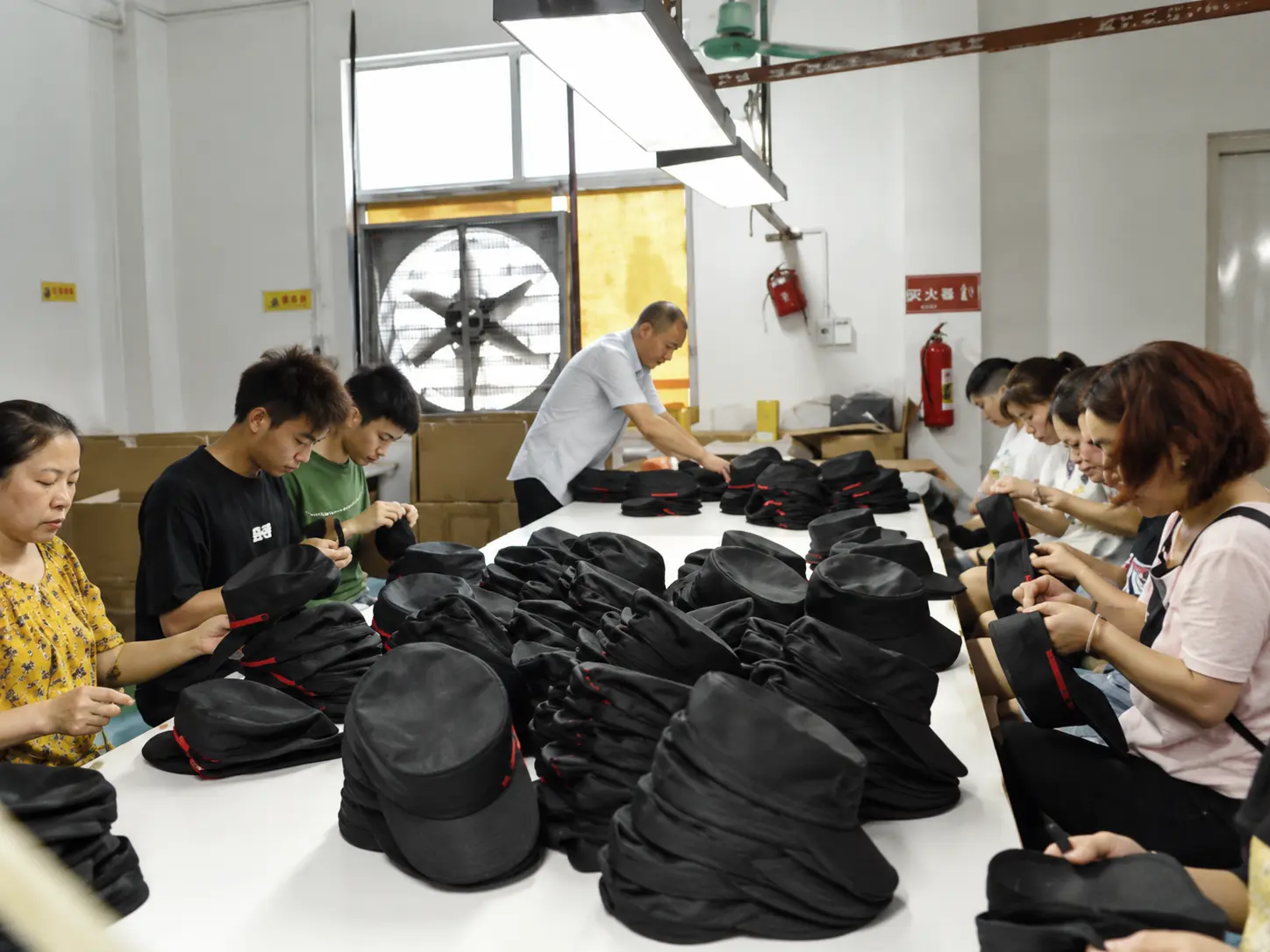
AQL 2.5 is an acceptance-sampling value used with a defined inspection plan. It helps a buyer decide whether to accept or reject a production lot after inspecting a random sample. It does not mean that every shipment contains 2.5% defects, and it does not guarantee zero defects.
For custom hats, an effective inspection plan must state more than “AQL 2.5.” It should identify the sampling standard and edition, lot size, inspection level, defect categories, AQL assigned to each category, sampling timing, and the buyer’s acceptance rules.
What Does AQL 2.5 Mean?
AQL stands for acceptance quality limit. In a continuing series of lots, it is a quality level used to index an acceptance-sampling plan. The current ISO framework for attribute inspection is ISO 2859-1:2026. ANSI/ASQ Z1.4 is another commonly referenced attribute-sampling standard.
The number 2.5 is not a standalone percentage promise. The inspection outcome depends on the complete plan. A sample-size code and the chosen AQL lead to an acceptance number and a rejection number. If the sample reaches the rejection threshold, the lot is not accepted under that plan.
This approach balances inspection effort and statistical risk. It is not a substitute for process control, approved samples, clear specifications, or corrective action.

Why “AQL 2.5” Alone Is Incomplete
A buyer asking only for “AQL 2.5 inspection” leaves several decisions undefined.
| Required decision | Why it matters |
|---|---|
| Sampling standard and edition | Different standards or editions should not be mixed casually |
| Lot definition | Sample size is selected from the lot being presented for inspection |
| Inspection level | The level helps determine the sample-size code |
| Normal, tightened, or reduced inspection | The applicable plan changes with switching rules and supplier history |
| Single, double, or multiple sampling | Each plan uses a different decision process |
| Unit or defect counting | A defective hat and multiple defects on one hat are not the same measure |
| Defect classification | Critical, major, and minor categories require written definitions |
| AQL by defect class | Buyers may assign different limits to different risks |
| Inspection timing | Inline and final inspections answer different questions |
| Disposition after rejection | Rework, sorting, reinspection, or other action must be agreed |
AQL should be written into a purchase specification or inspection instruction. The supplier and inspection team need the same definitions before production begins.
How an AQL Inspection Works
The exact sampling table belongs to the selected standard, so the inspector should use an authorized, current copy rather than a table copied from an unknown website.
The usual workflow is:
- Define the lot. Confirm which finished units, colorways, styles, and order lines are included.
- Choose the inspection standard and plan. State the edition, inspection level, sampling type, and whether normal, tightened, or reduced inspection applies.
- Determine the sample size. Use lot size and inspection level to find the code, then obtain the sample size from the selected plan.
- Draw the sample randomly. Select units across available cartons and positions, not only from an easy-to-reach top layer.
- Inspect against approved requirements. Compare construction, measurements, decoration, color, labeling, function, packing, and workmanship with the approved sample and specification.
- Classify findings consistently. Record each nonconformity using the agreed critical, major, or minor definition.
- Apply acceptance and rejection numbers. Compare the sample result with the plan for each defect category.
- Document the lot decision. The report should show what was inspected, results, photographs, measurements, and disposition.
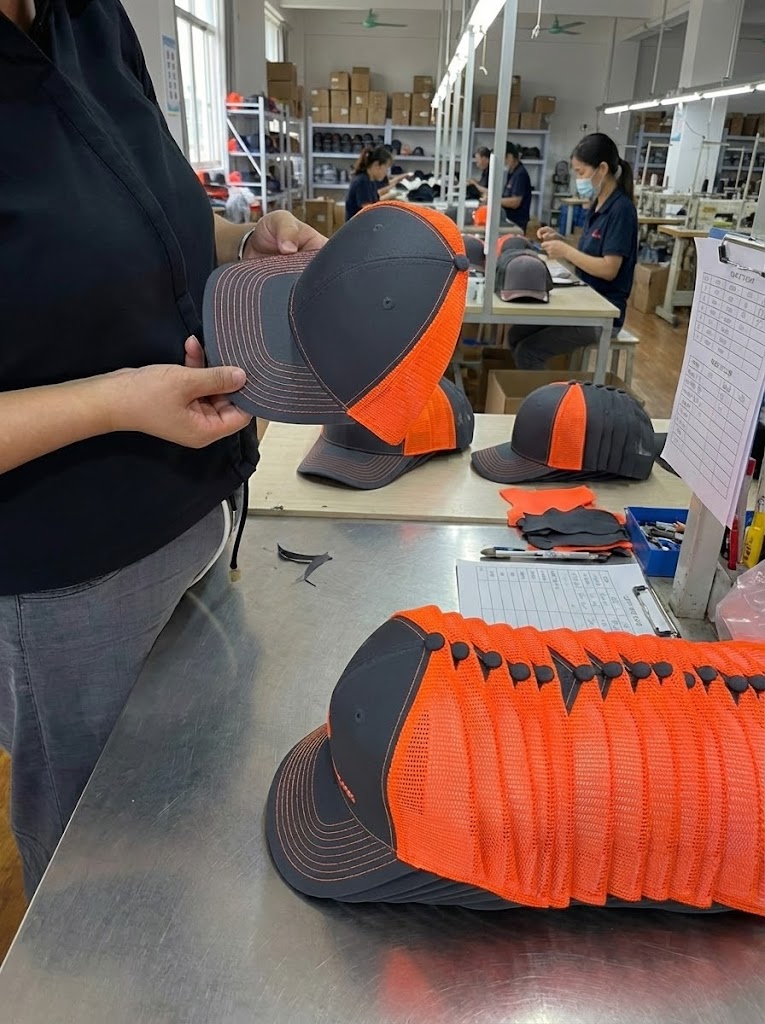
AQL 2.5 Does Not Mean 2.5% Defects Are Approved
This is the most common misunderstanding. AQL 2.5 indexes a statistical sampling scheme; it is not permission to deliberately ship 2.5 defective hats out of every 100. An individual lot can pass or fail based on the plan’s sample size and acceptance criteria.
Acceptance sampling also contains producer and consumer risks. A good lot can sometimes be rejected, and a poor lot can sometimes be accepted. That is why AQL inspection should sit inside a broader quality system rather than carry the entire responsibility for product quality.
For a custom-hat program, prevention starts earlier:
- Confirm the construction and decoration on a physical sample
- Record measurements and tolerances in the specification
- Approve production fabric, trims, thread colors, and packaging
- Check early production when a new material or process is introduced
- Correct systemic issues before final inspection
- Keep approved references available to the inspector
Critical, Major, and Minor Defects in Custom Hats
Defect classification depends on the product, market, buyer requirements, and intended use. The following examples are starting points for an inspection checklist, not universal legal definitions.
Critical Defects
A critical defect may create an unsafe condition, violate a mandatory requirement, or make the product unsuitable for its intended use. Examples could include a sharp exposed component, a prohibited or incorrect safety-related component, or contamination. Buyers should define these risks for their product and destination market; they should not copy a generic list without review.
Major Defects
A major defect can make the hat unsellable, substantially reduce function, or visibly depart from the approved product. Possible custom-hat examples include:
- Wrong style, colorway, fabric, or closure
- Logo missing, substantially misplaced, reversed, or incorrect
- Open seam, broken closure, or visor construction failure
- Severe crown asymmetry or panel distortion
- Measurement outside an agreed major tolerance
- Decoration damage that makes the item unsuitable for sale
- Incorrect required label or packaging information
Minor Defects
A minor defect generally does not prevent normal use but falls below the agreed workmanship standard. Examples may include:
- A removable loose thread
- Small stitch variation away from a prominent area
- Minor temporary crease that can be corrected during finishing
- Slight cosmetic variation within an agreed range
- Small packaging presentation issue without product damage
The same observation can be classified differently depending on severity and location. A small mark on an interior seam is not equivalent to the same mark across a white front logo panel. Use photographs and written thresholds to reduce subjective decisions.
What Should Be Checked on a Custom Hat?
An AQL decision is only as useful as the checklist used during the inspection. A final-random inspection for custom hats may cover the following areas.
Product Identity and Quantity
- Style, order line, color, and size assortment
- Carton and unit quantities
- Barcode, hangtag, care label, and private-label details
- Packaging method and shipping marks
Construction and Workmanship
- Panel shape, crown symmetry, and center-seam alignment
- Seam security, skipped stitches, broken stitches, and loose threads
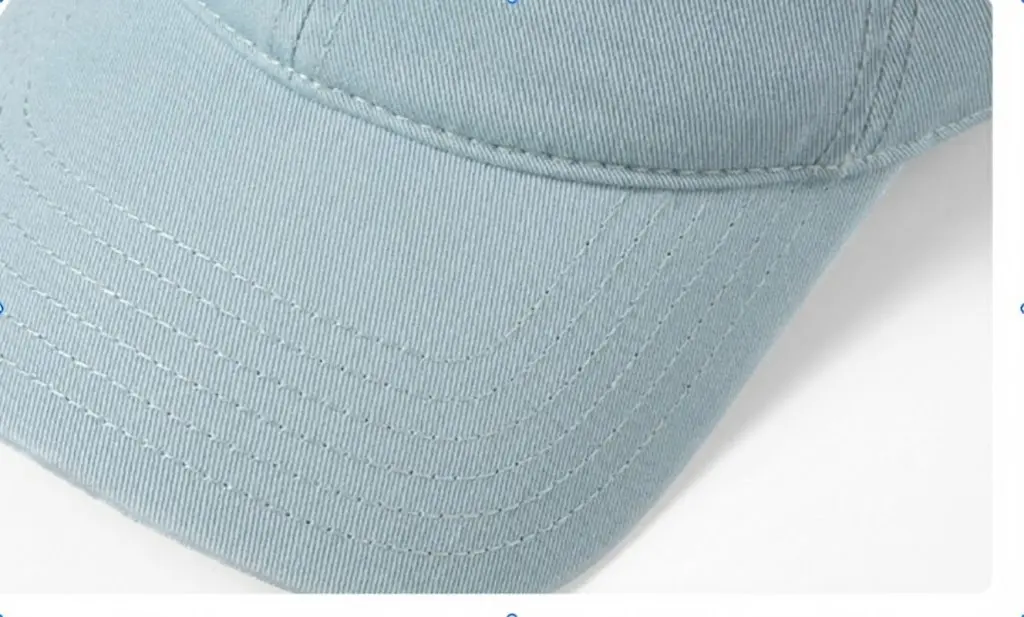
- Visor shape, stitching rows, edge consistency, and attachment
- Eyelets, top button, sweatband, seam tape, and closure function
- Clean interior without exposed or unfinished components
Decoration
- Logo content, orientation, size, placement, and color
- Embroidery coverage, edge definition, thread trimming, and puckering
- Patch attachment, edge finish, and alignment
- Print or transfer adhesion, registration, and visible heat damage
- Consistency with the approved decorated sample
Measurements and Fit
- Head opening or circumference using the agreed method
- Crown height and profile reference
- Visor length and width
- Closure range and function
- Decoration position measured from agreed reference points
Measurements should have written tolerances. A pass/fail attribute check and a dimensional measurement are related but not identical; record actual values where fit or positioning matters.

When to Inspect: Inline vs Final Inspection
Final random inspection is useful when production is complete and enough units are packed to represent the shipment. It can support a lot-acceptance decision, but it is late in the process. If a repeated defect is found at that point, rework may affect schedule and packing.
Inline inspection is more useful for detecting a process problem while production is still running. It may focus on first output from embroidery, panel assembly, visor construction, measurements, or a newly introduced material. Inline inspection does not automatically replace final lot inspection; the two stages have different purposes.
For a new full custom OEM hat design, use feasibility review and sampling to prevent specification problems, inline checks to control execution, and a final inspection to evaluate the completed lot.
What Happens When a Lot Fails?
A failed sampling inspection is a decision trigger, not a complete diagnosis. The buyer and supplier should determine the next action based on the agreement and the nature of the defects.
Possible actions include:
- Hold the affected lot from shipment
- Investigate whether the finding is isolated or systemic
- Sort or rework the affected production
- Replace nonconforming units or components
- Repeat inspection under an agreed plan after corrective work
- Accept under a documented concession when the buyer has authority and the issue is suitable for concession
- Reject or remake the lot when requirements cannot be met
Do not simply inspect another convenient sample until one passes. Reinspection rules should be defined before a problem occurs, and corrective work should be traceable.
What a Useful Hat Inspection Report Contains
A buyer should be able to understand the decision without standing beside the inspector. A useful report includes:
- Supplier, order number, style, color, size, and lot quantity
- Inspection date, stage, location, and available quantity
- Sampling standard, edition, plan, inspection level, and selected AQL values
- Sample size and acceptance/rejection criteria by defect class
- Quantity and classification of findings
- Product and carton photographs
- Measurement results and tolerance comparison
- Functional checks performed and methods used
- Packing, labeling, assortment, and carton results
- Overall result and agreed disposition
An AQL report should not replace a custom hat specification and approved sample. Those documents define what “conforming” means.
How Buyers Should Write the Inspection Requirement
Avoid a purchase-order note that says only “AQL 2.5.” A clearer instruction might state:
For example: “Conduct a final random inspection using the sampling standard and edition agreed in the purchase order. Apply the agreed inspection level and sampling plan. Classify findings using the buyer-approved custom-hat defect list and photographs. Use the separately agreed AQL or acceptance rule for each defect category. Do not ship a rejected lot until written disposition is provided.”
This language intentionally leaves project-specific values to the actual agreement. Buyers should select those values based on risk, product requirements, supplier history, contractual terms, and qualified quality advice—not because a generic article presents one combination as universal.
Frequently Asked Questions
What does AQL 2.5 mean in quality inspection?
It means that 2.5 is the AQL used to index an acceptance-sampling plan. Lot size, inspection level, sampling type, and the selected standard determine the sample size and acceptance or rejection thresholds.
Does passing AQL 2.5 guarantee a defect-free shipment?
No. AQL is sample-based and includes statistical risk. Passing means the inspected sample met the selected plan’s acceptance criteria; it does not prove that every unit is defect-free.
Is AQL 2.5 mandatory for custom hats?
Not universally. The applicable inspection requirement comes from the buyer-supplier agreement and any relevant market or product requirements. Different defect categories may use different acceptance criteria.
Can I use AQL 2.5 for critical defects?
Do not assume one AQL is appropriate for every defect class. Safety-related or mandatory-requirement failures often need stricter treatment. Define critical defects and their acceptance rule with qualified input for the actual product and market.
How many hats should be inspected?
The answer cannot be determined from “AQL 2.5” alone. The inspector needs the lot size, inspection level, sampling plan, and the selected standard’s current tables.
Is AQL inspection the same as quality control?
No. Acceptance sampling supports a lot decision. Quality control also includes product specifications, supplier controls, approved samples, process checks, corrective action, and production records.
Use AQL as a Decision Tool, Not a Quality Promise
AQL 2.5 can be useful when it is part of a complete, agreed sampling plan. For custom hats, the practical work is defining the product, identifying defect severity, establishing measurable requirements, and giving the inspector an approved physical reference.
If you are preparing a custom-hat order, review our customization options and development process, then send your style, artwork, quantities, destination, and inspection requirements through the contact page.