
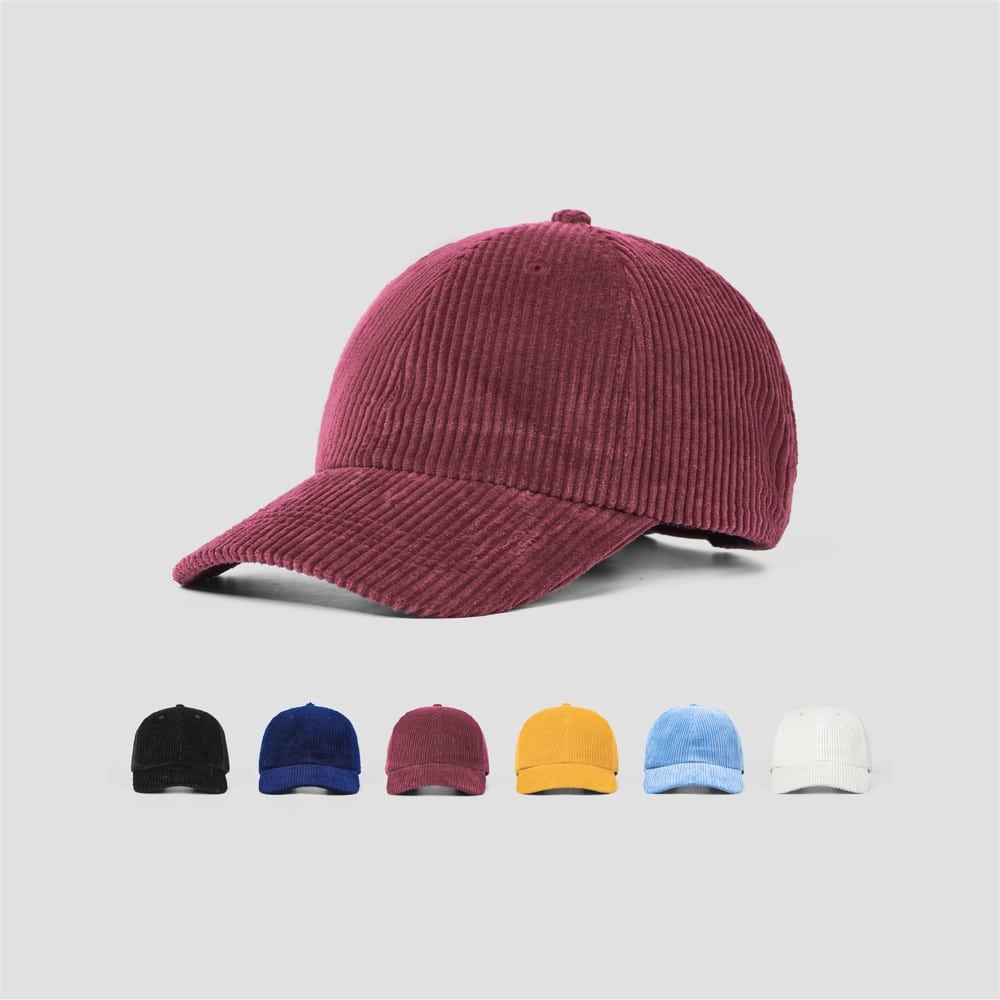
A corduroy cap can look distinctive in a product grid and still disappoint on a person’s head. The raised ribs may suit a brand’s visual identity, but the crown depth, fabric hand, brim shape and placement of the logo determine whether people keep wearing it. If you are developing custom corduroy hats for a retail line or branded merchandise program, approve the finished hat rather than choosing fabric from a photo alone.
Start with the wearer and the sales setting
Is this a fashion-led cap that a customer will buy for its texture, a staff hat that needs to sit comfortably through a shift, or merchandise that must work with several outfits? Those are different briefs. A highly structured front panel may present a large logo neatly, while a softer shape can feel more relaxed. Neither construction is universally better; ask for a physical sample and compare it with the audience and price position of the program.
For repeat merchandise orders, also decide what must stay consistent: silhouette, corduroy rib scale, color, decoration and trim. Record the approved sample rather than relying on a phrase such as “the same burgundy cap.”
The table below compares the three briefs on what the wearer judges first and what to approve on the physical sample.
| Brief | What the wearer judges first | Approve on the physical sample |
|---|---|---|
| Fashion-led retail cap | Texture and silhouette as the reason to buy. | Rib scale and crown shape together, and logo presentation on the front panel. |
| Staff hat | Comfort through a shift. | Fit, crown depth, closure, and size range, tested on a wearer. |
| Merchandise | Whether it works with several outfits. | Silhouette, rib scale, color, decoration, and trim, recorded from the approved sample. |
Specify the corduroy, not just the color
Corduroy is identifiable by its lengthwise raised ribs, called wales. CottonWorks describes the structure as a cut-pile woven fabric that forms vertical wales. Different rib widths change the visual scale of a small hat panel. A broad rib can make the texture the main design element; a finer rib may read more subtly from a distance.
Ask the supplier to confirm the actual fabric composition, weight and finish for the chosen swatch. Do not infer these from the word “corduroy,” and do not assume one swatch will behave like another. Compare the surface under the same lighting and look at it from multiple directions: pile direction can alter its apparent shade. On the finished sample, check whether the ribs appear consistent across crown panels and the visor.
Check the hat shape before approving decoration
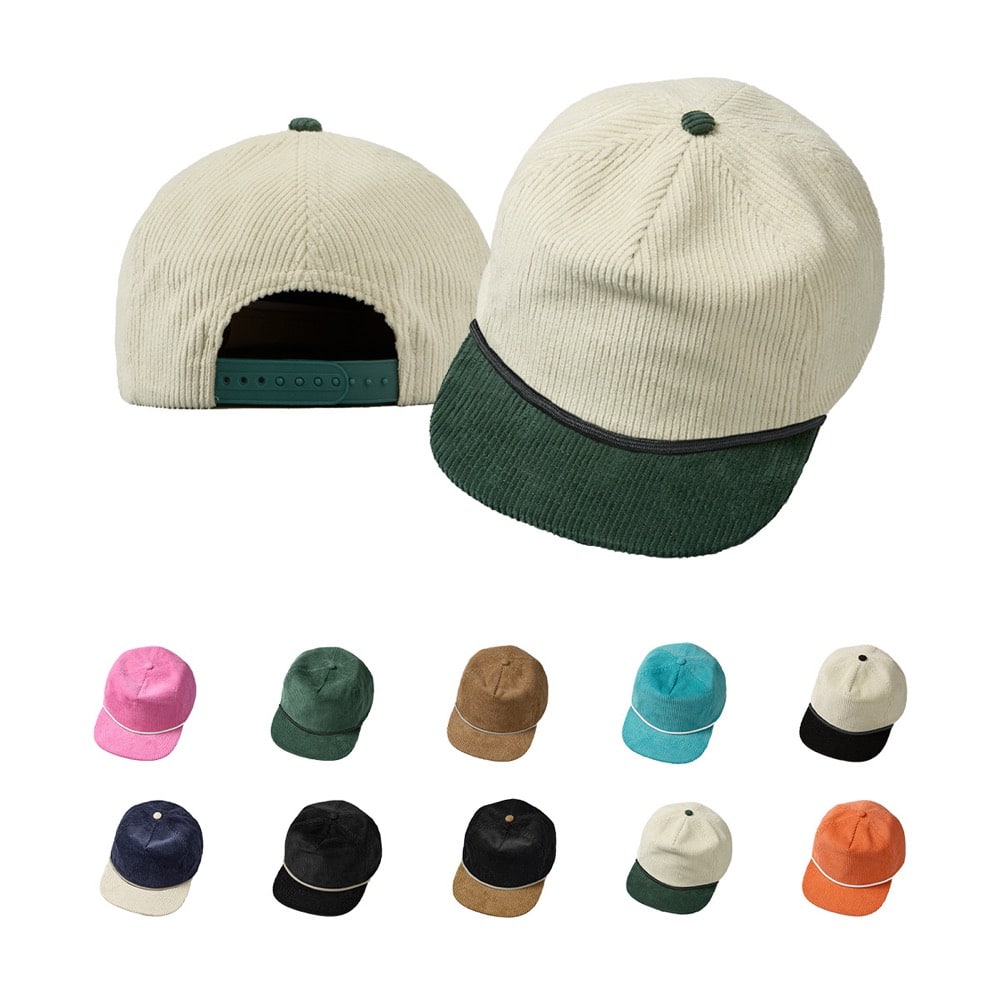
On a cap, fabric texture is only part of the result. Compare crown height and depth, front-panel support, visor curve, closure and size range on a wearer. A sample that looks balanced on a table can feel too shallow or too rigid once worn. The same ribbed fabric may also look different on a five-panel cap, a six-panel cap or a bucket hat because seams interrupt the surface in different places.
If you are still choosing a silhouette, use the custom baseball cap page to frame the fit decision, then specify the corduroy and trim on your sample request. For a full-custom project, the customization options page shows where construction and branding decisions meet.
Make the branding compatible with the ribbed surface
Embroidery, patches and labels each sit differently on a raised surface. A small logo with fine detail can become hard to read when the ribs compete with the stitches. A large, dense design may feel heavy on a soft front panel. Before approving production, ask to see the actual decoration on the selected fabric and hat shape—not only a flat digital mock-up.
Check logo legibility at normal viewing distance, placement relative to seams, how the back of the decoration feels inside the hat and whether the panel keeps the intended shape. A simple mark that remains readable and comfortable may serve the wearer better than the most elaborate version of the artwork.
Build a reference for reorders
For a retail collection or recurring merch program, keep a compact approval record. It should identify:
- the approved finished sample and fabric swatch;
- fabric composition and the agreed rib scale or swatch reference;
- color reference and any approved shade tolerance;
- crown structure, fit, visor shape and closure;
- artwork size, placement, decoration method and label details;
- packing and size or color allocation, if relevant.
These are items to confirm with the supplier, not a promise that every future fabric lot will be visually identical. If a precise color or texture match matters, request a fresh swatch or pre-production sample before a reorder is released.
A practical brief to send your manufacturer
Send a reference image, the intended wearer or selling environment, the cap silhouette, preferred color family, logo artwork, estimated quantity and target delivery window. If you already have a hat whose fit you like, include its measurements or a physical reference. Note which details are essential and which can be adjusted after sampling. This gives the supplier enough context to discuss options without pretending that a photo alone defines the specification.
The final test is straightforward: would someone choose this hat again when they are not required to wear it? Texture attracts attention; fit, proportion and a considered logo make the cap easier to keep in rotation. If you are developing a corduroy style, send SN your reference and project brief so the discussion can start with the sample you actually want to make.
Frequently Asked Questions
Can I choose corduroy from a photo alone?
No. Approve the finished hat rather than choosing fabric from a photo alone, and compare the swatch under the same lighting from multiple directions, since pile direction can alter its apparent shade.
Will a small, detailed logo read well on corduroy?
Not necessarily. A small logo with fine detail can become hard to read when the ribs compete with the stitches. Ask to see the actual decoration on the selected fabric and hat shape, not only a flat digital mock-up.
Will a reorder match the first run exactly?
Not automatically. Keep an approval record of the finished sample, fabric swatch, rib scale, color reference, and decoration — but that is not a promise that every future fabric lot will be visually identical. If a precise match matters, request a fresh swatch or pre-production sample before a reorder is released.