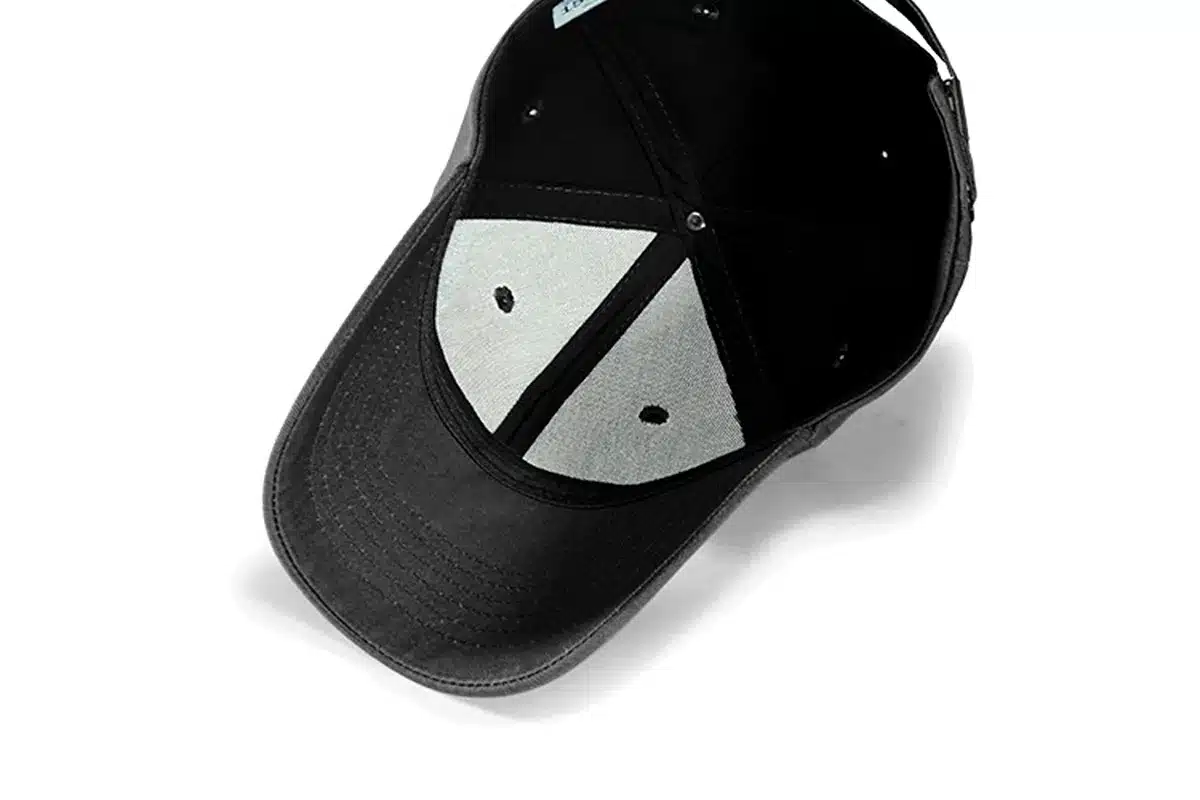
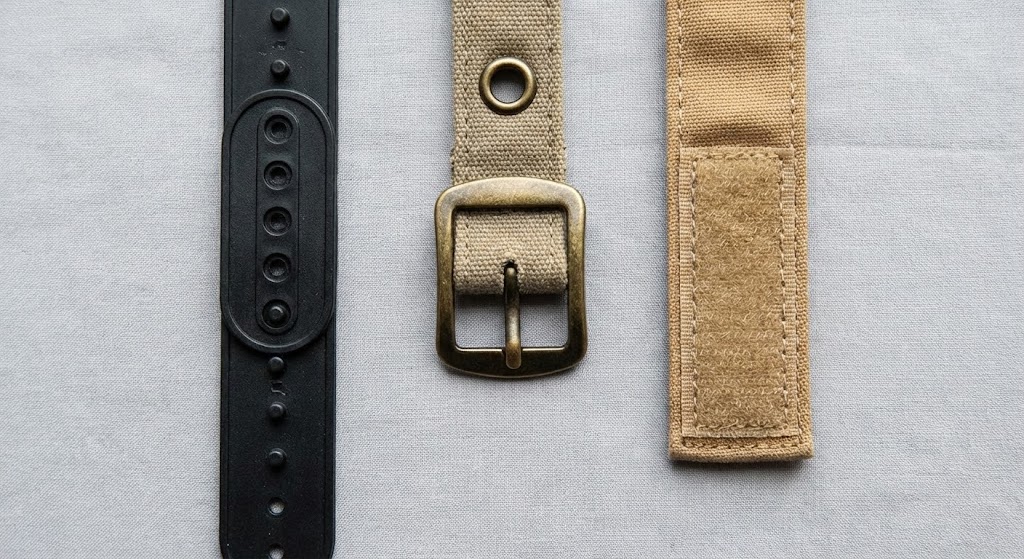
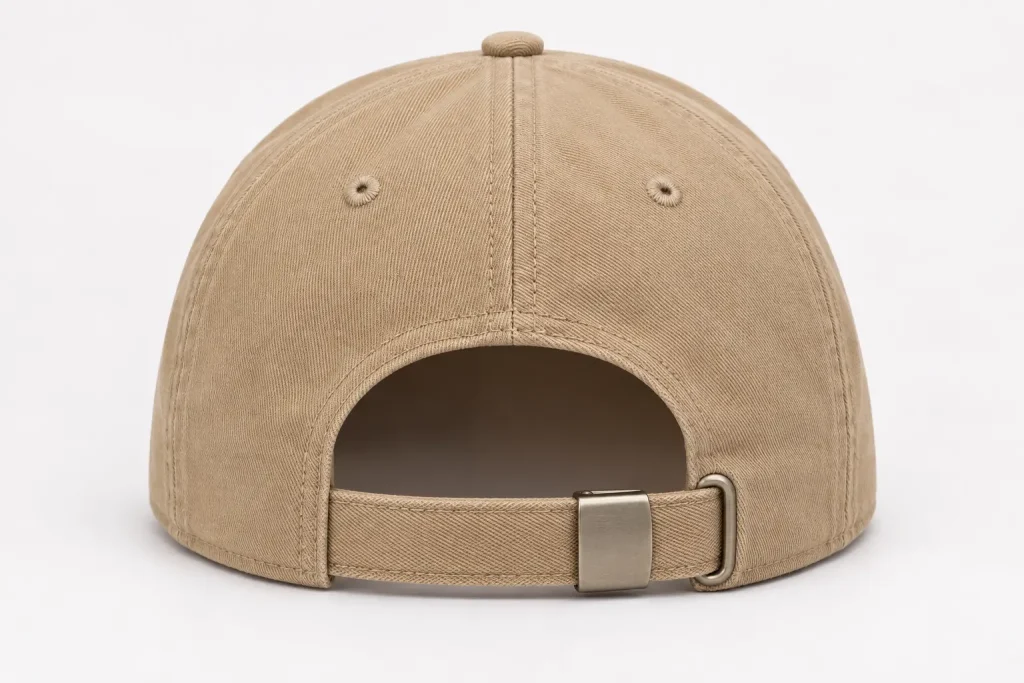
The back of a cap may be less visible than the front logo, but it is still part of the product specification. Different hat closure types change how the cap adjusts, how the rear opening looks, how much space remains for branding, and how the size program must be planned.
There is no single closure that is best for every custom hat. A plastic snapback may suit a structured trucker cap, while a fabric strap and metal adjuster often fit a cleaner baseball-cap design. Stretch-fit and fitted constructions can create an uninterrupted rear profile, but they require more careful sizing. The correct choice depends on the hat structure, intended wearer, brand direction, and order plan.
Quick Comparison of Hat Closure Types
| Closure type | Adjustment | Common use | What buyers should check |
|---|---|---|---|
| Plastic snapback | Fixed snap positions | Trucker hats, structured caps, streetwear styles | Tab length, snap engagement, color, comfort at common settings |
| Fabric strap with metal adjuster | Continuous adjustment | Baseball caps, dad caps, retail-inspired programs | Strap material, hardware finish, tail storage, slippage |
| Hook-and-loop | Continuous overlap adjustment | Uniforms, workwear, promotional and practical caps | Hook exposure, edge comfort, holding area, appearance after repeated use |
| Stretch-fit or elastic | Elastic adjustment within a size range | Performance caps, athletic and clean-back styles | Actual fit range, recovery, sweatband interaction, size labels |
| Fitted | No rear adjustment | Premium team, fashion and closed-back styles | Size run, measurement method, inventory allocation, consistency |
| Webbing strap or cord lock | Sliding adjuster | 5-panel, outdoor and technical caps | Adjuster function, strap end, bulk at the rear, compatibility with light fabric |
These are starting categories rather than universal specifications. Two closures with the same name can still behave differently because the strap width, hardware, rear pattern, sweatband and crown depth are different.
What the Closure Changes on a Custom Cap
A closure does more than change circumference. It also influences the rear opening, the way the two back panels meet, and the balance of the crown at different settings. It can determine whether a rear logo, woven label or small embroidery has enough clear space.
Closure selection can also affect purchasing decisions. Adjustable caps often allow a simpler one-size program, although the usable fit range still needs to be tested. Stretch-fit and fitted caps normally require a defined size plan, which means quantities must be allocated across more than one size.
Plastic Snapback Closures
A snapback uses two plastic tabs that lock together at several positions. It creates a familiar casual and sport-inspired appearance and is widely used on custom trucker hats and structured caps.
The step-by-step adjustment is easy to understand, but it is not infinitely adjustable. Buyers should check the complete cap at several snap positions rather than approving the plastic tabs by themselves. Crown depth and rear-panel shape may change how the same snap setting feels.
- Confirm the tab color, surface finish and shape.
- Open and close several positions during sample review.
- Check for sharp edges, excessive stiffness or weak engagement.
- Review how the tabs attach to the rear panels.
- Confirm that the rear opening and any branding remain balanced.
Fabric Strap and Metal Adjuster Closures
A self-fabric strap with a metal slide, clasp or buckle provides continuous adjustment and a cleaner rear appearance. It is common on unstructured and lower-profile custom baseball caps.
The strap can match the crown fabric or use a contrasting material. The hardware may be plain, engraved or finished in a selected color. These details should be agreed during development; “metal buckle” alone does not fully describe the construction.
Pay particular attention to how the loose strap end is handled. It may feed through an opening, tuck into an internal sleeve or remain visible. Test whether the adjuster holds its position and whether the strap becomes bulky when shortened.
Hook-and-Loop Closures
Hook-and-loop systems are quick to adjust and practical when caps are shared, worn with gloves or frequently resized. They can work well for uniform, workwear and event programs where function is more important than hiding the closure.
The hook section should not remain exposed at common settings, because it may catch hair or other fabric. Check the overlap length, edge finish and stitching. A sample should also show whether the closure looks neat from the rear when adjusted for smaller and larger wearers.
Stretch-Fit and Elastic Closures
Stretch-fit caps use elastic in the sweatband, rear panels or another internal component to provide flexibility without a visible back opening. This can support a clean appearance and is often considered for custom performance hats.
“Stretch-fit” does not mean one size will fit every wearer. The useful range depends on the complete cap pattern, crown depth, sweatband and elastic construction. Review each proposed size on intended wearers and record the approved size labeling before production.
Fitted Caps
A fitted cap has no adjustable rear closure. The uninterrupted back can look clean and intentional, but fit depends on the selected size. This makes measurement, size grading and inventory planning more important.
Before choosing a fitted program, decide how many sizes will be offered and how order quantities will be divided. Avoid assuming that a size label from another hat can be copied without checking the new pattern. Material, sweatband and crown construction can change the finished fit.
Webbing Straps, Cord Locks and Technical Adjusters
Nylon webbing, elastic cord, cord locks and low-profile sliding adjusters are useful when the design calls for an outdoor or technical character. They are often paired with lightweight 5-panel hats and performance constructions.
The adjuster should suit the fabric and the intended use. Check whether it creates uncomfortable bulk, whether the strap end is controlled, and whether the mechanism holds after normal sample handling. Small components should be evaluated as part of the complete hat, not only from a catalog image.
Match the Closure to the Hat Style and Buyer
Retail and lifestyle collections
Fabric straps, metal adjusters and fitted constructions can support a refined or deliberately minimal look. The final choice should match the crown shape, fabric and hardware direction rather than being selected only because it appears “premium” in isolation.
Trucker and streetwear programs
Plastic snapbacks provide a recognizable rear detail and straightforward adjustment. A contrasting snap color can become part of the design, while a matching color keeps the rear quieter.
Uniform and promotional programs
When caps must be distributed across a mixed group, practical adjustment and clear sizing matter more than fashion labels. Snapback and hook-and-loop closures may be suitable, but the complete fit range still needs confirmation.
Performance and outdoor use
Stretch systems, webbing straps and technical adjusters can work with lightweight fabrics, provided the component does not create pressure or unnecessary bulk. Test the cap during the intended type of movement and confirm how the closure interacts with the sweatband.
Rear Branding and Closure Placement
A rear logo is often planned after the front decoration, but the closure may leave limited room. The opening, strap, hardware and rear seams all compete for space. Decide whether the rear mark will sit above the opening, on a side-back panel, on the strap or on a separate label.
Keep rear artwork compact and confirm it on the physical sample. A centered digital mockup may not show how the opening changes when the cap is adjusted. Our customization options page covers the decoration methods that can be coordinated with the closure and crown.
What to Put in the Product Specification
- Closure category: snapback, fabric strap, hook-and-loop, stretch-fit, fitted, webbing or another defined construction.
- Material and color: plastic, crown fabric, webbing, leather alternative, elastic or cord.
- Hardware: adjuster type, finish, color and any branding.
- Rear opening: shape, dimensions and relationship to the closure.
- Fit plan: intended wearer group, adjustment range or fitted size run.
- Branding: rear embroidery, label, strap detail and required clearances.
- Approved reference: photos and the signed-off physical sample.
Recording these details prevents a familiar closure name from being interpreted differently during repeat orders. The custom hat development process explains how specifications, sampling and production approval fit together.
Closure Checks During Sampling
- Wear the complete sample at several adjustment settings.
- Confirm that the crown remains balanced at the rear.
- Open, close and readjust the mechanism repeatedly during normal sample handling.
- Check edges, pressure points, exposed hook surfaces and hardware contact.
- Review the loose strap end and any tuck-away method.
- Confirm that rear embroidery, labels and seams remain clear.
- For stretch-fit or fitted programs, verify every proposed size rather than approving one representative size.
Closure quality is more than hardware weight
A heavier buckle or thicker snap does not automatically create a better cap. Review the complete closure system: strap material, edge finishing, attachment, adjustment range, contact with the wearer and how the back opening relates to the crown. The correct closure should operate smoothly and support the intended fit without making the rear of the hat feel unnecessarily bulky.
During sampling, open and adjust the closure repeatedly, inspect the attachment points and wear the cap at different settings. Record the approved closure, color, strap and rear-branding position together so a later substitution does not change fit or appearance without review.
Hat Closure Types FAQ
Which hat closure is the most adjustable?
Fabric straps with sliding hardware and hook-and-loop systems provide continuous adjustment within their usable range. Snapbacks adjust in fixed steps. The complete cap still determines the actual fit, so compare finished samples rather than closure mechanisms alone.
Is a snapback the same as a fitted cap?
No. A snapback has adjustable plastic tabs and a rear opening. A fitted cap has a closed back and is produced in defined sizes.
Can a closure be customized?
Many closure details can be developed to match the hat, including strap material, color, hardware finish, snap color and selected branding. Feasibility depends on the component, order requirements and approved construction.
Which closure works best for a mixed-size group?
An adjustable closure is usually easier to distribute than a fitted size run, but no closure guarantees a universal fit. Test the complete cap across the intended wearer range.
Choose the Closure as Part of the Complete Hat
The best closure is the one that works with the crown, fabric, sweatband, wearer and visual direction of the complete product. Decide it early, document it clearly and approve it during sampling rather than treating it as a last-minute accessory.
Explore our custom hat styles, or send your project details for a practical review of the crown, closure, sizing and branding together.