
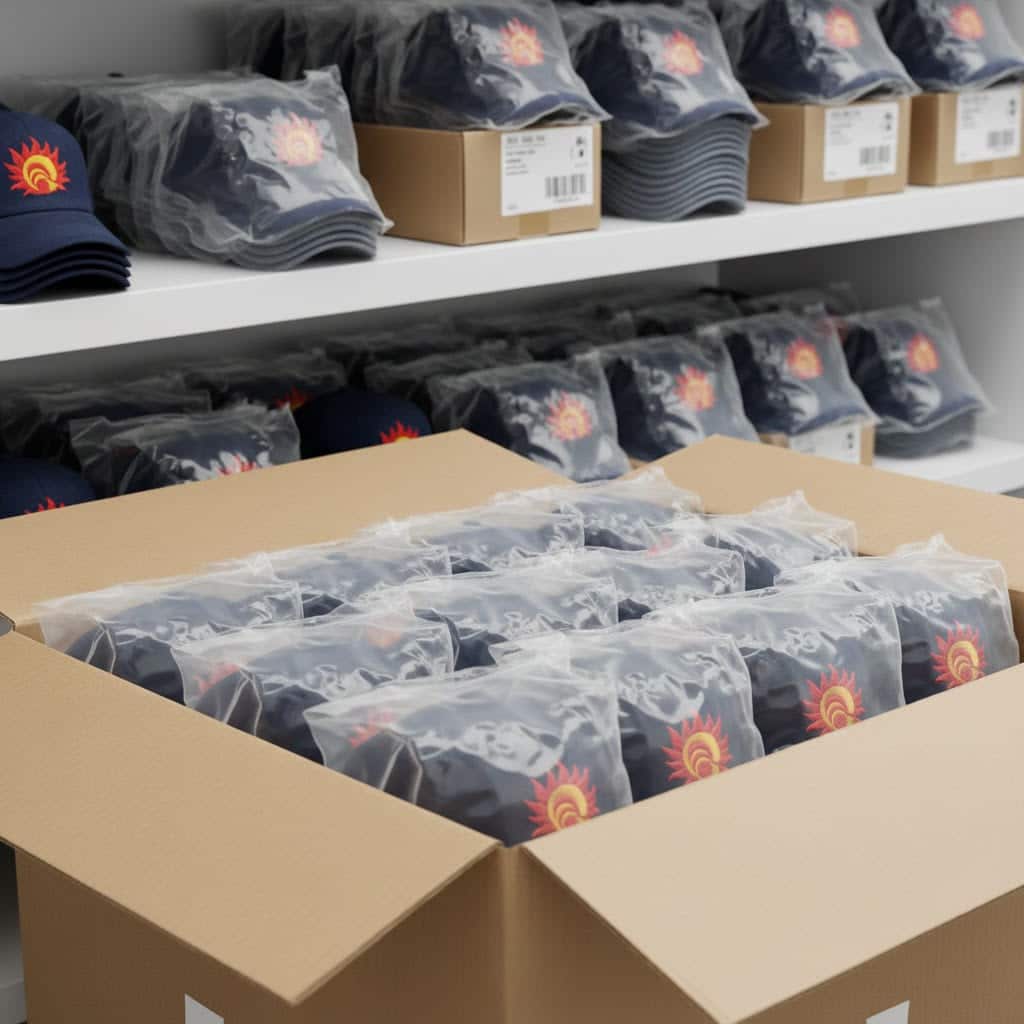
Ordering fully custom hats differs from buying finished blank caps and adding a logo. A full custom project may change the fabric, crown structure, visor, closure, decoration, labels, taping, sweatband, color matching, and packaging. Each choice affects material purchasing and production setup. That is why a custom hat MOQ cannot be judged by one number alone.
For a brand or procurement team, the useful question is not simply, “What is the lowest MOQ?” A better question is, “Which specification can the supplier produce consistently at the quantity we need?” This guide explains the main factors behind minimum order quantity and how to plan a first order without creating avoidable cost or quality risk.
What does MOQ mean for fully custom hats?
MOQ means minimum order quantity. In full custom hat manufacturing, the MOQ normally applies to a confirmed product specification rather than the total number written on a purchase order.
If one order contains several crown shapes, fabric colors, logo treatments, or closures, each combination may function as a separate SKU. A manufacturer may be able to combine some materials across those SKUs, but cutting, decoration, sewing, labels, packing, and inspection still need to follow the approved specification for each version.
For example, compare one larger run of an identical hat with the same total quantity divided among many designs. The divided program requires more material allocation, machine changes, work instructions, sorting, and inspection. The exact effect depends on which components the styles can share.
Hat construction and pattern development
A familiar baseball-cap shape can still involve different crown depths, panel curves, visor shapes, seam allowances, and internal support. The development team must prepare and check any new pattern before bulk cutting begins.
Brands can simplify development by using one approved construction across several colorways instead of launching multiple crown structures at once. Confirm the target fit and silhouette before multiplying the number of styles.
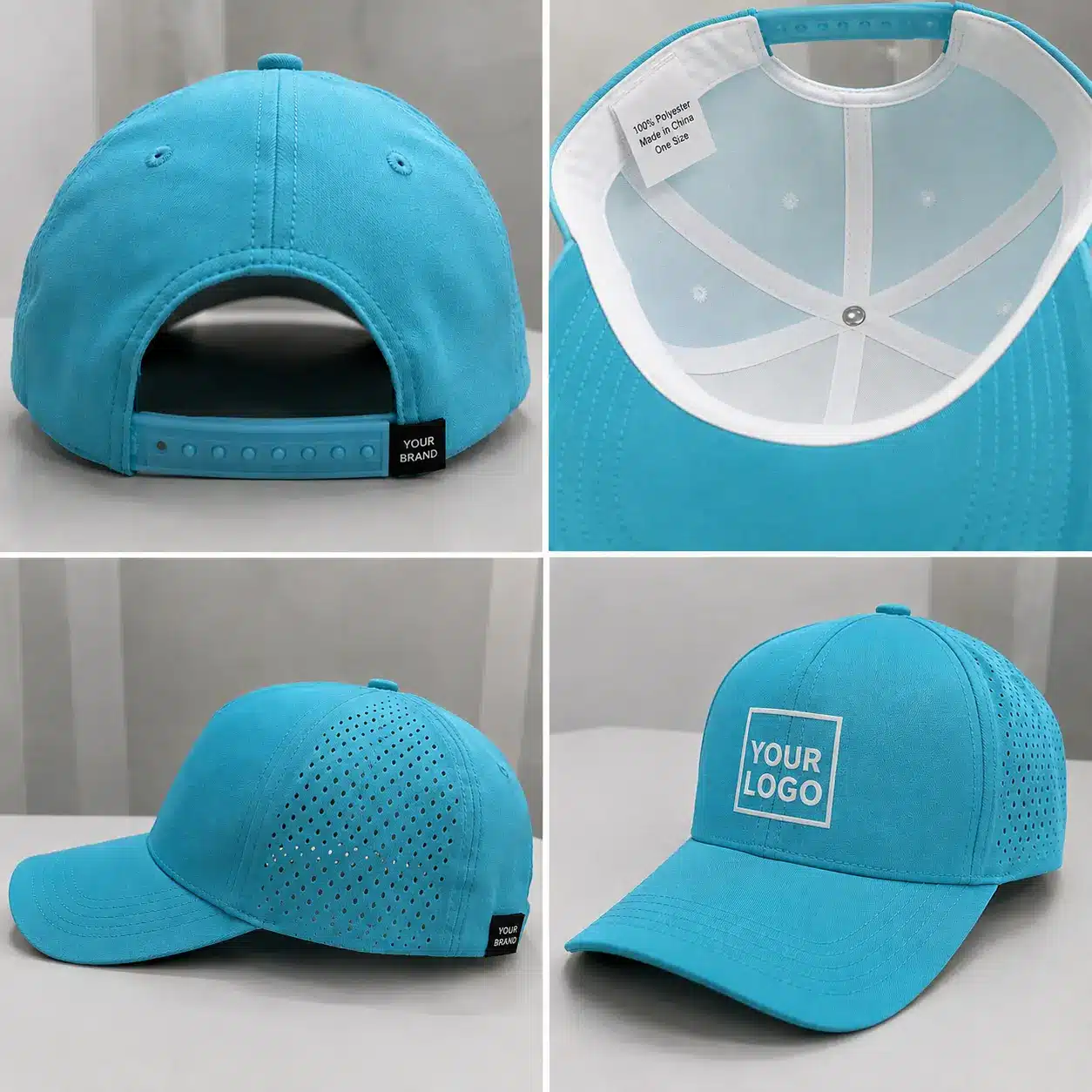
See our full custom OEM hat capabilities for the construction elements our team can develop as part of one program.
Fabric availability and color requirements
Fabric is often an important custom hat MOQ variable. An available material and color may support a different production plan from a special weave, uncommon finish, or custom-dyed color. Performance materials may also have sourcing requirements that differ from common cotton twill or polyester.
Before quoting, the manufacturer needs to know:
- the preferred fabric type and weight;
- the required color or physical color reference;
- acceptance of an available material, if appropriate;
- potential use of one fabric across several styles;
- any required washing, coating, or other treatment.
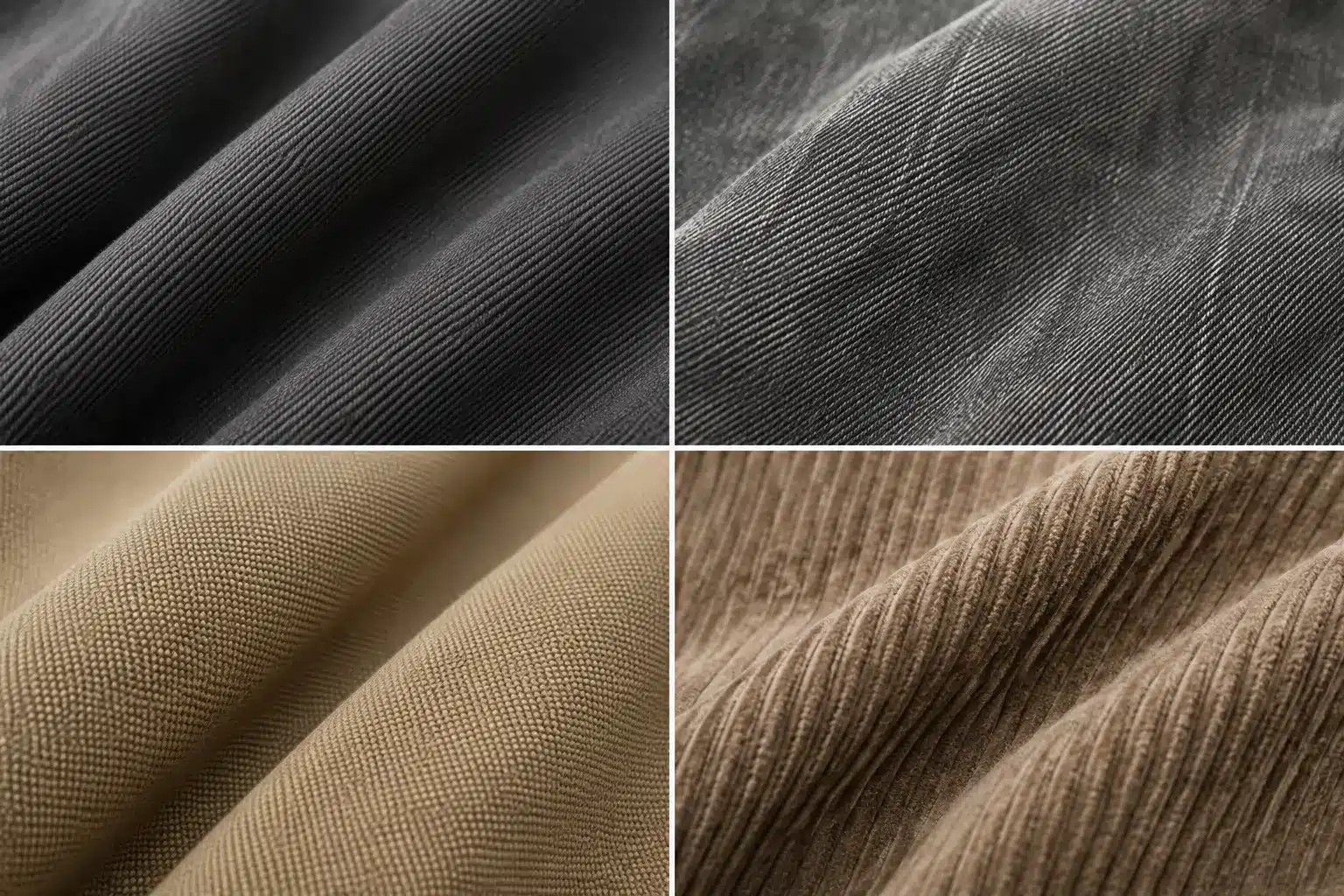
If close brand-color matching is important, approve the color reference and material route early. Changing fabric after sampling can affect hand feel, structure, decoration, cost, and the quantity a supplier can produce.
Decoration method and logo complexity
Flat embroidery, 3D puff, woven patches, embroidered patches, PVC patches, appliqué, screen printing, and transfers require different preparation and production steps. A simple embroidered logo does not create the same setup as a multi-part patch with a custom shape and edge finish.
Important variables include logo dimensions, stitch coverage, number of placements, thread colors, patch construction, attachment method, and how the decoration interacts with seams or curved panels.
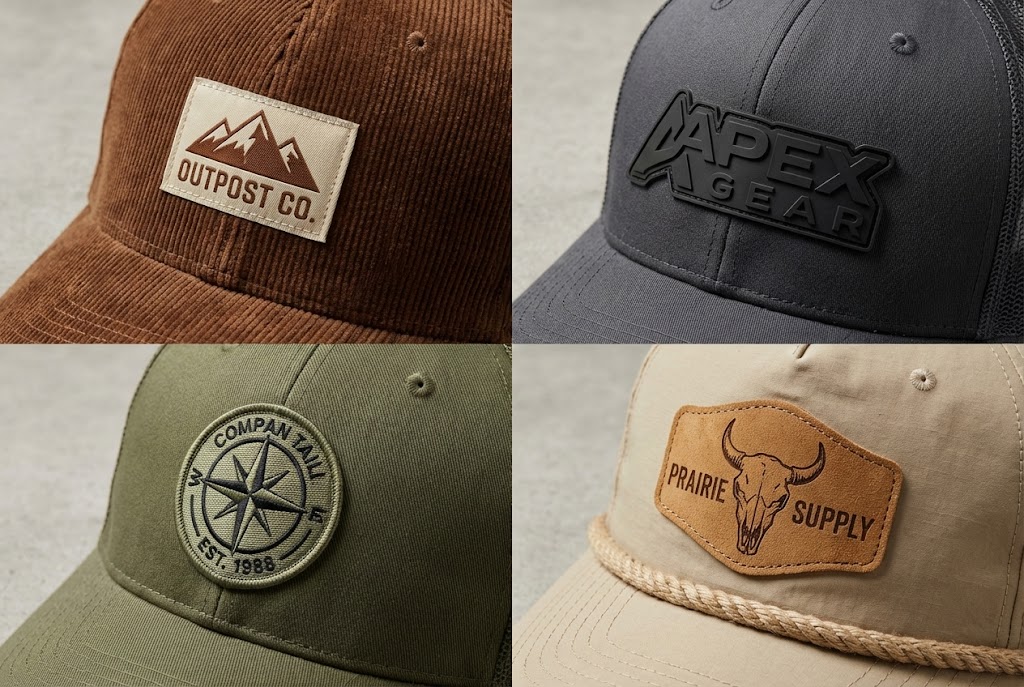
For a first order, it can be more practical to use one decoration system across colorways. Review the available custom hat decoration options before finalizing the artwork.
Number of styles, colors, and sizes
Buyers often focus on total units, but production planning also depends on how those units are divided. Every added variation creates another item that the team must cut, identify, assemble, inspect, and pack correctly.
| Order structure | Production effect | Practical approach |
|---|---|---|
| One style, one color, one logo | One clear material and production plan | Useful for validating a first product |
| One style, several colors | May share construction and some components | Keep fabric and decoration specifications aligned where possible |
| Several styles with one logo | Needs separate patterns and work instructions | Confirm which components can be shared |
| Several styles, colors, and logos | More SKU and production complexity | Prioritize the strongest SKUs or launch in phases |
Reducing SKU count does not mean reducing creativity. It means deciding which differences matter to the customer and which differences only add operational complexity.
Closures, labels, and interior components
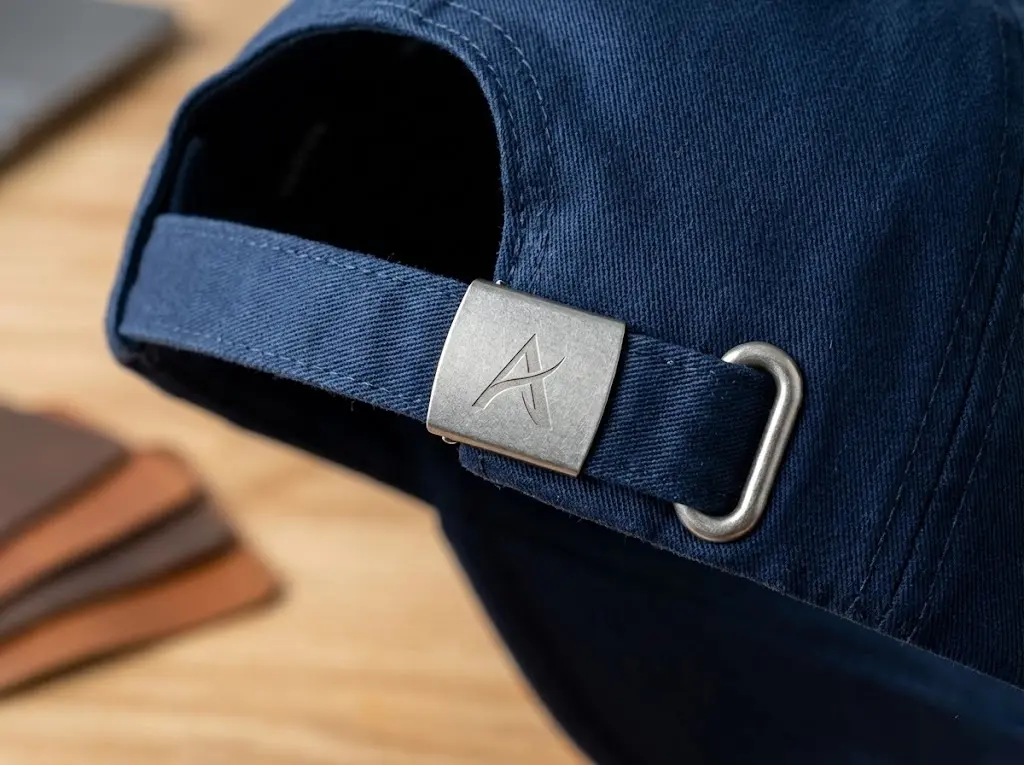
Closures and interior details are easy to overlook during early planning. Custom buckles, snaps, woven labels, printed taping, sweatbands, size labels, and packaging may each come from a different production route.
Review a complete bill of materials before approving the sample. A late component change can affect quantity, cost, and timing. When several styles use the same label, sweatband, or closure, consolidating those components may make the program easier to manage.
Sampling and approval readiness
MOQ planning becomes difficult while the specification is still changing. A sample should answer production questions, not simply communicate a general idea.
Before bulk production, confirm:
- crown shape and fit;
- fabric and color;
- visor shape and stiffness;
- closure type and finish;
- logo dimensions, placement, and method;
- interior labels and taping;
- packing and carton marks.
Clear approvals reduce the risk of purchasing materials for a specification that later changes. Our custom hat production process explains how development, sampling, approval, production, and inspection connect.
Repeat-order planning
Plan the first order with the next order in mind. Keep approved artwork, color references, measurements, material details, and packing instructions together. Ask which components the supplier can repeat and which ones require new sourcing.
Repeat orders may be easier when the specification remains stable, but availability should not be assumed. Fabric lots, hardware, and supplier conditions can change. Reconfirm critical materials and colors before each production run.
How to plan a smaller first custom hat order
A brand with a limited launch quantity can simplify the program without turning it into a blank-cap project:
- Start with one confirmed crown construction.
- Limit the first release to the strongest colorways.
- Use one decoration system across the program.
- Share labels, closures, and interior components where practical.
- Approve the complete specification before adding more SKUs.
- Use sales and fit feedback to plan the next release.
This approach protects the parts customers notice—fit, materials, color, branding, and finish—while removing avoidable production fragmentation.
How to compare custom hat MOQ quotations
Two suppliers can quote different minimum quantities because they are not pricing the same product or production route. Compare the specification behind the number before treating one MOQ as better.
Check whether each quotation includes the same crown construction, fabric, color method, decoration, closures, labels, packaging, sample stages, inspection scope, and delivery basis. Also ask whether the quantity applies to the total order, each style, each color, or each artwork version.
A lower minimum may come with fewer custom components, a narrower color choice, a different material, or a simpler decoration process. That can be a sensible option when it matches the product plan. Calling both products “custom hats” does not make their specifications equivalent.
What to include in a custom hat MOQ request
A useful quote request should include more than a logo file. Send the manufacturer:
- target hat style and crown profile;
- reference photos or an existing sample;
- estimated quantity by style and color;
- fabric preference and color requirements;
- decoration method, dimensions, and placement;
- closure and interior branding details;
- target market and intended use;
- required delivery date and destination.
Clearly identify any undecided details. The manufacturer can then explain which choices affect the custom hat MOQ instead of building a quote around assumptions.
Frequently asked questions
Is MOQ based on the total order or each design?
It depends on which materials and production steps the styles can share. A supplier may treat different structures, fabrics, colors, or logos as separate SKUs even when they appear on one purchase order.
Can different colors be combined to reach the MOQ?
Sometimes, especially when the construction and components are the same. The supplier still needs to check fabric availability, color-specific purchasing requirements, and production allocation before confirming the order.
Does a custom patch change the MOQ?
It can. Patch material, shape, size, backing, edge finish, and attachment method affect the production route. Confirm the patch specification together with the hat specification.
Why can a very small order cost more per hat?
Pattern work, sampling, production setup, work instructions, and inspection still take time. Fewer units must absorb those setup activities, so the unit cost usually increases.
Should a brand choose the lowest available MOQ?
Not automatically. Compare the actual specification, sample quality, included components, approval process, and repeat-order plan. A low number is only useful if the product still meets the brand’s requirements.
Build the MOQ around the product you actually need
The right MOQ is the quantity that supports a stable specification and a workable production plan. Start by defining the hat, reducing avoidable SKU complexity, and confirming the sample before committing materials.
If you are planning a fully custom headwear program, contact our team with your target style, quantity, artwork, and delivery requirements. We can review which choices affect MOQ and outline the next development steps.