

Irish Open 2026 and the Solheim Cup put golf culture in front of spectators, club members, sponsors, retailers, and corporate-event buyers at the same time. That attention does not automatically prove demand for a particular hat. It does, however, show why a golf headwear program needs more structure than placing one tournament logo on one stock cap.
For a pro shop, country club, golf apparel brand, or promotional products distributor, the useful question is not “Which cap is trending this week?” It is “Which headwear roles do we need to cover, and how should each product be built?” A rope hat can anchor the lifestyle side of the range, while lighter performance caps and visors can cover play, staff, and warm-weather use.
Buyer takeaway: Use event interest as a planning signal, not as permission to copy protected tournament marks. Define the buyer, wearing environment, price position, artwork rights, and delivery date before approving a hat specification.
Why These Golf Events Matter to Headwear Buyers
The 2026 Amgen Irish Open is scheduled for September 10–13, while the Solheim Cup competition takes place September 11–13 at Bernardus Golf in the Netherlands. Both concentrate attention around live play, national or regional identity, sponsor visibility, hospitality, and retail merchandise. Those are distinct commercial needs, even when they share the same event calendar.
A tournament-related program may include products for several audiences:
| Program role | Primary wearer | Product priority | Typical design direction |
|---|---|---|---|
| Pro shop retail | Members and visiting golfers | Perceived value and repeat wear | Refined rope cap, tonal embroidery, club-inspired colors |
| Participant pack | Amateur or corporate-event players | Comfort across a full round | Lightweight cap or visor with restrained branding |
| Staff and volunteers | Operational teams | Visibility, fit range, and easy identification | Consistent color block and clear role marking |
| Sponsor giveaway | Guests and prospects | Broad appeal and cost control | Simple cap shape with one readable decoration |
| Limited retail drop | Collectors and golf-lifestyle customers | Story, color, and scarcity | Distinctive rope, side detail, or premium patch |
This separation prevents a common sourcing mistake: asking one hat to perform as premium retail merchandise, an all-day playing cap, and a high-volume giveaway at the same time.

Why Rope Hats Fit Golf Culture
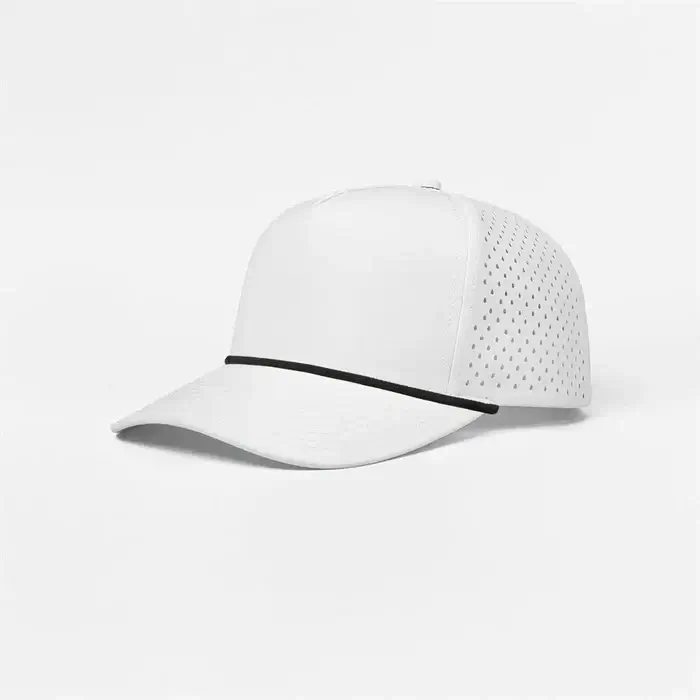
The rope across the front of the visor is a small construction detail with a strong visual effect. It creates a horizontal line between the crown and the brim, giving the cap a deliberate, finished appearance. In golf merchandise, that detail can feel both heritage-led and contemporary, depending on the crown shape, fabric, and color.
Rope hats also work well in a coordinated range. A brand can keep the same front artwork while changing the rope color, crown fabric, side detail, or under-visor treatment. That produces recognizable variations without forcing every item to carry more decoration.
The rope itself should not be treated as an afterthought. Its thickness, twist, tension, end attachment, and position against the visor all affect the finished look. A loose or oversized rope can dominate a shallow crown. A thin rope may disappear on a taller structured cap. These proportions need to be reviewed on a physical sample.
Get the Crown, Rope, and Visor Proportions Right
A golf rope hat is a system of connected proportions. Changing one element can alter how the entire front reads.
Crown shape
A structured crown gives front embroidery or a patch a stable presentation and a cleaner retail silhouette. A softer crown creates a more relaxed club or resort look, but artwork can appear less rigid when the cap is not being worn. Five-panel constructions provide an uninterrupted front area, while six-panel designs introduce a center seam that must be considered during artwork placement.
Rope scale and position
The rope should sit consistently above the visor edge without interfering with the front decoration. Buyers should review its diameter, color, attachment points, and tension. The sample should also be checked from the side, because a front view alone may hide uneven attachment or a rope that lifts away from the visor.
Visor profile
A flatter visor can support a younger or more fashion-led presentation. A pre-curved visor usually reads as more traditional and may be easier for a broad golf audience to wear immediately. Neither profile is automatically more “premium.” The right decision depends on the retail concept, crown height, and target wearer.
Should the Rope Match the Hat?
No. A front rope does not have to match the crown or visor. It can follow one of three useful color systems:
- Tonal: rope, crown, and visor stay within one color family for an understated pro-shop look.
- Contrast: the rope becomes a clear accent that helps the product stand out at retail.
- Coordinated: the rope picks up a color from approved artwork, side embroidery, an under-visor detail, or the wider apparel collection.
Contrast works best when it has a reason. Adding a bright rope only because it looks different can make the cap harder to coordinate with apparel. Request physical color references when exact matching matters; screen colors and material finishes can create misleading expectations.
Cotton Lifestyle Hat or Performance Golf Hat?
The choice begins with use, not with a claim that one material is universally better.
| Decision factor | Cotton or cotton-rich lifestyle cap | Performance synthetic cap |
|---|---|---|
| Best fit | Pro shops, resorts, hospitality, lifestyle collections | Playing, warm-weather events, staff, active programs |
| Hand feel | Familiar, soft, and casual | Lightweight and technical |
| Visual character | Heritage, washed, or premium-casual | Clean, modern, and sport-focused |
| Ventilation options | Eyelets and construction choices | Mesh zones or laser-cut perforations where suitable |
| Decoration caution | Fabric stability and wash effect | Heat sensitivity, puckering, and decoration weight |
Terms such as “water-repellent,” “UV protective,” or “moisture-wicking” should only be used when the selected fabric, construction, and test evidence support them. A buyer should not assume that every polyester or nylon cap delivers the same performance.
For a broader active range, compare rope-cap concepts with other custom performance hats. A conventional curved-visor silhouette may also be developed through a custom baseball cap program when rope detailing is not central to the collection.
Embroidery, Woven Patch, or Leather Patch?
Decoration should support the artwork and the wearing environment. It should not be selected only because it looks premium in isolation.
- Direct embroidery suits bold lettering and simplified marks. Stitch density, front-panel support, and logo size must be balanced so the crown does not become distorted.
- Woven patches can hold smaller lettering and finer line work than standard embroidery. The border, shape, and attachment method still need approval on the actual cap.
- Leather or leather-look patches can support a heritage or club presentation. Buyers should check material consistency, edge finish, engraving contrast, care requirements, and whether the material suits the expected exposure.
A lightweight performance cap often benefits from lighter, more controlled decoration. A large, dense embroidered area can change the hand feel and front-panel behavior. Review the full set of customization options before approving artwork independently of the cap construction.
Build Different Hats for Retail, Participants, and Sponsors
A useful golf merchandise range does not need ten unrelated designs. It can start with three roles:
- Retail hero: a rope cap with the strongest material story, controlled branding, and a distinctive color combination.
- Playing option: a lighter performance cap or sports visor designed around comfort, ventilation, and secure fit.
- Program volume option: a broadly wearable shape with simplified decoration for staff, participants, or sponsor distribution.
Keeping one shared design cue—such as a color, small side mark, or artwork family—connects the range. Fit, fabric, and decoration can then change according to use.
What the Imperial Solheim Cup Example Actually Shows
Imperial announced that it was the official hat supplier for the 2024 U.S. Solheim Cup Team and described working with the team captain on custom headwear. The useful lesson is not to copy those products or assume that the same partnership applies to every edition. It is that tournament headwear can be developed as a coordinated identity system rather than as a single logo application.
For an independent club, brand, or event supplier, the same planning principle can be applied without using protected tournament marks: establish an approved color story, define products by audience, and repeat a small number of recognizable design cues across the collection.
Create Event-Led Colorways Without Using Official Logos
Event-inspired does not mean event-licensed. Names, logos, trophies, team marks, sponsor graphics, and other protected assets require permission from the appropriate rights holder. A manufacturer cannot grant those rights on behalf of a buyer.
Unlicensed programs can still build a relevant seasonal story through original design:
- Use a landscape or season-inspired palette rather than copying an official identity.
- Develop original golf, club, or location artwork cleared by the buyer.
- Create a dated corporate golf program using the client’s own approved marks.
- Use rope and under-visor colors to distinguish editions without adding protected graphics.
- Document who owns or has permission to use every supplied artwork element.
This approach gives country clubs, corporate events, and golf-lifestyle brands a timely merchandise story while keeping the approval responsibility clear.
Plan Backward from the Event Date
Do not begin with a fixed production promise. Begin with the in-hand date and ask the supplier to confirm a project-specific schedule. The path normally includes specification, artwork review, color references, sample development, sample feedback, pre-production approval, bulk production, quality checks, and shipping.
Extra revisions, custom-developed materials, complex patches, multiple colorways, or rights-holder approvals can extend the schedule. Build decision time into the plan and identify who can approve fit, color, artwork, and packaging. The practical custom hat development process should be agreed before the first sample begins.
A Practical RFQ Checklist
Send enough information for the supplier to recommend a construction rather than guess:
- Program type and target wearer
- Required in-hand date and destination
- Estimated quantity by color and design
- Crown structure, panel count, visor profile, and closure preference
- Lifestyle or performance fabric direction
- Rope color, scale, and matching requirement
- Artwork files, decoration preference, and proof of rights where required
- Packaging, labeling, testing, or compliance requirements specific to the program
Irish Open 2026 and the Solheim Cup are useful reminders that golf headwear serves several audiences at once. The strongest program does not chase an event name. It turns a clear audience plan into a balanced range of rope hats, performance caps, and visors that can be sampled, approved, and produced responsibly.
Develop a Golf Headwear Program
Share the wearer, use case, quantity, artwork, target date, and preferred hat direction. We can review the specification and organize the sampling path for a full-custom golf headwear program.
Editorial note: This article discusses public golf events as market context. SN International is not affiliated with the Irish Open, the Solheim Cup, Imperial, the LPGA, the Ladies European Tour, or the DP World Tour. All trademarks belong to their respective owners.
Frequently Asked Questions
Why are rope hats associated with golf merchandise?
The front rope creates a recognizable golf and leisure reference, but the complete crown, visor, fabric and fit determine whether the product suits a tournament, pro shop or club program.
Does the rope color need to match the hat body?
No. It can match, contrast or connect another brand color. Review the rope diameter, attachment and color with the complete physical sample.
Should tournament retail hats and participant hats be identical?
Not necessarily. Retail, participant, staff and sponsor products can have different budgets, performance needs, branding and packing. Define each use before finalizing the assortment.