
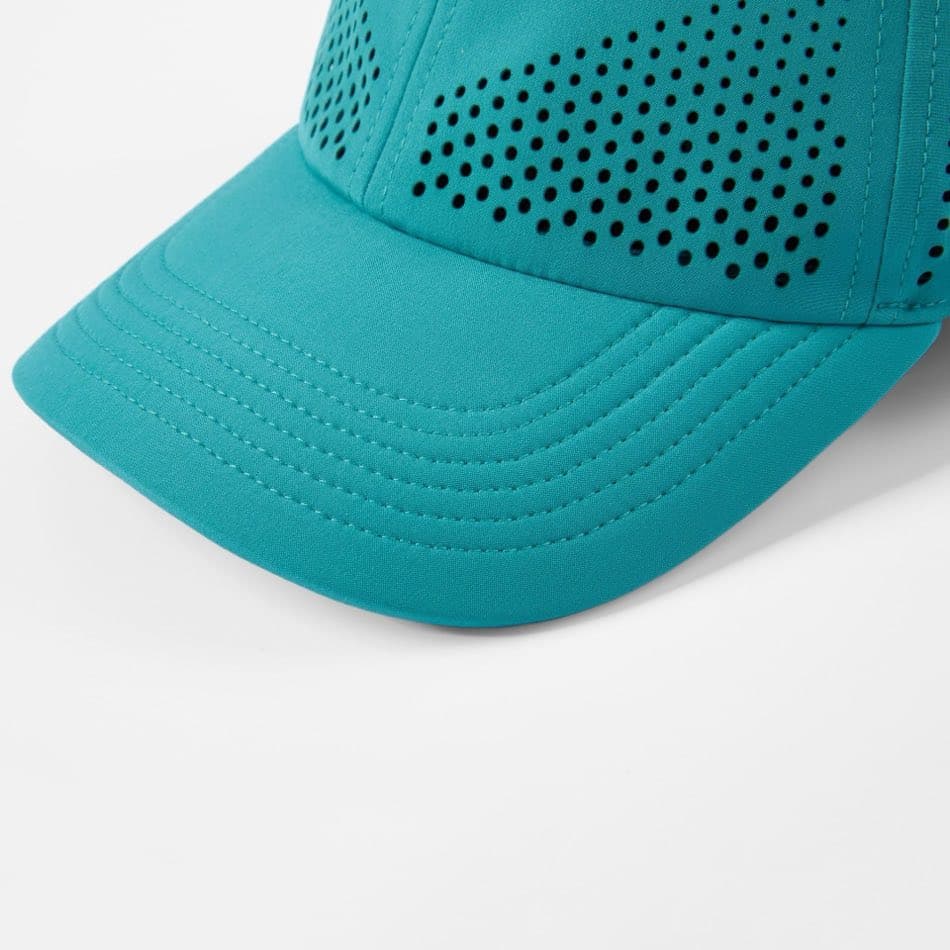
Laser-cut openings are easy to see on a performance cap. They are not enough to tell a buyer how the cap will feel, how the side panel will hold its shape or whether a logo can be added cleanly. The useful purchasing question is where the holes sit in relation to seams, support and decoration, and what the finished sample shows after wear and handling.
For staff uniforms, golf programs or branded retail, start with the intended wearer and setting. A cap may need a neat silhouette, a comfortable sweatband and decoration that does not make the front heavy. Those choices should be reviewed together. Our custom performance hats page covers the wider product brief; here the focus is the visible opening structure.
Place openings on the actual panel layout
Ask for a side, front and rear view of the hat, not only a close-up of the holes. Record which panels are perforated, how the pattern begins and ends near seams, and whether the openings reach an area that will be folded or stitched. A perforated sample can look clean from the side while the last row of holes sits awkwardly against a seam allowance.
The hole pattern may be evenly spaced, graduated or shaped as a graphic. Decide whether the pattern is decorative, intended to permit airflow or both. Do not turn a visible construction into a numerical ventilation claim without a method of measuring and supporting that claim. A photo cannot establish how much air moves through the hat in real use.
Check the edge and panel after handling
Review the cut edges under normal light and at close range. Look for uneven openings, rough edges, discoloration or distortion around the holes. Then handle the sample as a wearer would: put it on, adjust the closure and set it down repeatedly. Recheck the panel, especially near seams and high-contact areas.
Fabric type, weight, finish and any backing can change the result. A hole layout that works on one material should be sampled again when the fabric changes. Avoid promising a particular durability outcome from the process name alone. Ask the supplier to show the actual selected material and finished construction.
Keep decoration away from a weak or busy area
A front logo competes visually with a busy hole pattern if both have equal weight. Map the front decoration, side branding and opening field on one layout before sampling. Leave enough unperforated area for embroidery, patch attachment or print, and inspect the backside of any stitching where it crosses the panel.
Large dense embroidery or a thick patch can add weight and make a light cap feel front-heavy. A smaller flat mark may suit some projects, but that is a design option, not a universal rule. Compare decorated and undecorated samples if possible. Check logo position while the hat is on a head as well as in the flat product photo.
Sweatband and interior still matter
Openings on the outside do not tell the buyer what touches the forehead. Check sweatband thickness, seam placement, stitching, contact feel and fit on the physical sample. Look at the interior finishing around perforated panels and the join to the visor. If a supplier describes a fabric as moisture-wicking, quick-drying or UV protective, request the relevant material specification or test evidence before repeating those claims in a product listing.
For repeated orders, retain the approved opening layout, sample photos and fabric reference together. A similar-looking cap from another fabric may not reproduce the same edge finish or silhouette.
Approve a small, specific sample record
- Full-hat front, side, rear and inside photos.
- Panel map showing the opening field and distance from seams and decoration.
- Close-ups of cut edges and the last row of holes.
- Actual fabric, color, weight and any lining or backing under review.
- Decorated sample showing logo size, method, position and backing.
- Fit and sweatband notes from the intended wearing context.
SN’s usual starting minimum for regular custom hats is 100 pieces per style, per color. Construction, test requirements and quotation depend on the selected project. Send a reference hat or opening layout, intended use, artwork, quantity by color and any material documents already available. We can discuss what to verify on the sample before bulk production. Start a performance cap project.
Buyer questions
Do laser-cut holes prove that a cap is breathable?
They show openings in the material. A comparative or numerical airflow claim needs suitable evidence; wearing comfort also depends on fit, fabric and the inside construction.
Can embroidery go over a perforated panel?
It depends on placement, hole layout, backing, stitch density and panel stability. Approve the chosen method on the selected fabric.
Does a perforated cap automatically offer UV protection?
No. An image of openings does not establish a protection rating. Request fabric or finished-product test documentation for any such claim.