
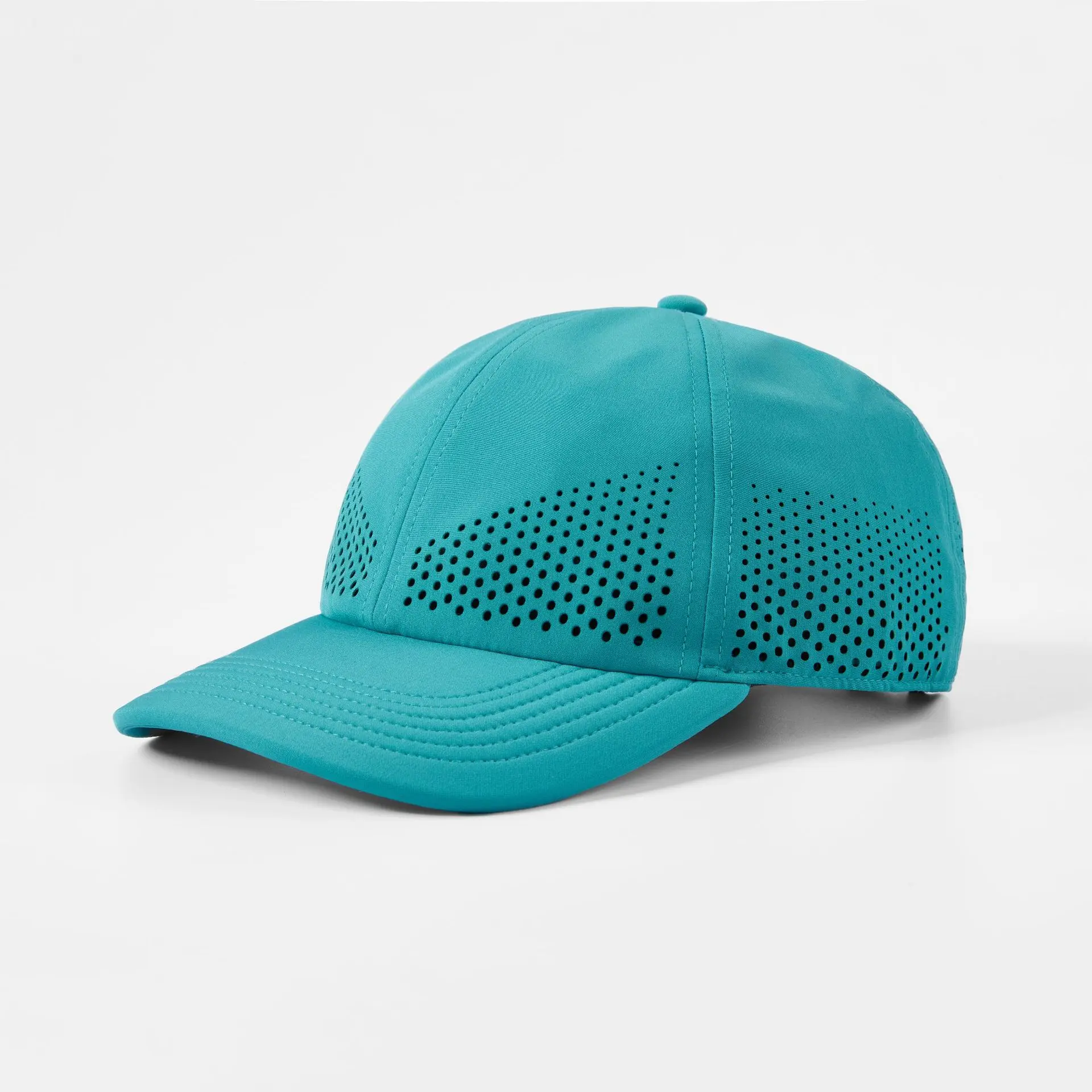
Shelton vs Tiafoe became part of a major US search surge during the 2026 US Open. For headwear buyers, the useful story is not the score. It is how a high-visibility tennis event turns caps and visors into performance equipment, staff uniform, sponsor inventory, retail merchandise, and sporty-preppy fashion at the same time.
That attention does not automatically equal demand for custom tennis hats. Match searches are mostly informational and disappear quickly. The opportunity belongs to tennis clubs, academies, country clubs, tournament organizers, sportswear brands, distributors, and licensed merchandise companies that plan the right product before the event window opens.
Why tennis events are also headwear showcases
Tennis puts headwear in unusually clear view. Players compete outdoors for long periods, officials and ball crews wear coordinated uniforms, spectators dress for both sun and style, and sponsors appear across courtside experiences and merchandise. One tournament can therefore create several distinct headwear needs rather than one generic logo cap.
The US Open adds a strong lifestyle layer. Its New York setting, hospitality programs, retail collections, and brand partnerships allow a functional cap to move beyond the court. A simple silhouette can become part of a sporty-preppy outfit when color, fit, decoration, and apparel coordination are planned as one collection.
How is a tennis hat different from a regular baseball cap?
The silhouettes can overlap. A tennis hat may still use a familiar five-panel or six-panel construction and a curved visor. The difference is the design priority.
- Weight: a performance tennis hat usually minimizes unnecessary bulk so it feels stable during repeated movement.
- Heat and moisture management: the crown, ventilation, and sweatband should work together instead of relying on a single “performance” fabric label.
- Fit security: the cap should remain comfortable through serves, lateral movement, and long wear without excessive pressure.
- Visor function: visor length, curve, stiffness, and viewing clearance matter on court.
- Decoration load: the logo method should not overwhelm a lightweight crown or create an uncomfortable stiff area.
A retail baseball cap can prioritize hand feel, fashion shape, heavy decoration, or a structured front. A performance tennis cap may use some of those features, but every addition needs to justify its effect on weight, airflow, flexibility, and comfort. Our Custom Performance Hats page shows how these construction decisions can be developed together.
Performance hat or sports visor?
A performance cap covers the crown and provides more space for logos, color blocking, panels, and interior branding. It can suit players, coaches, event staff, academies, sponsor programs, and retail collections. Crown coverage may also be important to the wearer, but any specific UV or UPF claim should be supported by testing for the finished material or product.
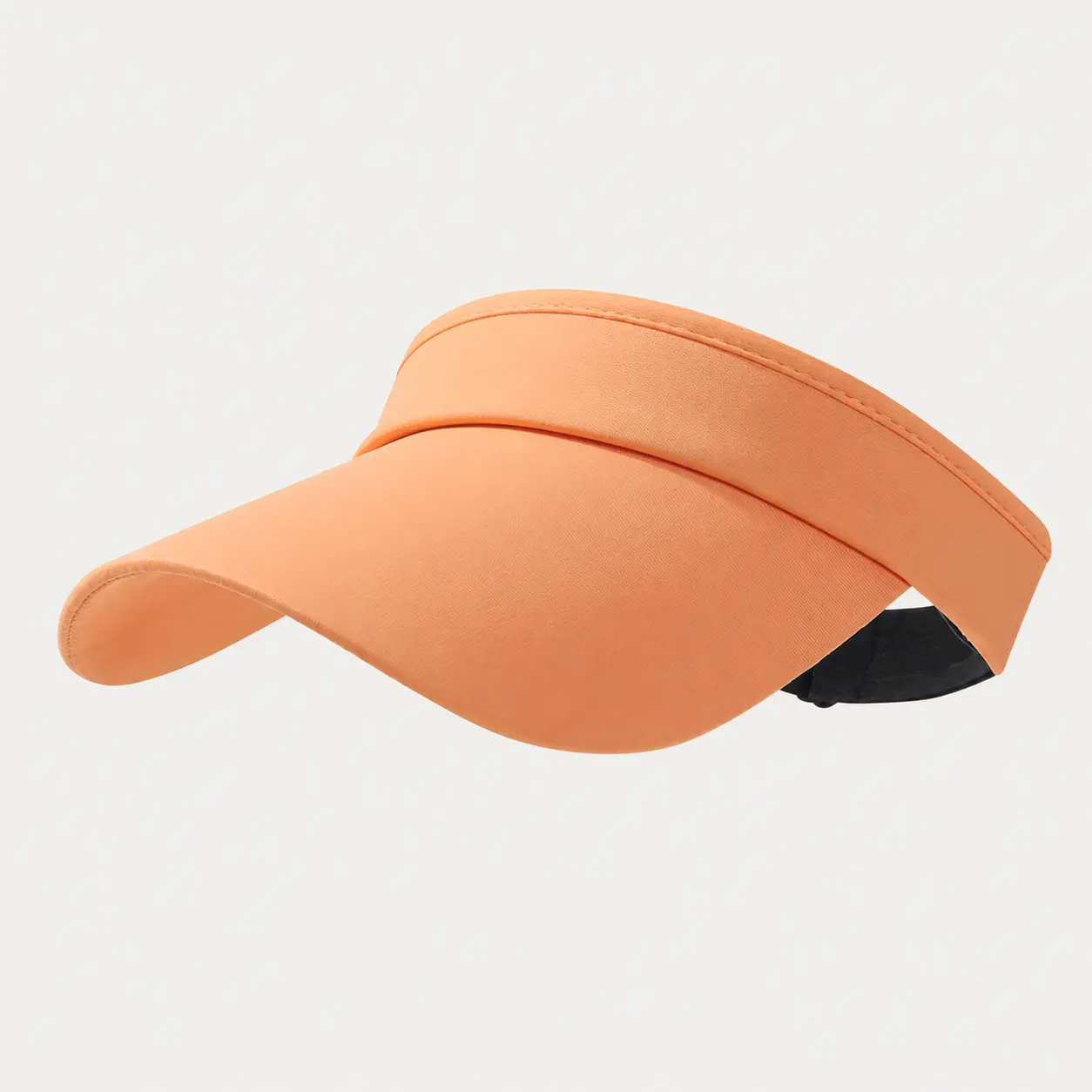
A sports visor leaves the top of the head open. It can feel less enclosed in heat, accommodates certain hairstyles, and creates a classic tennis or country-club look. The tradeoff is less crown coverage and less surface area for branding. Visor band depth, closure, sweatband comfort, and visor balance all need to be sampled.
Many programs benefit from offering both. The cap can serve staff, coaches, and customers who prefer coverage, while the visor adds another fit and style option without changing the overall collection identity.
Which materials work for heat, sun, and perspiration?
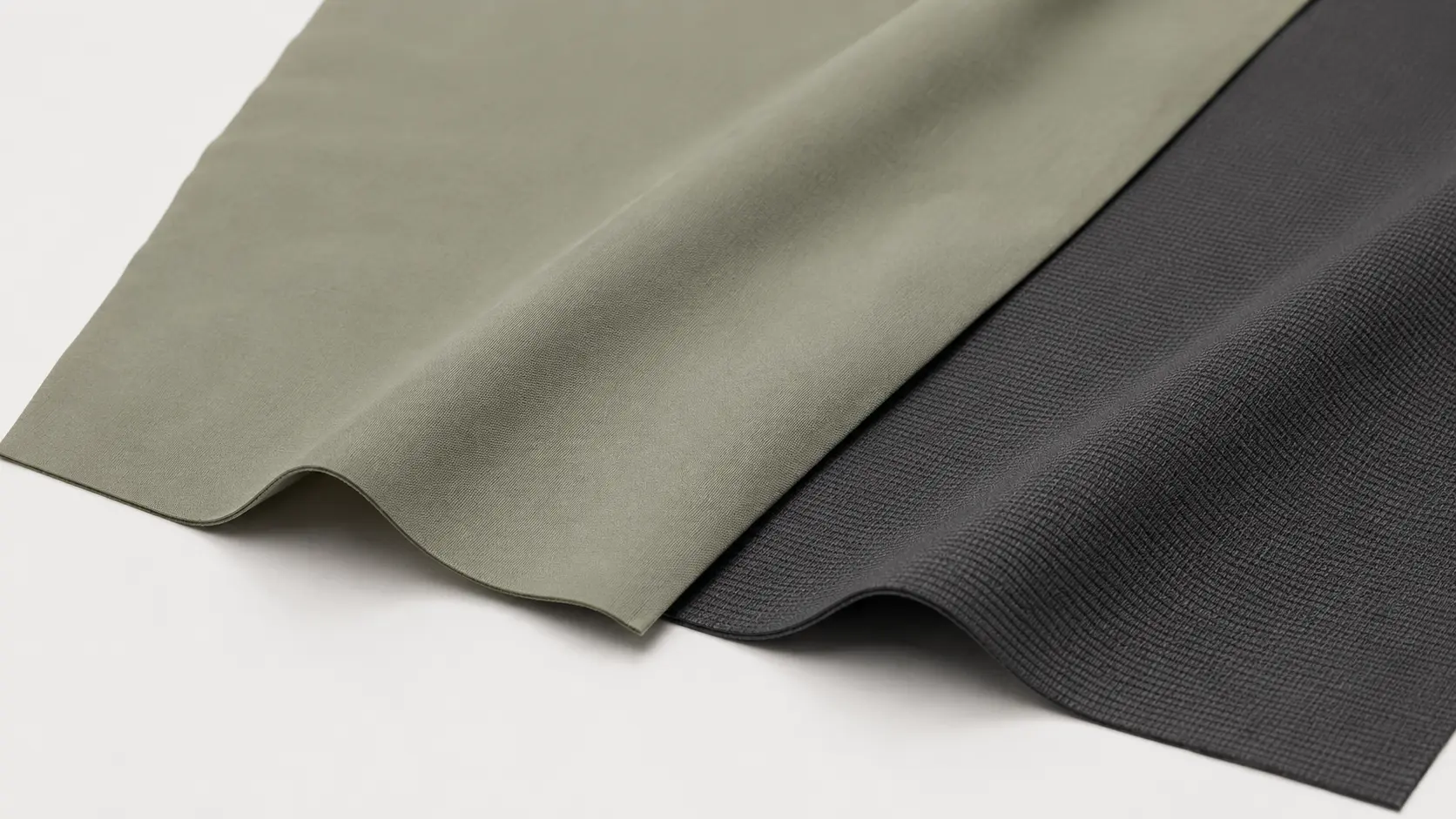
There is no single required fabric for performance tennis hats. Lightweight woven polyester and nylon are common starting points because they can be engineered for low weight, controlled stretch, and faster drying than many heavier cotton constructions. Blended fabrics and performance meshes can also work when their stretch recovery, color, feel, and decoration behavior match the project.
Buyers should evaluate a fabric as part of the complete cap, not select it from a fiber name alone. Useful sample questions include:
- Does the fabric recover after stretching, or does the crown become loose?
- Does the surface show needle marks, puckering, or heat-transfer outlines?
- How does the color appear when dry, damp, and under bright outdoor light?
- Does the material feel comfortable against the forehead and side panels?
- Are water resistance, moisture management, or UPF claims actually required, and what test evidence will support them?
This avoids turning broad marketing language into an unsupported product promise.
How should laser holes, mesh, and the sweatband work together?
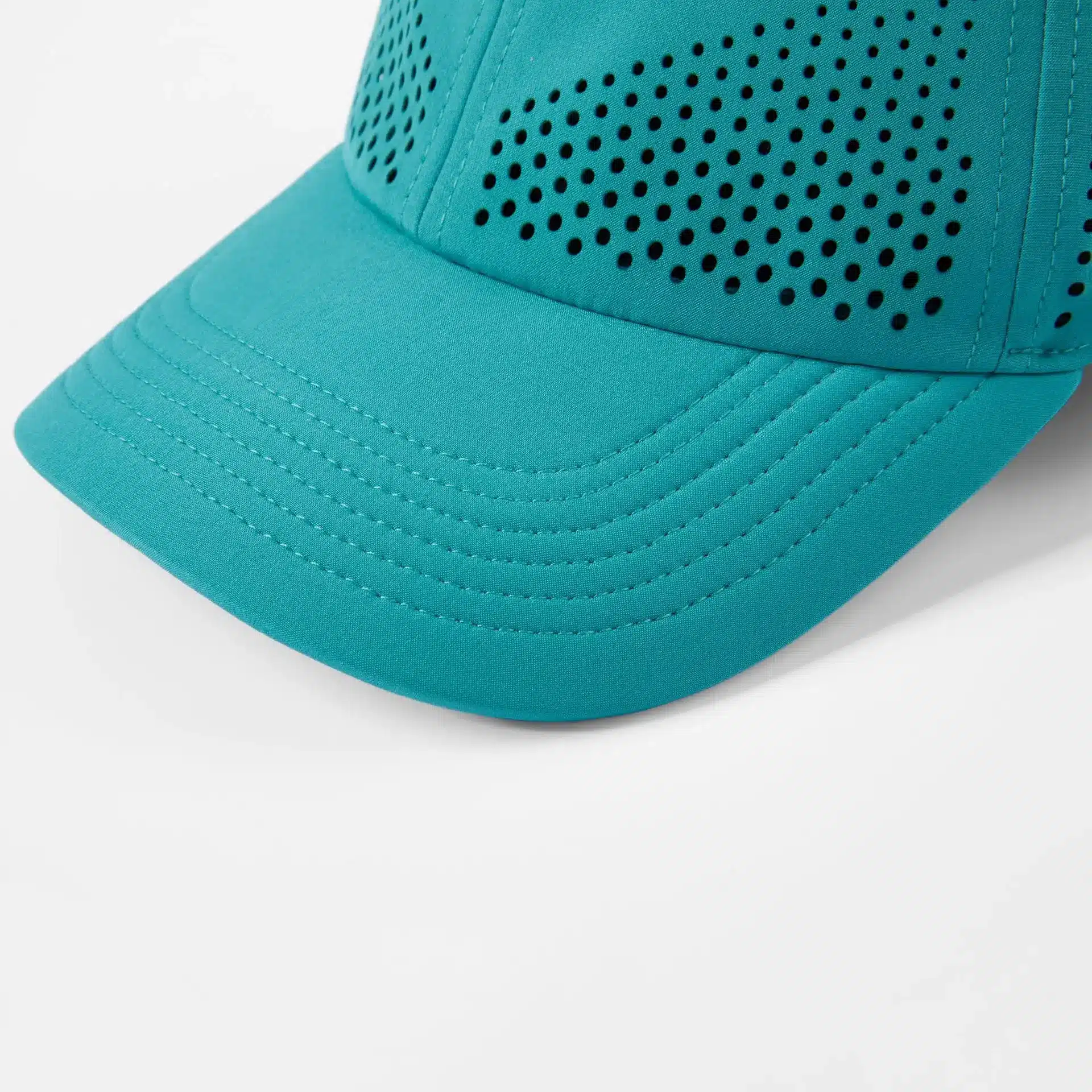
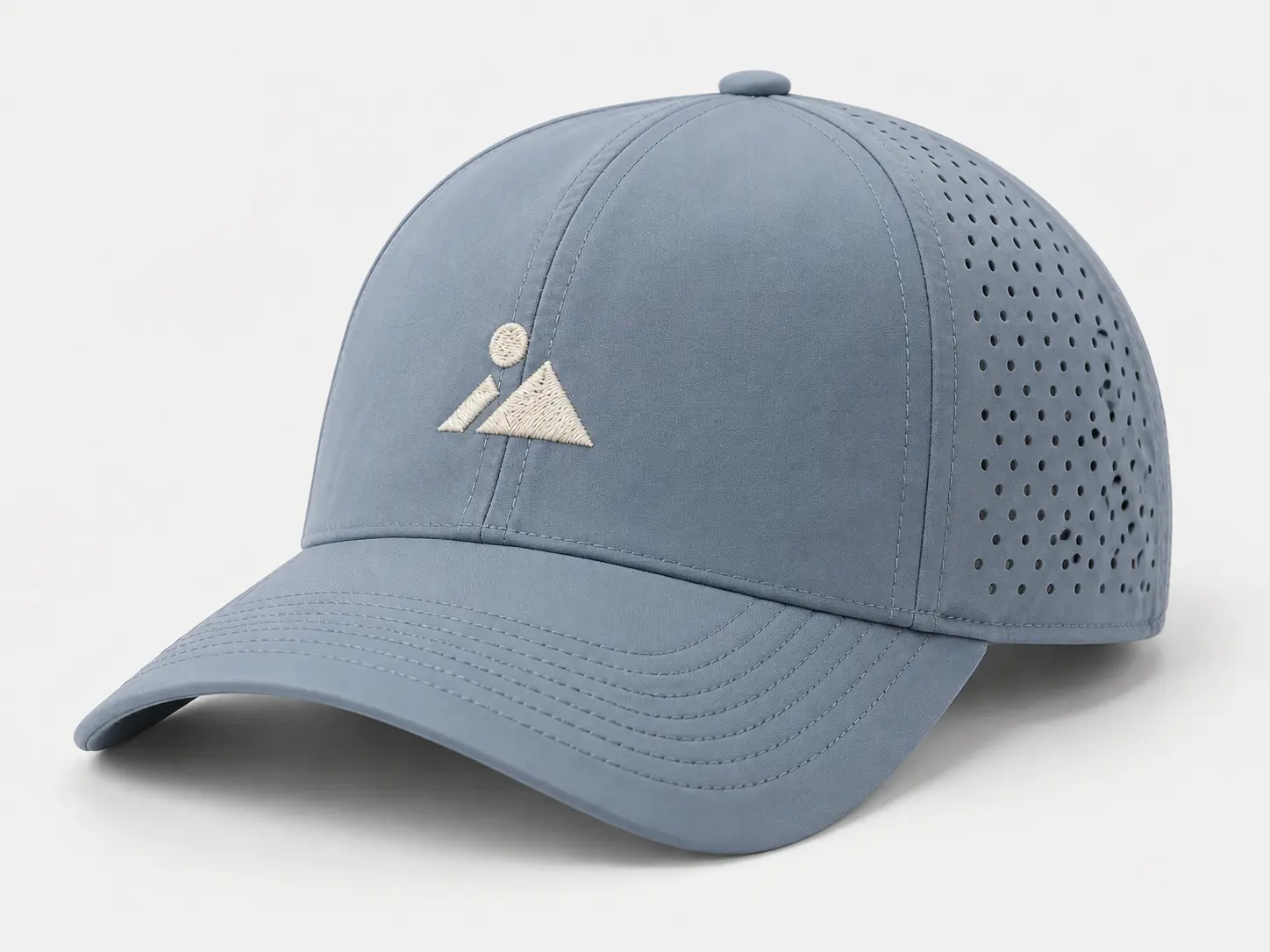
Laser-cut holes create a clean technical appearance and can place ventilation in specific zones. Hole size, spacing, distance from seams, and fabric stability matter. An aggressive pattern may weaken a panel or change how it holds shape.
Mesh panels provide a more open structure, but mesh type, stretch, transparency, and seam construction affect both comfort and appearance. A soft lightweight mesh for a player cap is not necessarily the same mesh a structured promotional cap needs.
The sweatband is the part that contacts the forehead, so its width, softness, stretch, seam joins, and drying behavior can matter as much as crown ventilation. A breathable crown paired with a thick, slow-drying, or abrasive sweatband may still feel uncomfortable.
Why heavy embroidery can work against a lightweight cap
Dense or oversized embroidery adds thread, backing, stiffness, and concentrated needle tension to the crown. On a lightweight fabric, that can create puckering, pull the panel out of shape, reduce flexibility, or make the front feel disproportionately heavy.
The solution is not to ban embroidery. A smaller flat-embroidered mark with suitable stitch planning may work well. Other projects may use a lightweight woven label, a carefully selected transfer, or a restrained patch. The artwork, fabric, backing, placement, and cap structure should be tested together before bulk production. Review the available routes on our Customization Options page.
One tournament needs more than one headwear brief
| Program | Main priority | Likely direction |
|---|---|---|
| Players and coaches | Low weight, secure fit, airflow, sweat management | Performance cap or visor with restrained decoration |
| Officials and event staff | Uniform consistency, identification, long-wear comfort | Coordinated caps with clear role or sponsor placement |
| Sponsor activation | Brand visibility, event relevance, distribution | Accessible sizing and decoration suited to the campaign |
| Retail merchandise | Style, storytelling, perceived value, assortment | Sporty-preppy caps, visors, special colors, and lifestyle fits |
| Club and academy programs | Repeatability, member choice, staff needs | A small core range with controlled colors and logo rules |
Licensed tournament names, player identities, event artwork, and sponsor marks also require documented authorization. A manufacturer should not assume that supplied artwork is cleared for use. The buyer or rights holder should confirm the product category, sales channel, territory, approval process, and permitted sales period.
How a tennis club can plan a coherent hat collection
- Define the wearers. Separate on-court players, coaches, staff, members, guests, and retail customers.
- Choose a core performance style. Establish the fit, crown, visor, closure, ventilation, and sweatband that will carry repeat orders.
- Add a visor option. Use shared colors and logo rules so it belongs to the same program.
- Create one lifestyle style. A cotton or mixed-material cap can serve the clubhouse and retail customer without pretending to be the on-court performance product.
- Control decoration. Set approved logo sizes, placements, sponsor combinations, and color versions.
- Plan the calendar backward. Work from the in-hand date through delivery buffer, transport, bulk production, sample approval, and artwork finalization. Actual timing depends on the specification and approval speed.
If a familiar curved-visor lifestyle cap is part of the assortment, our Custom Baseball Caps page provides the relevant crown, visor, closure, and branding choices.
The Polo Ralph Lauren × US Open lesson
Polo Ralph Lauren’s long-running US Open role shows how event apparel can connect operations, sponsorship, retail, and lifestyle. The brand outfits on-court personnel and ball crews while also extending the tournament identity into products that spectators can wear away from the venue.
The lesson for a smaller tennis organization is not to imitate its graphics. It is to design a system. Staff uniforms, player performance hats, sponsor products, member merchandise, and retail capsules can share a visual language while using different materials and constructions for different jobs. That is how a cap becomes part of a broader sporty-preppy program instead of an isolated promotional item.
SN International is not affiliated with the US Open, the USTA, Ben Shelton, Frances Tiafoe, or Ralph Lauren. Names are discussed only as market examples.
Use the trend to improve the brief
Shelton vs Tiafoe created a short period of intense tennis attention. The durable opportunity is the broader demand for tennis hats and US Open-inspired headwear occasions—not the assumption that every match searcher will buy custom merchandise.
Before requesting a sample, define the wearer, use environment, cap or visor direction, material priorities, ventilation, sweatband, decoration, authorization status, quantity, launch date, and destination. A clear product brief gives a custom headwear partner something useful to develop after the trend has moved on.
Frequently Asked Questions
How is a tennis performance hat different from a standard lifestyle cap?
A tennis program may prioritize low weight, airflow, sweat management and a secure fit. A lifestyle cap may accept heavier materials or decoration when performance is not the main requirement.
When should a tennis visor be chosen instead of a cap?
A visor provides an open crown and a distinct club or event look. Choose it when that coverage and fit suit the wearer; use a cap when crown coverage and additional branding space matter.
What decoration works on a lightweight tennis hat?
Use a method and size that the fabric and crown can support without excessive stiffness or distortion. Approve it on the physical performance-hat sample.