
Snoopy Starbucks searches and interest in Starbucks Snoopy merchandise are rising around a new Peanuts collaboration, but the useful lesson for a coffee brand is broader than one character or one product drop. A limited-edition collection works when the theme, release window, product mix, store experience, and approval process reinforce one another.
That does not mean every café should license a famous character or rush to copy a trending collection. It means café merchandise hats need a defined role. A staff cap, an everyday retail cap, and an IP collaboration cap serve different wearers and require different design, durability, inventory, and rights decisions.

What the Starbucks Peanuts Collection Confirms
Starbucks announced a limited-edition Peanuts collection for September 2026 inspired by It’s the Great Pumpkin, Charlie Brown, which marks its 60th anniversary that year. The announced range includes ten collectible items across drinkware, accessories, a plush, a mini tote, and an enamel pin set. Starbucks described a multi-market release with availability varying by location and while supplies last.
The public product list does not provide clear evidence of a Snoopy hat. This article uses the collaboration to study limited-edition merchandise planning. It does not claim that Starbucks launched Snoopy headwear.
The collaboration also follows the 2025 Starbucks and Peanuts program built around Joe Kind Snoopy, an exclusive character expression tied to kindness, coffee, and community. Together, the programs show how an established character can be adapted to a specific campaign idea rather than placed on unrelated products without context.
Why Limited Collaborations Create Search and Collection Demand
A recognizable IP brings an existing audience. A seasonal story gives that audience a reason to pay attention now. Limited availability adds a purchase window, while several coordinated products allow customers to choose one item or assemble a set.
Those ingredients can increase searches, social sharing, store visits, and resale discussion. They do not guarantee that every product will sell. Coffee brands still need to decide which items fit their customers, stores, price position, and fulfillment capacity.
| Demand driver | Merchandise implication | Planning question |
|---|---|---|
| Recognizable character or collaborator | Customers understand the theme quickly | Which assets are licensed for which products and markets? |
| Season or anniversary | The collection has a clear reason to launch | Will the product arrive early enough for the selling window? |
| Limited availability | The range can feel collectible | How will quantities be allocated by store or channel? |
| Coordinated product family | Colors and artwork connect different items | Which details make the hat belong to the same collection? |
| Regional release | Demand and product rules may differ by market | Which labels, packaging, approvals, and languages change? |
Separate Three Coffee Brand Hat Programs
Putting every café hat into one purchase order can blur its purpose. The development brief should first identify whether the cap supports daily operations, the café’s permanent merchandise range, or a time-limited collaboration.
| Program | Primary wearer | Main requirement | Typical branding |
|---|---|---|---|
| Employee uniform hats | Baristas and store staff | Fit, cleaning, replacement, and workplace consistency | Clear café identity with controlled placement |
| Core retail merchandise | Regular customers and local community | Wearability beyond the store and repeat availability | Café name, roaster identity, location, or house graphic |
| Limited-edition collaboration | Collectors, fans, and gift buyers | Rights approval, launch timing, packaging, and SKU control | Approved co-branding or licensed artwork |
A staff cap may need understated decoration and a construction that works during long shifts. A retail cap can use softer materials, a more lifestyle-oriented silhouette, or location-specific storytelling. A limited-edition branded hat may require special artwork, hangtags, individual packaging, and more formal approvals.
Choose a Hat Shape That Matches the Café
The same logo can feel very different on different crown shapes. A classic custom baseball cap gives a familiar, accessible profile and enough front area for embroidery or a patch. A low-profile unstructured cap can feel relaxed and local. A five-panel silhouette can support a modern roaster, streetwear, or design-led retail direction.
For staff use, buyers should check how the crown sits during movement, whether the visor interferes with the work environment, and how the closure fits different team members. For retail use, the same team should review the cap from the front, side, and rear because customer photographs rarely show only the logo panel.
Staff caps should support the uniform
A staff hat does not need the most complex decoration. It needs a repeatable color, comfortable construction, suitable fit range, and branding that remains legible without overwhelming the uniform. Replacement planning also matters when stores hire new staff or damaged caps leave service.
Retail hats should work outside the café
A customer should be able to wear a café cap with ordinary clothes. That often favors a controlled color palette, a recognizable but restrained mark, and details that reward a closer look. The goal is a product with independent use, not an employee uniform offered at the checkout counter.
Build One Visual Language Across the Merchandise Range
A collaboration gains strength when the cup, tote, packaging, and cap look related without carrying identical artwork. The design system can assign a hero character or mark to one product, a supporting pattern to another, and a simple color reference to the hat.

For a café program, the practical palette usually begins with the store environment and existing identity. Coffee browns and cream are obvious references, but they are not mandatory. A bakery café, specialty roaster, and lifestyle chain may require completely different colors. Physical fabric swatches should be reviewed with embroidery threads, patch borders, labels, and packaging because screen colors do not predict every material.
Use Patches When the Artwork Needs a Defined Surface
A patch can separate detailed artwork from the cap fabric and make seasonal graphics easier to organize. Woven patches can hold fine lines and small color areas. Embroidered patches create more visible thread texture. Printed patches may suit artwork with gradients, while leather-like or silicone options produce a different brand direction.
The patch still needs to fit the crown. A tall rectangle may distort on a low crown, and a wide design may cross panel seams. Buyers should approve the actual patch on the intended cap, not only a flat digital proof. The customization options page shows how patches, embroidery, labels, closures, and other components can be coordinated during development.
Interior Labels and Packaging Need Their Own Approval
Limited-edition café merchandise is often purchased as a gift or collectible. Interior taping, woven labels, care and origin information, hangtags, stickers, and protective packaging affect how complete the product feels. They also create more artwork files and approval points.
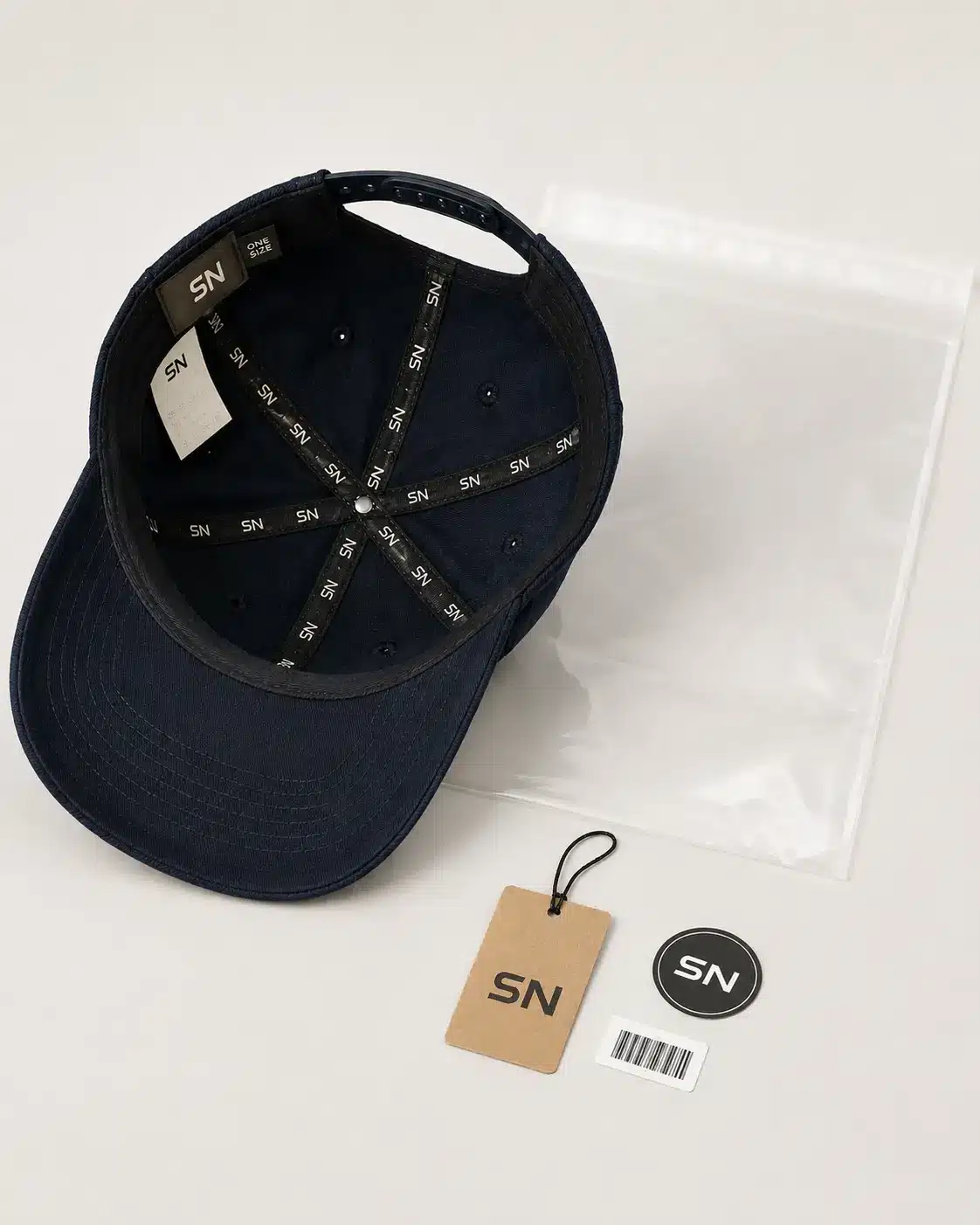
Each information element should have an owner. The licensing team may approve character artwork. The café may control its logo and product copy. The importer or seller may need specific labeling. The fulfillment team may define barcode and packaging requirements. One approval checklist keeps these responsibilities visible.
Licensing Changes the Development Workflow
Peanuts characters, Snoopy artwork, Starbucks marks, campaign phrases, and collaboration graphics are protected assets. A coffee brand cannot infer permission from the existence of another collaboration. It needs written rights covering the intended artwork, product category, sales territory, channel, and selling period.
The approved artwork package should identify:
- which character poses, logos, colors, and phrases may be used;
- whether the artwork may be simplified for embroidery or a woven patch;
- which placements and minimum sizes are permitted;
- who approves strike-offs, samples, labels, and packaging;
- which markets and channels are covered; and
- what happens to remaining inventory after the selling window.
The buyer or designated rights holder must supply authorized assets and approvals. A hat developer can translate approved artwork into construction and decoration specifications, but should not decide whether a buyer owns those rights.
Plan Global and Regional Releases at SKU Level
A “global collection” may still have different product availability by market. Store count, climate, customer preferences, local labeling, language, shipping route, and launch calendar can all change the practical assortment.
A single global hat SKU can reduce variation, but it may not serve every program. Regional colorways or localized labels can be useful when demand supports them. Every variation creates another forecast, sample, approval, purchase order line, inspection reference, and inventory balance. The collection plan should show which components are shared and which are market-specific.
Work Backward from the Selling Window
Limited-edition merchandise has a deadline that ordinary replenishment does not. Missing the anniversary, season, opening, or campaign date can reduce the value of otherwise acceptable goods. The schedule should allow time for rights approval, product specifications, material confirmation, decoration tests, complete samples, packaging, production, inspection, freight, receiving, and store allocation.
- Confirm the campaign and sales window. Record the first sell date, final useful arrival date, territories, and channels.
- Freeze the product architecture. Separate staff, core retail, and collaboration items.
- Release only authorized artwork. Mark unfinished concepts so they cannot be mistaken for production files.
- Sample the complete product. Review fit, color, decoration, labels, hangtags, and packaging together.
- Consolidate feedback. One approved change list prevents conflicting comments from different stakeholders.
- Protect receiving time. Store allocation and online fulfillment preparation begin after the goods arrive.
The custom hat development process explains how design decisions, sampling, approval, production, and quality control connect.
A Practical Brief for Café Merchandise Hats
A useful brief names the product’s role, wearer, sales channel, target launch, authorized marks, silhouette, fit direction, fabric, color references, decoration size, interior labels, packaging, quantities by SKU, and final approvers. It should also state what the program excludes.
The same framework applies to custom coffee shop hats, coffee roaster merchandise, and limited-edition branded hats. The design changes, but the need for a clear product role, approved assets, and repeatable specifications remains.
For coffee chains, independent roasters, restaurant brands, and collaboration agencies, full custom OEM hat development can coordinate those elements as one product. Begin with the program type and rights package, then develop the construction around the approved brand story.
Frequently Asked Questions
Should staff hats and retail café hats use the same specification?
They can share brand colors, but their jobs differ. Staff hats may prioritize comfort and maintenance, while retail products may justify more developed materials, trims and packaging.
Can a coffee brand use a character on a limited-edition hat?
Only when the relevant rights holder has approved that use. Product development should begin with authorized artwork and clear approval responsibility.
What should be approved for a seasonal café hat?
Approve the hat construction, colors, decoration, inside branding, packaging, quantity by version and the physical sample, then plan production from the required launch date.