
When Travis Kelce or Patrick Mahomes dominates a news cycle, the attention is larger than a single game. It reaches fashion, entertainment, sponsorship, and fan culture. For an athlete-led brand, that visibility can create demand for merchandise that feels personal rather than borrowed from a team store.
Headwear is a useful starting category because one silhouette can carry a recognizable point of view without requiring a large apparel range. The hard part is not putting a signature on a cap. It is deciding which identity the collection represents, who controls the rights, and how every product detail supports the same story.

Why Athlete Attention Creates a Different Merchandise Brief
A high-profile matchup can bring searches for Travis Kelce, Patrick Mahomes, the Chiefs, and NFL stories into the same moment. Those searches do not all have the same intent. Many people want news or entertainment. A smaller commercial opportunity exists when an athlete, agency, or licensing partner converts that attention into a coherent product program.
The merchandise brief must therefore start with the brand relationship. A fan buying an official team cap expects team colors, approved marks, and a familiar sports identity. A customer buying from an athlete-led label may instead expect off-field style, personal interests, humor, community, or a fashion point of view. Copying the team look weakens that distinction and may also create rights problems.
Official Team Merchandise and Athlete Brand Hats Are Not the Same
| Decision | Official team merchandise | Athlete-led collection |
|---|---|---|
| Primary identity | League, club, or team | Athlete’s own brand or approved collaboration |
| Visual language | Team marks and established colors | Independent symbols, typography, colors, and stories |
| Product role | Game-day fanwear and licensed retail | Lifestyle, fashion, community, or limited campaign product |
| Approval route | League and team licensing process | Athlete, agency, brand partner, and any relevant rights holder |
| Collection planning | Usually aligned with a wider licensed program | Built around the athlete’s audience and brand architecture |
An athlete’s name, likeness, signature, personal logo, team marks, and campaign photography may be controlled by different parties. Before artwork begins, the buyer should document which assets are authorized, where the products can be sold, and who gives final approval. A manufacturer can work from approved files, but it should not be expected to determine ownership for the buyer.
Define the Collection Before Choosing the Cap
A signature headwear collection is stronger when each style has a clear job. Starting with ten loosely related concepts usually creates extra sampling and an uneven launch. A focused opening range can cover several customer needs without losing its identity.
| Product role | Possible format | Design purpose |
|---|---|---|
| Core signature cap | Structured six-panel baseball cap | Recognizable everyday style with the main brand mark |
| Lifestyle alternative | Low-profile unstructured cap | Relaxed off-field expression and softer hand feel |
| Fashion-led style | Five-panel cap | Different front-panel proportion for graphics or minimal branding |
| Performance style | Lightweight cap with ventilation | Training, golf, travel, or warm-weather use |
| Limited release | Special fabric, patch, or colorway | A campaign moment without changing the core range |
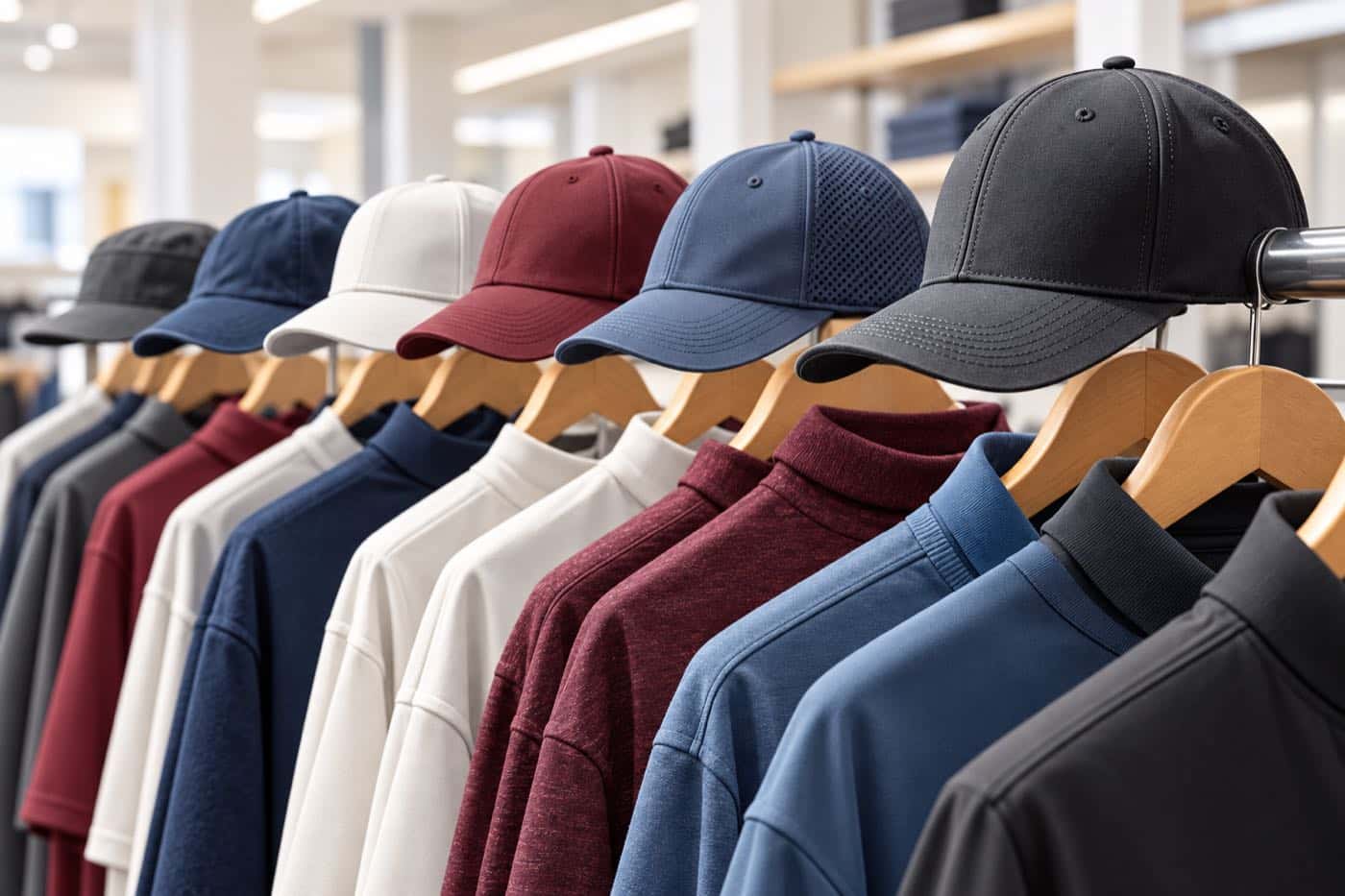
The first sample round should normally test the highest-priority silhouettes, not every possible variation. Buyers can compare a custom baseball cap with a more fashion-led custom five-panel hat, then decide which format best carries the brand before multiplying colorways.
Build a Recognizable Silhouette System
A logo does not fix the wrong cap shape. Crown height, structure, visor curve, panel count, and closure determine how the product looks on a person. These decisions also influence the usable decoration area and the way the brand appears in photographs.
Structured or unstructured crown
A structured crown creates a defined front surface and a stronger sports or retail presentation. An unstructured crown sits more casually and can support a relaxed lifestyle identity. Neither is automatically more premium. The correct choice depends on the intended look, fabric, decoration, and customer.
Curved visor or flatter profile
A curved visor can feel familiar and versatile. A flatter visor can move the product toward streetwear or a more graphic-led presentation. Instead of choosing by trend alone, the development team should review the cap on people, from multiple angles, with the final artwork at actual size.
Closure and fit
Snapback, fabric strap, buckle, hook-and-loop, and stretch constructions create different impressions and fit ranges. A visible rear closure can also become part of the design. The tech pack should identify hardware color, strap material, rear embroidery area, and any size-label requirements.
Color, Fabric, and Decoration Must Support the Brand Story
Athlete merchandise often fails when every recognizable reference is placed on one product. A stronger range assigns each element a purpose. A core neutral may carry the main identity, while a campaign color or secondary mark appears on a limited style.
Fabric should be selected with the intended use and silhouette. Cotton twill can support a familiar lifestyle feel. Nylon or polyester constructions may be better for lightweight or performance directions. Blends, mesh panels, brushed surfaces, and technical finishes change both appearance and sewing behavior, so material decisions should be evaluated on a complete cap sample.
Decoration should follow the artwork rather than a fixed hierarchy. Flat embroidery works for many straightforward marks. Puff embroidery needs enough shape and spacing to remain clear. Woven patches can hold fine linework, while appliqué, print, silicone, or leather-like patches create different visual and tactile effects. Our customization options show how decoration can be developed together with crown construction, visor details, closures, and interior branding.
Interior Labels and Packaging Turn a Cap into a Brand Product
The front mark attracts attention, but the inside of the cap helps establish ownership. Branded taping, woven labels, care and origin information, size identification, sweatband choices, and closure details should follow one approved system. These elements matter when a collection moves from a campaign sample to repeatable retail production.
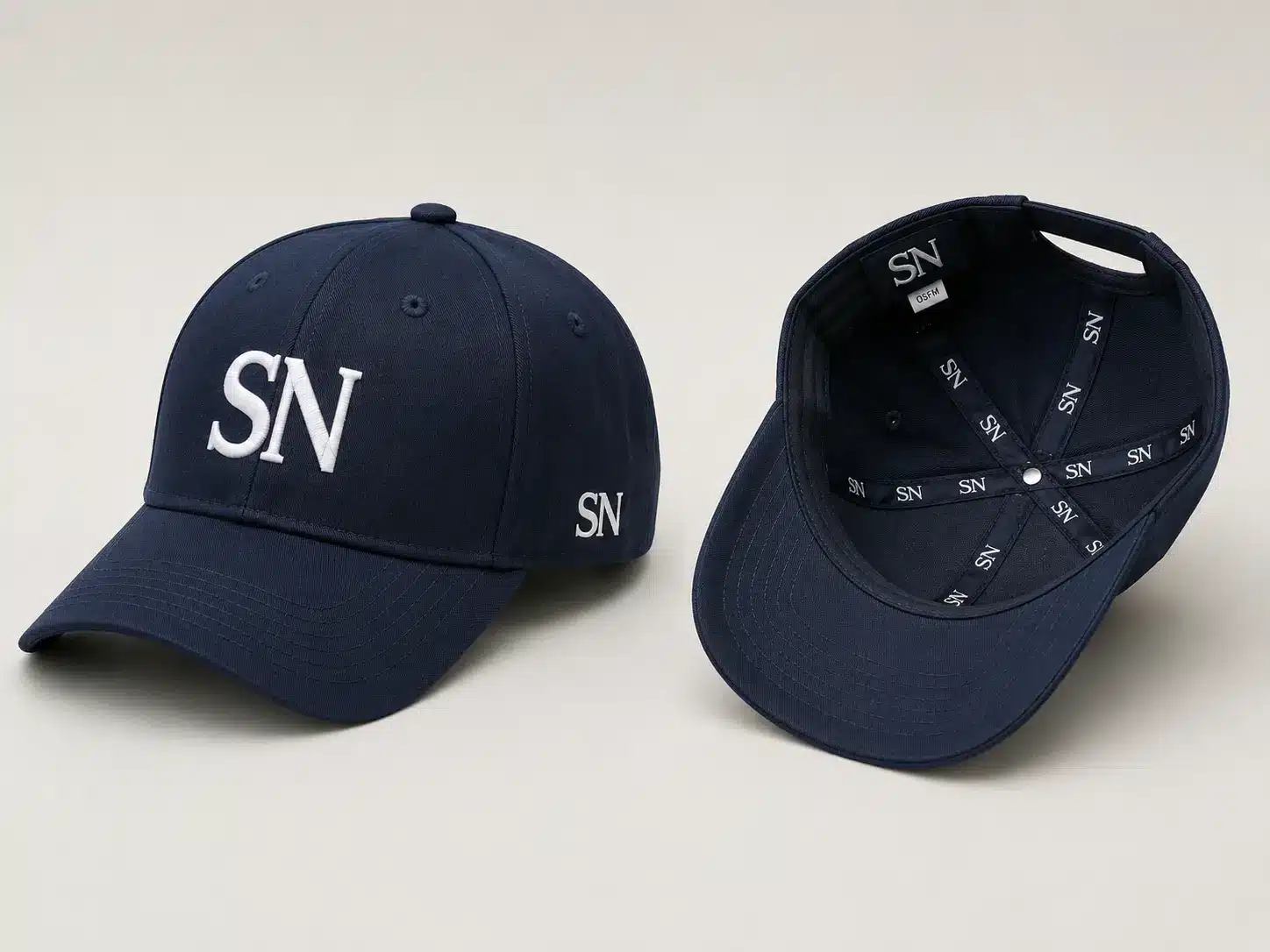
Packaging should match the sales channel. An online drop may need product protection, barcode or fulfillment information, and a controlled unboxing experience. A retail or event program may need hangtags, stickers, or display requirements. None of these choices should be added after bulk production has already started.
What the Travis Kelce and Tommy Hilfiger Collaboration Shows
Tommy Hilfiger announced Travis Kelce as a global brand ambassador and creative collaborator, placing him in its Fall 2026 campaign and describing a design collaboration planned for Spring 2027. The relevant lesson for headwear buyers is not that every athlete needs a major fashion house. It is that athlete influence becomes more durable when it is translated into a broader brand world, planned campaign, and product direction.
A useful athlete collaboration asks more than, “Where should the signature go?” It asks what the athlete contributes to the customer experience, which parts of the product system belong to the partner brand, and how the collection can remain recognizable after the first publicity spike. Headwear can then become one component of that system rather than a disconnected souvenir.
Patrick Mahomes and other prominent Chiefs figures may generate attention in the same sports conversation, but each athlete-led program needs its own approved identity. Shared team association does not make names, personal marks, or creative assets interchangeable.
Build the Approval Path into Product Development
Athlete merchandise often includes more reviewers than a standard private-label cap. The agency may review likeness and positioning. A brand partner may control campaign design. A licensing representative may approve specific assets. The distributor or retailer may add packaging, compliance, or delivery requirements.
Before sampling, create an approval map that answers:
- Who owns or authorizes each name, mark, image, and signature?
- Which countries, channels, and dates are covered by the permission?
- Who approves the silhouette, color standard, decoration sample, labels, and packaging?
- Which changes can the product team make without restarting the full approval cycle?
- Who holds the final approved artwork and specification files?
This map does not replace legal advice or a licensing agreement. It prevents production teams from treating approval as an informal message thread.
Plan Sampling and Launch Dates Backward
A trend can move quickly, while full-custom development requires decisions. The practical response is not to promise an unrealistic production speed. It is to reduce avoidable delay by locking the range architecture, artwork ownership, sample priority, and reviewers early.
- Define the commercial moment. Is the product for an evergreen store, a campaign, an event, or a limited drop?
- Freeze the rights-approved design direction. Separate approved assets from concepts still under review.
- Select the hero style. Develop the most important cap before extending the idea across multiple silhouettes.
- Review a complete sample. Evaluate fit, crown shape, visor, decoration, interior branding, and packaging together.
- Record changes in one specification. Conflicting feedback from different parties should be resolved before the next sample or production approval.
- Protect the launch window. Allow time for approvals, production, inspection, freight, receiving, and channel preparation.
A Better Brief for a Signature Headwear Collection
The strongest brief connects brand strategy with physical construction. It identifies the buyer, wearer, price position, sales channel, launch date, authorized assets, required silhouettes, fit expectations, color references, fabric direction, decoration, interior details, packaging, and approval owners.
The same discipline applies to private label sports caps, custom fanwear hats, and a celebrity collaboration: the product must still have a defined customer, an approved identity, and specifications that a production team can repeat.
For athlete brands, agencies, and merchandise partners, full custom OEM hat development makes it possible to coordinate those decisions as one product rather than decorating a generic cap at the end. Start with the identity the collection must own, then develop the hat around it.
Frequently Asked Questions
How is an athlete brand hat different from official team merchandise?
An athlete-led collection can use its own brand language, approved marks, labels and packaging. It should not imply team or league authorization unless those rights are confirmed.
What belongs in a signature headwear collection?
Start with a clear product role, one or more intentional silhouettes, a controlled color plan, decoration that fits the crown, private-label details and packaging suited to the selling channel.
Who approves the use of an athlete’s name or identity?
The buyer or rights holder must provide approved assets and confirm permission. Record approvals before sampling and again before bulk production if artwork changes.