

US-managed China hat sourcing combines a buyer-facing US business contact with product development and manufacturing coordination in China. The value is not the label itself. It comes from clear roles, controlled specifications, documented approvals, and direct communication between the commercial and production sides.
This model can help brands that want full custom hats rather than finished blank caps with an added logo. It does not make sourcing risk-free, guarantee perfect production, or replace the buyer’s responsibility to review the product and commercial terms.
What does US-managed China hat sourcing mean?
In this arrangement, a US-side contact or account team helps the buyer define commercial requirements and follow the project. A China-side development and production team handles the technical work needed to turn an approved idea into a repeatable hat.
The exact legal and operating structure varies by supplier. A US address or English-speaking contact does not prove who manufactures the product, controls the specification, receives payment, or accepts responsibility for changes. Buyers should ask those questions directly.
A useful management layer connects four things:
- the product the buyer intends to purchase;
- the construction and material details production needs;
- the sample revisions the buyer actually approved;
- the commercial, inspection, and delivery terms in the order.
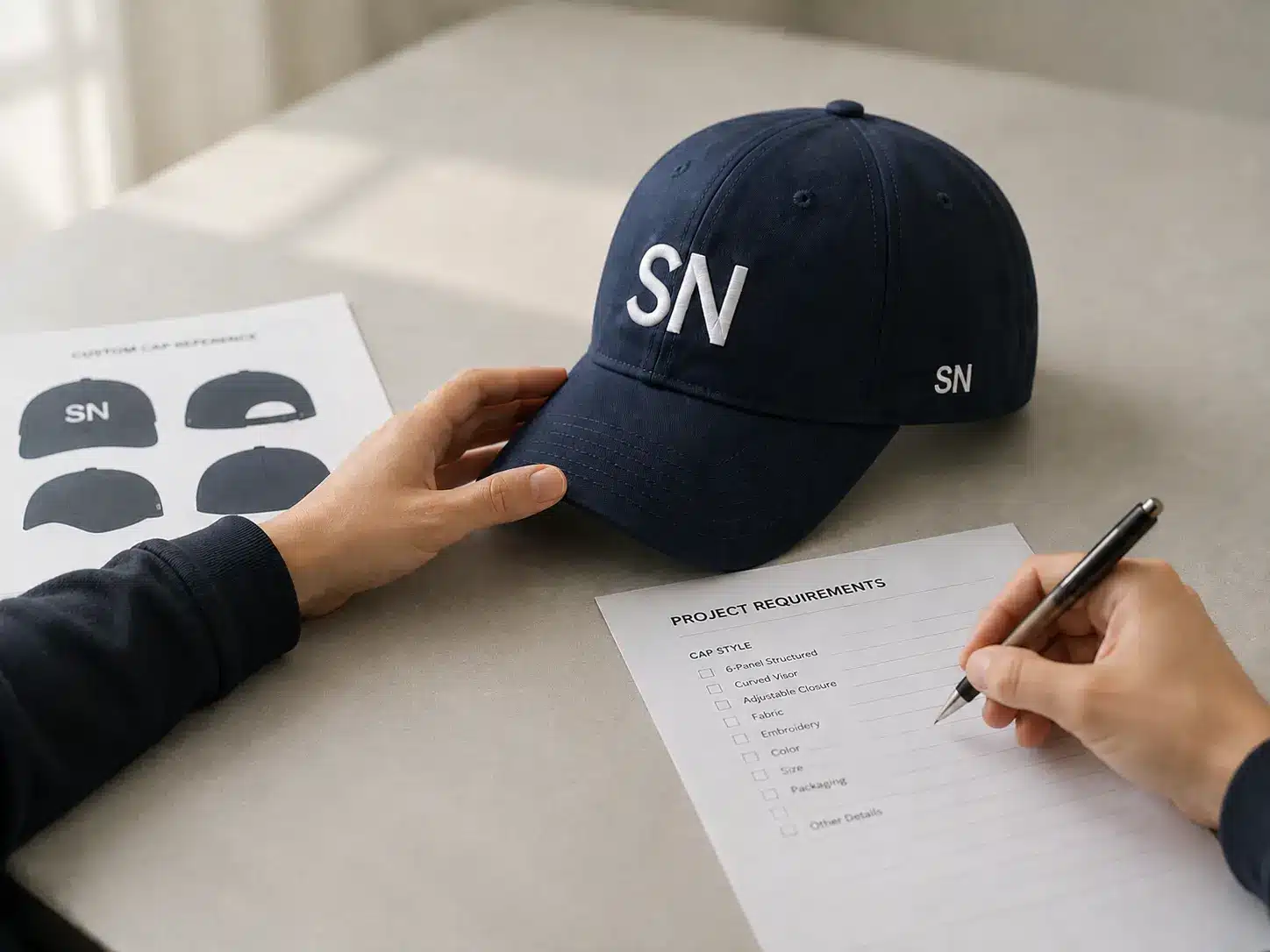
How responsibilities should be divided
The buyer should know which team owns each decision. The table below describes a practical division of work, but the actual quotation and agreement should identify the parties involved in the project.
| Project area | Buyer-facing management role | China development and production role |
|---|---|---|
| Project definition | Clarify target customer, quantity, schedule, delivery basis, and commercial priorities | Review feasibility and identify missing technical details |
| Product development | Organize buyer decisions and approval records | Prepare construction details, patterns, materials, decoration files, and samples |
| Changes | Confirm which buyer comments are final | Evaluate production effects and update the working specification |
| Bulk production | Report milestones, open decisions, and exceptions | Cut, decorate, sew, shape, finish, inspect, and pack to the approved requirements |
| Quality review | Keep acceptance points understandable and traceable | Check the agreed materials, construction, decoration, measurements, finishing, and packing |
| Shipping | Clarify the selected shipping term, documents, and buyer responsibilities | Prepare goods and shipment information for the agreed method |
Problems arise when a management team acts as a message relay instead of controlling decisions. An effective process translates comments into updated specifications and confirms that the production team is working from the same version.
Where this model adds the most value
Turning a visual idea into a complete specification
Many projects begin with a logo, reference photograph, and general style name. Production needs more detail: crown shape, panel structure, visor, fabric, closure, sweatband, decoration, labels, color references, sizing, and packing.
A managed process identifies missing decisions before they become repeated sample revisions. It should also separate firm requirements from preferences so the development team knows where alternatives are possible.
Connecting design decisions to production
Comments such as “make the crown deeper” or “the logo looks small” are difficult to reproduce unless the team turns them into measurable or visually verifiable instructions. Approved changes should update the construction specification, artwork, and sample record.
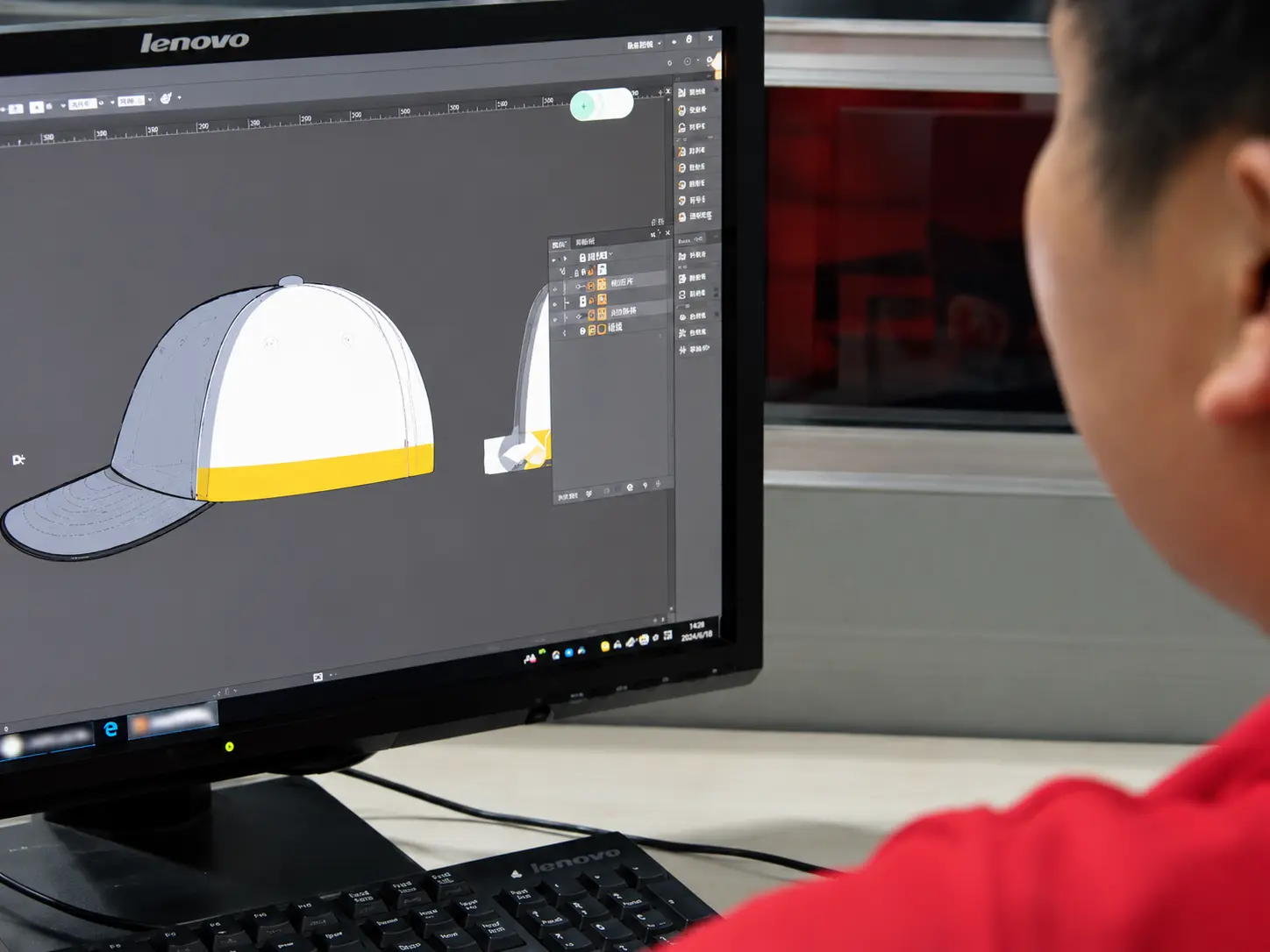
Explaining feasibility and alternatives early
A requested material may not be available at the planned quantity. A logo may need adjustment for the selected decoration method. A closure or trim may follow a different supplier minimum. The management role is to explain the options and their effects before the buyer approves a new route.
Keeping communication usable across time zones
A local contact can make discussions and commercial follow-up easier for a US buyer. Technical answers may still require coordination with the production team in China. The process should distinguish between a question that can be answered immediately and one that needs factory confirmation.
What the model does not guarantee
- Zero risk: material availability, development changes, manufacturing variation, freight disruption, and customs issues can still occur.
- Perfect production: a sample and specification reduce ambiguity, but bulk goods still require an inspection plan appropriate to the order.
- A fixed total landed cost: product price, freight, duties, taxes, brokerage, storage, and destination charges depend on the agreed delivery basis and shipment.
- Automatic compliance: requirements depend on the product, materials, destination market, customer, and intended use. Buyers should define applicable requirements for their project.
- Instant answers: some construction, material, and production questions require review by the people doing the technical work.
Claims such as “factory direct,” “US quality,” or “risk-free sourcing” do not explain how an order will be managed. Named responsibilities and current documents are more useful than broad positioning language.
The documents that keep the model accountable
A well-managed custom hat project should not depend on scattered messages. The working record normally includes:
- a product brief with the target style, customer, quantity, and intended use;
- a construction specification covering crown, visor, fabric, closure, and interior components;
- current artwork and decoration details;
- material, trim, and color references;
- sample comments with approved revisions clearly marked;
- the final approved sample or agreed visual reference;
- packing, labeling, shipping, and inspection instructions;
- a record of any change approved after sampling.
These documents also make repeat orders easier to review. Material lots and availability may change, so a prior order should remain a reference rather than an assumption that every component will be identical.
A practical custom hat workflow
- Project review: define the hat style, target quantity, use case, delivery window, destination, and artwork.
- Feasibility review: identify missing decisions and explain which requests affect construction, quantity, cost, or timing.
- Specification development: record materials, colors, decoration, trims, sizing, and packing.
- Sampling: make and review the physical sample against the current brief.
- Approval: record accepted details and any project-specific acceptance points.
- Bulk production: manufacture from the approved sample, artwork, and specification.
- Inspection and shipping: review the agreed quality points, quantity, packing, and shipping documents.
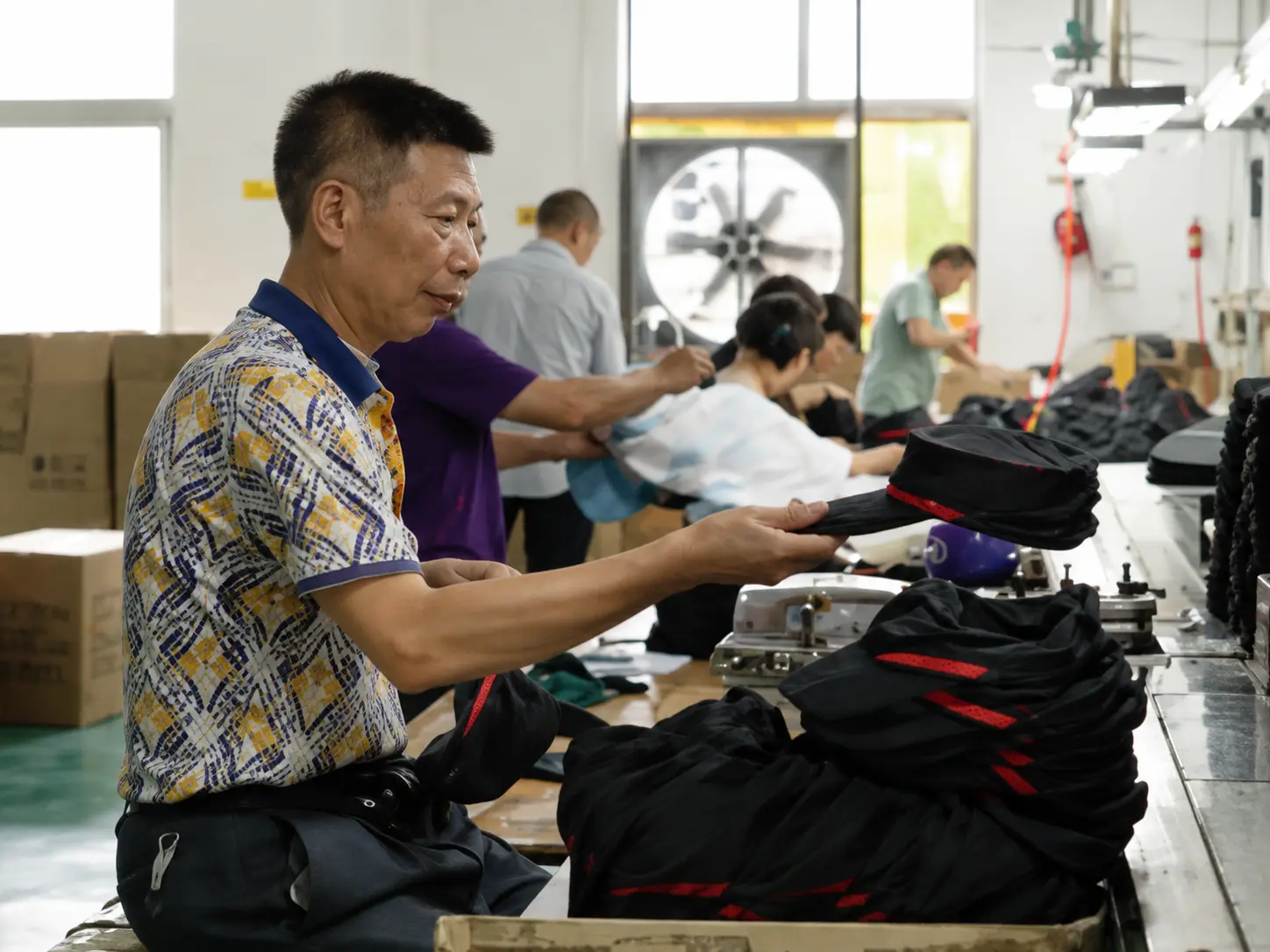
For the broader material and production sequence, see our custom hat supply chain planning guide. Our custom hat process explains the main development and approval stages.
Questions to ask before choosing a partner
- Which company appears on the quotation, invoice, and agreement?
- Where will product development and manufacturing take place?
- Who keeps the current specification and approval record?
- Who can authorize a material, construction, price, or schedule change?
- What does the sample charge include, and how are revisions handled?
- Which details are checked before bulk production begins?
- What inspection information is available before shipment?
- Which shipping term is quoted, and which costs remain with the buyer?
The answers should describe people, documents, and actions. If responsibilities remain vague before an order, they are unlikely to become clearer during a production exception.
Is US-managed China hat sourcing right for your project?
This model can suit brands, distributors, promotional product companies, and other B2B buyers that want one commercial contact while using China-based development and production capability. It is most useful for projects with several connected decisions across hat construction, materials, decoration, interior branding, labels, and packaging.
A buyer that only needs a finished stock cap may not need the same development workflow. The model should support the complexity of the product—not create extra layers without clear responsibility.
Review our full custom OEM hat capabilities and business model. To discuss a project, send us your target style, quantity, artwork, and timing requirements.
Frequently asked questions
Does US-managed sourcing mean hats are made in the United States?
No. In the model described here, buyer-facing management is connected with development and manufacturing in China. Buyers should always confirm the actual manufacturing location and contracting party for their order.
Is a US contact responsible for every technical decision?
Not necessarily. The US contact may coordinate the project, while pattern, material, decoration, and production questions require input from the technical team. What matters is a clear route from the question to a verified answer.
How is this different from a general sourcing agent?
The label alone does not establish a difference. Compare the actual scope: product development knowledge, specification control, sample management, production visibility, inspection process, and contractual responsibility.
What should a buyer approve before bulk production?
Approve the current hat construction, materials, colors, decoration, placement, closures, interior branding, sizing, packing, and any agreed inspection points. Record every post-sample change in the same working specification.