
An A-frame hat is defined by the way the front crown rises from the visor and folds or pinches toward the top. That construction creates a taller, more directional profile than many standard baseball caps. It also gives a brand a broad front area for decoration, but only when the crown, fabric, artwork, and reinforcement are developed together.
The term is easy to misuse. An A-frame hat is not automatically a trucker hat, and not every five-panel cap has an A-frame shape. Buyers should specify the front construction and finished silhouette instead of relying on the style name alone.
What Is an A-Frame Hat?
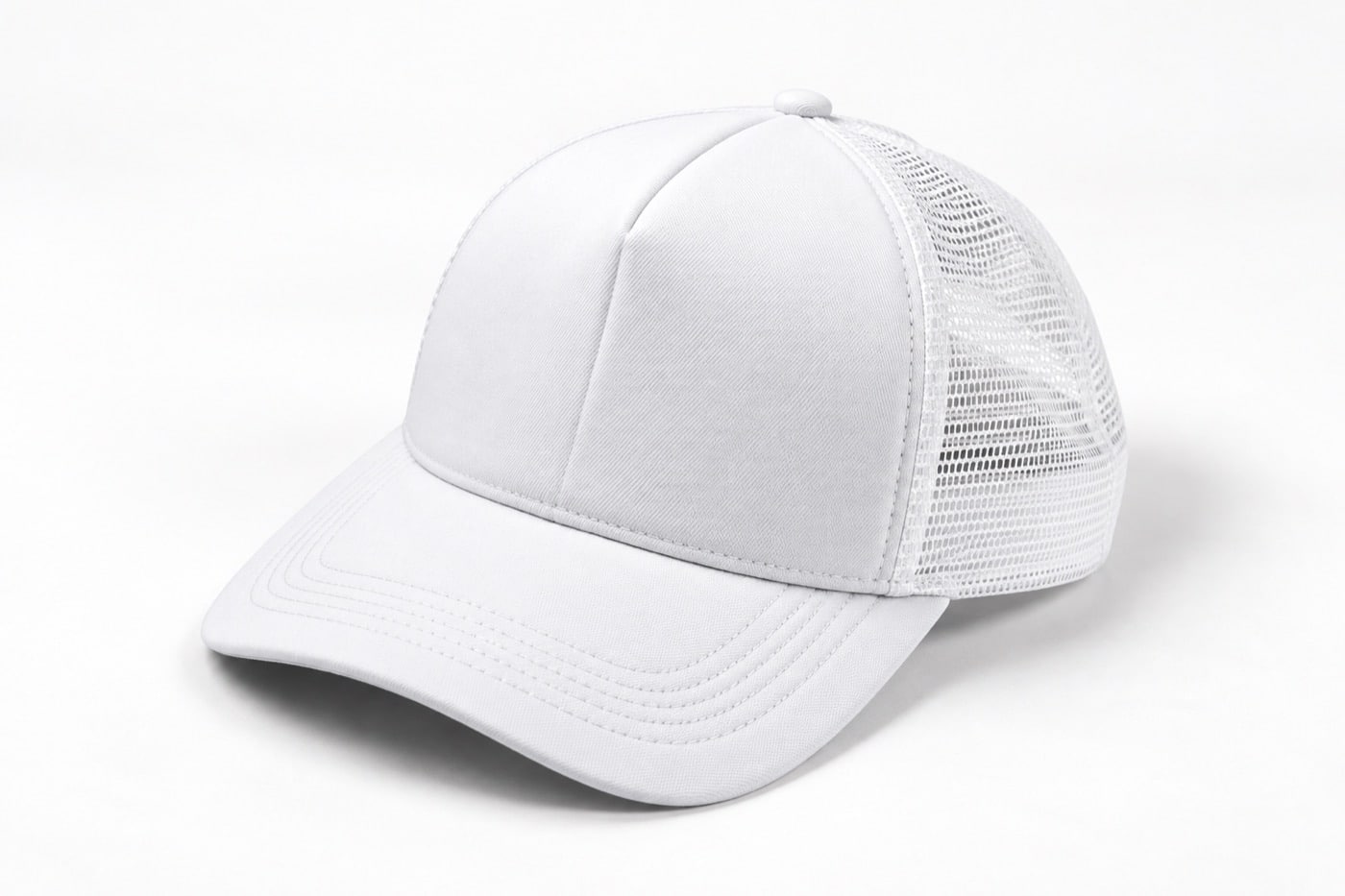
An A-frame hat uses a front crown that forms a visible peak or fold above the visor. From the front, the crown appears to rise in an A-like line. From the side, it normally looks more upright than a relaxed low-profile cap.
The shape can be produced with different pattern and reinforcement choices. Some versions use a broad front section with a dart or controlled fold rather than a conventional center seam. Others use a panel layout designed to preserve a clean front area while still creating the pinch. The exact construction varies by pattern, so the finished silhouette matters more than a supplier’s label.
A-frame styling is common in trucker-inspired headwear because a structured front works naturally with mesh side and rear panels. It can also be made as an all-fabric cap. If the project needs mesh ventilation, review our custom trucker hats. If the project is driven by an uninterrupted front panel, compare the available custom five-panel hat constructions as well.
A-Frame, Standard Trucker, and Six-Panel Caps
These terms describe overlapping features, not three rigid categories. A trucker hat usually refers to a structured front combined with mesh at the sides and back. A six-panel cap refers to the panel arrangement. A-frame describes the front-crown silhouette. One cap can therefore be an A-frame trucker, while another A-frame cap may have an all-fabric back.
| Style reference | Front appearance | Common rear construction | What the buyer should confirm |
|---|---|---|---|
| A-frame hat | Raised front with a deliberate pinch or fold | Mesh or fabric | Peak shape, crown height, fold consistency, and decoration position |
| Standard trucker hat | Structured front that may be flatter or more rounded | Mesh | Foam or fabric front, mesh stiffness, fit, and closure |
| Classic six-panel cap | Center front seam and a more rounded crown | Usually fabric; mesh is also possible | Seam interaction with artwork, structure, profile, and visor curve |
Panel count alone does not settle the choice. The separate five-panel versus six-panel guide explains seam layout and panel construction. For an A-frame program, the sample should answer a different question: does the finished crown keep the intended front peak when it is worn?
Choose the Front Material Around the Intended Shape
The front crown needs enough stability to hold its profile, but that does not mean every A-frame cap requires the same heavy material. Foam-backed polyester can create a bold trucker look and a smooth decoration surface. Cotton twill or canvas can produce a more apparel-oriented finish. A lighter woven fabric may work when the pattern and internal support are adjusted for it.
Material choice changes the character of the fold. A thick or heavily backed front can look sharp and prominent. A softer front can relax after wear. Coarse canvas, brushed cotton, corduroy, recycled fabrics, and technical woven materials all behave differently at the pinch, seams, and visor join.
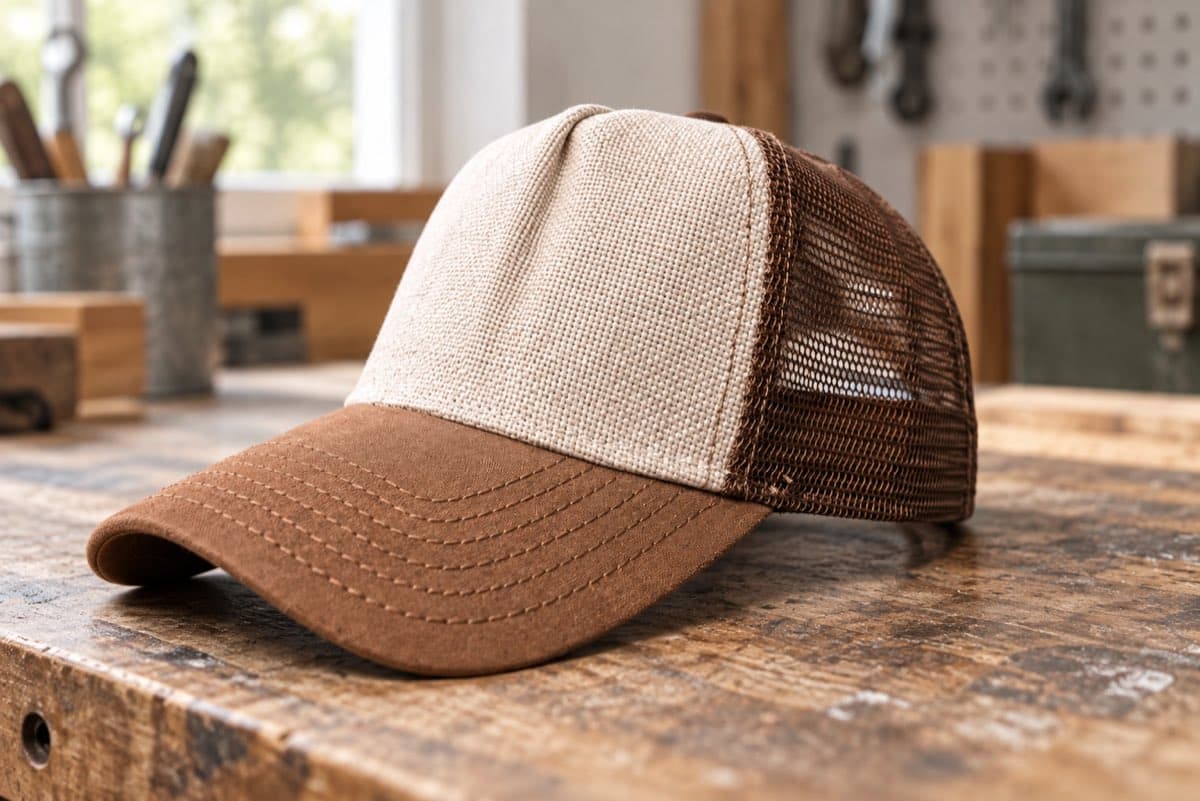
Ask the sample team to show the proposed front material with the intended reinforcement. Approving a loose fabric swatch does not prove that the crown will keep its shape. The buyer should also check whether the fabric changes color or surface appearance where it bends at the front fold.
Fit Depends on More Than Crown Height
A-frame hats are often described as high-profile, but that description is not precise enough for development. The pattern must also define crown depth, front angle, side-panel length, opening shape, and the relationship between the crown and visor.
A taller front can create visual space above the artwork, yet it may feel excessive if the rear depth is too shallow. A steep front can look sharp from the front but sit away from the forehead. A heavily curved visor can make the crown appear taller, while a flatter visor gives the same crown a more streetwear-oriented proportion.
Review the sample on more than one wearer when the program serves a broad audience. Check the front view, side view, rear opening, pressure at the forehead, ear clearance, and whether the crown keeps its intended shape after the closure is adjusted. For adjustable projects, the closure range and opening shape matter as much as the nominal circumference.
Match Decoration to the Front Fold
The large front area is one reason brands choose A-frame hats, but the visible fold changes where artwork can sit. A design placed directly across the pinch may distort, bridge unevenly, or pull the crown out of shape. The usable decoration area therefore depends on the actual pattern and sample, not a generic cap template.
| Decoration | Useful application | A-frame sample check |
|---|---|---|
| Flat embroidery | Wordmarks, symbols, and controlled line work | Stitching near the fold, fabric puckering, and legibility at actual size |
| Raised embroidery | Simple artwork with sufficient stroke width | Weight, edge definition, crown support, and clearance from the pinch |
| Woven patch | Finer artwork and compact lettering | Patch shape, edge finish, placement, and whether it sits flat |
| Printed patch | Artwork with tonal changes or small visual detail | Color, surface finish, edge construction, and durability for the use case |
| Appliqué or fabric patch | Material-led branding and larger graphic shapes | Bulk, edge stitching, fold interaction, and consistency across caps |
A decoration test should use the production-intent front material and reinforcement. A stitch-out on flat fabric is useful for thread and artwork review, but it cannot show how the finished crown reacts. The customization options page covers embroidery, patches, closures, labels, and interior details that can be coordinated with the crown.
Decide Whether Mesh Supports the Product Position
Mesh makes the trucker reference obvious and changes ventilation, weight, stretch, and visual texture. It can suit outdoor, workwear, motorsport, beverage, music, and casual lifestyle programs. It is not required for every A-frame design.
An all-fabric back can make the cap feel closer to a fashion baseball cap. It also creates more options for side and rear embroidery, although the added fabric changes structure and comfort. A fabric front with mesh back can split the difference, but the front and mesh colors should be reviewed together under the same light. Two materials specified with the same color name can still look different.
What to Approve During Sampling
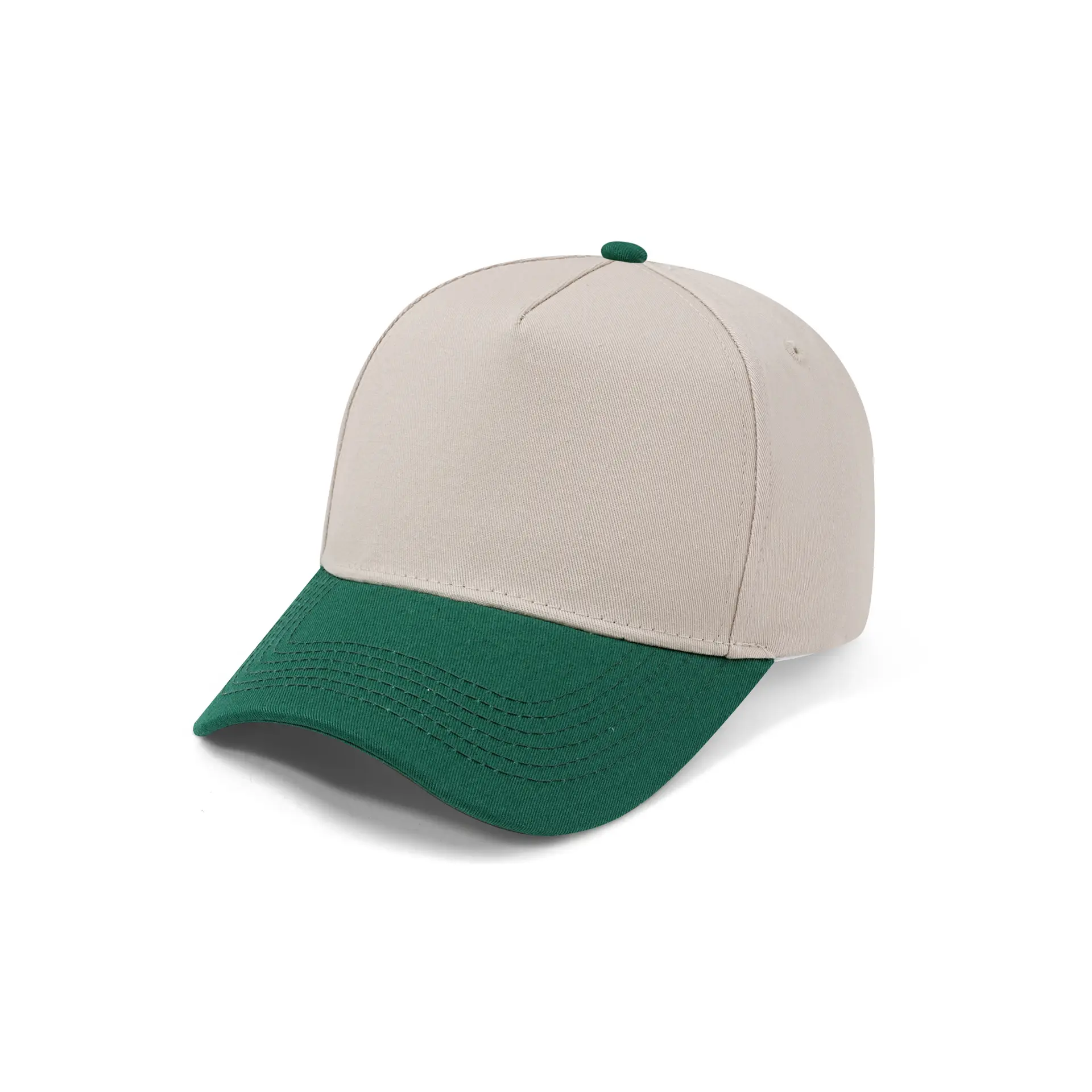
A useful sample review separates construction problems from artwork revisions. Approve the silhouette first, then refine decoration and trims. Otherwise, a logo may be adjusted repeatedly on a crown that is still the wrong shape.
- Front peak: Is the fold intentional, centered, and consistent from cap to cap?
- Crown proportion: Does the side profile match the intended market position?
- Fit: Does the hat sit securely without an excessive gap or pressure point?
- Visor: Are the length, curve, material, stitch rows, and underside correct?
- Decoration: Is the artwork balanced around the fold and clear at wearing distance?
- Material behavior: Do the front, mesh, seams, and reinforcement recover after handling?
- Closure and rear opening: Do the adjustment range and rear shape fit the target wearer?
- Interior: Are the sweatband, labels, taping, and seam finishing comfortable and correctly positioned?
Photograph the sample from the front, both sides, rear, top, and inside. Add one worn front and side view. These images make revision comments more specific and reduce arguments caused by different viewing angles.
How to Brief an A-Frame Hat Supplier
Do not send only a logo and the phrase “A-frame trucker.” Include a visual shape reference, intended wearer, sales channel, crown height direction, front pinch, panel layout, visor shape, front and rear materials, closure, decoration file, decoration size, colors, labels, packaging, order quantity, and required delivery date.
Mark which details are fixed and which can be developed with the supplier. If the A-frame silhouette is the key design feature, make that an approval checkpoint before color and trim variations are released. The custom hat development process shows how product definition, sampling, feedback, production, and quality review connect.
For brands and B2B programs, the best A-frame hat is not the one with the tallest crown or the largest logo. It is the version whose shape, fit, material, and decoration serve the intended customer. Start with that product role, then use a full custom OEM hat development process to build and approve the complete cap around it.
Frequently Asked Questions
Is an A-frame hat the same as a trucker hat?
No. A-frame describes the pinched front-crown profile. Many A-frame styles use a mesh back and trucker construction, but an A-frame specification can also use other back panels, fabrics and closures. Confirm the complete construction instead of choosing by name alone.
Which decoration details should be tested on an A-frame sample?
Check how the artwork sits across the front fold or seam, whether the crown supports the chosen embroidery or patch, and whether the decoration changes the intended profile. Approve placement on a physical sample rather than a flat mockup alone.
What should a buyer approve before bulk production?
Approve the crown height and front fold, panel materials, visor shape, closure, artwork size and placement, inside finishing and the complete physical sample. Keep those decisions in one product specification for production and inspection.