
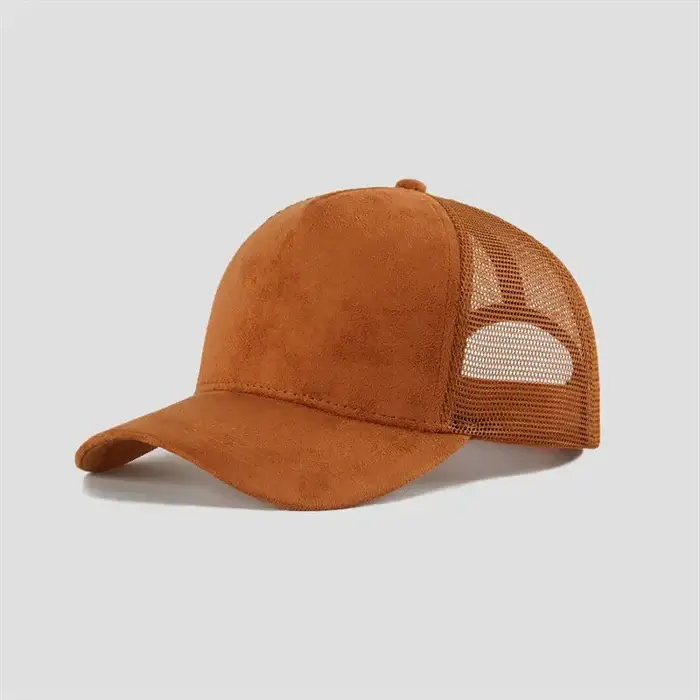
Baseball cap vs trucker hat is not simply a choice between two looks. For a brand or B2B program, the decision affects crown shape, airflow, logo placement, material selection and how the finished hat is likely to be worn. A baseball cap usually uses fabric across the full crown, while a trucker hat combines solid front panels with mesh at the back.
Quick answer: choose a baseball cap when you want a classic all-fabric silhouette with broad styling flexibility. Choose a trucker hat when rear ventilation, a more casual outdoor character or a taller front presentation is central to the brief. Neither style is automatically better; the right option depends on the wearer, the design and the intended use.
Baseball Cap vs Trucker Hat at a Glance
| Decision factor | Baseball cap | Trucker hat |
|---|---|---|
| Crown construction | Usually fabric on all panels | Solid front with mesh rear panels |
| Typical profile | Available in low, mid and high profiles | Often mid or high profile |
| Airflow | Depends on fabric and ventilation details | Open rear mesh generally increases airflow |
| Brand character | Classic, athletic, lifestyle or uniform-ready | Outdoor, workwear, casual or heritage-inspired |
| Logo area | Works with embroidery, patches and other methods; center seams must be considered | Front panels can provide a bold logo area; construction varies by style |
| Common closures | Snap, buckle strap, hook-and-loop, elastic or fitted | Frequently plastic snap, with other options possible |
These are typical differences, not fixed rules. A trucker hat can have fabric rather than foam at the front, and a baseball cap can be highly structured or completely unstructured. Full custom development lets the buyer control those details instead of accepting a standard catalog combination.
What Is the Main Construction Difference?
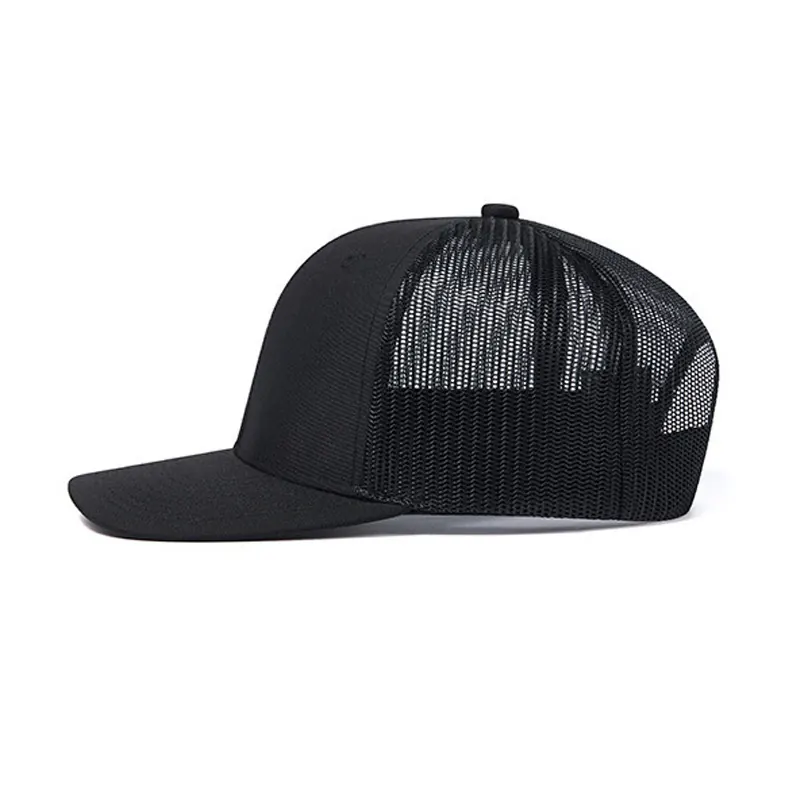
The clearest difference is at the back of the crown. Most custom baseball caps use one fabric across the crown, although panels, structure and profile can vary. Most custom trucker hats use mesh rear panels connected to a solid front section.
A baseball cap may be made as a six-panel, five-panel or another construction. The front can be supported for a clean upright shape or left softer for a relaxed fit. Cotton twill, polyester, nylon and blended fabrics can all be used, depending on the desired hand feel and performance.
A trucker hat may use foam-backed front panels, fabric front panels or a structured front with mesh behind. This distinction matters. A foam-front promotional trucker and a retail-oriented fabric-front trucker can look and feel very different even though both use mesh at the back.
Which Style Feels Cooler?
A trucker hat generally allows more air to move through the rear of the crown because of its open mesh. That can make it a logical starting point for outdoor events, warm-weather merchandise and workwear programs. Mesh alone, however, does not determine comfort.
The front material, crown depth, sweatband and overall fit still affect how the hat feels. A tall foam front can retain warmth around the forehead, while a lightweight fabric baseball cap with eyelets or perforated panels may be comfortable in active use. If heat and moisture are important, compare complete samples rather than deciding from the style name alone.
How Do Profile and Fit Compare?
Baseball caps offer the widest range of familiar fits. A low-profile cap sits closer to the head, while a structured mid-profile cap creates a more defined front. Crown depth, visor curve and closure choice can all change the wearing experience.
Trucker hats are often associated with a taller crown and a more visible front, but not every trucker is high profile. Mesh tension and rear-panel shape affect how the cap wraps around the head. A snap closure gives a useful adjustment range, but it does not guarantee that one pattern will suit every wearer.
For a mixed audience, test the sample on several head sizes and record the usable closure range. Check whether the crown feels too shallow or deep, whether the mesh pulls at the seams and whether the visor sits at the intended angle.
Which One Works Better for a Logo?
Both styles can carry strong branding, but the best decoration depends on the front-panel construction and the artwork.
Baseball cap logo considerations
- A six-panel front has a center seam, so very small text and thin details need careful placement.
- Structured panels can provide a stable base for flat or raised embroidery when the design is digitized for the actual cap.
- Unstructured caps suit softer styling, but dense decoration may change how the front panel drapes.
- Patches can move detailed artwork away from the center seam and create a separate material effect.
Trucker hat logo considerations
- A broad front can make a bold mark highly visible, especially on taller profiles.
- Foam-backed panels react differently to needle tension than woven fabric panels, so the sample must confirm the result.
- A seamless five-panel front can suit wide artwork, patches and selected print or transfer methods.
- The logo should be scaled to the usable front area, not copied from another cap without checking seams and curvature.
Review the available custom hat decoration options only after the crown style and artwork have been considered together. The same logo may need different dimensions or even a different technique on each style.
Which Style Fits Different Brand Programs?
Retail and lifestyle collections
Either style can work in retail. Baseball caps give a familiar foundation that can be changed through profile, wash, fabric, closure and decoration. Trucker hats create a stronger outdoor or retro reference and can add visible texture through mesh and color blocking. The decision should follow the collection’s design language, not a general assumption that one style is more premium.
Outdoor, workwear and event programs
Trucker hats are often considered when airflow and an informal workwear look matter. Baseball caps may be preferable when the program needs an all-fabric appearance, a lower profile or a wider range of closure and structure options. For employees or event teams, comfort across different wearers should carry more weight than a single product photo.
Distributors developing hats for clients
When the end client has not chosen a style, present two clearly defined sample directions rather than asking whether they want a “baseball cap” or “trucker hat” in the abstract. Specify profile, front structure, rear material, visor shape, closure and decoration for each option. This makes the comparison concrete and reduces late-stage changes.
Does One Style Cost More?
There is no universal price winner. Cost changes with fabric, mesh, front support, visor construction, closure, decoration, labels, washing, packing and order quantity. A simple trucker construction may cost less than a highly developed baseball cap, but premium mesh, specialty closures or complex decoration can reverse that comparison.
Compare quotations only when the specifications are equivalent. If one quote includes a different fabric, lighter construction or simpler decoration, the unit prices do not represent the same product. For full custom OEM hats, build the specification first and then compare the total project requirements.
What Should You Check During Sampling?
- Crown profile: view the hat from the front, side and back, both on and off the head.
- Fit range: test several closure positions and note who the pattern fits well.
- Front stability: check whether the crown holds the intended shape without unwanted folds.
- Mesh comfort: feel the edge, flexibility and contact points around the sides and back.
- Logo balance: confirm its size, height, position and relationship to seams and visor.
- Sweatband: assess thickness, softness, attachment and fit around the circumference.
- Closure: operate it repeatedly and confirm the color and finish match the design.
- Color relationship: review fabric, mesh, thread and trims together under consistent lighting.
The approved sample should represent the complete combination, not just the logo. See how custom hat sampling and production work before approving a bulk order.
A Simple Decision Framework
- Start with a baseball cap if the brief calls for an all-fabric crown, classic versatility, softer lifestyle styling or a specific low- or mid-profile fit.
- Start with a trucker hat if visible rear mesh, increased airflow, color-blocking or an outdoor and workwear character is important.
- Sample both if wearer preference is uncertain or if the same program serves different climates and audiences.
The final choice should connect construction, wearer, artwork and use case. If those four elements point in different directions, revise the brief before production rather than asking the factory to solve the conflict later.

Frequently Asked Questions
Is a trucker hat a type of baseball cap?
A trucker hat belongs to the broader family of brimmed casual caps and often shares a similar overall shape with a baseball cap. In product discussions, “trucker” usually identifies the mesh-back construction and its characteristic front profile.
Are all trucker hats made with foam fronts?
No. Some trucker hats use foam-backed front panels, while others use woven fabric with structural support. The front construction should always be stated in the specification.
Can both styles use embroidery and patches?
Yes, but the result depends on panel seams, support, material and artwork. A physical decorated sample is the safest way to confirm appearance and stability.
Which style is better for a mixed-size audience?
Both can use adjustable closures. Pattern shape and crown depth still affect fit, so test the proposed sample on several people rather than relying only on the closure type.
Choose the Style Before Finalizing the Decoration
A baseball cap and a trucker hat can support the same brand in different ways. Define the wearer, environment, desired profile and artwork first, then develop the construction around those decisions. To compare full custom options, send us your artwork, quantity and intended use.