
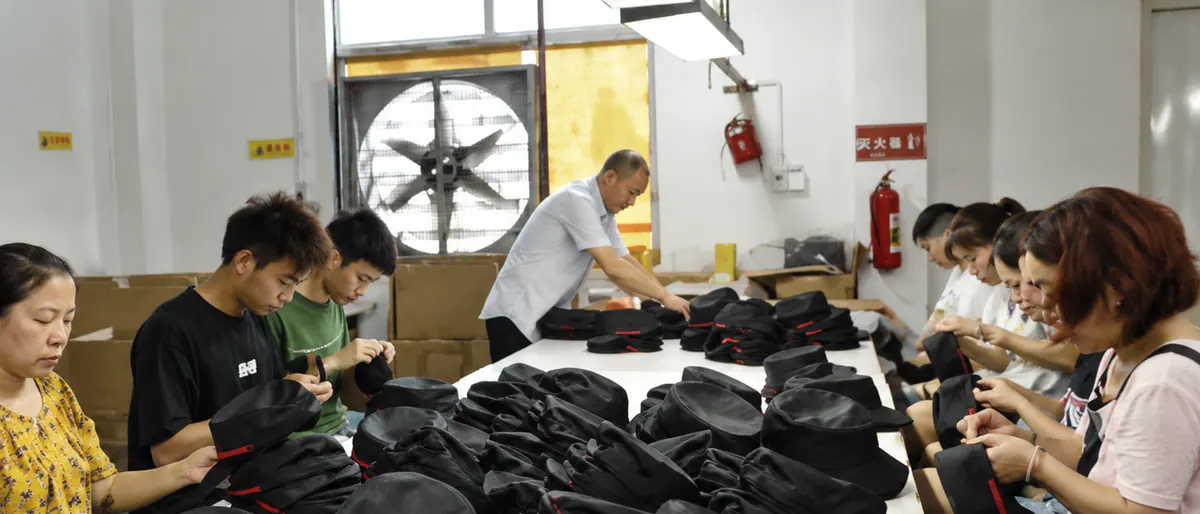
A good custom hat sample proves that one version can be made. Consistent bulk production requires something more: an approved reference, a clear specification, control of changes, and checks focused on the details that matter to that particular design.
This guide is for brands and B2B buyers who have already chosen a general hat direction and want to reduce avoidable differences between the approved sample, the bulk order, and a later reorder. It does not replace the broader custom hat manufacturing process. It explains how to keep the approved product direction intact while that process moves forward.
Turn the approved sample into a production reference
A sample should be reviewed as a complete hat. Crown height, panel shape, visor curve, fabric, closure, sweatband, decoration and inside finishing affect one another. If the buyer approves only a front photo, the factory still has to interpret everything the photo does not show.
Keep the physical sample together with a written specification. The written record should identify the approved materials and components, key measurements, artwork size and location, color references, packing requirements and the version date. Photographs from the front, side, back and inside help record the appearance, but they do not replace the physical sample.
| Reference | What it controls | What it cannot show alone |
|---|---|---|
| Physical approved sample | Shape, hand feel, decoration and overall finish | Every written measurement or supplier reference |
| Specification or tech pack | Materials, dimensions, placement and construction notes | The complete feel of the finished hat |
| Color and material swatches | Approved visual and tactile references | How the materials behave in the completed construction |
| Approval photographs | Visible appearance and version record | Accurate color under every screen and light source |
Identify the product-specific control points
A generic statement such as “strict quality control” does not tell the production team what to protect. Each hat needs a short list of critical points based on its design and use.
- Silhouette: crown profile, front-panel shape and visor curve.
- Fit: circumference range, crown depth, closure operation and sweatband feel.
- Decoration: artwork dimensions, location, alignment with seams and surface distortion.
- Visible construction: panel symmetry, seam appearance, top button, eyelets and visor stitching.
- Interior: taping, labels, sweatband, loose threads and any edge that touches the wearer.
The list should be short enough to use. A performance cap with laser-cut ventilation needs different attention from a structured trucker hat with a large front patch. The sample review should decide which details have the greatest effect on appearance, fit and function.
Check the first production output before the whole order is finished
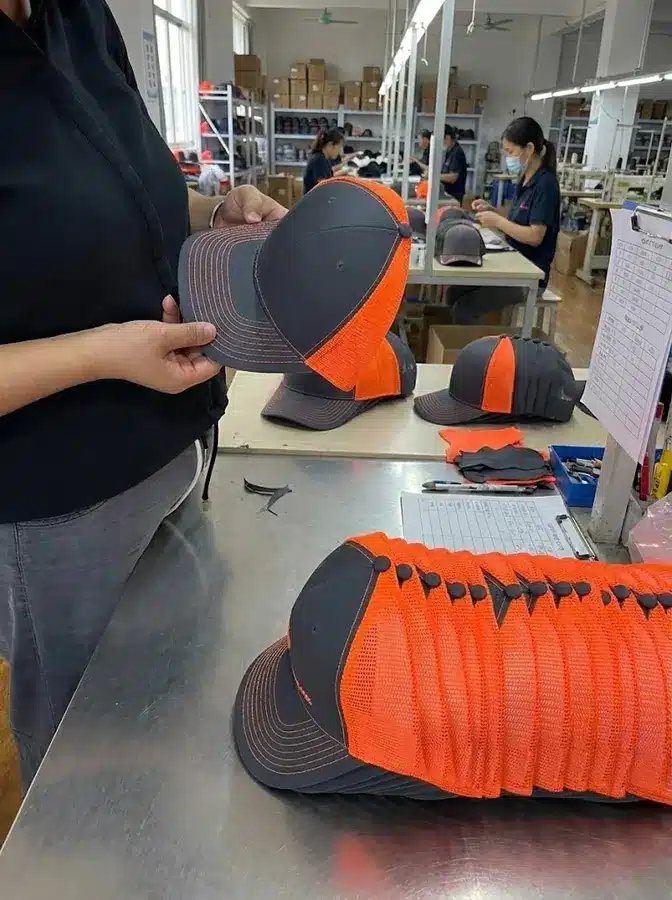
When practical, compare early production pieces with the approved reference before the entire quantity is completed. This is the point to confirm whether the actual production materials, machine settings and assembly sequence are creating the expected result.
The check does not need an invented universal tolerance. The acceptable range depends on the feature, the construction and the buyer’s specification. A small variation in an internal stitch may have little commercial effect, while the same visual shift in front-logo placement may be obvious on a retail display. Agree in advance on what will be measured, how it will be measured and which reference controls the decision.
Treat every substitution as a product change
Material availability can change between sampling and production or between one order and the next. A replacement fabric with the same fiber composition may have a different surface, stiffness or shade. A different closure can change the fit and the appearance at the back. Patch backing and embroidery construction can also alter how the crown sits.
The supplier should identify a proposed substitution before using it. The buyer can then review a swatch, component or revised sample according to the risk. Record the new version instead of silently updating the old specification. This protects both sides from comparing bulk goods against a reference that no longer represents the product.
Plan reorders from the approved record, not memory
For a reorder, provide the previous order reference and confirm which specification and sample apply. Ask whether the same fabric, color, closure and decoration inputs remain available. If one input has changed, review the effect before assuming the rest of the hat will remain identical.
Keep one approved sample in suitable storage and retain its dated specification and photographs. Fabric and physical samples can also change with handling, light and time, so use the full record rather than relying on one old cap as the only standard.
Questions buyers ask about production consistency
Can every hat in a bulk order be completely identical?
Manufactured textile products have normal variation. The practical goal is to define the details that matter, agree on acceptable ranges where needed, and keep the finished order aligned with the approved product direction.
Is an approved mockup enough for bulk production?
No. A mockup communicates graphic direction, but it cannot confirm crown shape, fabric behavior, fit, visor construction or the physical result of the decoration. Use a physical approved sample for a full-custom product.
What should be rechecked when placing a repeat order?
Confirm the specification version, material and component availability, color references, decoration files, packing and delivery requirements. Reapprove any changed input instead of treating it as the same product automatically.
If your project needs a new construction rather than decoration on an available cap, review our full-custom OEM hat development page. The sampling and approval process explains how the working reference is established before bulk production.