
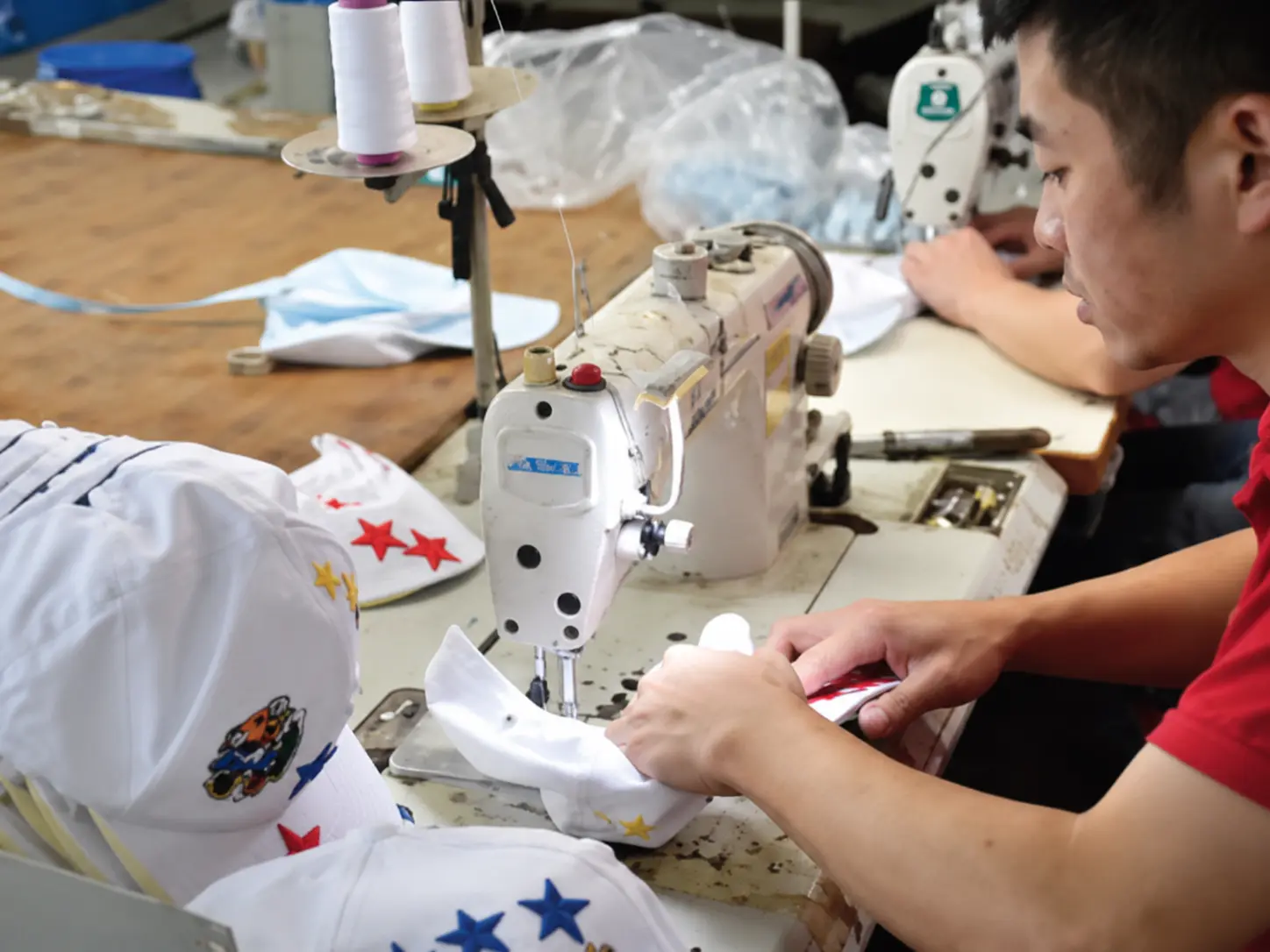
Custom hat manufacturing is a connected development and production process, not a single sewing operation. A full-custom cap moves from a buyer brief through specification, pattern development, sampling, material preparation, decoration, assembly, finishing, inspection, packing, and shipping.
The exact sequence changes with the hat style and decoration method. A structured baseball cap, foam-front trucker hat, lightweight performance cap, and unstructured five-panel hat do not use identical materials or construction. The useful question is not whether every factory follows one rigid formula. It is whether the project has clear decisions and approval points before bulk production begins.
This guide explains what normally happens at each stage, what the buyer should approve, and where changes can still be made without turning the order into rework.
Custom Hat Manufacturing Process at a Glance
| Stage | What happens | What the buyer should confirm |
|---|---|---|
| Project review | The hat style, use, quantity, target delivery window, and customization scope are reviewed. | Business purpose, wearer, style direction, quantities, and essential features. |
| Specification | Construction, materials, colors, decoration, labels, closure, and packing details are documented. | One written reference that reflects the intended product. |
| Pattern and sample | The cap pattern is developed or adjusted and a physical sample is made. | Fit, crown shape, visor, materials, logo execution, and interior details. |
| Bulk preparation | Approved materials and trims are prepared and production instructions are released. | Final quantities by style, color, and size; approved sample and artwork. |
| Cutting and decoration | Fabric components are cut and suitable decorations are applied at the required stage. | Placement, scale, color, surface condition, and repeatability. |
| Sewing and assembly | Panels, visor, sweatband, closure, labels, and other components become a complete cap. | Construction follows the approved specification and reference sample. |
| Finishing and inspection | The cap is shaped, cleaned, checked, and prepared for packing. | Appearance, measurements, workmanship, quantity, and packing requirements. |
| Packing and shipment | Approved packing, carton marks, and shipping documents are completed. | Pack ratio, carton information, consignee details, and shipping arrangement. |
This overview applies to full-custom OEM projects. If you are still deciding between standard decoration and full product development, review our full custom OEM hats page first.
1. Start With a Buildable Product Brief
A useful brief explains the product, not only the logo. It should identify the intended hat style, wearer, use, quantity range, color direction, preferred material, decoration, closure, labels, packaging, and delivery destination. Reference photos or a physical sample can help communicate shape and finish, but they still need written notes explaining what should be copied and what should change.
“Make it premium” is not a production instruction. A clearer brief might request a medium-depth six-panel cap, an unstructured crown, a pre-curved visor, washed cotton twill, front flat embroidery, a fabric strap with a metal adjuster, and a woven interior label. The factory can then evaluate whether the requested elements work together and identify decisions that remain open.
At this stage, alternatives are still relatively easy to discuss. After materials are purchased or components enter production, even a small change may affect cost, timing, or minimum quantities.
2. Turn the Brief Into a Product Specification
The specification converts design intent into details that can be sampled and repeated. Depending on the project, it may be a formal tech pack, an annotated drawing, an order specification, or a combination of these documents.
- Hat style, panel construction, crown depth, and structure
- Visor shape, curve, stitching, and underside treatment
- Shell fabric, mesh, lining, sweatband, and reinforcement
- Color references for fabric, thread, mesh, closure, and trims
- Decoration method, artwork size, placement, and thread or material colors
- Closure construction and finished size plan
- Eyelets, top button, seam tape, labels, hangtags, and packaging
A specification should describe the actual approved construction. It should not rely on broad labels such as “standard cotton,” “high crown,” or “metal buckle” when those terms can cover several different options. Our customization options page shows the product decisions that normally need coordination.
3. Develop the Pattern and Physical Sample
The pattern controls how flat fabric pieces become the crown. Panel width and height, seam shape, visor relationship, rear opening, and sweatband length all influence the finished fit and silhouette. A reference cap can guide development, but a new fabric, structure, or closure may still require pattern adjustment.
The physical sample is where the complete product is evaluated. Review it on the intended wearer rather than judging only from front-view photos. Check the crown from the front, side, and rear; confirm the visor; inspect how the decoration sits on the surface; and look inside at seam coverage, labels, and sweatband construction.
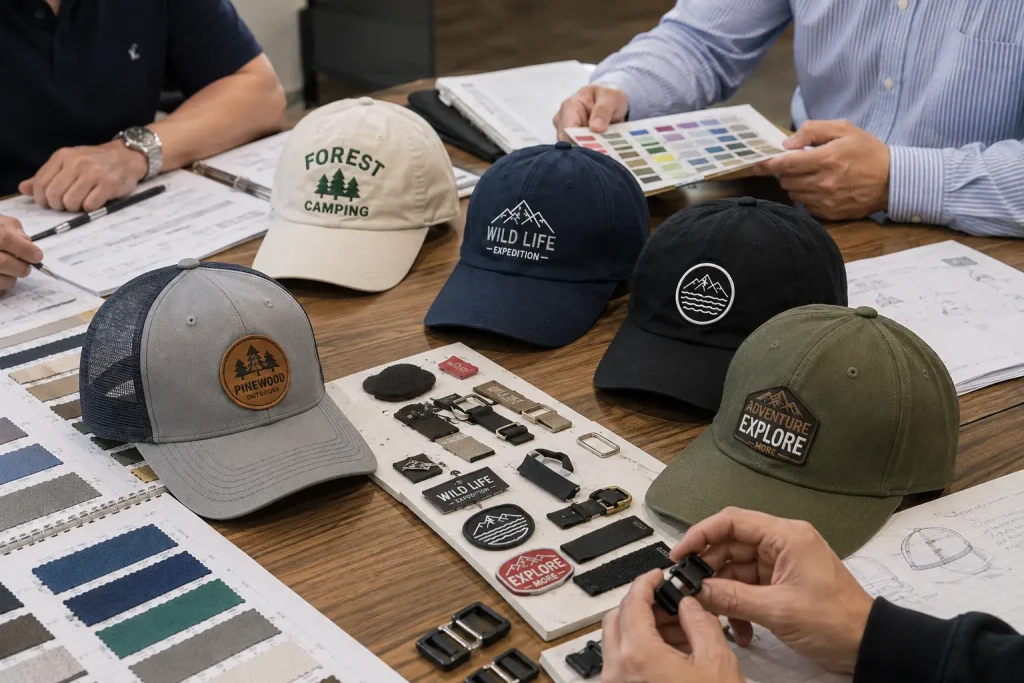
Feedback should be specific: identify the area, describe the required change, and provide a measurable or visual reference where possible. Multiple scattered messages can create conflicting instructions, so combine comments into one revision list.
4. Approve Materials, Trims, and the Production Reference
Bulk preparation should begin from confirmed information. The approved sample is important, but it works best together with the final specification, artwork files, color references, and quantity breakdown.
Before material commitment, confirm whether the selected fabric and trims are stock items or project-specific. Custom-dyed fabric, special mesh, branded hardware, labels, and packaging may have their own minimums and preparation requirements. These component minimums can differ from the minimum order quantity for the finished hat.
If the bulk material cannot be exactly the same as the first development sample, the difference should be disclosed and reviewed before production. A substitute should never be treated as automatically equivalent because it has a similar name.
5. Cut Fabric Components
After the production pattern is released, fabric is spread and cut into panels and other components. Grain direction, fabric movement, print placement, pile direction, and usable width can affect how pieces are arranged. Corduroy, patterned fabric, coated nylon, stretch fabric, and mesh may require different handling.
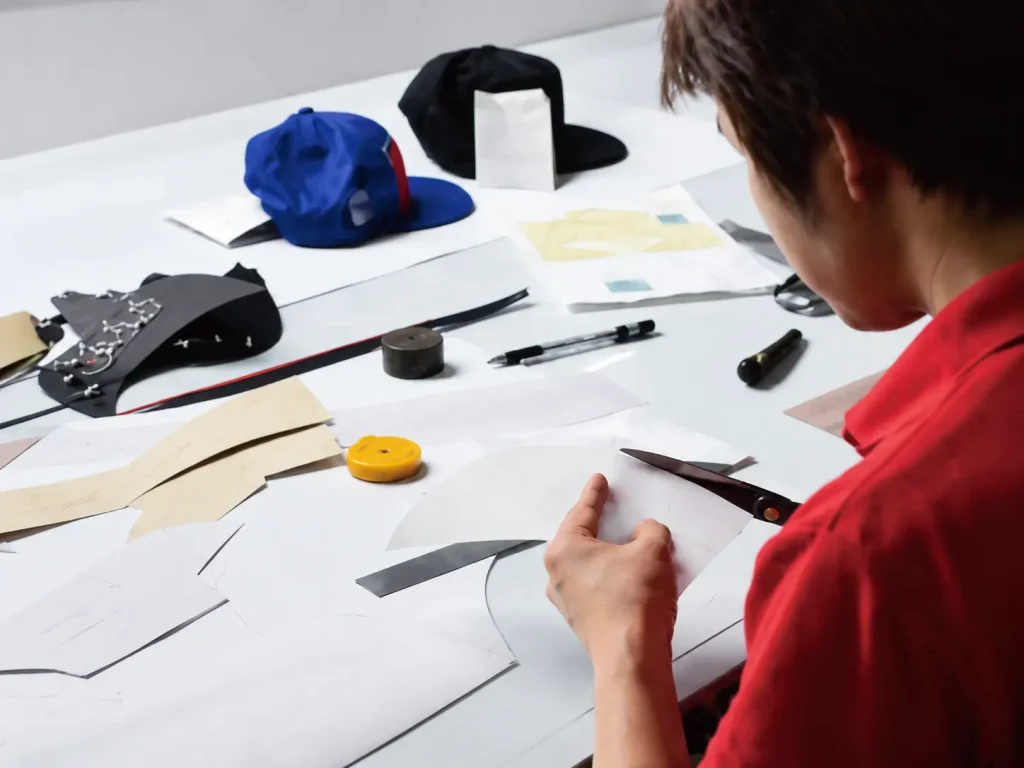
Cut components should remain organized by style, color, and size. This is especially important when one order contains several similar colorways or multiple fitted sizes.
6. Apply Embroidery, Patches, Prints, and Other Decoration
Decoration does not always happen at the same point. Front embroidery is commonly applied to a flat panel before crown assembly because the panel is easier to hoop and control. A sewn patch may be attached before or after assembly depending on its position and construction. Heat transfer, screen print, all-over print, side embroidery, and rear branding each have different process requirements.
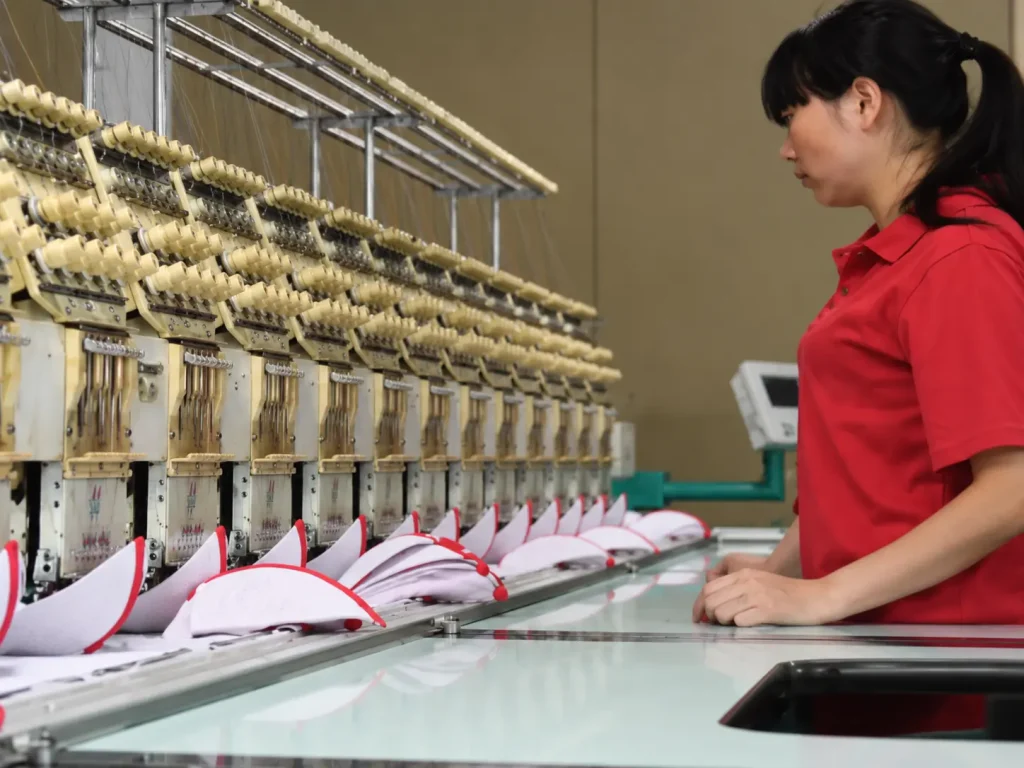
The approved artwork alone is not enough. The sample should also confirm the decoration size, location, stitch or surface appearance, edge finish, colors, and interaction with seams. A design that works on cotton twill may need adjustment on foam, mesh, stretch fabric, or a curved assembled area.
7. Sew and Assemble the Cap
Assembly joins the decorated panels and adds the components that create the final hat: reinforcement where required, visor, sweatband, seam tape, eyelets, top button, closure, and labels. The exact order depends on the construction.
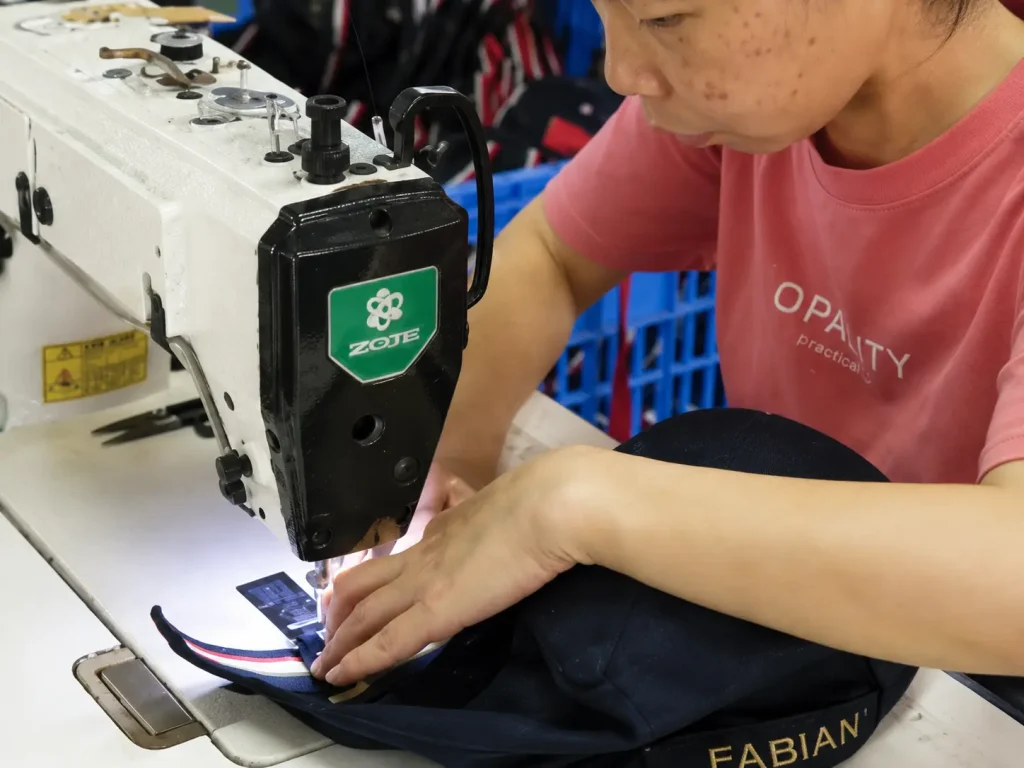
Buyers do not need to prescribe every machine setting. They do need a clear approved result. Important review points include seam alignment, crown symmetry, visor position, puckering, exposed thread ends, interior comfort, closure attachment, and label placement.
8. Shape, Finish, and Inspect the Order
Finishing may include shaping, pressing or steaming where appropriate, thread trimming, surface cleaning, visor forming, and final presentation. The method depends on the material and style; not every cap should receive the same heat, pressure, or curve.
Inspection should compare the production order with the approved sample and written requirements. It can include checks during production as well as a final review. The inspection plan should reflect the project rather than relying on one generic checklist for every hat.
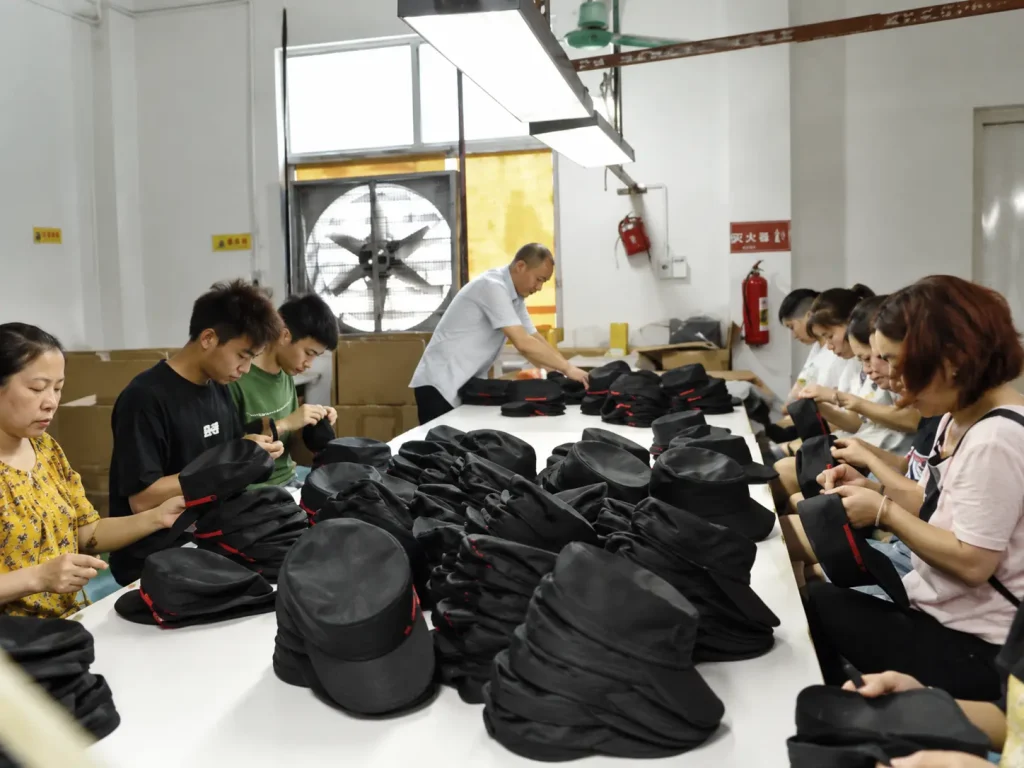
- Correct style, color, size, and order quantity
- Overall crown shape and left-to-right balance
- Visor construction and agreed curve
- Decoration placement, appearance, and color
- Seams, stitching, labels, closure, and interior finish
- Finished measurements using the agreed method
- Cleanliness, packing, assortment, and carton marks
No production process makes every item mathematically identical. The practical goal is controlled, acceptable consistency against the approved reference and project requirements—not a universal tolerance copied from an unrelated cap.
9. Pack and Prepare the Shipment
Packing protects the shape and keeps the order organized. Confirm how hats are nested or individually packed, whether inserts or retail packaging are required, how styles and sizes are assorted, and what information appears on cartons.
Shipping terms, destination details, importer responsibilities, and required documents should be agreed separately from the product specification. Production completion is not the same as arrival date: booking, export handling, transit, customs, and final delivery all affect the schedule.
Where the Process Can Change
There is no single fixed workflow for every custom hat. Common variations include:
- A printed fabric may be produced before cutting, while a small transfer may be applied to a cut panel.
- Front embroidery is often completed before assembly, while some side or rear decoration may be added later.
- A new crown silhouette requires more pattern development than a repeat order using an approved pattern.
- Fitted hats need quantity planning by size, while many adjustable hats use a simpler size program.
- Performance fabrics and seam-free constructions may require different equipment and finishing from cotton twill caps.
The correct sequence is the one that suits the approved construction. Ask the supplier to explain any step that affects appearance, function, minimums, or the approval schedule.
Buyer Approval Checklist Before Bulk Production
- Final hat style, pattern, fit, and size plan are approved.
- Shell fabric, mesh, lining, sweatband, reinforcement, and trims are confirmed.
- All colors have clear references and any expected variation is understood.
- Artwork files, decoration method, placement, size, and colors are approved.
- Closure, labels, seam tape, hangtags, and packaging are documented.
- The physical sample and written revision notes agree with each other.
- Quantities by style, color, and size are final.
- Inspection points, packing method, carton marks, and shipping arrangement are recorded.
Our custom hat development process explains how project review, sampling, production, and inspection connect from the buyer’s perspective.
Custom Hat Manufacturing Process FAQ
Does every custom hat need a new pattern?
No. An existing pattern may be suitable when its fit and shape match the project. A new silhouette, material behavior, construction, or size requirement may require an adjusted or new pattern. The decision should be based on the finished product, not on the style name alone.
When is embroidery added to a custom cap?
Front embroidery is commonly applied to a flat panel before crown assembly. Other locations and decoration methods may be completed at a different stage. The production team should choose the sequence that provides access, control, and a clean result.
How long does custom hat manufacturing take?
There is no reliable universal number. Timing depends on specification readiness, sample revisions, material and trim availability, order size, construction, factory schedule, packing, and shipping method. Use a custom hat production timeline that separates development, approval, bulk production and transit instead of treating them as one lead time.
What should be approved before bulk production?
Approve the complete physical sample together with the current written specification, artwork, colors, material details, size plan, quantities, labels, and packing. If any approved component will change for bulk production, review that difference before production begins.
Can the same manufacturing process be used for every hat style?
The broad stages are similar, but the detailed sequence and controls vary. A trucker cap, fitted cap, unstructured dad cap, five-panel hat, and lightweight performance cap have different patterns, materials, decoration constraints, and finishing needs.
Build the Process Around the Approved Hat
A dependable custom hat manufacturing process does not come from adding more promises or fixed standards. It comes from making the product decisions visible, approving the physical result, and keeping the production reference consistent as the order moves from one stage to the next.
Explore our custom hat styles or send your project details for a practical review of the hat construction, materials, decoration, sampling, and bulk-production plan.