
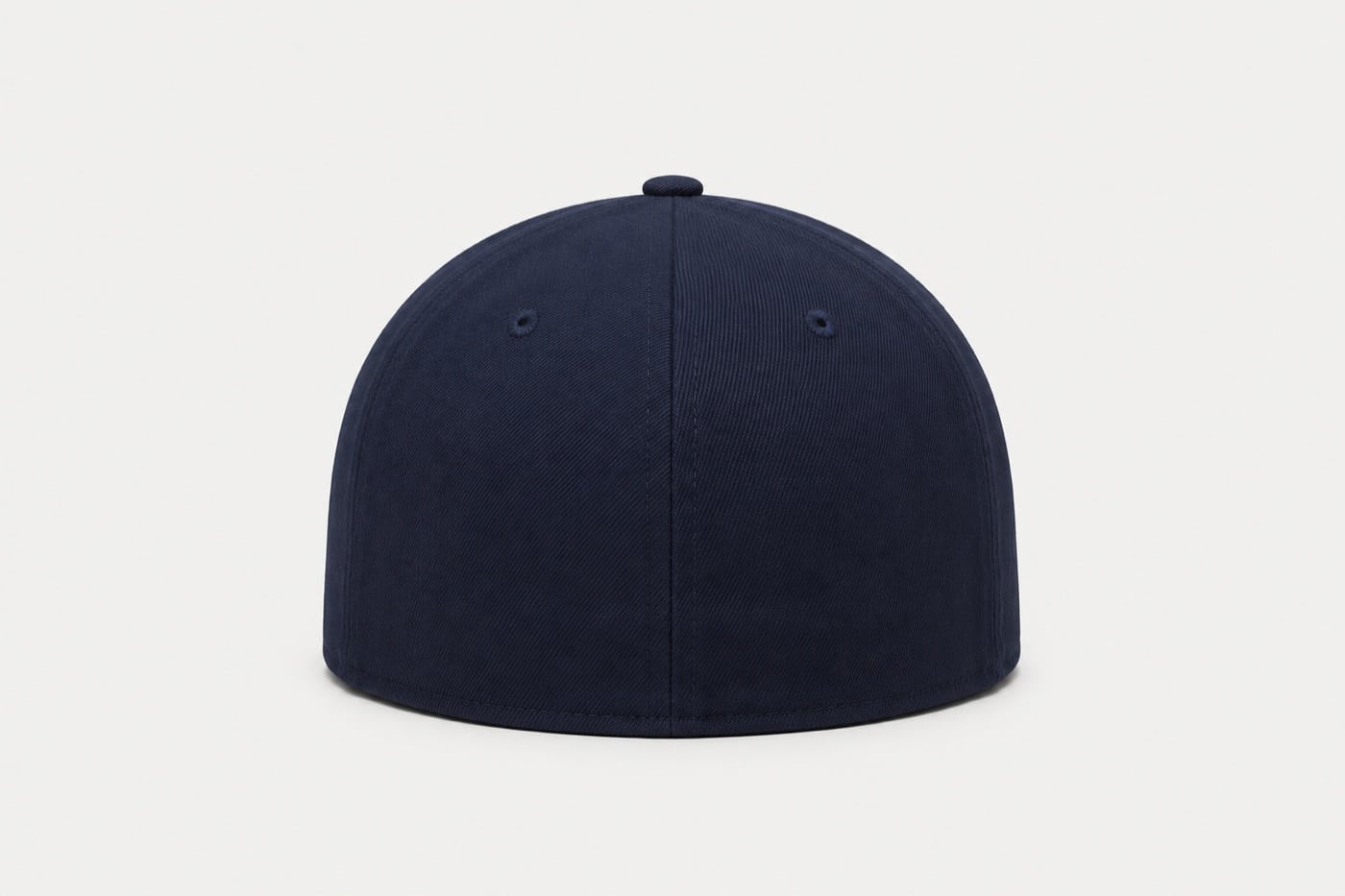
From the front, a fitted cap and an adjustable cap may look nearly identical. At the back, they make very different promises to the buyer. One gives a continuous, closed-back silhouette but needs a planned size run. The other lets the wearer change the fit, while making the closure part of the design.
Neither is automatically the “premium” option. The better choice is the one your audience will wear comfortably and your buying team can distribute without a pile of unwanted sizes.
The difference that matters after the sample looks good
| Buying question | Fitted cap | Adjustable cap |
|---|---|---|
| How is fit selected? | The wearer chooses a marked size; there is no back adjustment. | The wearer changes the opening or strap within the chosen design’s range. |
| What must the buyer forecast? | Quantity by size, color and style. | Usually quantity by style and color, plus any offered size variants. |
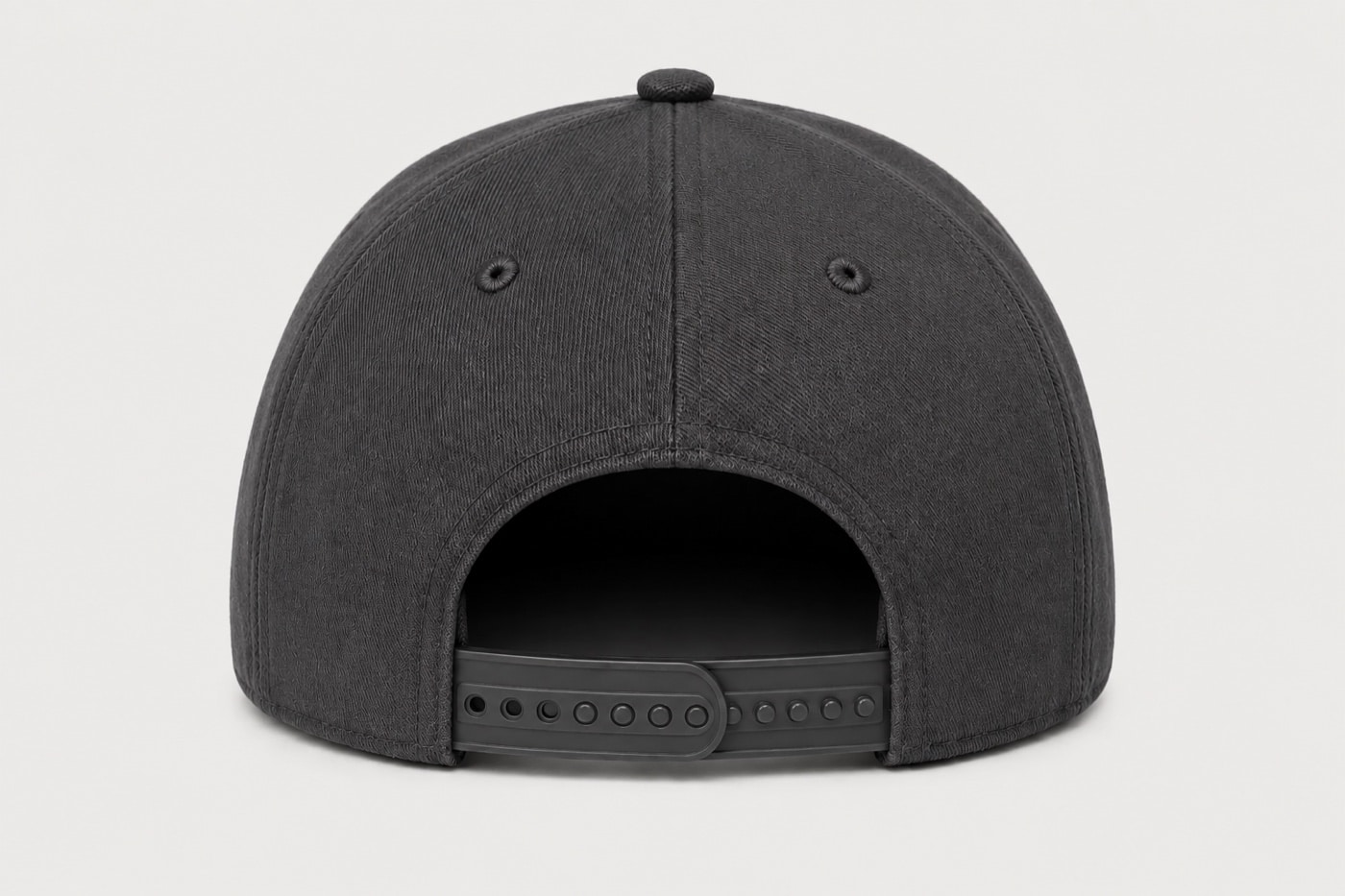
| What appears at the back? | A continuous crown; size information can sit inside. | A visible closure, opening or strap that affects appearance and branding space. |
| Where is the main buying risk? | Poor size allocation can leave stock that fits too few people. | A closure can feel awkward, slip, or clash with the intended look if not sampled. |
“Adjustable” does not mean that one cap fits every head. Published size guides from large cap brands show that even one-size adjustable models have a stated head-circumference range; fitted models have separate size increments. For a custom program, use your approved sample’s measurements and fit tests, not another brand’s chart as the production specification.
For retail: decide how you will sell and replenish sizes
A fitted cap can make sense when the closed-back shape is part of the product identity and the retailer is ready to merchandise several sizes. That decision needs more than a single sample in a common size. Ask for the proposed size chart, try the smallest and largest planned sizes, and record how many units you intend to buy for each size and color. If your sales history is thin, a beautiful fitted sample does not tell you what size curve customers will actually buy.
An adjustable cap reduces the number of fit-specific units to forecast, but the closure should be treated as a visible product component. Compare a strap, buckle or snap closure in the hand and on the head. Look at how much loose strap remains, how easily the wearer adjusts it, and how the back looks in the product photos that shoppers will see. A closure that works mechanically can still be wrong for a clean retail silhouette.
If you are testing a first collection, a limited adjustable style can be a practical way to learn who buys it before committing to a fitted size run. That is an inventory decision, not proof that adjustable caps are universally more comfortable or more desirable.
For teams and organizations: collect fit information before ordering
For a known roster, fitted caps may work well if each wearer can supply or test a size before the order is finalized. Put the name, selected size, color and delivery group in one approved allocation sheet. Build a process for late additions and mistakes; do not assume an unassigned fitted cap can be handed to anyone.
For an event where attendees are not known in advance, an adjustable cap is often simpler to distribute. Still, try the sample across the expected wearer group. Check the adjustment range, the sweatband contact and whether the cap stays in place during the activity. A one-size label is not a substitute for that test. Youth and adult groups may need different specifications.
If the hat is intended as a keepsake, a promotional giveaway or a store product, ask what happens after the event. A cap people can fit and like is more likely to be worn again than one chosen solely because it is easy to hand out. The answer also depends on crown depth, visor shape and material—not only the closure. Our custom baseball cap guide covers those choices together.
Approve the whole fit, not just the back opening
Ask your supplier to document the sample in front, side, back and interior views. On several actual wearers, note where the sweatband rests, whether the crown feels shallow or deep, and whether the visor position changes when the closure is tightened. For fitted caps, compare more than one size of the same construction. For adjustable caps, test the closure near both ends of its intended range; the crown may not sit the same way at each setting.
Then keep the product specification and the order allocation separate. The specification describes construction, material, color, branding and approved fit. The allocation tells production how many units to make by style, color and—if fitted—size. Mixing these up is an easy way to approve a good cap yet place an impractical order.
For regular custom hats, SN’s usual starting minimum is 100 pieces per style, per color. That figure does not tell you whether every fitted size can be ordered in any split. Share the proposed size breakdown and construction so the applicable minimum and price can be confirmed before sampling or bulk production.
Our closure guide goes deeper on closure types. This article answers the earlier commercial question: should your project use a fixed size run or an adjustable product at all?
What to send for a useful quote
Tell us whether the hats are for retail, a named team or open event distribution. Include reference images, the intended crown and visor, artwork, colors, total quantity per style and color, and any size allocation you already know. If you are undecided, say so. We can discuss which dimensions and closure details should be compared on physical samples before the order is finalized.
Send your cap brief rather than guessing a size run from a single photo.
Buyer questions
Does adjustable mean one size fits everyone?
No. Every adjustable design has a practical fit range. Confirm that range on the proposed sample and test it with the intended wearers.
Can I order a fitted cap without a size breakdown?
You can request a quote, but production planning and stock allocation require a size split. A supplier can help discuss options, yet only the buyer knows the likely wearer mix and sales history.
Is fitted always more expensive?
Not necessarily. Price depends on the chosen construction, materials, decorations, size range, quantity and packing. Ask for quotes against comparable specifications rather than judging cost by the closure alone.