
The most common hat materials are cotton twill, polyester, nylon, canvas, corduroy, wool blends, and mesh. None is automatically the best. The right choice depends on the hat structure, intended use, surface appearance, decoration, care expectations, quantity, and target cost.
For a full custom cap, a fiber name is only the starting point. Two cotton twills can differ in weight, weave, finish, stiffness, shrinkage behavior, and embroidery support. Two polyester fabrics can have different stretch, sheen, moisture handling, and heat sensitivity. Buyers should approve the exact fabric on the finished sample rather than approve “cotton” or “polyester” in general.
| Hat material | Typical character | Useful applications | What to check on a sample |
|---|---|---|---|
| Cotton twill | Familiar diagonal weave, available in soft or firm constructions | Baseball caps, dad hats, lifestyle and workwear programs | Weight, finish, shrinkage, color, structure, and embroidery response |
| Polyester | Wide range from matte woven fabric to lightweight technical material | Performance, uniforms, events, and color-driven programs | Hand feel, sheen, stretch, moisture handling, heat response, and decoration |
| Nylon | Lightweight, smooth, or lightly textured depending on construction | Outdoor, running, packable, and technical-looking caps | Noise, wrinkle recovery, coating, sewing behavior, and heat sensitivity |
| Canvas | More pronounced body and surface texture than many twills | Workwear, outdoor, heritage, and structured casual styles | Bulk, seam thickness, crown shape, needle marks, and comfort |
| Corduroy | Visible ribs and a soft, dimensional surface | Lifestyle, seasonal, vintage, and fashion collections | Wale direction, pile marks, seam appearance, color, and logo readability |
| Wool or wool blend | Warm hand feel with a dressier or heritage appearance | Seasonal baseball caps, fitted styles, and premium casual collections | Composition, surface, care, comfort, color, and decoration |
| Mesh | Open construction used for airflow and visual contrast | Trucker hats and selected performance caps | Fiber, openness, stiffness, stretch, edge feel, transparency, and color |
Our customization options page shows how fabric works with crown construction, visor shape, closures, decoration, and private-label details.
Cotton twill
Cotton twill is widely used for baseball caps because the diagonal weave can provide a clean surface and enough body for many structured and unstructured styles. It can be crisp, brushed, enzyme washed, garment washed, or developed with another finish. Those treatments change color, softness, surface character, and dimensional behavior.
A heavier cotton is not automatically more durable or more premium. Weight must work with the weave, yarn, finish, panel pattern, internal support, seams, and intended fit. A dense, stiff fabric may give a defined crown but feel too rigid for a relaxed cap. A lighter fabric may suit an unstructured style yet need careful stabilization around embroidery.
For a direct material comparison, see cotton twill vs polyester hats.
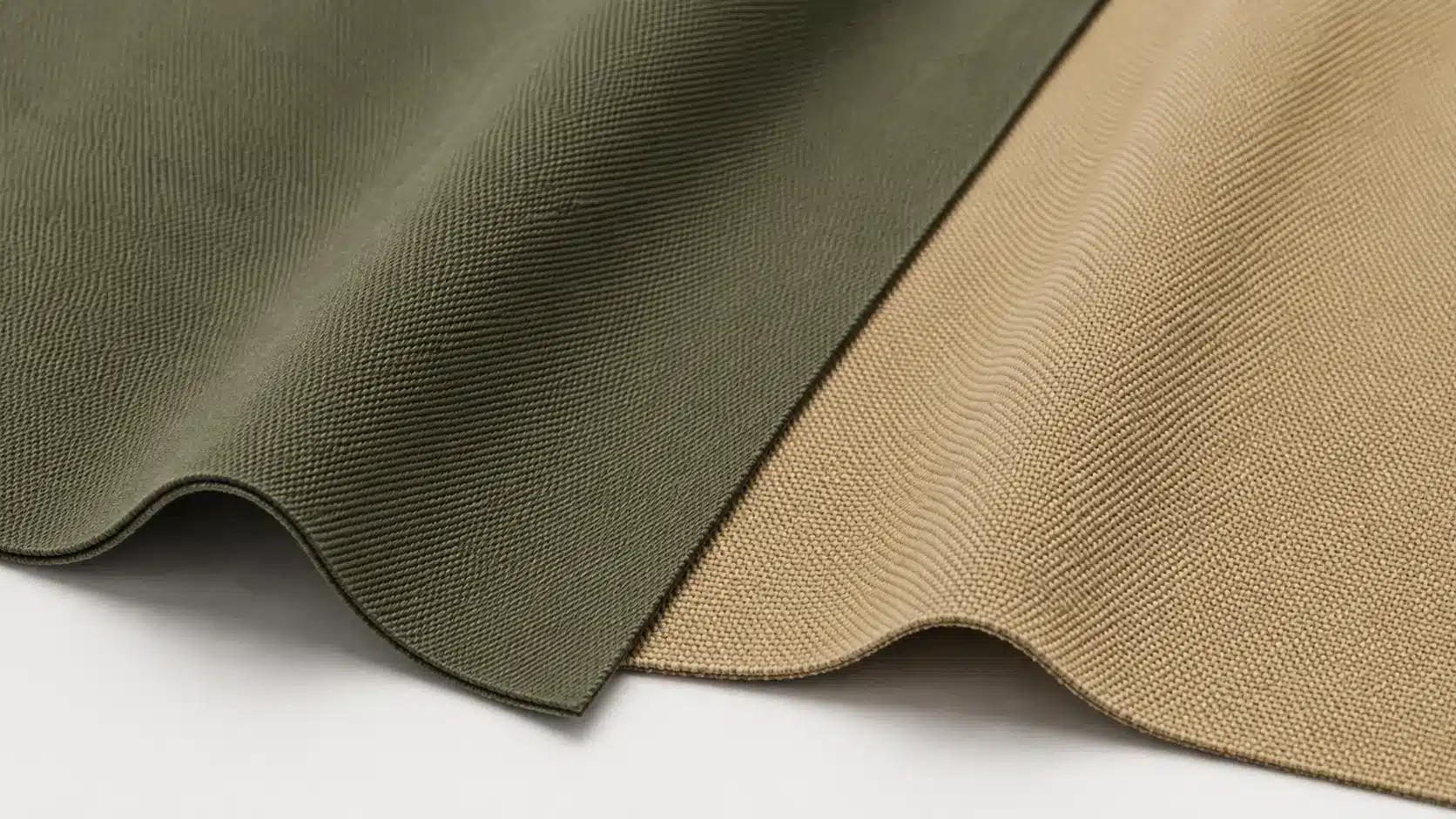
Canvas
Canvas usually has a more substantial plain-weave appearance than standard cap twill, although actual weight and firmness vary. It can support workwear, outdoor, utility, and heritage directions where visible texture is part of the design.
The same body that creates a strong appearance can add thickness at overlapping seams. Check the finished crown, visor edge, top button, eyelets, and closure attachment. Heavy seams can change comfort and make some small construction details harder to execute cleanly.
Embroidery and patches can work well on canvas, but the specific artwork still needs testing. Needle size, backing, stitch plan, patch attachment, and panel support should be selected for the fabric rather than copied from a different cap.
Polyester
Polyester is a broad material category, not one performance specification. It may be woven, knitted, brushed, textured, laminated, perforated, stretchy, matte, or glossy. Some polyester fabrics are selected for moisture movement or quick drying, while others are used mainly for appearance, color, or stability.
Ask the supplier to describe the exact fabric construction and finish. If a performance claim matters, define the intended result and request suitable evidence or testing for the selected fabric. The word “performance” on a swatch card does not prove a particular drying rate, UV rating, water resistance, or cooling result.
Polyester can react differently from cotton during embroidery, heat transfer, pressing, or washing. Test the proposed decoration on the actual panel material. Heat and pressure settings that work on one fabric may create shine, marks, dye movement, or distortion on another.
Nylon
Nylon is often considered for lightweight and technical cap designs. Depending on the weave and finish, it can feel soft and packable or crisp and slightly noisy. It may be combined with stretch, a coating, a water-repellent finish, or ventilation details, but each feature must be specified separately.
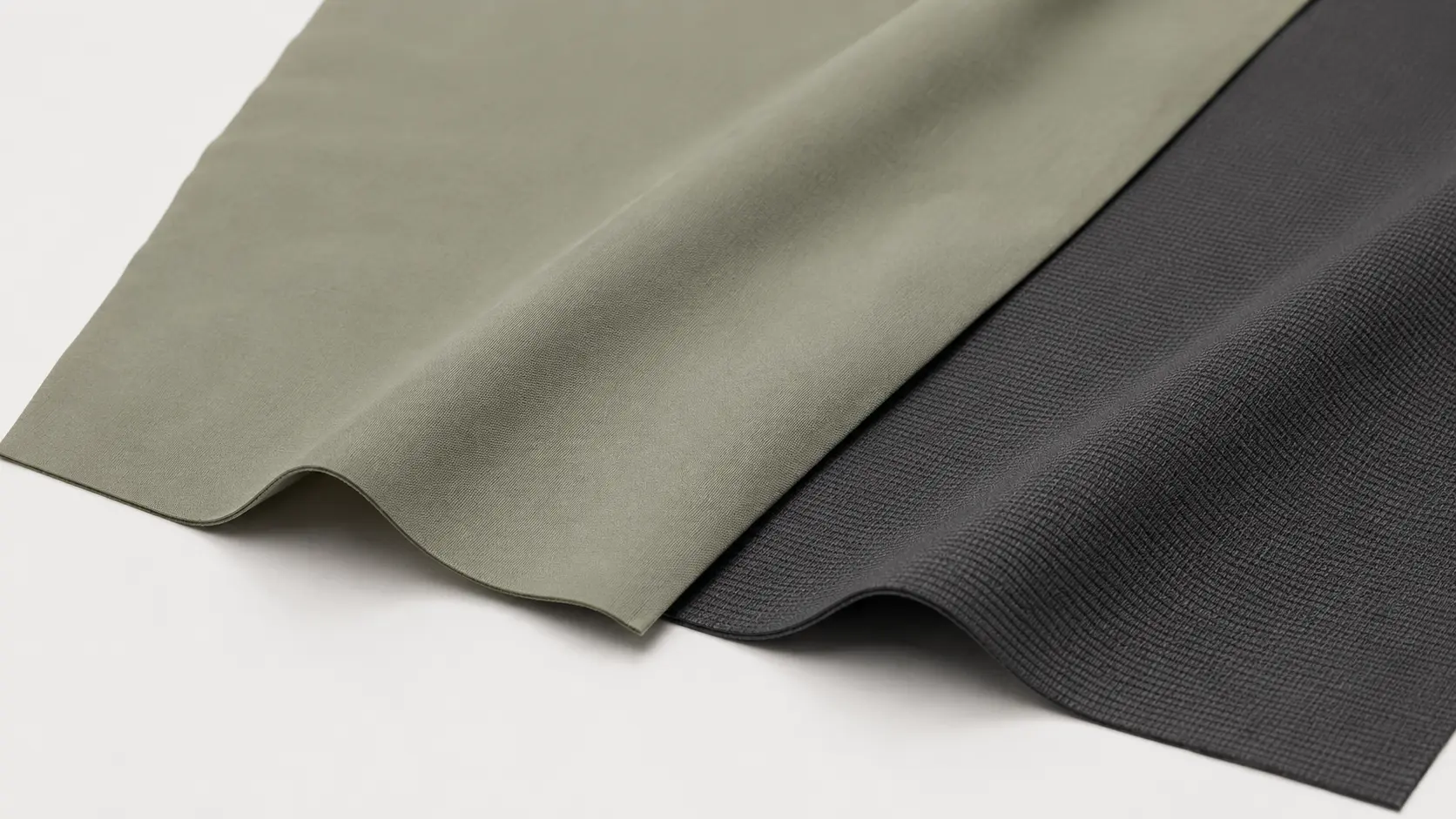
For running and outdoor caps, evaluate the finished product for crown recovery, seam comfort, ventilation, sweatband compatibility, and decoration weight. A lightweight front panel can be overwhelmed by a dense logo or a heavy patch. A smaller mark, transfer, perforated decoration, or another construction may suit the product better.
See our custom performance hats page for full custom development options for lightweight and active headwear.
Corduroy
Corduroy uses raised ribs called wales. Fine-wale corduroy looks different from a wider, more pronounced corduroy, and pile height can change how the surface catches light. It is often used when a brand wants texture, seasonal warmth, or a vintage reference.
The wale direction should remain consistent across panels and the visor. Cutting or sewing variation becomes visible because the ribs create clear lines. Check pile flattening around seams, embroidery, pressing, and packing. Color may also appear different when the pile is brushed in another direction.
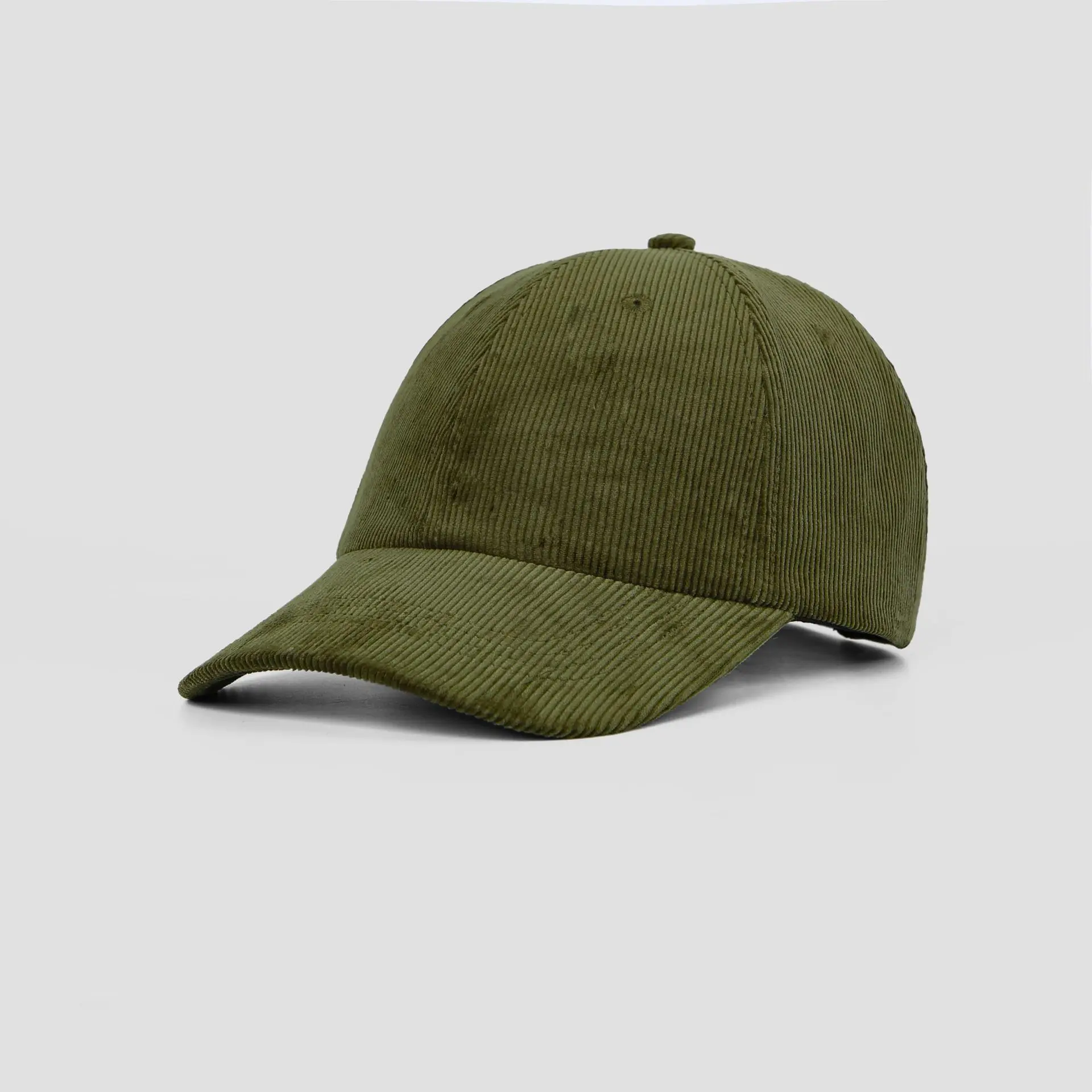
Fine artwork can disappear into a textured surface. Review thread contrast, stitch coverage, border definition, and small lettering on the physical sample. A patch can create a cleaner artwork surface, but its thickness, shape, and attachment should still suit the crown.
Wool and wool blends
Wool and wool-blend fabrics can give a cap a warm, tailored, or heritage appearance. Blends may be used to adjust cost, hand feel, stability, color, or care requirements. The blend percentage alone does not predict how the final cap will feel.
Confirm the full composition, surface finish, lining or internal support, sweatband, and expected care. Check whether the fabric feels suitable against the forehead and ears at the intended crown depth. If the cap is for a warmer climate or long periods of wear, evaluate the complete hat rather than assuming the fiber choice answers comfort.
Mesh
Mesh is most familiar on trucker hats, but it can also appear as side panels, ventilation inserts, or lightweight crown material. Mesh varies in fiber, hole shape, openness, stiffness, stretch, recovery, transparency, and surface feel.
A firm mesh can help define the rear crown. A soft or stretchy mesh follows the head differently. More open mesh may allow greater air movement, but the wearer’s experience also depends on crown fit, front material, sweatband, hair, activity, and weather.
Check the mesh edge where it joins the sweatband and closure opening. Also compare mesh, fabric, plastic closure, and thread colors together. Materials with different surfaces can appear mismatched even when their color references are close.
Fabric weight does not work alone
GSM, ounces, and other weight descriptions can help compare materials, but they do not describe the complete cap. The same weight can behave differently in a tight twill, open weave, brushed fabric, coated nylon, stretch polyester, or corduroy.
Use fabric weight together with:
- fiber composition and yarn construction;
- weave or knit structure;
- finish, wash, coating, or lamination;
- crown pattern and panel count;
- buckram or other internal support;
- visor and sweatband construction;
- seam thickness and stitching;
- decoration method and coverage.
A buyer should not specify a universal “premium GSM.” First define the required shape, touch, use, and decoration. Then compare fabric options on the same sample construction.
Match the fabric to the crown construction
Fabric and structure work together. A structured crown may use buckram or another support behind the front panels, so the outer fabric does not carry the full shape by itself. An unstructured cap relies more on the behavior of the outer fabric and panel pattern.
Soft fabric does not guarantee a relaxed fit, and firm fabric does not guarantee a clean structured crown. Crown height, depth, front angle, seam placement, visor position, and sweatband circumference also affect the result.
When changing the fabric on an existing design, do not assume the original pattern and support will produce the same shape. The new material may require another sample or an adjustment to seam allowance, reinforcement, pressing, or embroidery setup.
Match decoration to the surface
| Decoration | Fabric considerations | Sample checks |
|---|---|---|
| Flat embroidery | Surface stability, weave, stretch, backing, and seam position | Small details, edge quality, puckering, and panel distortion |
| 3D puff embroidery | Front support, artwork shape, stitch plan, and fabric recovery | Foam coverage, corners, joins, relief, and crown shape |
| Woven or embroidered patch | Patch weight, edge, attachment, and crown curvature | Placement, lifting edges, seam interference, and balance |
| PVC, silicone, or leather patch | Patch flexibility, thickness, attachment, and fabric strength | Crown pull, comfort, edge behavior, and packing marks |
| Print or transfer | Surface texture, coating, color, heat, and pressure response | Edges, color, adhesion, hand feel, shine, and distortion |
Decoration should be sampled on the actual fabric and crown construction. A clean test on a flat swatch does not confirm how the same artwork will behave over a curved panel, support layer, or center seam.
Specify finishes and performance claims separately
Washed, brushed, water-repellent, moisture-wicking, antimicrobial, UV-rated, recycled, organic, and other descriptions refer to different material properties or claims. They should not be treated as interchangeable.
If a feature is required, define what the claim means for the product and what documentation or test method the buyer needs. Availability, testing, labeling, and acceptable results may depend on the material, finish, market, and project. Avoid adding a claim to marketing copy before the selected material and supporting evidence are confirmed.
Finishes can also affect color, touch, sewing, pressing, decoration, and care. Approve the finished material or cap, not an untreated base fabric that will later be washed or coated.
How to approve hat materials before production
- Define the intended use, wearer, appearance, crown structure, and care expectations.
- Review physical swatches in the relevant colors and finishes.
- Confirm composition, construction, weight or supplier reference, and any required claim.
- Test the selected decoration on the actual material and support.
- Build a complete sample with the intended crown, visor, sweatband, closure, and interior components.
- Check fit, shape, touch, color, seam appearance, logo result, and packing recovery.
- Record the approved fabric reference and retain a swatch or sample when practical.
- Require approval before substituting a different material, finish, or color lot.
Our custom hat development process explains how material approval fits with sampling, revision, production, and quality checks.
What to include in a material brief
Send the supplier reference images, intended use, target appearance, required composition if any, preferred touch, structure, color, decoration, quantity, destination, and care expectations. Identify whether a performance or sustainability claim is required and what evidence your company expects.
If you do not know the exact fabric, describe the finished product rather than inventing a specification. “Matte, lightweight running cap with a soft crown and low-profile decoration” is more useful than selecting a random polyester weight from another product.
For help turning those inputs into a sample-ready cap specification, review our full custom OEM hats service or contact us about your project.
Frequently asked questions
What is the best material for a baseball cap?
There is no universal best material. Cotton twill suits many casual caps, polyester and nylon cover a wide range of technical directions, canvas adds body, and corduroy adds texture. Select the material with the crown structure, decoration, use, and target feel in mind.
Is cotton better than polyester for hats?
Each can work well. Cotton often gives a familiar natural hand feel, while polyester can offer different stability, finish, and moisture-handling options. Results depend on the exact fabric construction and the complete cap.
Does a higher GSM make a hat better?
No. GSM describes fabric weight, not overall quality. Weave, yarn, finish, support, seams, pattern, decoration, and intended use also determine how the hat looks and performs.
Can the same logo be embroidered on every hat fabric?
The artwork may need a different stitch plan, backing, size, placement, or method for a new fabric. Stretch, texture, thickness, seams, coatings, and crown support can change the result. Test the logo on the intended material.
Should a buyer approve a swatch or a finished hat sample?
Use both. A swatch helps compare color, touch, surface, and basic construction. The finished sample shows how the fabric works with the crown pattern, support, seams, visor, sweatband, closure, decoration, and packing.