
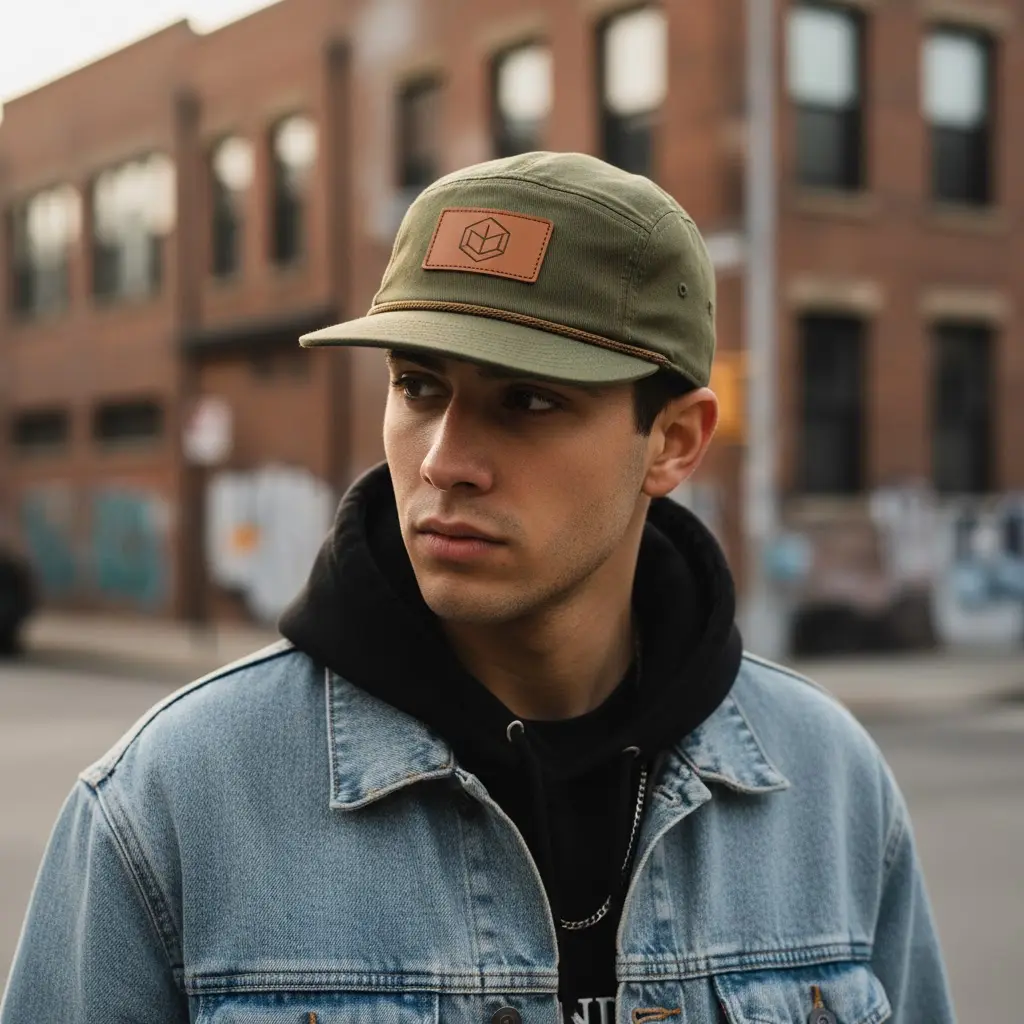
Custom leather patch hats can give a headwear range a clear outdoor, workwear, golf, or lifestyle direction. The result depends on more than attaching a brown rectangle to a cap. Patch material, artwork, edge finish, attachment, crown shape, and color contrast all affect how the product looks and how consistently it can be produced.
This guide is for brands and distributors developing hats from their own specifications. It explains the decisions to make before sampling, the tradeoffs between leather and leather-look materials, and the details buyers should approve before bulk production.
Start with the use case: A patch for a washed cotton lifestyle cap may need a different material, thickness, attachment, and artwork treatment from one used on a lightweight performance hat.
Why Leather Patch Hats Have Strong Commercial Appeal
OpenSEO data for the United States shows meaningful demand around both leather patch hats and custom leather patch hats. Search results are dominated by product pages, customizers, and retail collections, which signals purchase and supplier-comparison intent rather than purely educational interest.
The decoration is easy for customers to recognize. It adds material contrast to cotton, canvas, denim, corduroy, mesh, and some performance fabrics. It can also carry a brand story without relying on a large field of embroidery.
That visual appeal does not make every patch suitable for every hat. A successful program matches the patch to the crown, artwork, intended wearer, price position, and care expectations.
Choose the Material Before Finalizing the Artwork
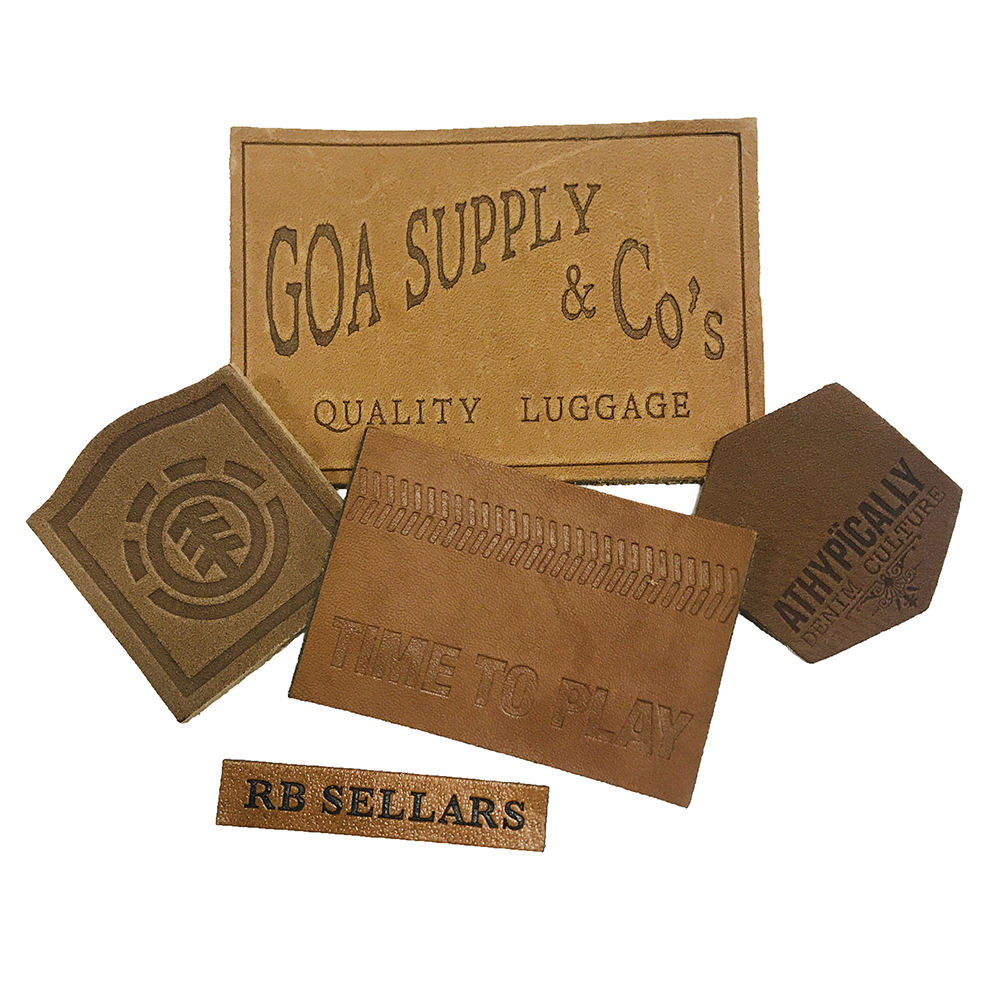
“Leather patch” is not a complete material specification. Suppliers may offer genuine leather, PU leather, other synthetic leather-look materials, or proprietary alternatives. These materials do not behave identically during cutting, engraving, embossing, stitching, or wear.
| Material direction | Useful characteristics | Points to approve |
|---|---|---|
| Genuine leather | Natural grain and variation can support a heritage or outdoor look | Leather type, surface, thickness, shade range, edge finish, and acceptable natural variation |
| PU leather | Can provide a more uniform surface and repeatable color direction | Backing, surface response, engraving or embossing contrast, flexibility, and care requirements |
| Other leather-look materials | May support specific colors, textures, or program requirements | Exact composition, claim language, decoration method, and physical sample performance |
Do not use terms such as “genuine,” “recycled,” “vegan,” “waterproof,” or “washable” unless the selected material and supporting documents justify them. The material description on the specification, label, and sales page should agree.
Match the Decoration Method to the Logo
Leather and leather-look patches can be decorated in several ways. Availability and appearance depend on the supplier’s equipment and the selected material.
Laser engraving
Laser engraving can create tonal contrast and fine detail, but the result changes with material color and surface. A design that reads clearly on tan leather may become subtle on dark brown or black. Buyers should approve an actual engraved sample rather than relying only on a digital mockup.
Debossing and embossing
Debossing presses the design into the surface, while embossing raises selected areas. Tooling, depth, material firmness, and lighting affect visibility. Simple marks usually translate more reliably than artwork filled with narrow gaps or very small text.
Print, foil, or combined treatments
Some materials can accept printed color, foil, or layered effects. These options should be tested for the intended hat, decoration process, and care conditions. A colorful effect may suit a retail collection, while a tonal treatment may fit workwear or heritage positioning.
Design the Patch for the Hat Crown
A patch should be sized on the chosen cap, not on a blank artboard. Crown height, front seams, panel curvature, foam or buckram support, and visor position determine how much usable area is available.
- Five-panel caps often provide an uninterrupted front area, but shallow crowns can limit patch height.
- Six-panel caps have a center seam that may sit behind the patch. The sample should show whether the patch remains flat and balanced.
- Trucker hats can support a strong workwear or outdoor look. Front-panel material and foam structure influence attachment and shape.
- Unstructured caps create a softer silhouette, so a thick or rigid patch may feel disproportionate.
- Performance hats need extra care around lightweight fabrics, stretch, perforations, heat sensitivity, and decoration weight.
Use the hat patch size guide to compare front, side, and rear placements. For mesh-back and workwear programs, review the available custom trucker hat constructions before fixing the patch dimensions.
Patch Shape Changes the Whole Product
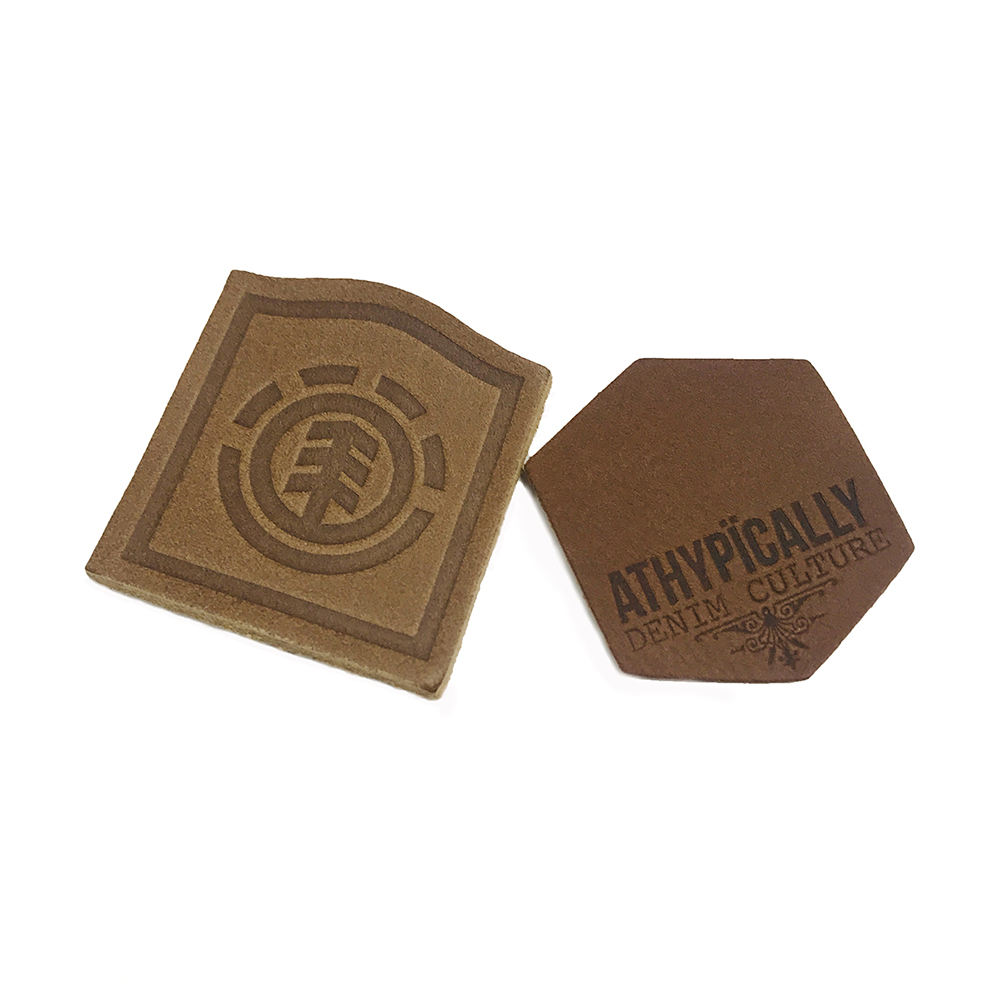
Rectangles are common because they accommodate wordmarks and sit naturally above the visor. Circles, ovals, shields, arches, and custom-cut shapes can create a stronger identity, but the border and attachment need enough space around the artwork.
A custom silhouette should remain recognizable after cutting and stitching. Sharp inside corners, narrow extensions, and small cutouts may be difficult to reproduce consistently. Ask the supplier to recommend adjustments after reviewing the final patch size and material.
The border can be part of the design. A visible stitch line creates one look; a narrow edge with hidden or less prominent attachment creates another. Decide this before approving the artwork because it changes the usable logo area.
How Should a Leather Patch Be Attached?
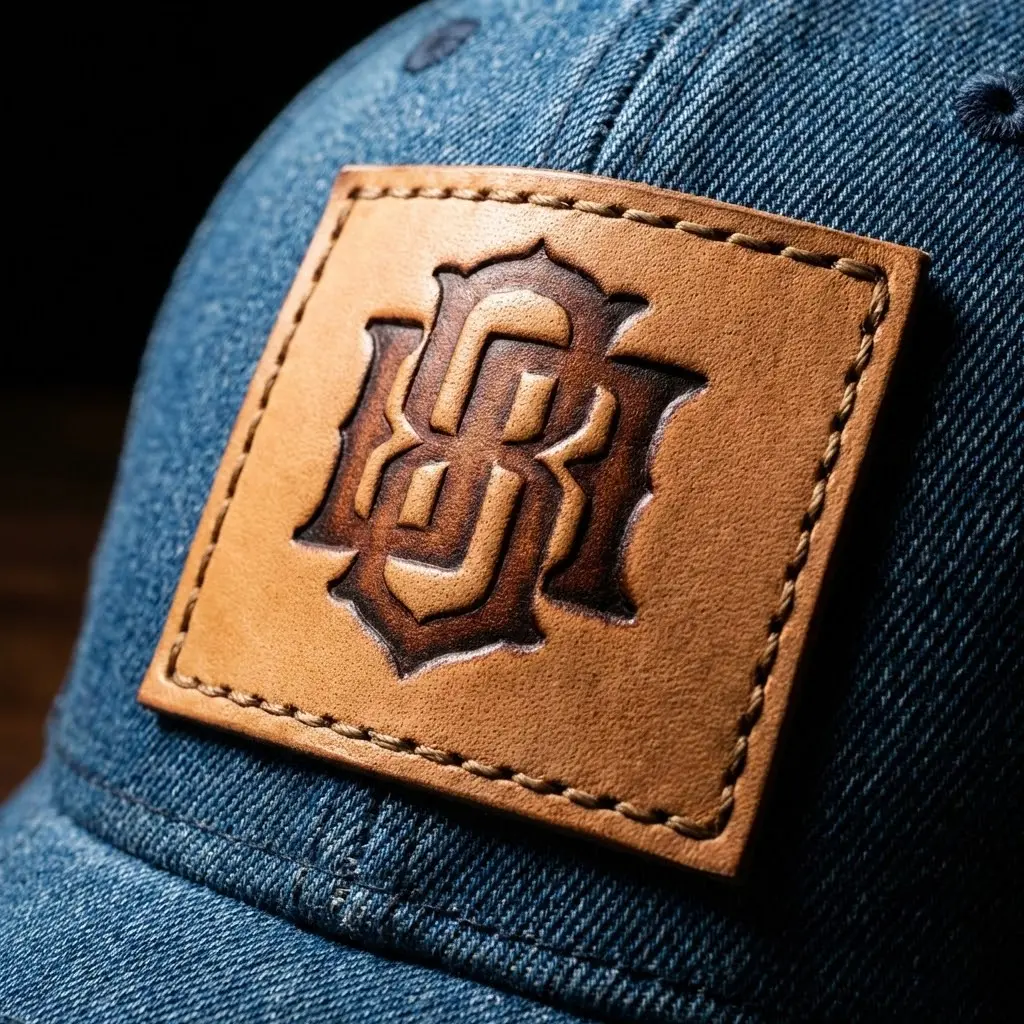
Perimeter stitching is widely used because it becomes part of the patch’s visual structure. Thread color can match the patch, match the hat, or create a controlled contrast. Stitch distance from the edge and corner handling should be approved on the sample.
Other attachment methods may be available, but suitability depends on the patch backing, crown fabric, heat and pressure limits, curvature, and expected use. Adhesive, heat application, or a combined method should not be treated as interchangeable with sewing without testing the exact construction.
Plan Color and Contrast for the Collection
A tan patch on an olive, navy, or black cap creates a familiar outdoor or workwear direction. Tonal dark-on-dark combinations can look quieter and more premium, but low contrast may reduce logo readability. Light patch colors make detail easier to see, although marks and color change may become more noticeable during use.
Buyers should compare patch color under the lighting where the product will be sold and worn. A pro shop, online product page, trade-show booth, and outdoor jobsite present color differently. If the program includes several cap colors, decide whether one patch color will work across the range or whether separate patch versions are needed.
Separate Lifestyle and Performance Requirements
A leather patch can work on a lifestyle cap, rope hat, trucker hat, or selected performance construction, but the specification should change with the use case.
For lifestyle collections, the buyer may prioritize grain, patina, washed fabrics, and a substantial hand feel. For active programs, patch weight, flexibility, ventilation placement, drying behavior, and crown distortion may matter more. A supplier should review the complete hat rather than approve the patch independently.
If the hat will be used for golf, running, outdoor work, or warm-weather events, compare the concept with other custom performance hat options. A lighter decoration may preserve the intended feel better than a thick patch.
What Buyers Should Check on the Physical Sample
A digital mockup can confirm general layout. It cannot show material feel, grain variation, actual engraving contrast, edge quality, crown behavior, or how the patch sits when the hat is worn.
Use a sample checklist:
- Material name, composition, color, surface, and thickness
- Patch width, height, shape, and corner treatment
- Logo scale, small text, line clarity, and tonal contrast
- Edge finish and distance between artwork, stitch line, and patch edge
- Placement relative to crown seams and visor
- Thread color, stitch consistency, and attachment from the inside
- Crown distortion, puckering, or lifting around the patch
- Appearance while worn, not only while displayed flat
- Approved variation limits for natural materials
- Care wording and any material claims used in packaging or sales copy
The broader customization options page shows how patch decisions connect with crown, visor, closure, interior details, and private-label elements.
What Changes the Cost of Custom Leather Patch Hats?
Cost depends on the cap construction, patch material, patch size, custom shape, decoration method, tooling, number of colorways, attachment, quantity, labels, packaging, and sample revisions. A lower patch price does not automatically produce a lower finished-hat cost if the artwork or attachment needs repeated correction.
For an accurate quotation, send the supplier the artwork, target patch size, material direction, cap style, placement, quantity by color, packaging requirements, destination, and required in-hand date. The supplier can then identify which details still need development.
Frequently Asked Questions
Are all leather patch hats made with genuine leather?
No. The term may be used broadly in the market. Confirm the exact material and make sure product descriptions and labels use accurate wording.
Can a detailed logo be used on a leather patch?
It depends on the finished patch size, material, and decoration method. Fine text and narrow gaps may need simplification. Approve the physical sample before production.
Do leather patches work on performance hats?
They can work on selected constructions, but material weight, flexibility, heat sensitivity, ventilation, and crown behavior must be reviewed together. A lighter patch or another decoration may be more suitable for some designs.
Should the patch be sewn or heat applied?
The correct method depends on the patch backing and cap material. Perimeter stitching is common, while other methods require confirmation and testing for the exact product.
What should be included in a leather patch hat RFQ?
Include the cap style, material direction, patch material, artwork, size, shape, placement, decoration method, quantities, colorways, labels, packaging, destination, and target date.
Develop the Patch and Hat as One Product
Start with the wearer, cap construction, and brand position. Then select the patch material, decoration, shape, color, and attachment that support that product. This sequence gives the sample team a complete specification and makes approval easier to repeat in bulk production.
Review the custom hat development process, then send your artwork and program requirements for a construction review.