
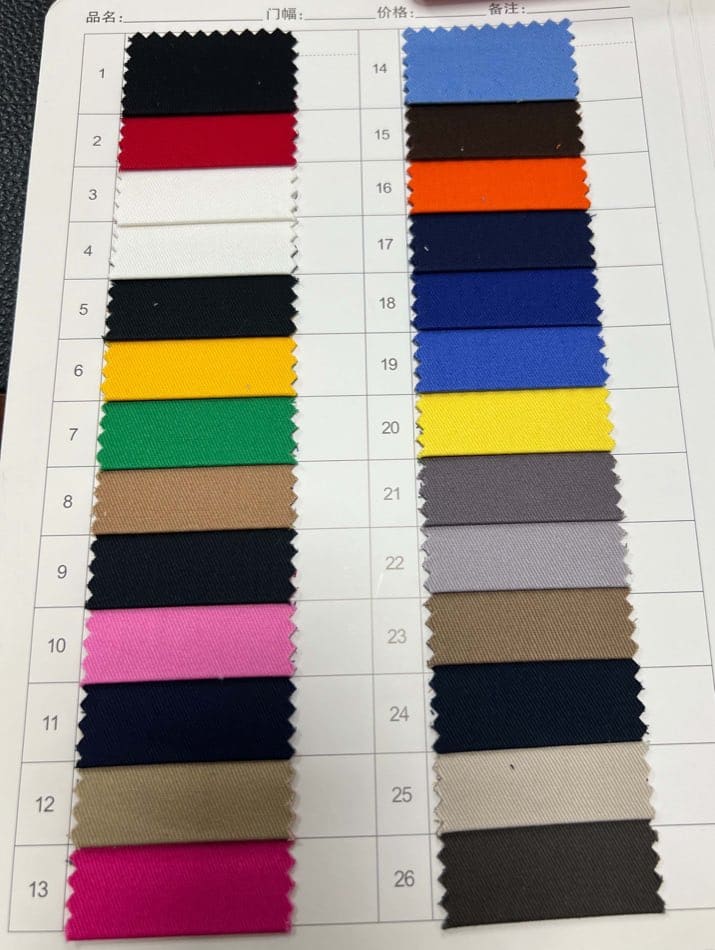
A brand can know its desired color and still be unsure how to specify it on a hat. A screen mockup does not tell a supplier whether an appropriate fabric is already available, whether custom dyeing is practical for the quantity, or whether the cap body, visor, thread and closure will look coherent together. The first decision is often between choosing an existing fabric color and developing a custom-dyed fabric.
Neither route is automatically more “premium.” The right choice depends on how exact the color must be, the selected material, order volume, timing and whether the brand expects to reorder the same shade. Ask to see physical materials before making a commercial promise to your own customers.
What a stock fabric color can solve
A stock color is a color already available in a supplier’s fabric range. It can reduce the number of development decisions, especially when a close shade is acceptable. But a color card is only the starting point. Confirm that the chosen color exists in the actual fabric construction, weight and finish required for the hat. A swatch from a different twill or woven fabric may not represent the material quoted for production.
Compare the swatch beside the logo thread, patch, visor underside and closure. View it in normal daylight and the lighting in which the finished hat will be sold. Ask whether the fabric is available for the planned quantity and whether the same source and shade can be obtained for future orders. Do not assume “stock” means permanently available or identical across batches.
What custom dyeing changes
Custom dyeing may be considered when a close stock shade is not acceptable or the brand requires a more controlled color direction. It introduces a separate approval path: target color reference, chosen base material, lab dip or sample, review under agreed lighting, then production-fabric approval. The exact steps, minimum quantity, cost and timing must be confirmed with the supplier for the selected material. We do not publish one universal custom-dye MOQ or lead time.
A Pantone reference helps communicate the target, but a printed card and a textile surface are not identical objects. The appearance can vary with fiber, weave, finish and light. Treat the approved physical fabric swatch or production sample as the decision record, not a claim that every screen or card will look exactly the same.
Compare the full hat, not only the crown fabric
Even a well-approved crown color can look off when paired with a different visor fabric, underbrim, rope, mesh, sweatband, thread or closure. List each visible component that must match, contrast or coordinate. A deliberate contrast can be more convincing than a near-match that looks accidental.
For a program with several colorways, create one approved component set per colorway. Include the crown fabric, visor top and underside, embroidery or patch colors, closure and any interior branding. The customization page shows how these decisions fit into a full product brief. Our existing hat color guide addresses brand positioning; this article is specifically about the stock-versus-dyed material route.
Plan reorders before the first order is approved
If a hat becomes a repeat seller or an ongoing uniform item, the second order should be able to refer back to the first. Keep a labeled physical swatch, the approved hat, material identity, supplier reference, colorway name and approval date. Ask the supplier what can be retained as a production reference. A name such as “forest green” is not precise enough to control a repeat order by itself.
If the fabric source or dye batch changes, compare a new sample with the retained reference before bulk approval. A reorder may require a new sign-off even when the artwork and logo have not changed. This is a planning issue, not evidence that either stock or custom-dyed fabric always varies by a predictable amount.
A brief that helps the supplier quote accurately
- Hat style, intended wearer and selected material or fabric feel.
- Target color reference plus a physical sample if exactness matters.
- Whether a close stock shade is acceptable, and which differences are not.
- Quantity by style and color, plus anticipated reorder needs.
- Components that should match or contrast, including thread and underbrim.
- Required sample date, approval process and delivery window.
SN’s usual starting minimum for regular custom hats is 100 pieces per style, per color. Custom-dyed fabric can have different material minimums and development requirements; those are quoted for the specific project. Send your color reference, fabric preference, quantity and deadline so we can review both routes rather than assume one is suitable. Discuss your hat color brief.
Buyer questions
Does a Pantone number guarantee an exact match on fabric?
No. It communicates a target. Approve the result on the actual selected fabric under agreed lighting.
Is a stock fabric color always faster?
It may avoid a dye-development step, but availability, sampling, decoration and production scheduling still have to be confirmed.
Can the same color card be used for every hat fabric?
Not safely. Check the specific material and finish being quoted, and retain the approved physical reference for reorders.