
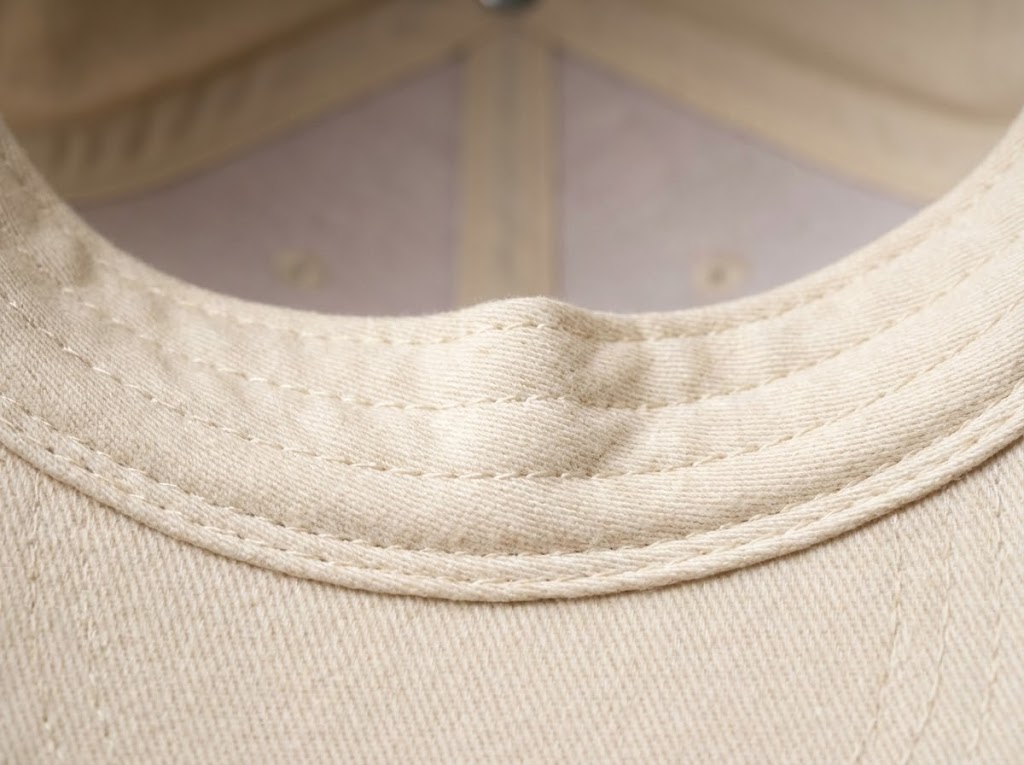
A hat sweatband is the band sewn around the inside lower edge of a cap. It sits against the wearer’s forehead, helps finish the interior, and forms part of the cap’s fit. It should not be confused with a separate athletic headband or a disposable liner added after the hat is made.
For a full custom hat program, choose the sweatband with the crown pattern, outer fabric, closure, and planned use. Cotton twill, terry-like cloth, polyester fabrics, and elastic or padded options can all work. Their names alone do not prove comfort or function. Buyers need to review the finished cap.
What a hat sweatband does in a custom cap
The sweatband covers the lower inner edge of the crown. It creates the main contact area around the head. Based on the cap design, it may also support the shape at the opening, hold a size or care label, and affect how the hat feels at each closure setting.
Its job depends on the product. For example, a washed cotton lifestyle cap may need a soft inner band. A running or golf cap may call for a light build that works with the outer fabric and air flow. A fitted cap needs a sweatband that belongs to the planned size system. A trucker hat must join the band, mesh, front panels, and closure without a rough or bulky edge.
Start with the wearer and use case
A useful product brief says where and how the hat will be worn. The same inner band will not suit every project.
- Lifestyle and retail caps: hand feel, flexibility, clean finishing, and visual coordination may lead the decision.
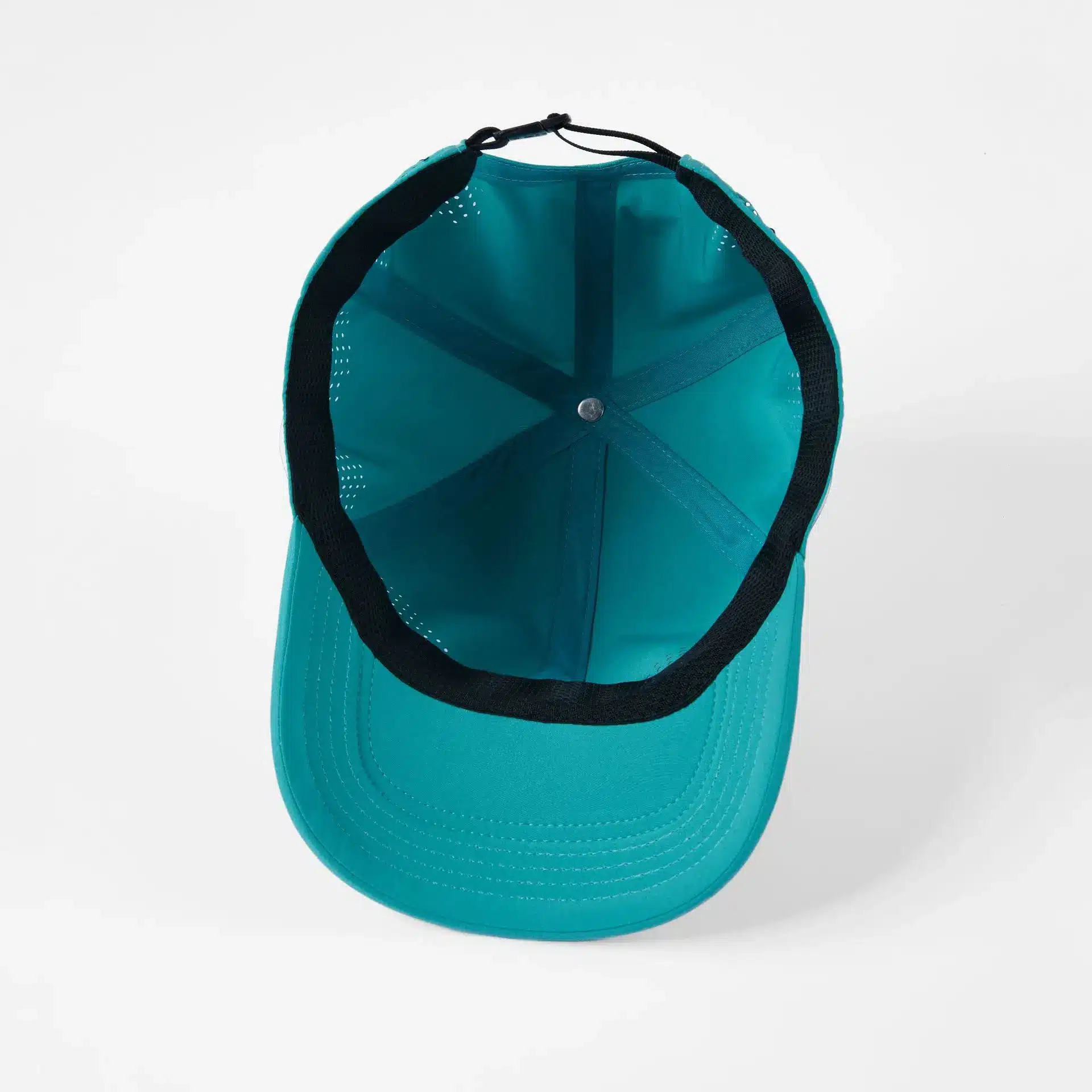
- Outdoor and performance caps: buyers may prioritize lower bulk, moisture handling, drying behavior, and how the sweatband works with ventilation.
- Workwear programs: repeated handling, visible soiling, and the feel of the band during long wear may matter.
- Promotional programs: the sweatband still needs to suit the fit and wearer, even when the cap has a tighter cost target.
- Fitted or stretch-fit caps: the band is part of the size and recovery system rather than a separate trim choice.
For active applications, review the sweatband together with the fabric and ventilation options on our custom performance hats page.
Compare sweatband materials by behavior, not labels
A supplier term such as “cotton,” “polyester,” or “moisture-wicking” is only a starting point. The fiber, weave or knit, thickness, finish, padding, and stretch can all change how the band feels and works.
| Construction direction | Why a buyer may consider it | What to verify on the cap |
|---|---|---|
| Cotton or cotton-rich woven band | Natural hand feel and compatibility with many casual cotton caps | Thickness, softness after finishing, color behavior, and drying after wear |
| Terry-like or absorbent surface | More surface texture and a cushioned feel | Bulk, skin feel, moisture retention, drying, and appearance after care |
| Polyester-based performance construction | Can support a lighter or quicker-drying product direction | Surface feel, stretch, edge finish, drying behavior, and compatibility with the outer fabric |
| Mesh or spacer-style band | Creates a ventilated, dimensional interior | Thickness, compression, roughness, seam bulk, and how it sits around the head |
| Elastic or stretch-integrated band | May form part of a stretch-fit size system | Fit range, recovery, pressure, seam joining, and consistency across sizes |
These are design paths, not fixed quality grades. A soft cotton-rich band may suit one program better than a technical-looking synthetic option. In practice, the approved choice should match the cap’s planned feel, care needs, and price point.
Absorbency and moisture transfer are different
An absorbent fabric takes in sweat. A moisture-transfer fabric aims to move it through or across the band so it can spread and dry. A band can do more of one than the other. Also, the result can change once the band is sewn into a cap and pressed against the head.
Do not promise that a sweatband will keep each wearer cool, prevent stains, stop odor, or dry within a set time unless the exact cap has been tested for that claim. Climate, activity, fit, hair, outer fabric, air flow, care, and the amount of sweat all affect the result.
During sampling, compare the chosen fabrics under the same real use. Note how they feel when dry and damp. Then check if they become heavy or rough and how the whole cap looks after the agreed care method.
Width and thickness can change the fit
Sweatband width changes the contact area against the head. Thickness and padding change the inner fit and where the wearer feels pressure. As a result, even a small change can make the cap feel different, mainly in fitted, stretch-fit, or low-profile styles.
The sweatband cannot fix a crown that is too shallow, deep, narrow, or wide. It must work with the panel shape, seams, closure, and size spec. Therefore, if a project already has an approved fit, a new sweatband may require a new fit review instead of a fabric-only approval.
Our custom hat sizing guide explains how buyers can define fit references and compare samples without assuming that “one size fits most” describes every wearer.
Edge finishing and seams matter against the skin
Buyers often touch the center of a sweatband swatch and miss the parts that may rub on the finished hat. Instead, check the top and lower edges, the rear seam, each label point, and the area near the closure.
A thick band may feel soft in the hand but add bulk where layers meet. By contrast, a light band may still feel rough if an edge, label corner, or seam is bare. Wear the sample at several closure settings and check it after normal use. A check on a table cannot show each contact point.

Match the sweatband to each cap style
Baseball caps and lifestyle hats
A cotton twill or washed cap often benefits from an interior that supports the same relaxed product direction. Review whether the sweatband feels too rigid against a soft crown and whether its color looks intentional when the cap is removed.
Trucker hats
Check how the band joins the front fabric and rear mesh, particularly near the closure opening. The inner circumference should feel continuous even though the crown combines different materials. See our custom trucker hat options for the wider construction context.
Performance hats
Lower bulk and drying behavior may be more important in an active cap, but the complete construction still controls the result. Pair the band with the intended outer fabric, perforation or mesh, closure, and fit. A material that looks technical is not proof of performance.
Fitted and stretch-fit caps
The sweatband may participate directly in stretch and recovery. Approve every offered size, not one sample applied to the full range. Check whether the band rolls, twists, or creates uneven pressure when stretched.
Plan labels and interior branding before sampling
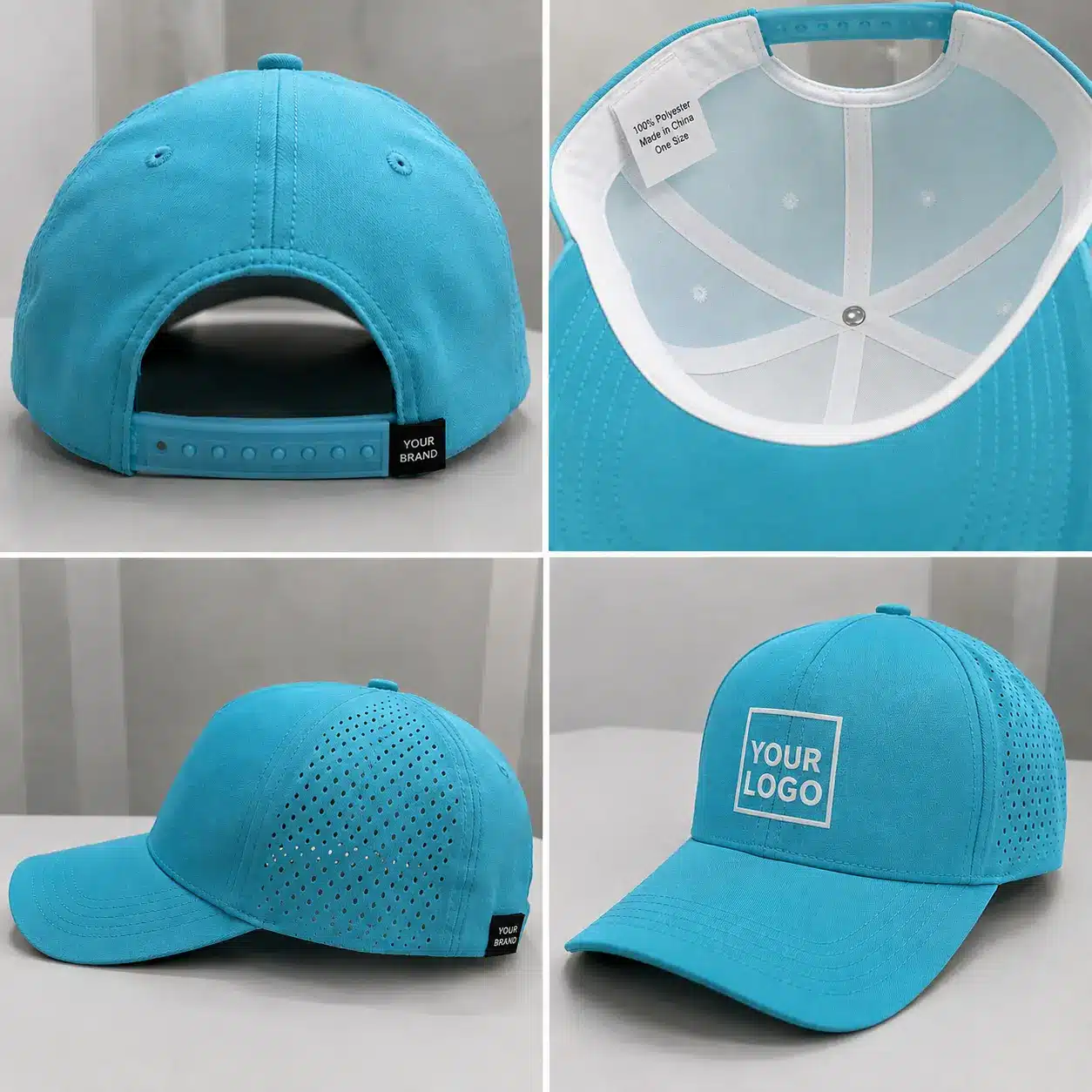
The sweatband is a common place for size, care, origin, and brand labels. Some projects also print or weave the brand name on the band. In both cases, these details need enough space and a clear way to attach them.
Check if the label corner touches the skin, if a folded label adds too much bulk, and if the text is easy to read on the chosen color. If the product details change by market, size, or fabric, confirm the label text and place before production.
Interior branding can be coordinated with seam tape, labels, closures, and other custom hat options, but it should not make the inside less comfortable or harder to inspect.
What to review on the physical sample
Approve the sweatband as part of the finished cap, then record the material and construction used in that sample.
- Does the band feel appropriate when dry and after practical wear?
- Are its width, thickness, and cushioning suitable for the intended fit?
- Do the upper and lower edges lie cleanly around the crown?
- Is the rear joining seam smooth and positioned correctly?
- Does the band stay flat instead of rolling or twisting?
- Does it work at different closure settings or across every fitted size?
- Are labels readable and placed away from irritating contact points?
- Does the color coordinate with the crown, seam tape, and labels?
- After the agreed care check, are fit and appearance still acceptable for the project?
Use the approved sample, material reference, color reference, dimensions, seam details, and label layout when comparing bulk production. The custom hat development process should give buyers a clear point at which these details are approved.
What to include in a hat sweatband RFQ
- hat style, crown profile, size system, and closure;
- target wearer, use case, and climate;
- preferred sweatband material or a physical reference sample;
- desired hand feel, width, thickness, color, and stretch;
- outer fabric, ventilation, and care expectations;
- size, care, origin, and brand-label requirements;
- any claim that requires supporting material documentation or testing;
- order quantity, target timing, and destination.
If a supplier proposes an alternative, compare it in a finished cap rather than approving it from a photograph. The interior may look similar while creating a different fit or contact feel.
Make the sweatband part of the product specification
A hat sweatband is a construction component, not a marketing shortcut. Material, width, thickness, stretch, edge finishing, seams, labels, and fit must work together. The best choice is the one that supports the planned cap and can be reproduced from an approved reference.
For a full custom project, send the target style, artwork, quantity, use case, and any reference cap you want to match. Contact us to review your custom hat requirements.
Frequently asked questions
What is the band inside a baseball cap called?
It is usually called the sweatband. It runs around the lower inside edge of the crown and forms the main contact area against the head.
Is a cotton hat sweatband better than polyester?
Neither fiber is automatically better. Cotton-rich and polyester-based constructions can vary in thickness, surface feel, stretch, absorbency, drying behavior, and finishing. Compare the actual options in the intended cap.
Can the sweatband change hat sizing?
Yes. Its width, thickness, cushioning, stretch, and installation can affect the internal circumference and pressure around the head. Recheck fit when changing the sweatband construction.
Does a moisture-wicking sweatband prevent sweat stains?
No material can support that universal promise. Moisture level, outer fabric, color, ventilation, fit, use, and care all affect visible staining. Test the finished cap for the intended conditions before making a claim.
Can a logo or brand name be added to the sweatband?
Depending on the construction, branding may be woven, printed, or added through a label. Check readability, color, durability for the agreed care method, and whether the branding changes the feel against the head.