
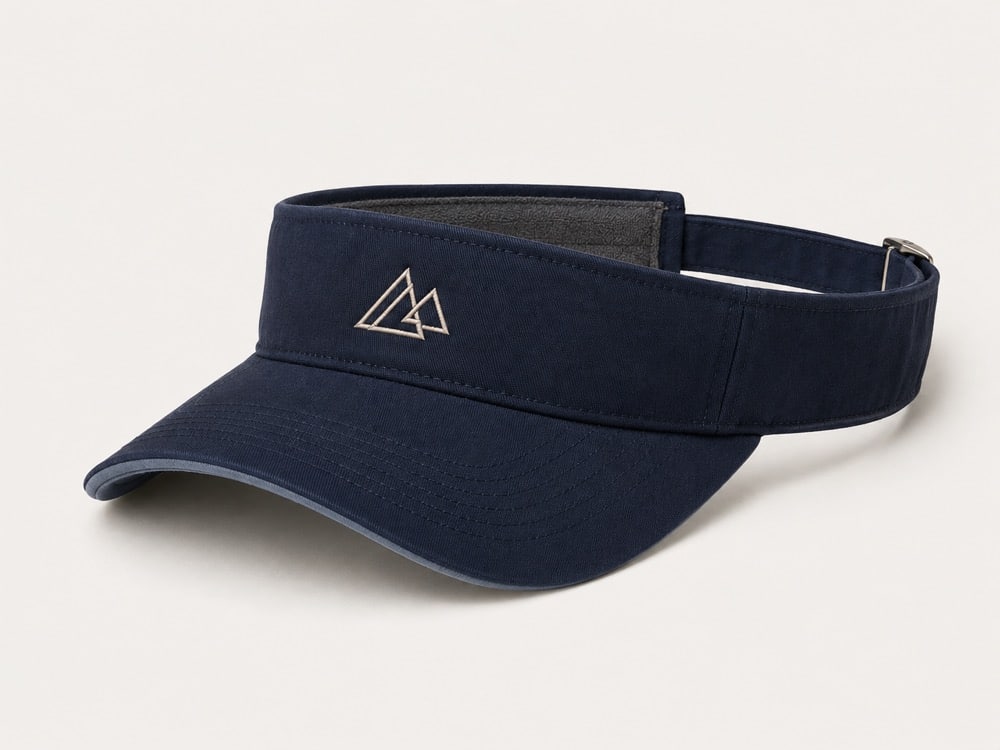
A golf cap and a visor can carry the same club mark, yet they feel like different products to the person wearing them. Choosing by the front logo area alone can leave a buyer with a strong-looking mockup and a weak wearing experience. Decide first who receives the headwear and whether an open crown is a deliberate preference. A visor leaves the top uncovered and puts the whole fit job on the band; a full cap adds crown coverage and more decoration space, but also adds crown depth, panel structure and inner seams to review. Every style starts at 100 hats per style and color — plan in blocks of 100. Samples take about one week after specifications, artwork and the sample payment are confirmed, and bulk takes about 30 days after the sample is approved. Never order bulk before the sample is approved.
This guide keeps the original question — hat or visor, for whom — and adds the parts the first version left out: a full decision table, a fit checklist, a sample approval list and a range method. How the hat or visor fits a tournament order is covered in our golf tournament hats guide; this guide only decides between the two silhouettes.
The Decision in One Table
The table compares the two silhouettes on the points a buyer can actually approve. Use it to decide, then confirm the choice on a physical sample.
| Decision point | Visor | Full cap | Check on the sample |
|---|---|---|---|
| Crown and coverage | Open crown; the top of the head stays uncovered | Full crown with panels, inner seams and a full sweatband | Ask the intended wearer which one they would reach for twice |
| Fit responsibility | The band does the work: width, lining, seam placement, adjustment range and pressure | Crown depth, head opening, closure range and sweatband share the fit | Test the band tension on a visor and the crown depth on a cap, both on a real head |
| Decoration space | Smaller front area; a large mark can crowd the short panel or stiffen it | More front, side and rear options; the crown profile changes how the same artwork reads | Check logo size, edge clearance and readability at wearing distance |
| Wear conditions | An open feel some wearers prefer with their hairstyle or in warm weather | Coverage some wearers want, and a broader brief for retail | Sample both on people who represent the recipients, not only on a table |
| Best use | An optional choice for members who prefer an open crown | The primary piece for a club, event or pro shop range | If the buyer cannot explain why the range needs both, develop one well-resolved style first |
The table is a planning framework, not a rule: the sample is where the visor, the cap and the logo are judged together. The broader range of golf styles is on our custom golf hats page.
Fit: the Band Does the Work on a Visor
Visors place more of the fit responsibility on the band: its width, lining, seam placement, adjustment range and pressure around the head all become more noticeable. Check the band on a real head, at both ends of its adjustment range, and note whether it stays neatly finished when tightened.
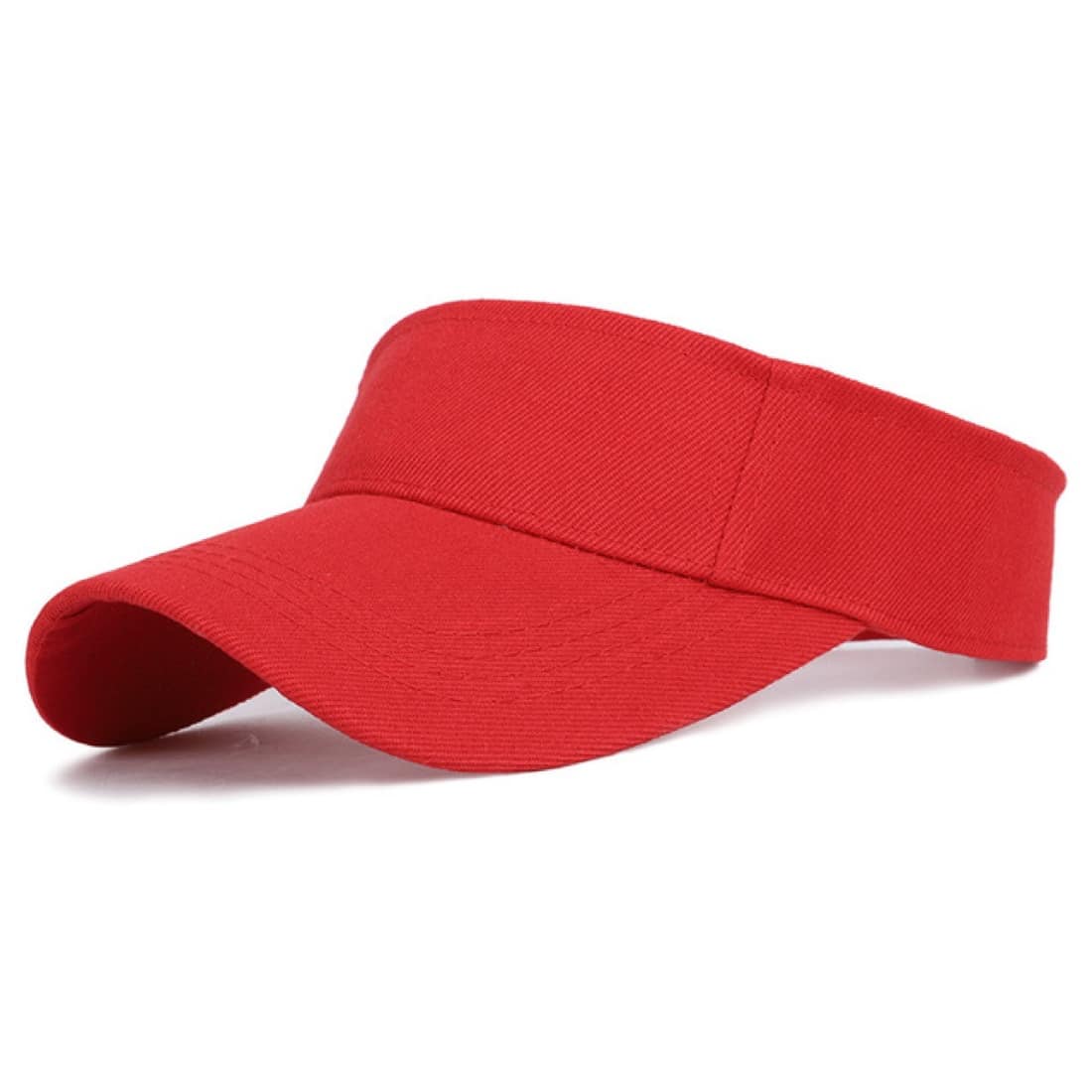
A full cap adds crown coverage and more places for decoration. It also introduces crown depth, panel structure, inner seams and a full sweatband to review. In both products, a photo of the front is not enough to judge fit. Record each item in the spec before sampling:
- Visor band: width, lining, seam placement, adjustment range and pressure at the forehead
- Cap crown: depth, panel structure, inner seams and sweatband
- Closure: type, adjustment range and finish — and whether it stays secure when worn
- Visor curve: profile and stitching on both silhouettes
- Decoration: artwork size and placement, checked against the crown or panel that will actually carry it
How closures and fit work together is covered in our closure and fit guide. How to write the spec itself is covered in our tech pack guide.
Where the Logo Belongs
On a visor, a large embroidered mark can crowd the short front panel or make it feel stiffer. Ask for the actual finished logo size and its clearance from the band edge and visor seam. A small symbol or modest flat embroidery may read better than a complex design compressed into a narrow space.
On a cap, the crown profile changes the impression of the same artwork. A rope or side-panel detail can also compete with the main mark. Compare samples at wearing distance, not just close-up artwork proofs. For a style with a cord across the brim, our golf rope hat construction guide examines that separate decision.
The photo in the original guide shows visible openings and a full crown. It does not establish a measured ventilation, sweat-management or UV result. If such claims matter to the project, ask for the selected fabric’s documentation or relevant testing before describing the product that way. A performance claim needs evidence behind it.
Build a Small, Purposeful Range
A club does not need to treat cap and visor as interchangeable versions of one SKU. One may be the primary retail piece and the other an optional choice for members who prefer an open crown. An event program might offer one silhouette to keep distribution simple. A pro shop may test both if it has evidence that customers request them. Those are merchandising decisions, not claims that one product performs better.
Decide the range by scenario, not by catalog habit:
- One silhouette: the simplest choice when the audience is one group and distribution is one channel — develop the single style well, with its own SKU and approved sample.
- Two silhouettes: the right choice when there is evidence that part of the audience prefers an open crown — name each as its own SKU, with its own sample reference, so a reorder never swaps one for the other.
- Test before committing: if the evidence is only a hunch, sample both on intended wearers first and let the fit session decide, rather than ordering both and hoping the range sorts itself out.
Each silhouette is its own style, so each one starts at 100 hats per style and color. Our MOQ guide explains how the 100-unit minimum works per style and color.
Approve the Sample Before Bulk
Before ordering, sample both on people who represent the intended recipients. Record whether the band presses, the cap sits too deep, the adjustment feels secure and the logo remains readable when worn.
On the sample, check these points before approval:
- Band pressure: the visor band worn for more than a few minutes, not only tried on briefly
- Crown depth: the cap sitting at the right height, without excess space or perching
- Closure at both ends: the adjustment reaching a comfortable position and staying neatly finished at each extreme
- Logo readability: the mark read at wearing distance, on the worn cap, in daylight
- Visor proportion: the curve and stitching holding their shape when the cap or visor is worn
Keep the approved sample with the artwork and color references. If a change is approved later, note it by date on the spec — a reorder built from an undated memory is how “the same hat” quietly becomes a different one.
The Buying Decision
If the program needs a golf hat, decide in this order: wearer first, then silhouette, then logo — and approve the sample on the intended wearer before the bulk order. A cap and a visor are not two versions of one decision; they are two different wearing experiences that happen to carry the same mark.
Send us your target wearer, preferred silhouette and logo through Request a Quote — we reply within one business day. If you have a reference hat that fits your audience well, send it or its measurements with your inquiry so the development conversation starts with evidence.
Frequently Asked Questions
Can one design serve as both a cap and a visor?
No — not as one SKU. The visor has no crown, so the band carries the whole fit, while the cap adds crown depth, panel structure and a sweatband. The artwork, the spec and the sample are different for each. If the program needs both, develop each as its own style with its own sample reference.
Which one suits a tournament gift?
It depends on the recipients. A full cap is the safer primary piece when the audience is mixed and the gift must suit most wearers. A visor works as an optional choice for members who prefer an open crown — but only when there is evidence that part of the audience wants it. How the gift fits the tournament order is covered in our golf tournament hats guide.
How do I check ventilation or sun-protection claims?
Ask for the selected fabric’s documentation or relevant testing before describing the product that way. A photo showing openings in a panel does not establish a measured ventilation, sweat-management or UV result. The claim belongs in the spec only when the evidence supports it.