
Hat embroidery is a system of artwork, stitch planning, cap construction and physical sampling. Buyers often begin by choosing “flat” or “3D” embroidery, but that choice alone does not determine quality. A design must remain readable on a curved crown, work with the selected material and stay proportional to the hat. The approved result should then be documented for bulk production.
Flat Embroidery and Raised Embroidery Serve Different Artwork
Flat embroidery is suitable for lettering, outlines, detailed shapes and many side or back placements. It follows the surface more closely and can combine several stitch directions. Raised embroidery—often called puff embroidery—uses an underlayer to lift selected areas. It works best for bold shapes with enough width to cover the raised base cleanly.
A logo does not need to use only one method. A bold central element can be raised while smaller text remains flat. The decision should follow the artwork, not a desire to make every logo look more “premium.” Fine details, narrow lines and small counters may lose clarity when forced into a raised treatment.
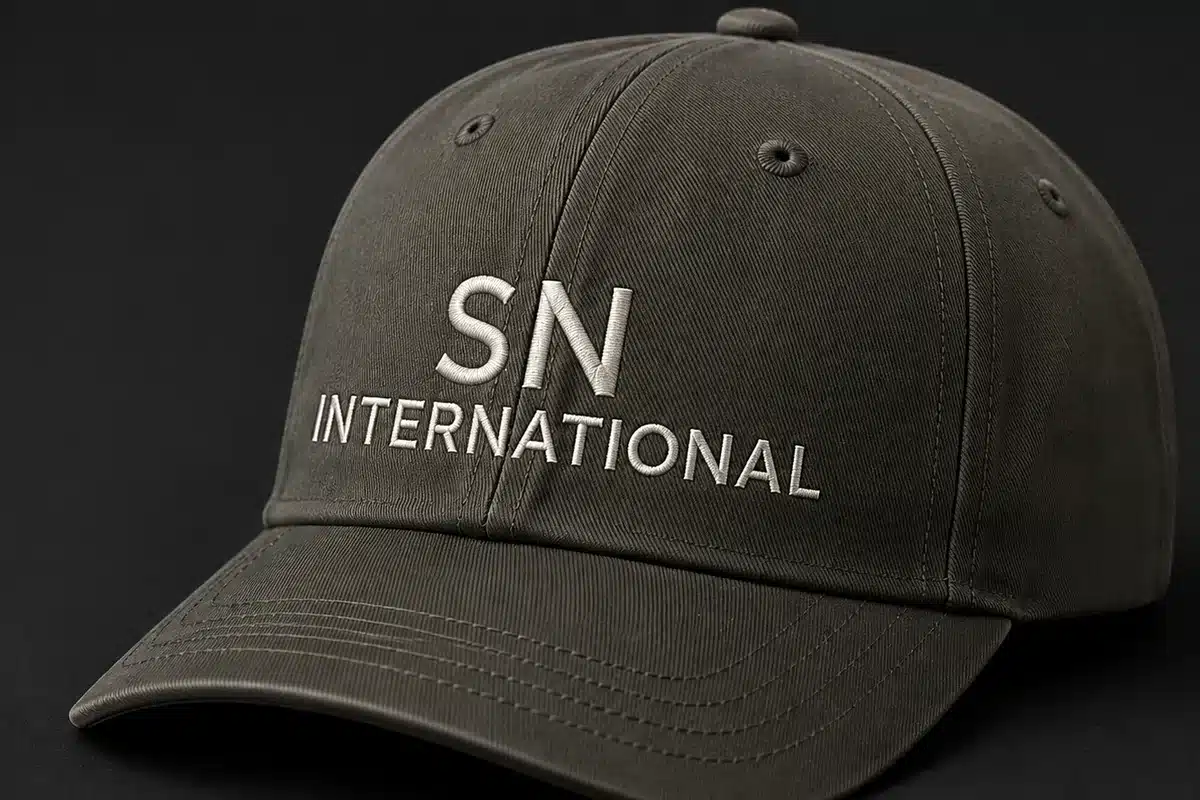
Digitizing Is Product Preparation
An embroidery file tells the machine how to sew the logo. It defines stitch types, sequence, direction and support. Automatically converting a vector file does not guarantee a usable result. The person preparing the file must consider the finished size, fabric stability, center seam and the path the machine will follow across the design.
Before digitizing, provide clean vector artwork where possible and identify approved colors. Confirm the intended size and placement on the actual cap style. If the smallest text or spacing will not sew clearly, revise the artwork before sampling rather than hiding the problem with more stitches.
See our detailed guide to preparing logos for hat embroidery.
Construction Changes the Embroidery Result
A structured cotton twill front, an unstructured washed cap, a foam trucker panel and a lightweight performance fabric respond differently to needle penetration and thread coverage. A six-panel center seam can raise part of a logo, while a five-panel front provides an uninterrupted area. Crown height and visor position limit how low or tall the decoration can be.
Backing and holding methods are selected to stabilize the surface during sewing. The objective is enough support for clean edges without making the cap unnecessarily stiff. There is no single backing specification that suits every design and material.
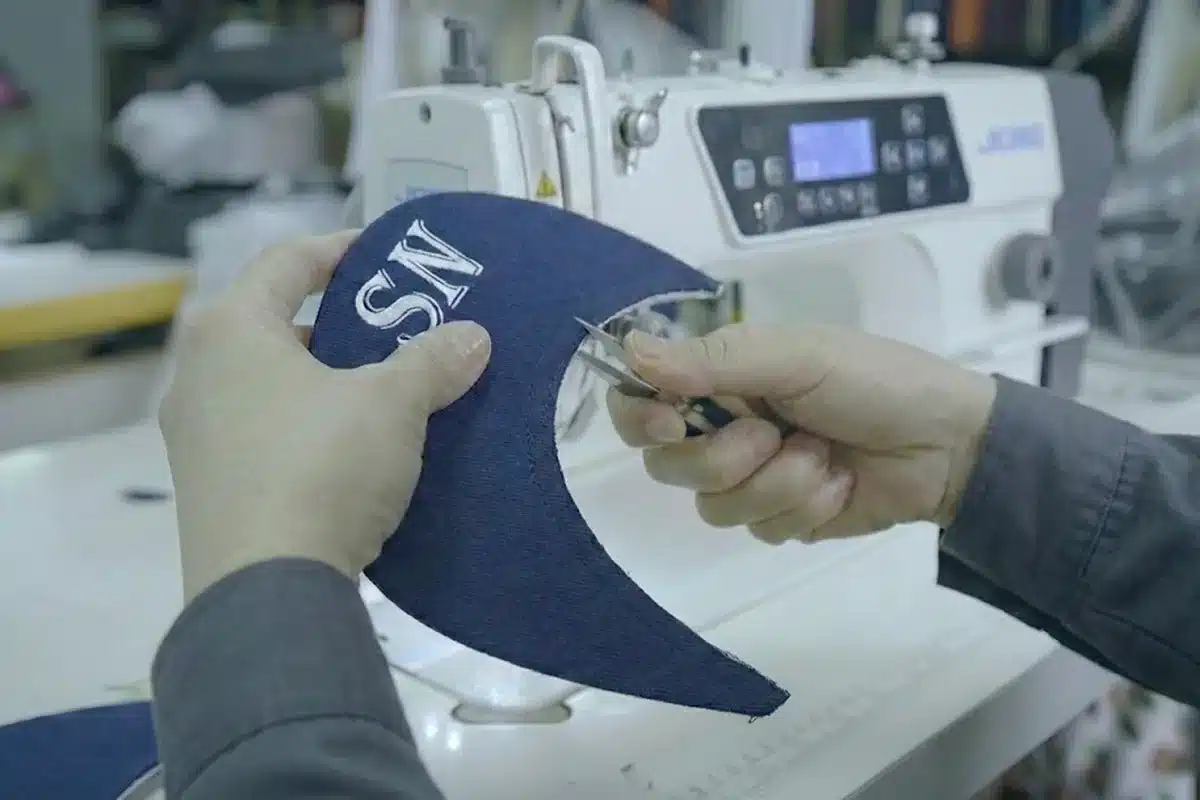
Choose Placement From the Normal Viewing Distance
Front-center decoration carries the strongest visual weight, but it is not the only option. Side embroidery can identify a collection, event or small secondary mark. Back embroidery can sit above an opening or near a closure if space allows. Each position has different size and construction limits.
Review placement on a physical cap and view it from several angles. A measurement can be correct while the logo still appears too high, too low or visually off-center because of the panel shape. Keep an approved placement photo or marked sample with the written specification.
If a range uses several cap profiles, approve placement for each construction. Copying one vertical measurement from a high crown to a low crown can change the visual balance even when the logo size is unchanged.
What Buyers Should Approve on the Sample
- Readability: letters, counters and small gaps remain clear.
- Coverage: the base fabric does not show through where it should be covered.
- Edges: outlines and fill areas meet cleanly.
- Surface: the crown is not visibly puckered around the design.
- Placement: the decoration is balanced against seams, visor and crown height.
- Finishing: loose threads and backing are handled appropriately.
If the sample does not meet the intended look, change one defined variable at a time. The solution may be artwork simplification, revised digitizing, different placement, another decoration size or a different cap construction.
Thread color should also be reviewed on the actual cap. A digital color value is not a thread standard, and sheen can make the same hue look different under changing light. When color is important, approve the available thread reference beside the selected fabric and record the final choice with the artwork version.
When Another Decoration Method May Be Better
Embroidery is durable and familiar, but it is not automatically right for every visual. A woven patch can preserve very fine artwork. A leather patch creates a solid workwear or lifestyle direction. Print or transfer methods can support gradients and photographic color. The best choice is the one that fits the design, material, intended use and price position.
Compare the broader custom hat decoration options and review how decoration can support product positioning and perceived value.
Frequently Asked Questions
Is raised embroidery always more premium than flat embroidery?
No. Raised embroidery creates a bold dimensional effect, but flat embroidery is often better for detail and small lettering. Quality depends on how well the method fits the artwork and cap.
Can the same embroidery file be used on every hat style?
Not reliably. A change in crown profile, material, panel seam or decoration size may require a revised stitch program and a new sample.
Why does small text become difficult to embroider?
Thread has physical thickness, and a curved textile surface limits how closely stitches can be placed while remaining clear. Simplifying letters or increasing size may give a better result.
Need to evaluate an embroidery concept? Send the cap style, artwork and intended placement through our project inquiry form.