
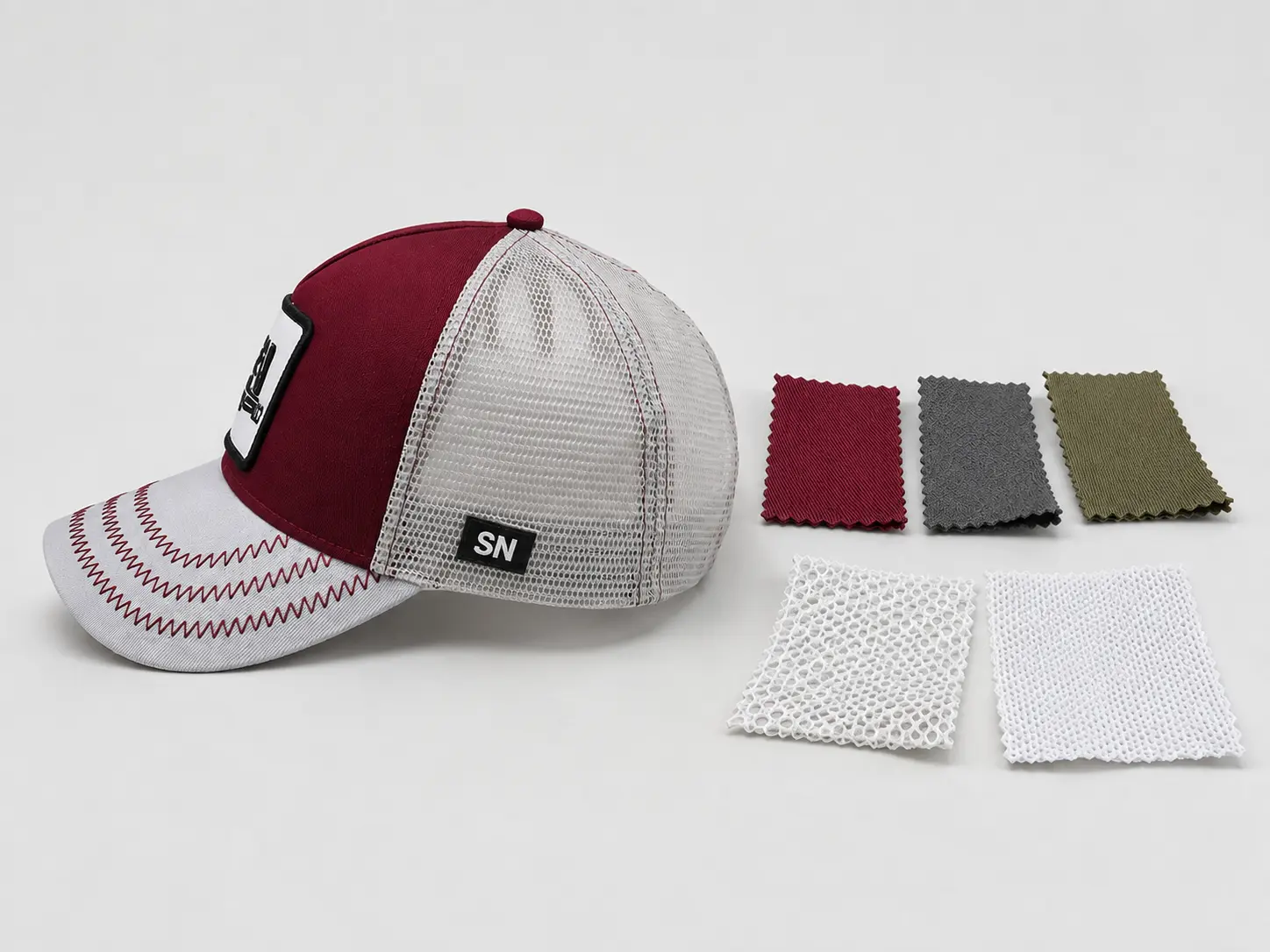
Trucker hat trends 2026 cover more than one look. The useful question for a brand is not whether the category is “in” or “out,” but which construction, profile, material, color and decoration choices fit the customer you want to reach.
Current retail assortments and 2026 headwear catalogs point to a broad category rather than one dominant look. Classic structured mesh-back caps remain visible, while lower profiles, rope details, two-tone colorways, vintage finishes and performance materials give brands several distinct directions. That variety is good for product development, but it also makes copying a trend without testing the fit more risky.
This guide translates the visible 2026 trucker hat trends into practical decisions for custom headwear buyers.
Are Trucker Hats Still in Style in 2026?
Yes. Trucker hats remain part of current fashion, workwear, outdoor and branded-merchandise assortments. Fashion coverage in 2026 also shows a wider return of expressive headwear, while wholesale marketplaces and major headwear catalogs continue to carry extensive mesh-back and trucker selections.
That does not mean every trucker hat will sell. The category now covers very different products: tall foam-front caps, mid-profile cotton-twill truckers, relaxed fabric-front styles and technical performance versions. A successful design starts with a specific wearer and use case, not a generic trend label.
Trucker Hat Trends 2026: Seven Styles Brands Should Watch
1. Two-Tone and High-Contrast Color Blocking
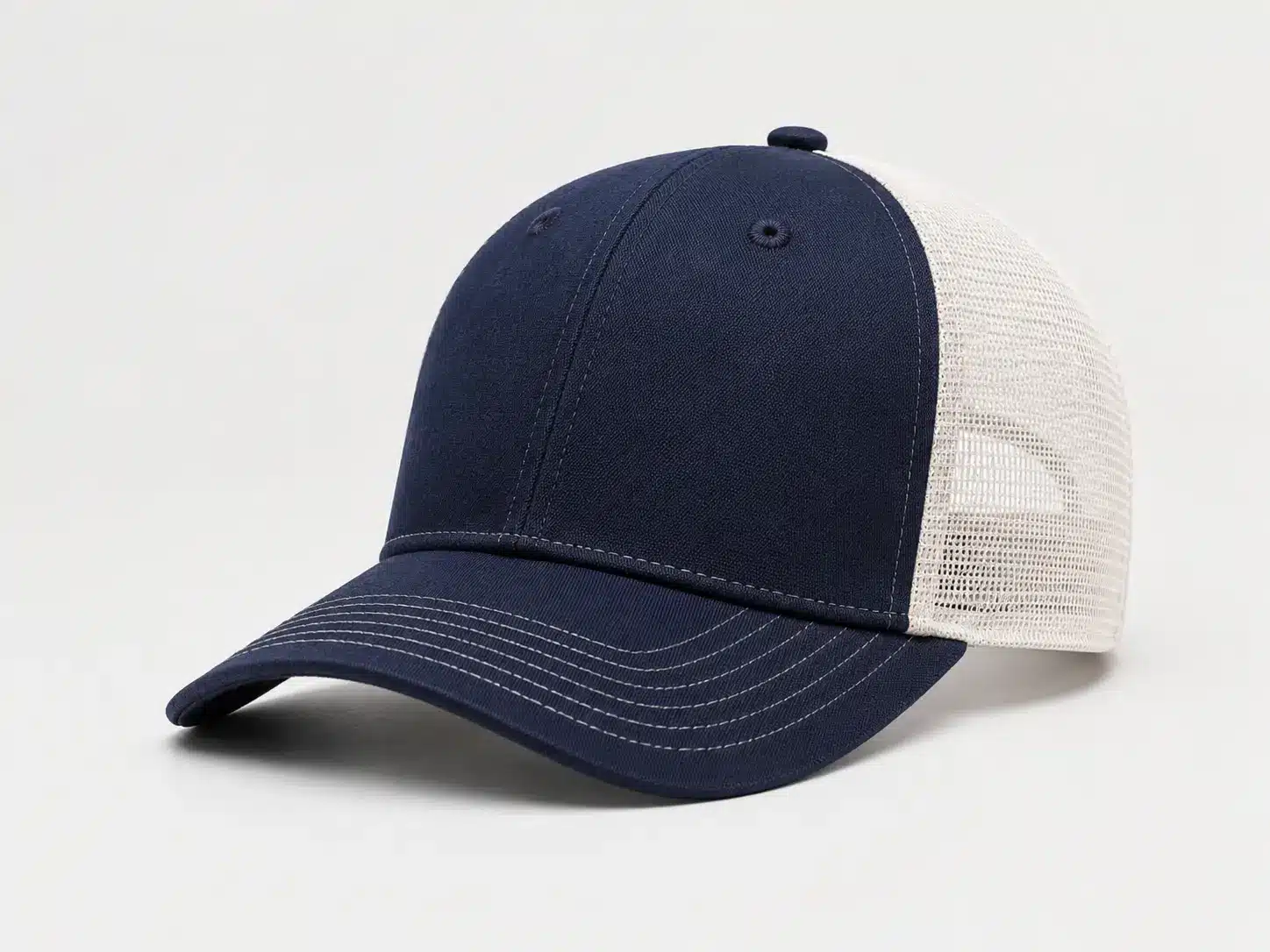
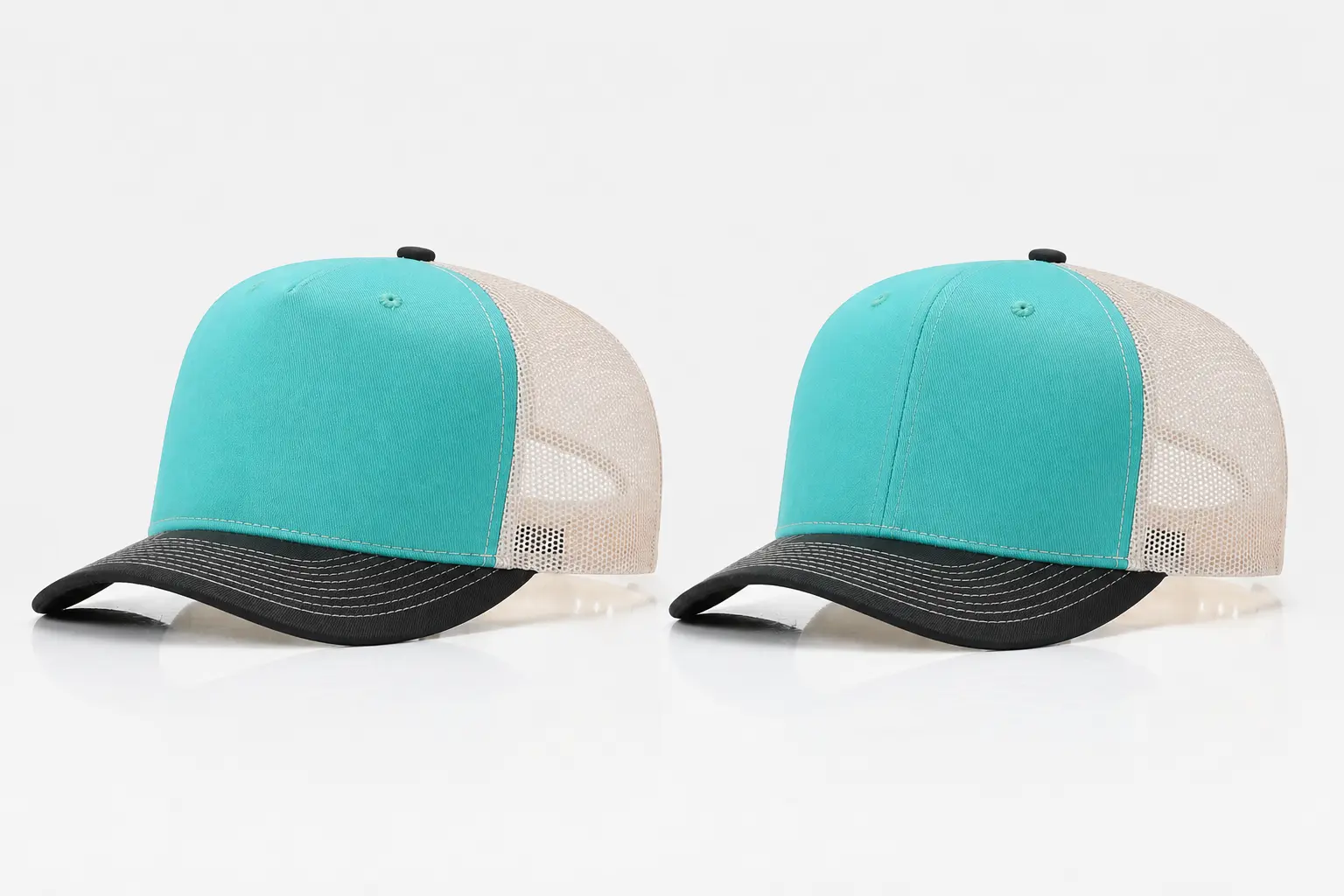
Contrast fronts, visors and mesh backs make the trucker silhouette easy to recognize. Navy with white mesh, forest green with tan, black with cream and warm brown combinations can communicate heritage or outdoor positioning without requiring a complicated graphic.
For custom production, approve the fabric and mesh colors together under the same lighting. “White,” “cream” and “natural” mesh can look similar in a digital mockup but noticeably different on the finished cap.
2. Lower and More Relaxed Profiles
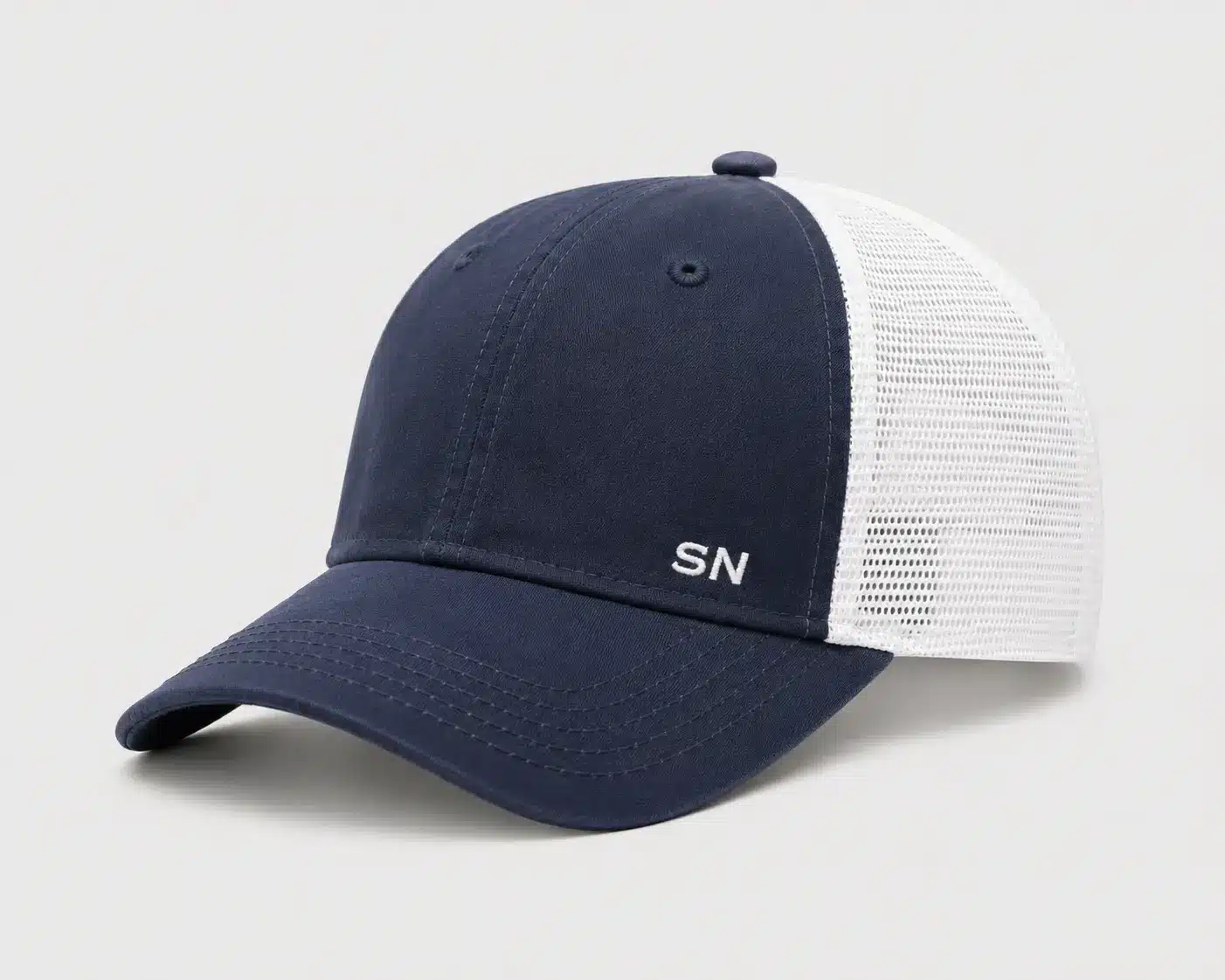
The classic tall crown is not the only option. Unstructured or lower-profile fabric-front truckers offer a softer shape for lifestyle, surf and casual collections. They can feel less promotional, but they provide less support for large embroidery.
Choose the crown before finalizing the logo. A wide patch that works on a firm five-panel front may wrinkle or dominate a relaxed crown.
3. Foam-Front Revival—with Better Execution
Foam-front trucker hats still provide the clearest early-2000s reference. The current opportunity is not simply using foam; it is controlling foam density, crown height, visor shape and decoration so the result looks intentional.
Screen print, heat transfer and lightweight patches usually place less stress on foam than dense embroidery. If embroidery is required, test the stitch count and backing on a physical sample before approving bulk production.
4. Rope Details and Outdoor References
Rope across the visor continues to appear in golf, fishing and outdoor-influenced headwear. It is a small component that can change the product’s character without rebuilding the entire cap.
Specify rope diameter, material, color, end attachment and placement. A rope that is too thick can crowd the front panel; one that is too loose can shift during wear or packing.
5. Vintage Washes, Corduroy and Textured Front Panels
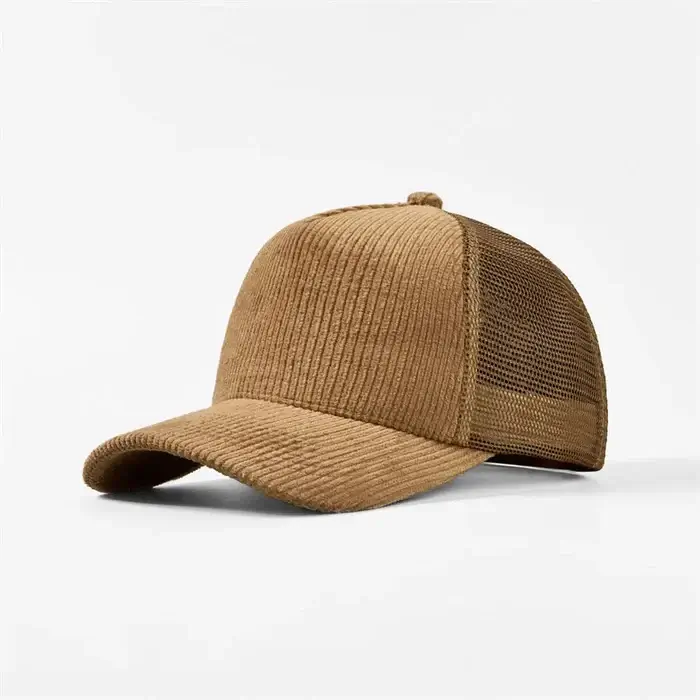
Washed cotton, corduroy, canvas and suede-like materials add surface interest and can support heritage, workwear or lifestyle positioning. They also introduce production variables. Wash treatments may change color, hand feel and dimensions, while corduroy direction affects how the panels reflect light.
Approve the finished wash on the actual hat material rather than relying only on a Pantone reference. For repeat orders, keep an approved production sample and define an acceptable shade range.
6. Patches and Dimensional Branding
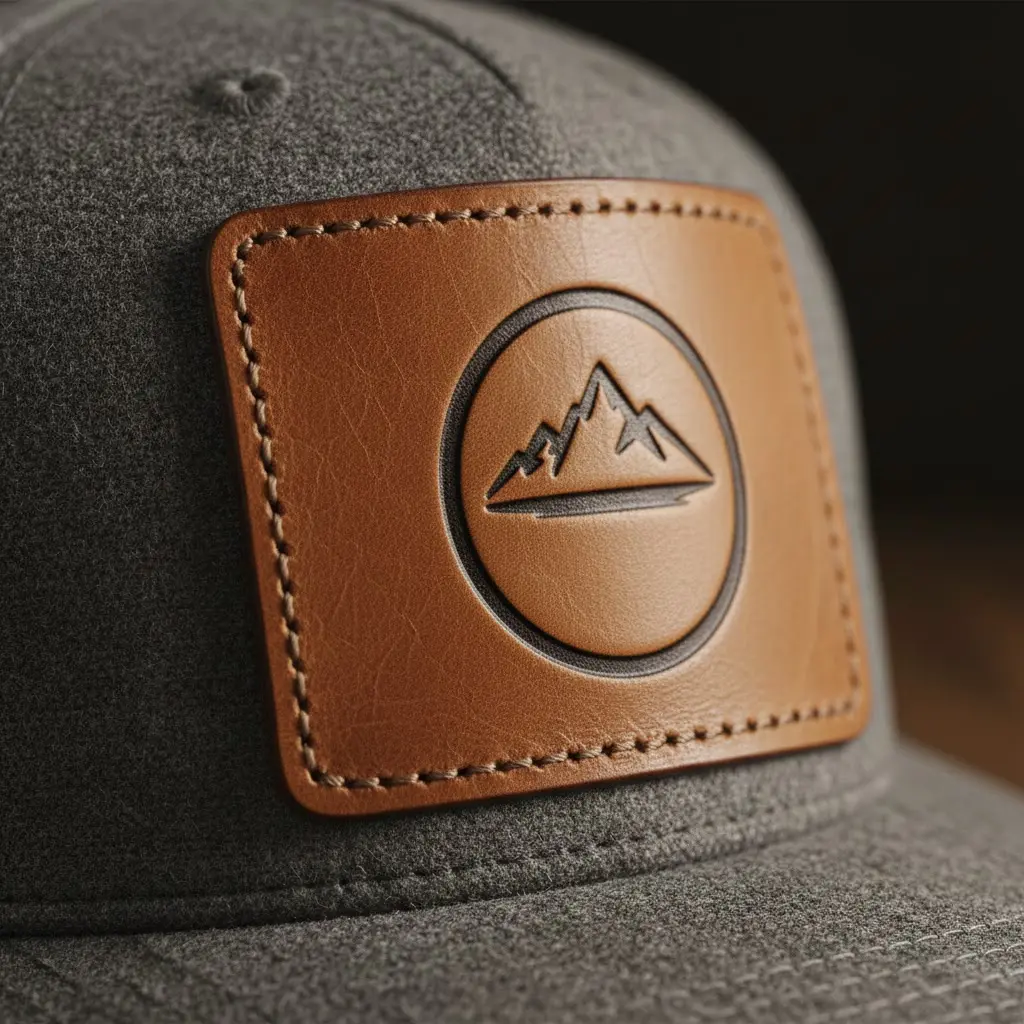
Woven, embroidered, faux-leather, PVC and silicone patches all work on trucker hats, but they communicate different things. Woven patches reproduce small details; embroidered patches add thread texture; faux-leather supports a heritage look; PVC and silicone suit sport or utility concepts.
Patch size must match the usable front-panel area. Ask for a placement mockup and a physical sample, especially when the patch crosses a seam or sits close to the visor.
7. Performance Mesh and Technical Fabrics
Performance-oriented truckers use lighter woven fronts, stretch components, moisture-managing sweatbands or engineered ventilation. These features can make sense for running, golf, fishing and outdoor programs, but each performance claim should be tied to the actual material or test result.
Do not add “UV protection,” “antimicrobial,” “waterproof” or recycled-content claims automatically. Confirm the fabric specification, treatment, test method and labeling requirements for the target market before using those statements.
How to Choose the Right Trend for Your Brand
| Brand or program | Practical direction | Main development risk |
|---|---|---|
| Outdoor or workwear | Mid/high crown, durable front, mesh back, patch or rope | Heat, abrasion and colorfastness need realistic testing |
| Streetwear | Foam front or structured five-panel, bold color blocking | Logo scale and crown proportion can look wrong on-head |
| Lifestyle | Relaxed fabric front, washed cotton or corduroy, subtle branding | Shade and dimensional variation after washing |
| Golf or performance | Lightweight front, technical mesh, moisture-managing sweatband | Unsupported performance claims and fit inconsistency |
| Corporate merchandise | Familiar mid-profile shape, restrained colors, clean embroidery | One profile may not fit the full wearer group |
The safest method is to shortlist two or three directions, build samples and compare them on actual wearers. Evaluate the front, side and back views—not only the straight-on product photo.
Five-Panel vs. Six-Panel Trucker Hats
A five-panel trucker usually provides an uninterrupted front area, which is useful for large prints and patches. A six-panel trucker has a center-front seam and a more traditional baseball-cap shape. Embroidery can still work well on six-panel caps, but fine details should not sit directly over the seam.
Neither construction is automatically more premium. Panel geometry, crown support, sewing accuracy, visor shape, mesh quality and fit have more influence than the panel count alone.
What Buyers Should Put in a Trucker Hat Brief
Before requesting a sample, define:
- five-panel or six-panel construction;
- crown profile and whether it is structured;
- front-panel material and weight;
- mesh material, stiffness and color;
- visor shape and number of stitch rows;
- closure type and color;
- sweatband material;
- decoration method, size and placement;
- inside labels, seam tape and packaging;
- target market and any substantiated performance or material claims.
A reference photo can explain the visual direction, but it is not a complete specification. Measurements, materials and approved artwork reduce interpretation during sampling and bulk production.
How to Test a Trend Before a Bulk Order
First, review the concept against the target customer and selling channel. Then approve a physical sample for fit, crown shape, color, logo placement and finishing. If the design uses washing, specialty fabric or a new decoration method, test that combination rather than assuming results from another hat will transfer.
For bulk production, keep the approved sample and tech pack as control references. Final inspection should check the agreed dimensions, appearance and workmanship; it should not introduce new requirements after production is complete. Our custom hat manufacturing process explains how design, sampling, production and inspection connect.
Frequently Asked Questions
Are trucker hats still popular in 2026?
Yes. They remain visible across fashion, outdoor, workwear and branded merchandise. Demand is spread across several profiles and materials, so brands should choose for a defined audience instead of treating all trucker hats as one product.
What trucker hat colors are trending in 2026?
Two-tone combinations, earth tones, navy, black, cream and outdoor-inspired colors are practical directions. Your existing apparel palette and customer data are more reliable than copying a single seasonal color.
Is a five-panel or six-panel trucker better for logos?
Five-panel fronts offer a continuous decoration area. Six-panel fronts have a center seam but can still support well-digitized embroidery. The best choice depends on the logo dimensions and desired crown shape.
Should a brand use foam or fabric front panels?
Foam creates a taller, more graphic silhouette and suits print or lightweight decoration. Fabric offers more choices in texture, structure and wash. Sample both if fit and perceived quality are uncertain.
Can performance claims be added to any trucker hat?
No. Claims such as UV protection, water resistance, antimicrobial performance or recycled content should be supported by the actual material documentation and, where appropriate, testing.
Build a Trucker Hat That Fits the Brand
Trends are useful inputs, not specifications. The strongest custom trucker hat combines a current visual direction with the right fit, material, decoration and quality controls for its intended use.
Explore our custom trucker hats and customization options, or contact us with your artwork, target quantity and launch requirements.