
For custom boonie hats, approve the brim shape, crown depth, size range and chin-cord design on a worn sample before the logo position is fixed. A single brim measurement cannot show whether the edge enters the wearer’s view, holds its shape after packing, or suits the way the hat will be worn. The right specification depends on one decision made first: whether the hats are for a lifestyle collection or an outdoor group, and how the recipients will wear, handle and store them. Get that decision and the worn sample right, and the rest of the brief — decoration, quantities and packing — follows from evidence instead of guesswork.
Decide the use first: lifestyle collection or outdoor group
Start by writing down who will wear the hat and where. A lifestyle collection is judged on the shelf and on the wearer: silhouette, colour, and how the hat reads with the rest of the outfit. An outdoor group is judged in use: whether the brim stays out of the wearer’s view, whether the hat stays on, and whether it survives handling, packing and a full day outdoors. A hat that looks right for a lifestyle collection can fail an outdoor group the first time the brim drops into view or the cord gets in the way — and a purely functional outdoor boonie can look wrong on a retail shelf. Record the intended use in the brief before choosing any detail, because the same brim, crown and cord are judged by different reasons in each direction. If the hats are for a golf tournament, the selection logic in the Best Custom Hats for Golf Tournaments guide applies the same way: choose by wearer and occasion, not by the logo alone. For group programs, the Custom Sun Hats group guide shows how to separate one group’s requirements from another’s before the brief is written. Use the same sample review for both directions, but record different reasons for accepting or changing each detail.
The five decisions to make on the sample
Use this table as the brief-building framework. Each row is one decision to settle on the worn sample, with a different test for a lifestyle program and an outdoor program.
| Decision | Lifestyle program | Outdoor program | Check on the sample |
|---|---|---|---|
| Brim shape | Check the silhouette from the front, side and worn views. | Check the wearer’s view and the brim shape after handling and packing. | On the worn sample, does the edge enter the view? Does the brim hold its shape? |
| Fit and sizing | Compare crown depth and the size range on the intended wearers. | Check the size range with the eyewear or gear the group will use. | A size-set tried on real wearers; the inner band sits securely without forcing the brim down. |
| Chin cord and adjustment | Decide whether a visible cord suits the collection and whether it should be removable. | Review attachment, adjuster, loose ends and packing. | Pull and adjust the cord on the sample; ends are finished, and the cord can be tucked away or removed as specified. |
| Crown and ventilation | Check that eyelets and openings sit evenly and do not distort the crown. | Confirm openings are placed consistently with clean edges; claim only what the sample shows. | Openings are even and clean; no cooling or airflow claim unless evidence for the finished hat supports it. |
| Decoration | Check whether a patch or embroidery changes the crown shape. | Keep decoration clear of openings, band attachments and cord hardware. | Decoration reviewed on the physical sample: position, weight and attachment where it will sit. |
Measure the brim as a shape, not a single number
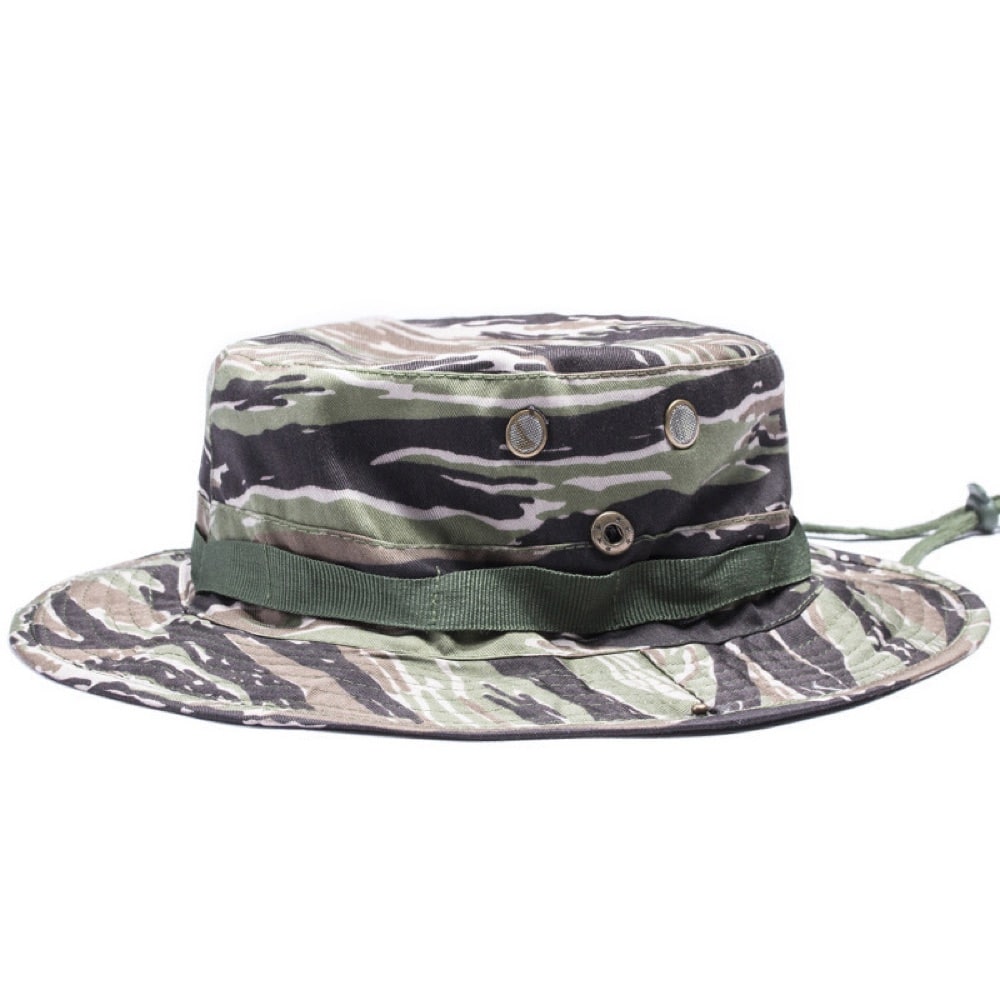
Ask for front, side and worn views of the same sample, and record the brim width at several points rather than one measurement. Note its angle, how the edge is finished, and whether the brim holds the intended shape after handling. Stitch rows and edge binding are visible construction details worth checking on a finished sample, because they show how the edge will look after the hat is worn and packed. A wider brim changes the silhouette and the packing volume; it is not, by itself, proof of a quantified UV-protection rating, and any such claim needs documentation for the actual finished product.
Test crown depth and the size range
The crown must sit securely without forcing the brim into the eyes. Compare crown depth and the inner band on real wearers from the target group, and note how the hat sits with hair, eyewear or other gear relevant to the use case. If multiple sizes are planned, approve a size-set rather than assuming one sample scales perfectly — these observations are more actionable than calling a sample simply “one size fits most.” The closure and fit guide explains how to judge fit and adjustment on a sample before bulk approval. Plan quantities as blocks of 100 per style and color, the standard minimum: for example, a 300-hat order split across three sizes is three blocks of 100, one block per size, and the size plan should be written down before the order is placed. The quantity, color and size planning guide shows how to build that plan without guessing the split.
Decide whether the cord belongs in the brief
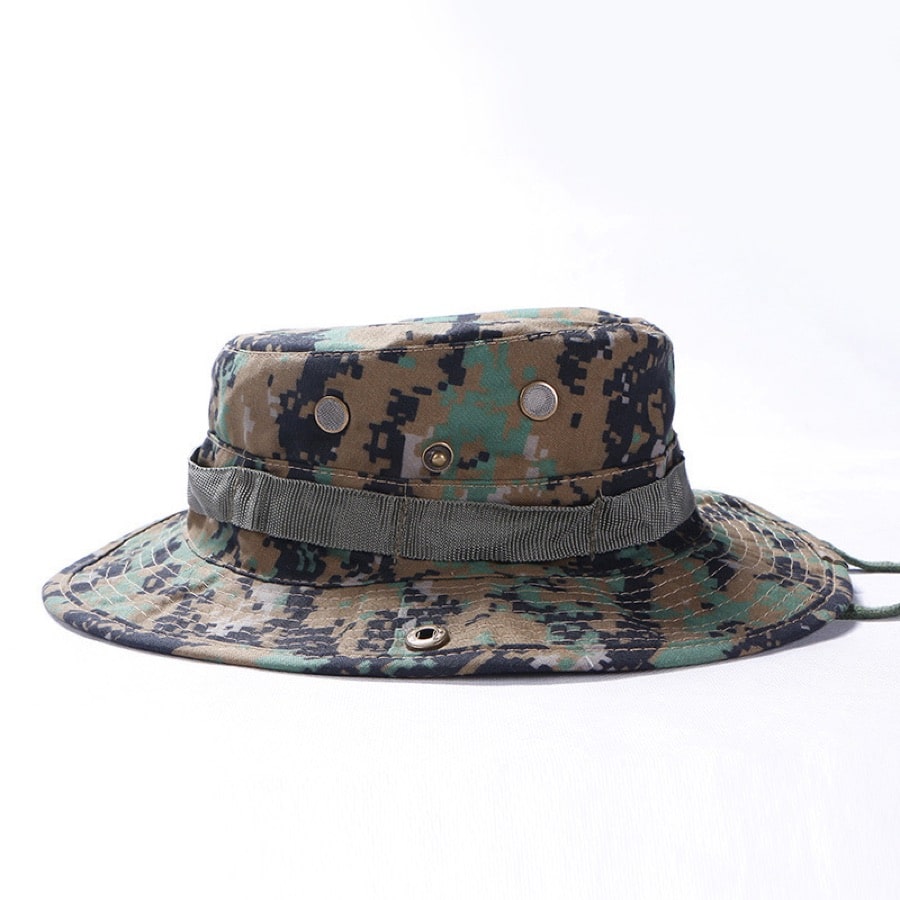
Confirm the cord attachment, length and adjuster, and whether the cord can be removed or tucked away in the selected design. For a retail lifestyle program, a prominent cord may change the look of the hat; for an outdoor group, it may be part of the intended construction. Check the attachment under normal handling and make sure loose ends are finished. Check that the adjuster moves smoothly and stays where it is set, and that the cord leaves enough slack to fit over a hood or cap without pulling the brim down. If the hat will be packed or folded, inspect its shape after unpacking rather than promising packability from material names alone. If cords are packed separately, the brief should say so, and the first bulk check should confirm they arrive with the hats.
Put the decisions in the tech pack
Record the chosen reference hat, which details are approved, and which still need a physical sample decision. The tech pack is the document the order is made from, so it should carry the brim reference, the size-set, the cord specification and the decoration position — not a description of the hat in general terms. The tech pack guide explains what a complete pack contains and how to check it before approval. For a multi-location order, state whether the chin cords should arrive fitted, tucked or packed separately, and whether the hats need to be sorted by size. A packed sample can reveal creasing and brim deformation that an unpacked showroom sample will not, and these details belong in the purchase specification because they affect the recipient’s first experience with the hat.
Place branding where construction allows it
Use a clear front, side or band position that does not cover functional openings or distort the crown. Patch weight, backing and attachment should be reviewed on the physical sample, because a photograph of a flat, undecorated boonie hat cannot establish how a large embroidered patch will sit after sewing. Ask for the decoration to be shown on the same construction that will be produced, not on a flat sample of a different hat, and check the back of the embroidery or patch for loose threads and stiff backing that could change how the crown sits. The customization guide compares placement and attachment methods; the final approval should still be made on the selected boonie construction, not on a different hat.
A boonie hat order is ready when the worn sample has settled the five decisions, the size range is approved as a set, and the decoration sits where construction allows. If any of those is still open, the next sample — not the bulk order — is the right step. Share the intended use, size range, brim reference and decoration direction through the contact page, and the next sample can address the decisions that matter to the wearer.
Frequently Asked Questions
When should I start a custom boonie hat order for a dated event?
Start from the event date and work backwards. Sampling, bulk production and shipping are separate stages with their own timing, so confirm each stage before committing to a delivery date — and do not promise the event date until the sample is approved.
Do I need a physical sample in every color?
Approve the construction on one reference color first, then confirm each additional colorway before bulk — a swatch or a sample in that color shows whether the fabric, binding and band still read as intended. Do not assume a color that looks right on screen will look the same on the finished hat.
What should I do if the bulk hats arrive and the brim shape differs from the approved sample?
Check the delivery against the approved sample on arrival — brim shape, cord, decoration and size marking — and keep the approved sample as the reference. Raise any difference before the hats are distributed, while the comparison is still easy to make.