
A trucker hat is a cap with solid front panels and a mesh rear crown. Most versions use an adjustable snap closure, but the front may be foam or fabric, and the crown may be built as a five-panel or six-panel shape.
That basic definition is useful for shoppers. A brand developing a full custom trucker hat needs a more detailed specification. Front-panel material, crown profile, mesh character, visor shape, closure range, sweatband, and decoration must work together. A photo alone does not define those decisions.
| Feature | Common trucker-hat construction | What can vary |
|---|---|---|
| Front | Solid foam or fabric panels | Material, stiffness, seam layout, profile, and decoration support |
| Rear crown | Open mesh panels | Fiber, stiffness, openness, color, stretch, and surface feel |
| Closure | Plastic snap | Snap range, color, tab shape, or another adjustable closure |
| Visor | Curved or flat | Length, width, curve, internal board, rows of stitching, and underside |
| Branding | Usually centered on the solid front | Flat embroidery, 3D puff, patch, print, side mark, and interior branding |
Our custom trucker hats page shows how these elements can be developed as one product rather than selected as unrelated options.
What makes a hat a trucker hat?
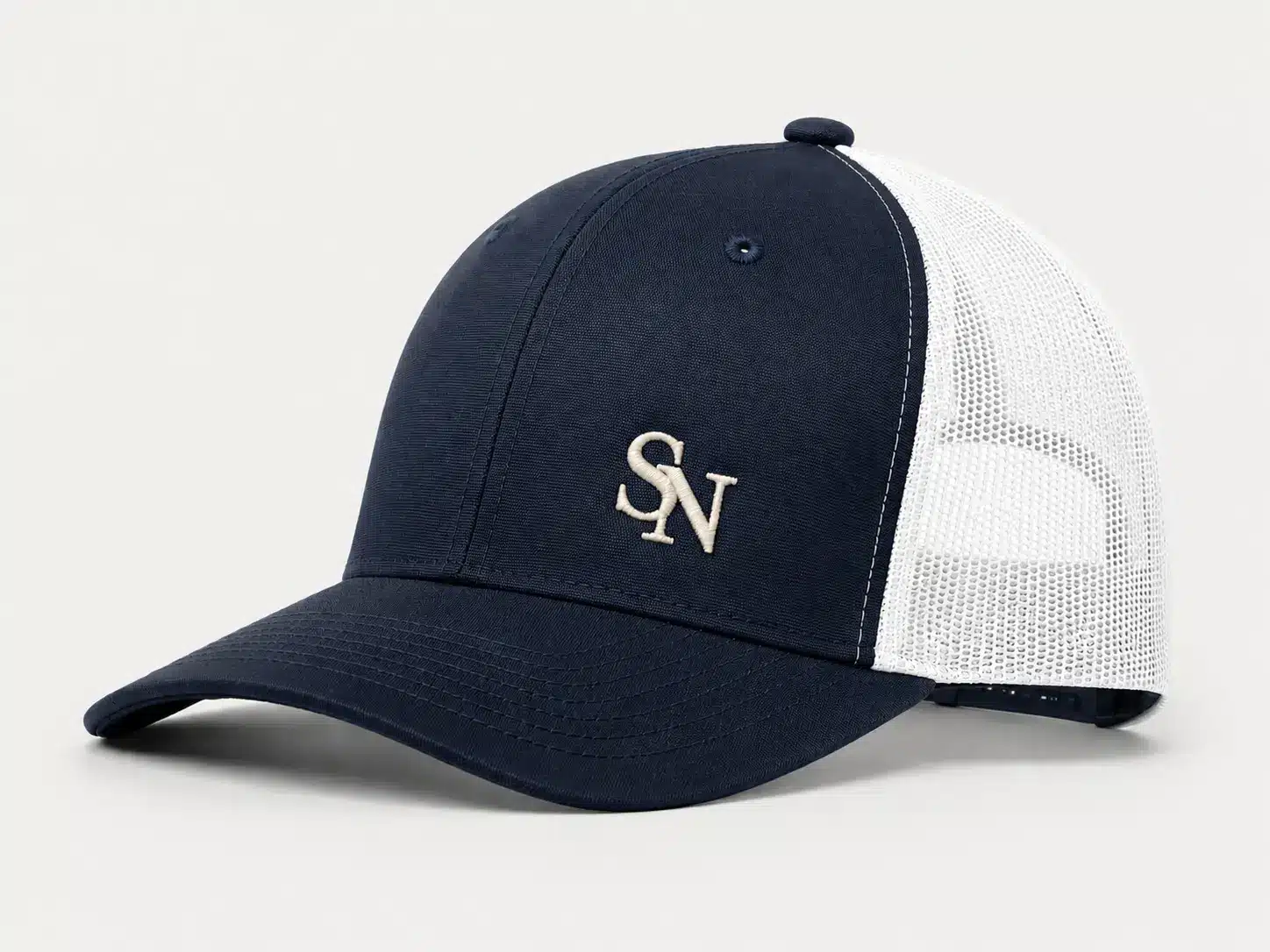
The mesh rear crown is the clearest identifying feature. It gives the cap a different appearance and construction from an all-fabric baseball cap. The solid front provides the main area for a logo, while the mesh shapes the rear volume and changes the way the cap feels on the head.
Many classic trucker hats also have a taller front and a snapback closure. Those details are common, not mandatory. A lower-profile fabric-front cap can still be a trucker hat when mesh forms the rear crown. Likewise, a cap with a plastic snap is not automatically a trucker hat if the entire crown is solid fabric.
Is a trucker hat a type of baseball cap?
Yes. A trucker hat belongs to the broader baseball-cap family, but its mesh rear panels create a distinct construction. A conventional baseball cap normally uses fabric around the full crown. A trucker hat combines a solid front with mesh at the sides and back.
The decision is not about which style is universally better. An all-fabric baseball cap may support a quieter retail look or provide more solid areas for side and rear decoration. A trucker hat creates a more recognizable open-mesh profile and may suit workwear, outdoor, event, lifestyle, and merchandise programs.
For a direct comparison of the two product types, see our baseball cap vs trucker hat guide.
Foam-front and fabric-front trucker hats are different products
“Trucker hat” does not specify the front material. This is one of the first decisions a buyer should make.
Foam-front construction
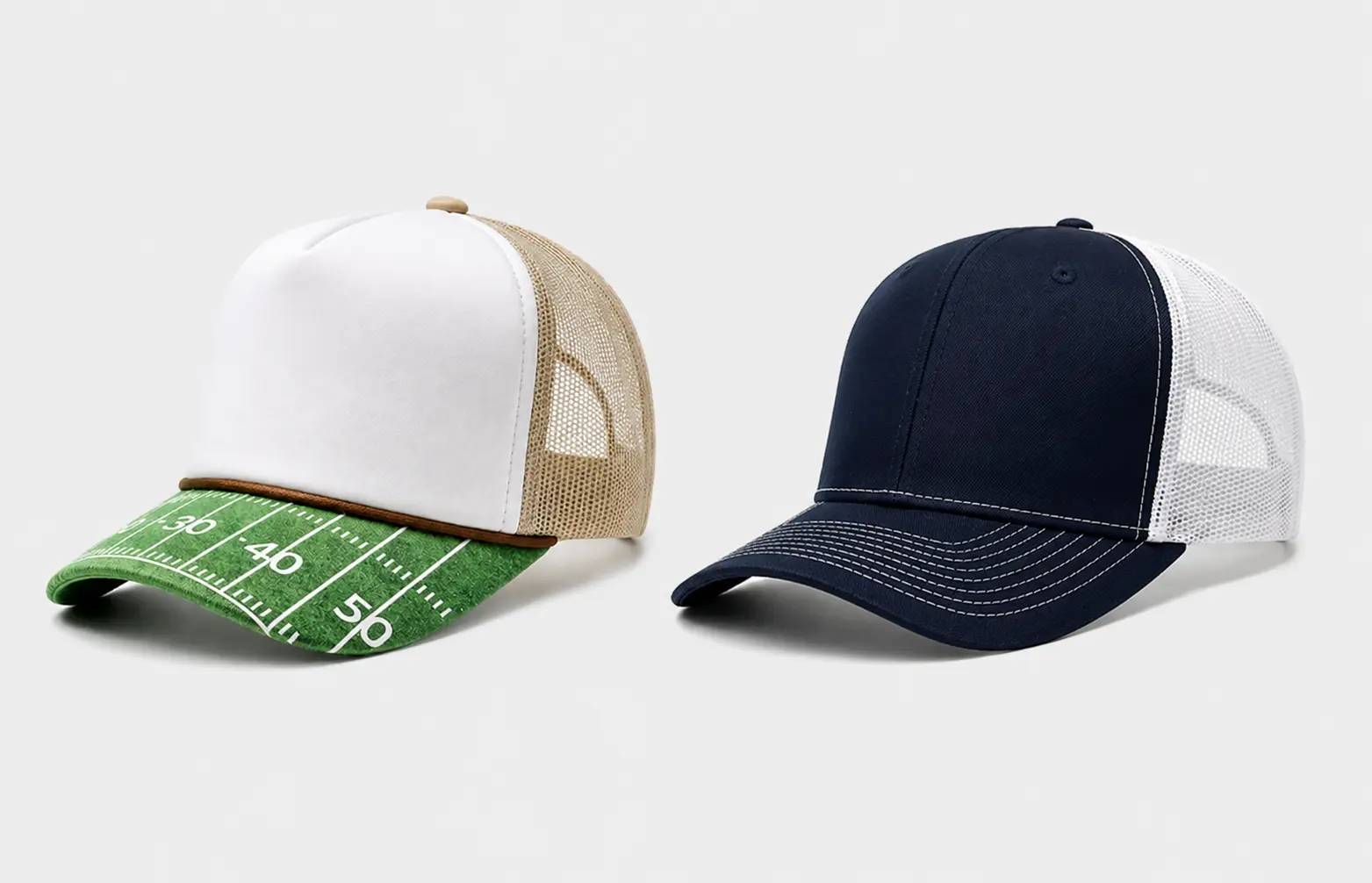
A foam front can create the familiar promotional or vintage trucker silhouette. The surface, thickness, lamination, and backing affect how the panel stands and how decoration behaves. Foam should be evaluated in the complete sample because a flat material swatch does not show the finished crown shape.
Direct embroidery, patches, and printing may all be possible, but suitability depends on the selected foam and artwork. Heavy stitching or an unsuitable needle plan can compress or distort the front. A physical decorated sample is the appropriate approval reference.
Fabric-front construction
A fabric front can use cotton twill, polyester, corduroy, canvas, or another material that fits the product brief. Buckram or another support material may be added when the design requires a firmer crown. Fabric-front trucker hats can range from crisp workwear styles to softer lifestyle caps.
The material name does not define the result by itself. Fabric weight, finish, support, panel pattern, seam placement, and visor construction all affect the finished appearance.
Five-panel vs six-panel trucker hat construction
A five-panel trucker hat usually gives the main artwork a front area without a vertical center seam. That can help with a wide patch, print, or artwork that would otherwise cross the seam. A six-panel hat has a center-front seam and often creates a more segmented, rounded crown.
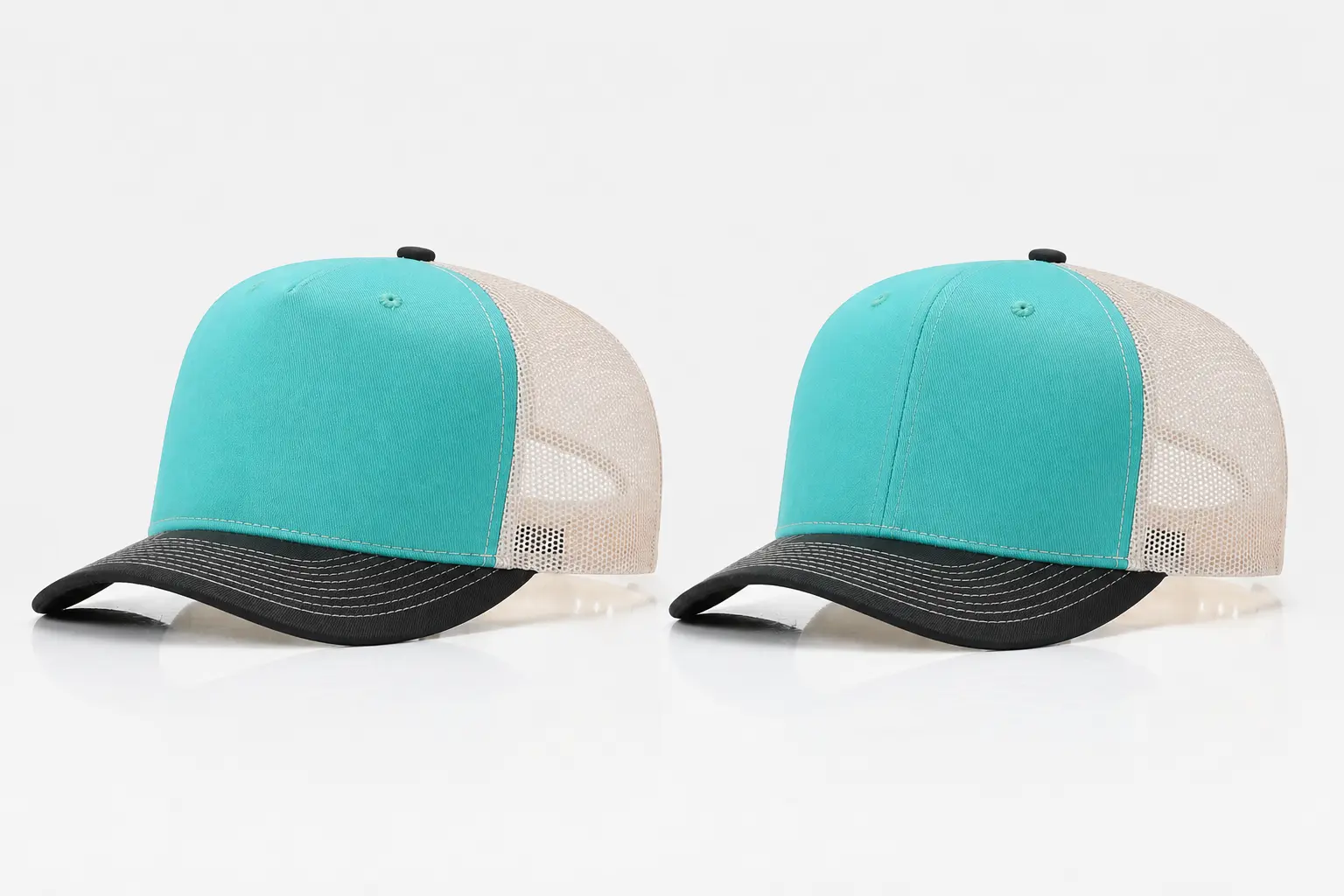
Five-panel does not automatically mean foam front, and six-panel does not automatically mean structured fabric. The panel count, material, internal support, and pattern must be stated separately. Buyers should also check where the top button and front seams sit in relation to the artwork.
Crown profile should be approved on a wearer
High, mid, and lower profiles describe general crown directions rather than universal measurements. Suppliers may use the same term for patterns that fit differently. Front height is only one part of the shape. Crown depth, front-panel angle, rear volume, visor position, and sweatband circumference also matter.
Approve the profile on people within the intended fit range. Check the front from eye level, the side transition into the mesh, pressure near the temples, and whether the rear crown pulls when the closure is adjusted. Our trucker hat fit guide explains the main fit checks before bulk production.
Mesh changes fit as well as airflow
Mesh may be described as polyester, nylon, recycled polyester, or simply cap mesh. Fiber content is only one part of the specification. Knit structure, stiffness, openness, stretch, finish, color, and edge feel can make two meshes behave differently.
A firmer mesh can support a defined rear crown. A softer mesh may follow the head more closely. More open mesh changes transparency and may support air movement, but the complete wearing experience also depends on fit, hair, sweatband, front material, and conditions of use. Avoid promising a fixed cooling result without testing the specific cap.
Use the trucker hat mesh buyer’s guide when specifying stiffness, openness, surface feel, and color relationship.
Choose the closure as part of the fit system
A plastic snap closure is common because it is adjustable and visually consistent with the trucker-hat category. However, the number of usable positions, strap length, hole spacing, plastic flexibility, tab shape, and attachment to the rear opening can vary.
Do not describe a trucker hat as “one size fits all.” Define an intended adjustment range and test the complete hat at several settings. A cap can technically close while still feeling too shallow, too tight at the temples, or unbalanced over the visor.
Closure color can coordinate with the mesh, front, visor, or branding. If a specific color is important, approve it with the other materials because plastic, mesh, fabric, and thread reflect light differently.
Match decoration to the front construction
The main decoration method should be chosen after the front construction and artwork are known. A method that works on firm fabric may behave differently on soft foam or across a center seam.
| Decoration | Useful for | What to approve |
|---|---|---|
| Flat embroidery | Clear marks, text, and moderate detail | Stitch direction, small details, backing, edge quality, and panel distortion |
| 3D puff embroidery | Bold shapes and larger lettering | Foam height, corners, joins, small gaps, and compatibility with the front |
| Woven or embroidered patch | Defined patch shape and detailed artwork | Patch size, border, attachment, placement, and how the patch follows the crown |
| PVC or silicone patch | Raised molded detail and a technical look | Thickness, small elements, color, edge shape, flexibility, and attachment |
| Print or transfer | Artwork that suits the selected surface and process | Surface compatibility, color result, edges, hand feel, and finished-panel appearance |
Side or rear branding on mesh requires separate evaluation. Fine direct embroidery may not reproduce on open mesh the same way it does on a solid front. A simplified mark, small label, or another placement may give a cleaner result. Review the available customization options together with the selected construction.
What B2B buyers should approve on the sample
A digital mockup can confirm artwork direction, but it cannot prove fit, mesh feel, crown recovery, visor curve, or decoration behavior. Use the physical sample to approve the complete product.
- front material, color, support, profile, and panel layout;
- mesh material, stiffness, openness, color, and surface feel;
- crown symmetry and the transition from solid panels to mesh;
- visor length, width, curve, underside, and rows of stitching;
- sweatband material, width, joining seam, and comfort;
- closure type, color, attachment, and intended adjustment range;
- logo size, placement, color, relief, backing, and visible distortion;
- side and rear branding on both solid and mesh areas;
- inside labels, seam tape, hangtags, packaging, and carton requirements.
Record approved details in the product specification and retain the physical sample. If the construction changes after approval, review the affected fit, appearance, decoration, price, and timing before production. Our development and production process shows where these approvals fit into a full custom program.
What to include in a trucker hat RFQ
A useful request for quotation gives the supplier enough information to evaluate the same product you intend to buy. Include:
- reference photos or a physical reference hat;
- five-panel or six-panel construction;
- foam-front or fabric-front requirement;
- target crown profile and fit direction;
- front, mesh, visor, sweatband, and closure preferences;
- artwork files, decoration methods, sizes, and placements;
- private labels, seam tape, hangtags, and packaging;
- estimated quantity, destination, and required delivery date.
If some details are undecided, identify them instead of using “standard trucker hat” as the specification. That phrase can describe several different products. A clear brief lets the sample resolve the remaining choices.
Define the product before comparing quotations
Two trucker-hat quotations are comparable only when they cover the same construction, materials, decoration, labels, packaging, quantity, and delivery scope. A lower price may reflect a different foam, mesh, sweatband, closure, decoration plan, or packing method.
For a full custom project, send us the intended use, artwork, quantity, destination, delivery requirement, and reference images. We can help organize those inputs into a sample-ready specification. Learn more about full custom OEM hat development or contact us about your trucker hat program.
Frequently asked questions
What is the difference between a trucker hat and a baseball cap?
A trucker hat is a type of baseball-style cap with a solid front and mesh rear crown. A conventional baseball cap normally uses solid fabric around the full crown. Both can vary in panel count, structure, profile, visor, and closure.
Are all trucker hats made with a foam front?
No. Some use a foam front, while others use cotton twill, polyester, corduroy, canvas, or another fabric. The front material and internal support should be specified separately.
Is a five-panel trucker hat better for logos?
A five-panel front can avoid a vertical center seam, which may help some wide patches, prints, or artwork. A six-panel design may suit a different crown shape. The better option depends on the logo, material, profile, and intended look.
Does a snapback closure make every trucker hat one size fits all?
No. A snap provides adjustment, but crown depth, circumference, panel shape, sweatband, and visor position still affect fit. Define an intended range and approve the complete sample at more than one snap setting.
What is the most important trucker-hat sample check?
Check the complete relationship among fit, crown shape, mesh, front construction, visor, closure, and decoration. Approving one component separately does not confirm how the finished cap will wear or look.