

Split a running event hat order by use before you choose a style. Giveaway hats go to every finisher, so pick a lightweight, quick-dry cap that is comfortable to wear and cheap enough to give away. Retail hats are sold, not given away, so pick styles runners actually want to buy. Staff hats are worn all day, so pick a durable cap that survives a long race day. Calculate the three quantities separately — giveaway, retail, and staff are three different orders, not one. Every custom style starts at a minimum of 100 hats per style and color, so plan each use in blocks of 100. Samples take about one week after specifications, artwork, and the sample payment are confirmed, and bulk production takes about 30 days after the physical sample is approved. Never place the bulk order before the sample is approved.
This guide covers which styles to choose for each use and how to plan the quantities. How to forecast the split between giveaway and merchandise numbers is a separate method, covered in our race hat forecasting guide — this guide does not repeat it. The full range of styles is on our custom running event hats page.
Split by Use First
A race hat order goes wrong in one way more than any other: the buyer orders one hat for everyone. A finisher, a shopper, and a volunteer do not need the same hat. Start with the three uses, then choose a style for each.
Giveaway hats — for every finisher
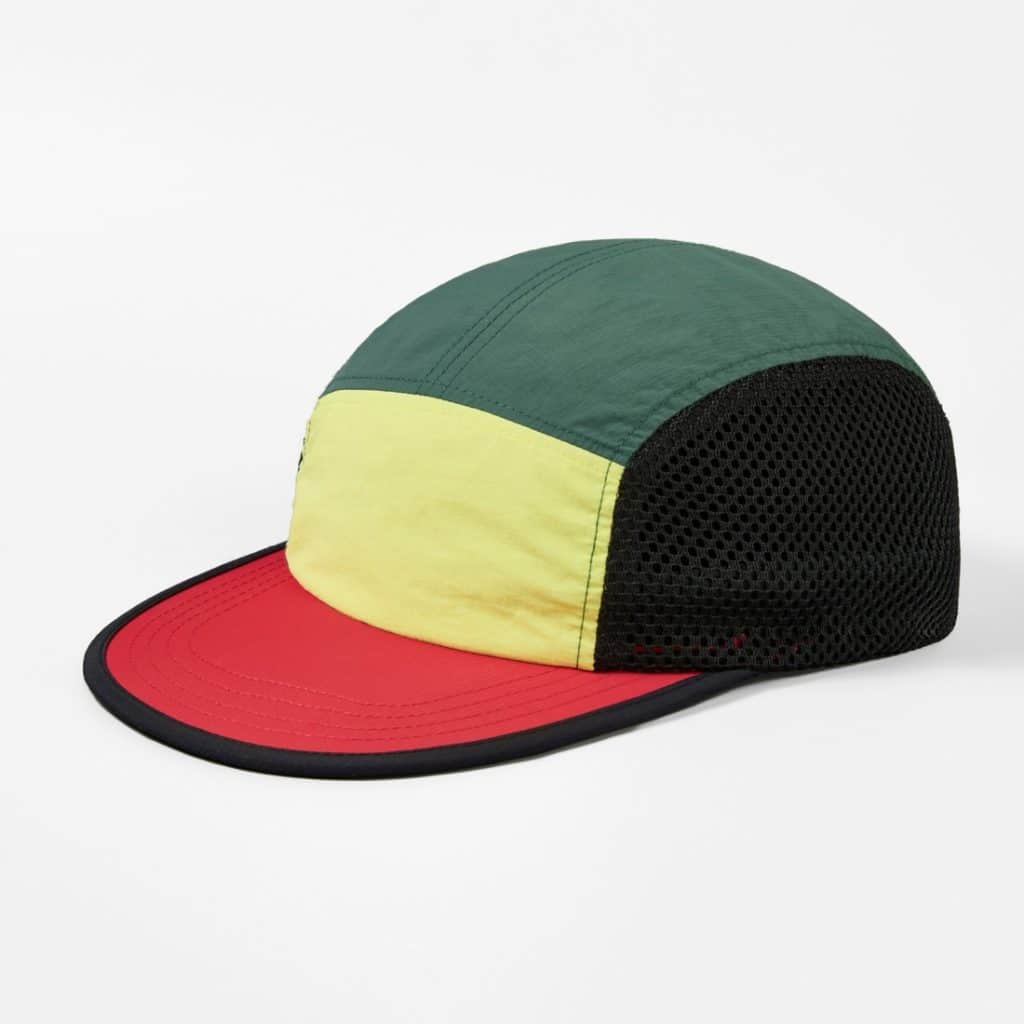
The giveaway hat is the finisher gift, so it has to suit every runner. Pick a lightweight, quick-dry cap with mesh ventilation and a sweatband — comfortable over a long race and light enough to wear after the finish. Keep the decoration simple: one clean logo, plus the race distance and year so the hat works as a keepsake. Order one style, in one or two colors, and plan the quantity from the finisher count.
Retail hats — for the merch table
A retail hat is bought, not given away, so it has to be a hat runners want to wear again. Pick performance styles in colors that sell, and allow a bolder design than the giveaway hat — race branding, a strong color, or a style that reads as a running cap rather than a souvenir. Retail quantity is planned to sell, not to cover the field: start with a small range and reorder the styles that sell out.
Staff and volunteer hats — worn all day
Staff and volunteers wear the hat from setup to the last finisher, so durability and comfort matter more than looks. Pick a durable performance cap that holds its shape through a long day, with a sweatband and reflective details for early-morning starts. Mark the role on the hat — staff or volunteer — so runners can spot the right person on the course. Count staff and volunteers as their own group, separate from finishers.
The Three Uses, Compared
The table compares the three uses on the points that decide an order.
| Use | Recommended styles | Fabric points | Decoration | Quantity logic |
|---|---|---|---|---|
| Giveaway | Lightweight quick-dry cap with mesh panels | Lightweight, quick-dry; mesh ventilation; sweatband | Simple logo; race distance and year | One hat per finisher, plus spares; one style, one or two colors; plan in blocks of 100 |
| Retail | Performance styles runners want to buy again | Same performance fabric; colors that sell | Bolder race branding; distance and year | Order to sell, not to cover the field; start small, reorder what sells |
| Staff and volunteers | Durable performance cap; visor option for warm weather | Durable, quick-dry; sweatband; reflective details | Role marking (staff / volunteer); simple logo | Count staff and volunteers separately; one style per group |
Choose by Race Size
The same three uses apply at every race size, but the range changes. Use the bands below as a planning framework, not fixed thresholds — place your race by its registration numbers.
| Race size | Giveaway | Retail | Staff |
|---|---|---|---|
| Small local 5K (under 500 runners) | One style, one color; 100-unit blocks cover the field | One or two styles; a small merch table | One staff style; a small count |
| Mid-size city race (500–5,000 runners) | One giveaway style, possibly two colors; plan per 100 | Two or three styles; test what sells | Staff plus volunteers; count each group separately |
| Large marathon or multi-thousand field | Giveaway style in one or two colors; blocks of 100 per style and color | A full retail range; reorder fast sellers during race week | Larger staff and volunteer groups; role-marked styles |
Performance Specs That Decide a Running Hat
A running hat earns the name through its specs, not its label. Check these points before you approve a style.
Fabric and ventilation. The fabric should be lightweight and quick-dry, with mesh panels that let heat out. A sweatband is part of the spec, not an extra — it keeps sweat out of the eyes over a long race. Cotton is the wrong choice for a running hat: it absorbs sweat, gets heavy, and dries slowly. The full performance range is on our custom performance hats page.
Laser-cut ventilation. Laser-cut openings add ventilation without a mesh panel, which suits a clean, low-profile cap. Openings change the structure of the crown and the space left for a logo, so check placement on the sample. The structure and logo placement details are covered in our laser-cut performance hats guide.
Reflectivity. Reflective details matter for races that start before dawn or finish after dusk. A reflective strip or logo helps runners and staff stay visible on the course and around the start and finish areas.
Ponytail and back openings. Runners who wear their hair up need a ponytail opening or an open-back option. Check the opening size on the sample — too small and it is useless, too large and the cap loses its fit.
Race print: distance and year. Print the race distance and the year on the hat. It turns a giveaway cap into a finisher keepsake and a retail cap into a souvenir runners will buy. Keep the print legible at a distance: a short distance mark and a clear year read better than a crowded design.
How Many Hats to Order
Quantity planning has four steps. Count the three uses separately: finishers, retail buyers, and staff plus volunteers. Assign a style and color to each use. Plan each style and color in blocks of 100 — that is the minimum order per style and color. Then round up, never down: a use that needs more than one block takes two. Our MOQ guide explains how the 100-unit minimum works per style and color.
How to forecast the giveaway-versus-merchandise split — the numbers behind the three uses — is a separate method. It is covered in our race hat forecasting guide, linked above; this guide covers style choice and quantity logic, not the forecast.
For example, a 1,000-runner race needs at least 1,000 giveaway hats in the giveaway style and color — ten blocks of 100, plus spares — while retail and staff are counted separately and never added to the giveaway count. The example shows the method; it is not an SN order.
Wear Test and Sample Approval
Test the hat by wearing it, not only by looking at it. Fit, the sweatband, and how the cap feels after a run only show up when it is worn. The wear-test method is covered in our running hat wear-test guide; this guide does not repeat it. For the fold-and-pack check, follow the wear-test guide.
Samples take about one week after specifications, artwork, and the sample payment are confirmed. Bulk production takes about 30 days after the physical sample is approved, final specifications are confirmed, and the required payment is made. International shipping and customs are separate. The full sequence is covered in our production timeline guide.
The Buying Decision
If the race date is set, decide in this order: use first, then style, then quantity — and approve the sample before the bulk order. A race hat is a one-shot order: there is no second run before race day, so the sample is the last chance to catch a mistake.
Send us your race date, expected field size, and logo through Request a Quote — we reply within one business day.
FAQ
How many running hats should I order for a race?
Count the three uses separately — finishers, retail buyers, and staff plus volunteers — then plan each style and color in blocks of 100, the minimum order per style and color. Combine uses only where the style and color match, and round up rather than down. The forecasting method for the giveaway-versus-merchandise split is in our race hat forecasting guide.
What makes a hat a running hat?
Lightweight, quick-dry fabric, mesh ventilation, a sweatband, and reflective details. Cotton is the wrong choice: it absorbs sweat, gets heavy, and dries slowly.
How long does a custom running hat order take?
Samples take about one week after specifications, artwork, and the sample payment are confirmed. Bulk production takes about 30 days after the physical sample is approved. International shipping and customs are separate.