
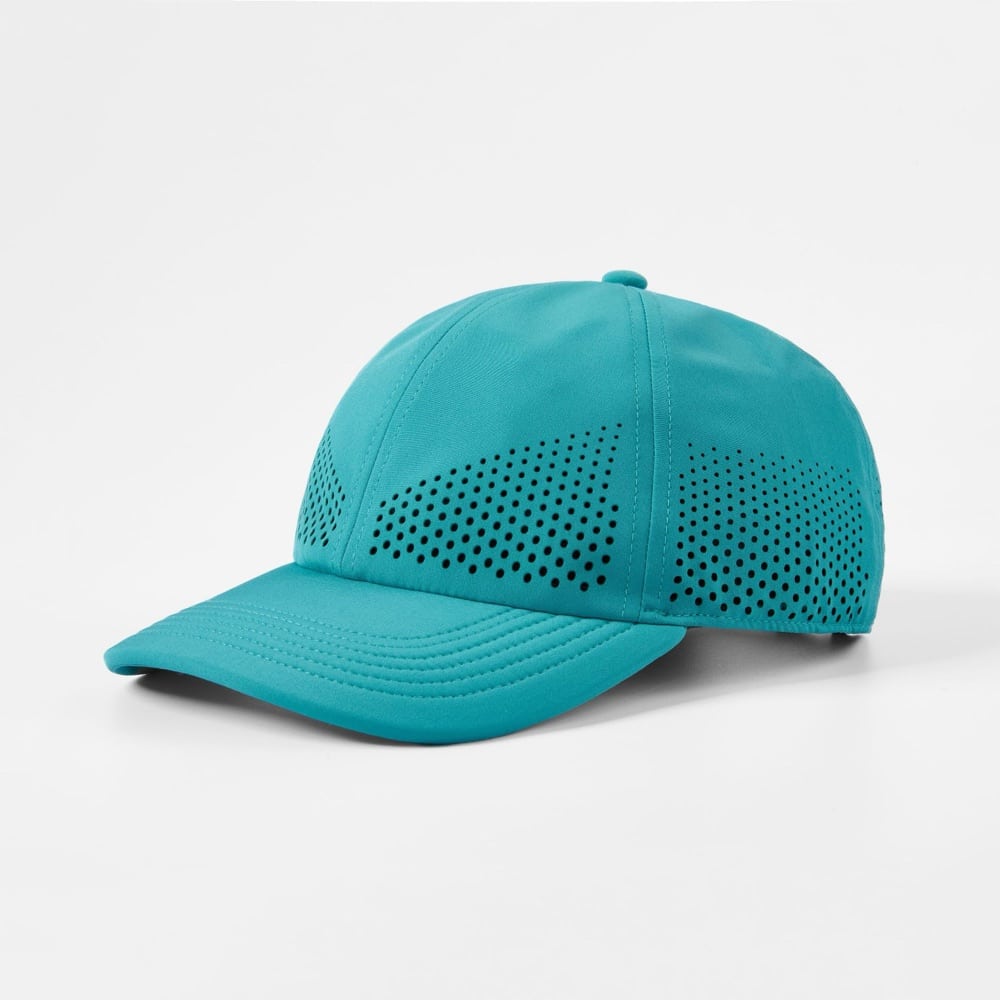
To choose custom running hats people will keep wearing, test the finished cap on intended wearers before bulk approval. Check whether it stays in place during a brief walk or jog, whether the visor clears the wearer’s view, how the sweatband feels, and whether decoration changes the balance of the crown. Record those observations for each candidate, and approve the cap that passes on real wearers — not the one that looks best in a product photograph.
Start with the wearer and the use case
Write the wear brief before choosing a cap. Is this a finisher gift, an item for regular club runs, or merchandise people will purchase? A cap worn for a short event may be judged mainly on appearance; one intended for repeated training needs a more careful fit review. State the intended activity, the expected weather, the preferred crown height and whether the cap should pack easily. A generic label such as “performance cap” is not a specification — it names a category, not a construction, and two caps under that label can feel entirely different when worn. If the hats are for a race rather than regular club training, keep the wearer test aligned with the distribution plan: who receives a hat, when, and whether the same cap must also serve staff and volunteers. The Best Custom Hats for Running Events & Races guide covers the broader choice between participant, staff and merchandise styles; this guide focuses on what to observe when a candidate cap is worn. For a program where the running cap is one of several sun shapes, the sun hats guide compares visor, bucket and wider-brim styles — choose the shape first, then the construction.
The five decisions to make on the sample
Use this table as the brief-building framework: one decision per row, with a different test for each construction.
| Decision | Five-panel cap | Six-panel cap | Low-profile unstructured cap | Check on the sample |
|---|---|---|---|---|
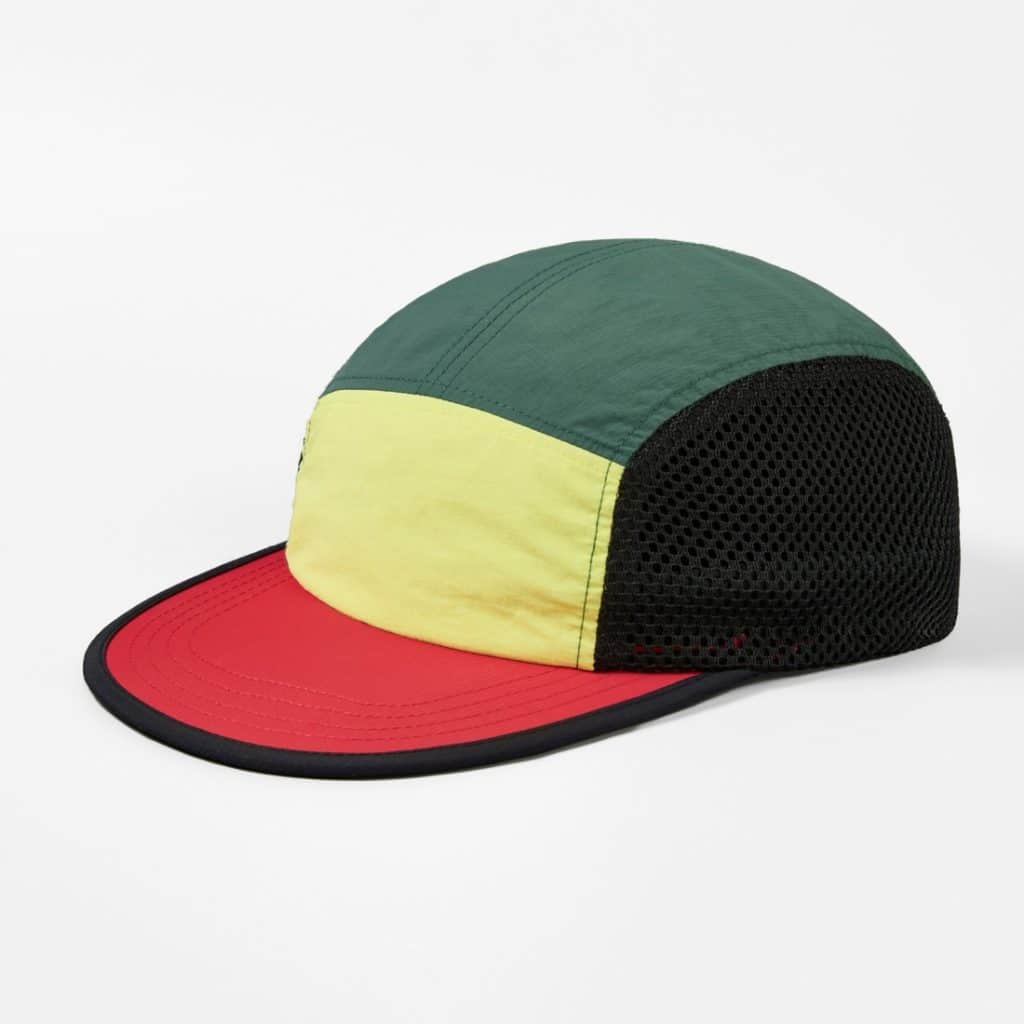
| Cap construction | Fewer panels, a lower crown and a flatter front for a clean logo area. | More panels and a rounder crown, with a deeper fit. | Soft crown with no internal structure; the shape follows the head. | On the worn sample, does the crown hold its shape or collapse? |
| Fit and closure | Closure range carries the fit; check the adjustment and the band contact. | Crown depth plus closure; check pressure at the forehead. | Fit depends on the band and the fabric stretch; check slip. | A size-set tried on real wearers; the band sits securely. |
| Sweat and ventilation | Mesh side panels and perforations are visible construction choices. | Ventilation depends on the panel fabric and openings. | Fewer seams can mean fewer openings; check the sweatband first. | Openings and seams are even and clean; claim only what the sample shows. |
| Decoration and logo durability | Flat front takes a logo well; check added stiffness. | Curved front can distort a large logo; check readability. | Soft crown can pull under a dense badge; approve weight and position. | Decoration reviewed on the sample: position, weight and readability. |
| Quantity planning | Count by wearer group and handout site. | Count by style and color, plus a reserve. | Count by station or destination, plus a reserve. | Confirm each style-color line starts at 100 pieces. |
Check stability and sightline on a moving wearer
Put the sample on several intended wearers, not just a display head. Adjust the closure to a comfortable setting and have them walk or jog briefly. Notice if the crown shifts, presses at the forehead, or needs constant readjustment. Compare a curved visor with a shorter or flatter option from the side as well as the front: the visor should suit the intended look without becoming an annoyance when the wearer looks ahead or down. Record the crown depth, circumference range, closure type and visor shape of the approved sample. If a later colorway uses a different base cap, repeat the fit check — two caps that share the same nominal size can still feel different because of panel shape, fabric and construction. The closure and fit guide explains how to judge fit and adjustment on a sample before bulk approval.
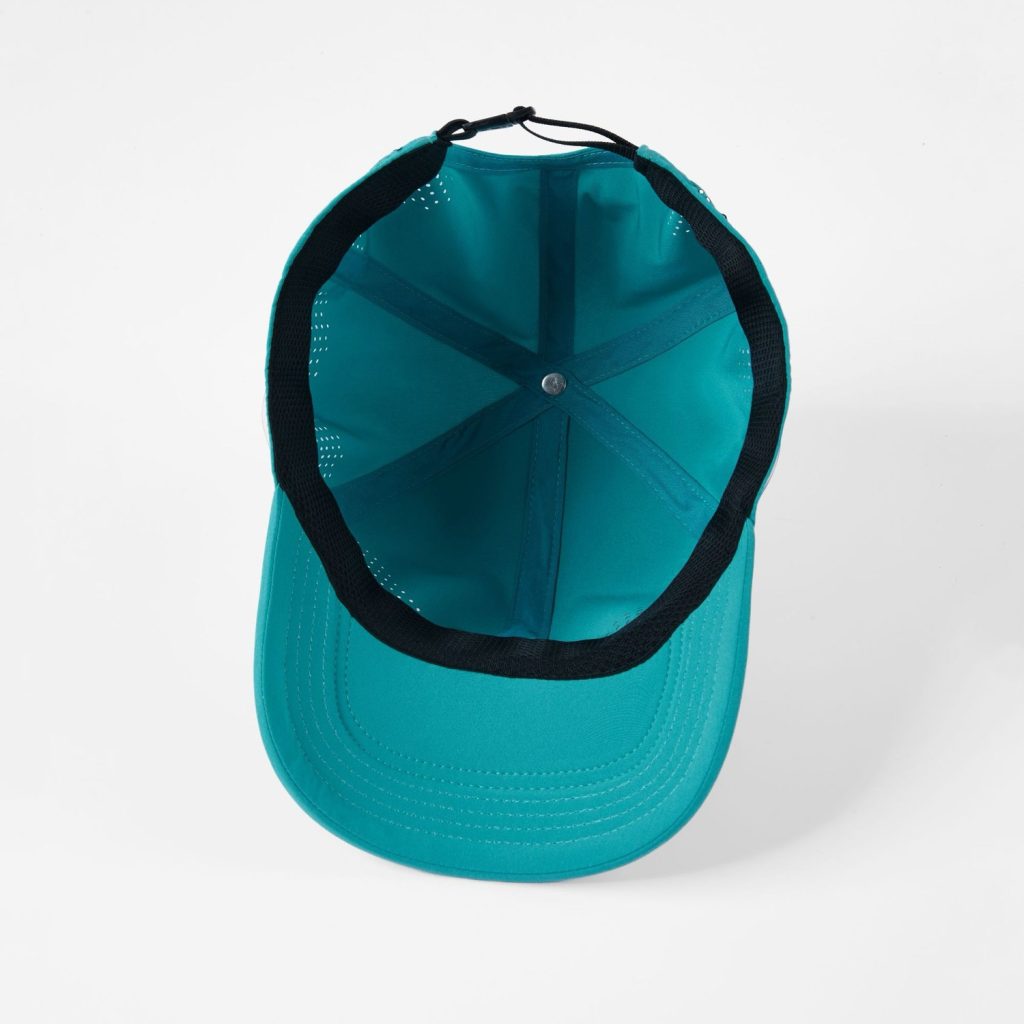
Look inside: sweatband, seams and ventilation
The sweatband is the part that touches the forehead, so check it on an actual wearer: its edge, seam placement, thickness and feel. A product photograph cannot show whether a band rubs after use, and a band that looks fine on a table can irritate once it is damp. Check the inside seams as well — a raised or rough seam at the forehead is the detail most likely to end the wear test early. Likewise, perforations and mesh are visible construction choices; they do not, by themselves, establish a quantified ventilation rate or moisture-management benefit. If the brief requires claims such as quick drying or sun protection, request the selected material specification or relevant test evidence before stating them.
Keep decoration in proportion to the cap
A dense embroidered badge may be visually appealing but can make a light front feel or hang differently. A flatter print or transfer may be worth sampling when its compatibility with the selected fabric is confirmed. Review the decorated cap, not only the blank or the artwork proof: check logo scale at normal viewing distance, panel distortion, hand feel and the cap’s balance when worn. A logo that reads well on a flat proof can crowd a curved front or pull a soft crown out of shape. Sponsors may need visibility, but a cap that members put away after the race gives that branding little repeat exposure — the decoration decision is also a wear decision. Decoration routes and placement are set out on the customization page.
Count quantities by wearer group and destination
Count quantities by style-color line and by wearer group, not by total hats. Each line — one style in one color — starts at the standard 100 pieces. Example: one running style in two colors is two lines, so the starting quantity is 200 pieces, and each line carries its own decoration approval. Show the lines in the brief, not only a single total. For a race program, keep participant giveaways, staff allocations and merchandise stock as separate allocations: an event with optional merchandise should not automatically order one hat per runner. The quantity, color, and size plan guide works through this line-by-line method in full.
Record the decisions in the tech pack
Record the chosen reference cap, what is approved, and what still needs a sample decision. The tech pack is the document the order is made from, so it should carry the crown and visor dimensions, the closure, the panel construction, the sweatband, the decoration size, placement, method and color references — not a general description of the hat. Keep front, side, rear and inside photographs of the approved physical sample with the pack, and separate any alternate color or logo version from the base specification. The tech pack explains what a complete pack contains and how to check it before approval. Ask a small group of actual wearers for feedback before the bulk decision, especially if the cap is meant for recurring runs. Their comments are not a laboratory test, but they can expose a slipping closure or an awkward visor that a tabletop review misses. Keep those observations with the approved sample so the next order starts from a known design.
A custom running hat order is ready when the cap stays in place on a brief walk or jog, the visor clears the sightline, the sweatband feels acceptable on a real wearer, and the decoration sits where construction allows. If any of those is still open, the next sample — not the bulk order — is the right step. Share the intended use, the reference cap, the decoration and the estimated quantities through the contact page, and the next sample can address the decisions that matter.
Frequently Asked Questions
Should the wear test copy race-day conditions?
No. A brief walk or jog with intended wearers is enough to judge stability, sightline, sweatband feel and decorated balance. A short trial cannot prove full-race performance, and a laboratory test is a separate question with its own method. Record what the trial actually showed, and do not turn a short wear check into a race-day performance claim.
What if the sample fits the staff group but not the participants?
Do not approve it on the strength of one group. Approve a size-set rather than assuming one sample scales perfectly, and record which groups tried the sample and what each group reported. If the fit differs by group, the brief needs a size range that covers both, not a single size chosen from one fitting.
Can a reorder keep the same logo but change the base cap?
Only with a new sample approval. Two caps that share the same nominal size can still feel different because of panel shape, fabric and construction, so a changed base cap means re-running the wear test on the new construction. Record the new base cap with the approved samples and confirm the decoration on the new front before the reorder is confirmed.