
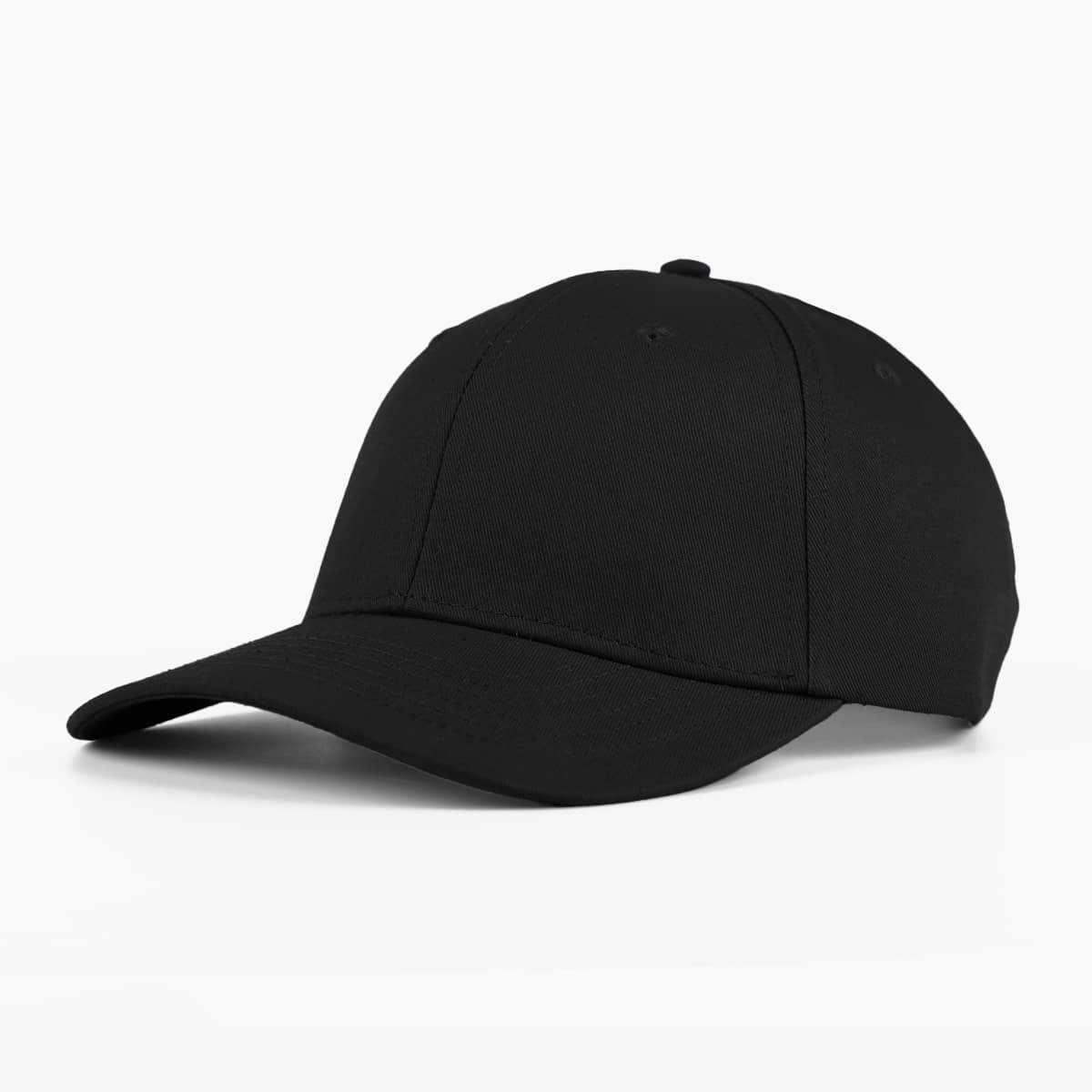
For custom fire department hats, separate the three uses — member off-duty wear, fundraising merchandise, and community-event handout — before approving the cap, and confirm who may authorize the emblem. A cap is merchandise, not protective equipment, and it is not automatically an approved duty-uniform item. The right specification depends on one decision made first: who will wear the hat, where, and under whose approval the emblem is used. Get that decision and the decorated sample right, and the rest of the brief — decoration, quantities and packing — follows from evidence instead of guesswork.
Separate off-duty merch from operational gear
This guide concerns conventional branded caps for off-duty, casual or promotional use. A baseball cap is not a fire helmet, flame-resistant hood or other protective item, and no decoration turns it into one. If a department has uniform, safety or insignia policies, obtain its own approval before making a purchasing decision; do not assume a promotional cap is authorized for duty wear, and do not describe it in a way that suggests it is. Write the intended use on the order brief — member wear, fundraising sale, or event handout — so decoration, product descriptions and packing do not create the wrong impression. The distinction matters most at the handout: a cap given to the public should read as merchandise from that program, not as gear issued for duty.
Identify who can approve the mark
Department emblems, station numbers, union-local identifiers and event artwork can have different owners, and each needs its own sign-off. Ask the buyer to provide the approved logo file and to name the person who signs off on its use. A supplier can check whether an artwork file is technically suitable for a hat — line weight, size, stitch count — but it cannot grant permission to reproduce a department or union insignia. Record the version, colors and placement approved by that decision-maker, and treat a changed mark as a new approval, not a repeat of the last one. The logo authorization checklist helps the buyer record that approval separately from the physical sample review, so the artwork decision and the construction decision are not mixed into one sign-off.
The five decisions to make on the sample
Use this table as the brief-building framework. Each row is one decision to settle on the decorated sample, with a different test for member wear, fundraising merchandise and event handout.
| Decision | Member off-duty wear | Fundraising merchandise | Community event handout | Check on the sample |
|---|---|---|---|---|
| Decoration and logo placement | Emblem and any station or unit mark, approved for repeated wear | Graphic that sells: readable at a glance, with the program or year on a hangtag | Sponsor or partner marks cleared separately from the department emblem | On the decorated sample, is the emblem legible at normal viewing distance? Does small lettering stay readable? |
| Color and visibility | Cap color that coordinates with off-duty wear and reads as the program’s own | Color that stands out on a sales table and photographs clearly | Color chosen for the event setting and for quick handout identification | Check the finished color on the sample, not on screen; confirm the emblem still reads against it |
| Fit and sizing | Fit range covering the members who will wear it repeatedly, checked by trial wear | A closure range that fits most buyers, since there is no fitting time at the point of sale | A closure range covering a mixed group with no fitting time | Trial wearers note pressure, slip and whether the closure holds once adjusted |
| Quantity planning | Count by station and group, plus a reserve for new members and replacements | Count by design and color, each saleable line identifiable | Count by handout site and list, plus a small reserve | Confirm each style-color line starts at 100 pieces before ordering |
| Pack-out | Sorted by station and group for internal distribution | Individually bagged or boxed for display and sale | Grouped by event site, with carton marks for each destination | Confirm the packing destination on the brief before production, not after delivery |
Choose the base cap for recipients, not just the emblem
Compare crown height, visor shape, closure and color on real samples. A structured front can support a bold mark; a lower-profile cap may be preferred for everyday wear. Neither choice is inherently better for every group, and the same emblem can read differently on each. Let a few intended wearers try the sample and note whether the closure range and inside feel suit them — a cap that looks neat in a photograph can press at the forehead after hours. The closure and fit guide covers closure range and returns risk before approval. The approved hat should be documented by more than a logo placement image: record the base style, crown, closure and color alongside the decoration, so a later order starts from the same specification.
Put the emblem where it stays legible
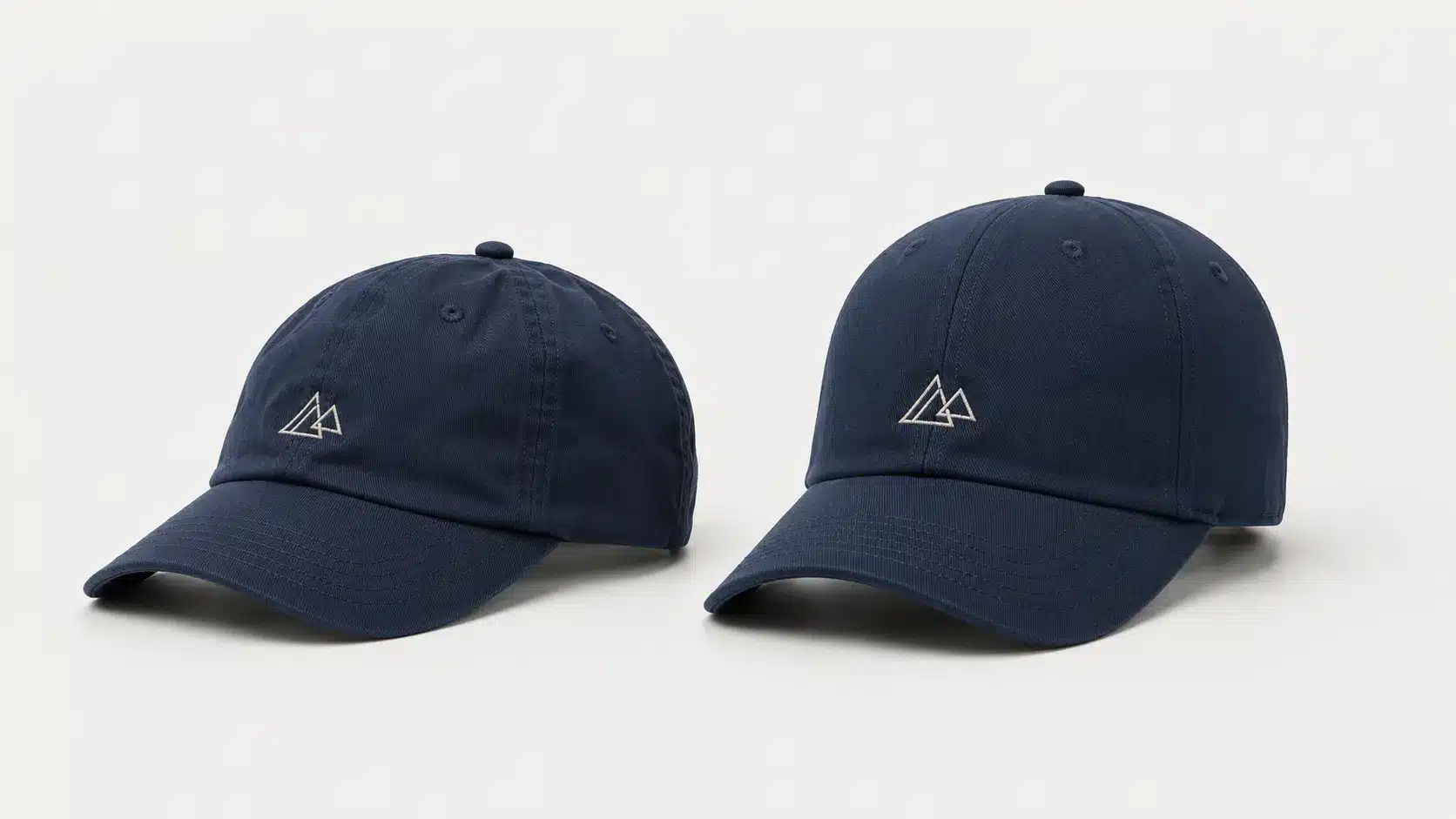
A detailed shield may need simplification at cap size. Review the design at its intended dimensions on a physical sample rather than relying on a large digital proof — small numbers and fine lettering should remain legible at normal viewing distance, and a mark that works on a banner may fail on a six-panel front. Keep decoration clear of seams, closures and ventilation openings, and check the back of the embroidery or patch for loose threads and stiff backing that could change how the crown sits. If several stations share one order, avoid silently swapping the department-wide mark for a station-specific version; each version is its own approval. Design and decoration routes are set out on the customization page.
Control station, event and year variations
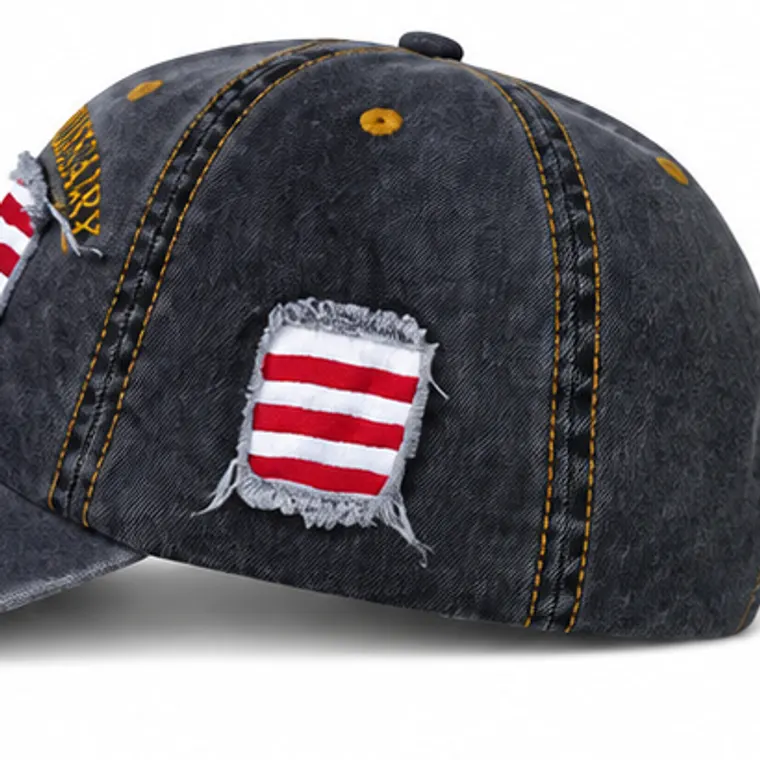
Make a version table before asking for a quote: base style, cap color, front emblem, side or back text, recipient group, quantity and packing destination. A fundraising cap may use a different graphic from a member cap, and an annual event may update the year while the base cap remains the same. Keep station-level quantities separate if the shipment must be divided by destination, and request a separate personalization workflow and proofing plan if individual names or ranks are required — do not bury variable data inside a standard bulk artwork approval. The tech pack is the record that holds the approved style, color references, artwork version and packing instructions in one place, so the next coordinator can recreate the intended item.
Count quantities by version and destination
Count quantities by style-color line, not by total hats. Each line — one style in one color — starts at the standard 100 pieces. Example: one member style in two colors is two lines, so the starting quantity is 200 pieces, and each line carries its own decoration and packing. Show the lines in the brief, not only a single total, and keep member, fundraising and event lines separate even when they share a logo — they are different specifications with different packing. The quantity, color, and size plan guide works through this line-by-line method in full. Separating the three programs before ordering is the same discipline the team hats guide applies when it splits player, staff, and fan requirements: one order, different briefs for different wearers.
A compact brief for the first conversation
The brief should carry: intended use — off-duty member wear, fundraiser or community event; the approved mark and the person authorized to sign off; preferred cap silhouette, color, closure and decoration method; quantity by version and destination, with any individual packing needs; event date and which parts of the design may change next time. Bring that brief, the authorized artwork and the version table to the project discussion, and the sample can address the decisions that matter instead of reopening them.
A fire department hat order is ready when the three uses are separated, the emblem’s approval is recorded, the decorated sample has settled the five decisions, and the version table covers every station and destination. If any of those is still open, the next sample — not the bulk order — is the right step. Share the intended use, the approved mark and the version table through the contact page, and the next sample can address the decisions that matter to the wearer.
Frequently Asked Questions
What should we do if the bulk hats arrive and the emblem looks different from the approved sample?
Check the delivery against the approved sample on arrival — emblem, color, decoration and size marking — and keep the approved sample as the reference. Raise any difference before the hats are distributed, while the comparison is still easy to make.
Can the same cap design be reused for next year’s fundraiser?
Yes, if the mark, the approval and the base cap are all unchanged. A new year, a changed emblem or a different graphic needs a fresh artwork approval and a new sample check, even when the cap itself stays the same.
Who keeps the approved sample and the artwork file after the order?
Name one holder in the brief — usually the buyer or the program coordinator — and keep the sample, the artwork revision and the packing instructions together. A later reorder starts from that record, not from memory, and a new coordinator can recreate the intended item without guessing.