
To approve a custom printed trucker hat, choose the front construction first, then review the graphic on a decorated physical sample. Foam and woven fronts present different surfaces, and a print approved on a flat artwork file may look different across a curved crown or near seams. Record the cap style, front material, graphic dimensions, colors, and decoration method together before bulk approval.
Start with the wearer and the use case
Write down who will wear the hat, where, and for how long, before choosing any detail. A one-day campaign giveaway, a staff uniform and a paid retail item may call for different compromises. A promotional buyer may prioritize visibility from a distance; a retail buyer may want a quieter graphic that still sells after the campaign ends. Include the intended viewing distance in the brief: a small symbol may look crisp on a close-up proof but fail to read when the cap is worn across a room, while a graphic that dominates the mock-up may feel oversized on a person’s head.
The five decisions to make on the sample
Use this table as the brief-building framework: one decision per row, with a different test for each front route.
| Decision | Foam front | Woven front | Printed panel | Check on the sample |
|---|---|---|---|---|
| Artwork type | Large, bold graphics read well on the broad front face. | Fine detail and small text need a smooth, stable fabric. | Panel-spanning artwork is placed before assembly. | On the worn sample, does the artwork read at the intended distance? |
| Front-panel construction | High, structured foam front with a wide printable face. | Fabric front with visible texture and a softer profile. | Printed fabric panels cut and sewn into the crown. | Does the crown profile change the visible area when worn? |
| Decoration method | Print sits on the foam surface; check edges and hand feel. | Print follows the weave; check color and detail on that fabric. | Graphic is approved after cutting and sewing, especially at seams. | Is the method sampled on the selected material, not a substitute? |
| Panel and print durability | Check edges for lift or cracking when flexed. | Check how the print behaves on the fabric after handling. | Check seams and pattern placement where panels meet. | Ask which tests apply, and record the method. |
| Quantity planning | Count by style-color line, with a reserve for reorders. | Same line-by-line count; each front color is its own line. | Same count; each panel artwork version is its own line. | Confirm each style-color line starts at 100 pieces. |
Compare front-panel routes before the artwork is fixed
First decide whether the hat needs a high foam front, a fabric front, or a printed fabric panel assembled into the crown. These are different visual products: the front material and its surface affect which methods can be sampled, while the crown profile changes the area a buyer can see when the hat is worn. A graphic that fills the front in a mock-up may sit too close to the visor join or disappear around the side curve on the real hat. The undecorated front makes the practical graphic area easier to judge than a flat digital template, so ask for the blank sample before the artwork is placed. If a cord accent is wanted beside the print, the rope hats guide covers cord placement and logo position for that route.
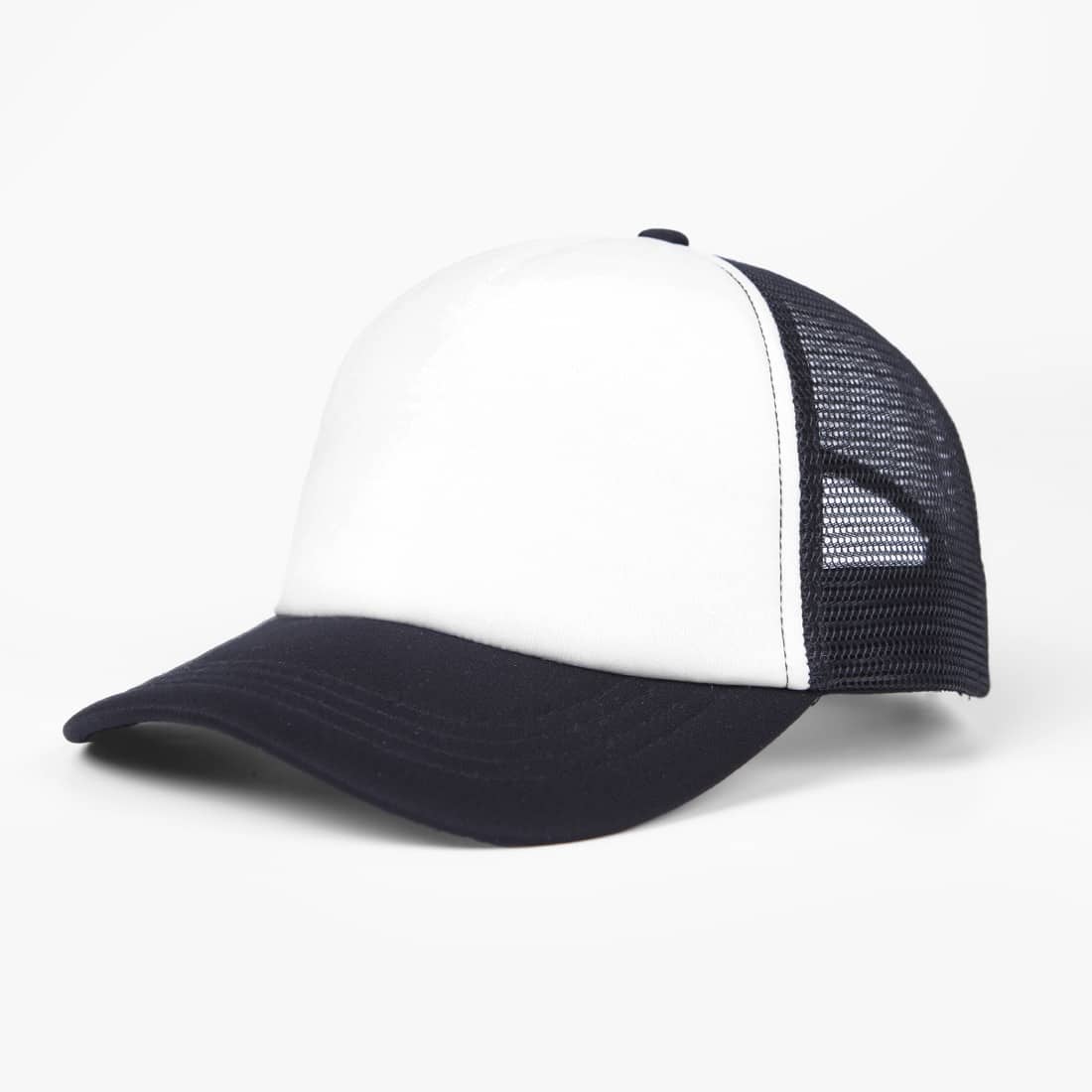
Mark the print area and no-print zones
Mark the intended print area and no-print zones on the artwork approval file before production. Seams, the visor join and the crown curve are where artwork most often fails: a design crossing a seam may split when the panels are sewn, and a graphic running to the visor join may be partly hidden once the cap is assembled. For artwork continuing over more than one panel, ask how seams and pattern placement will be handled; do not assume a perfect match without seeing a sewn sample. Supply vector artwork or a high-resolution design with final dimensions, and record which areas are off-limits on the same file the printer works from. If the artwork is revised, mark the new version and retire the old file.
Approve the print where the wearer will see it
Review a physical sample straight on and at a three-quarter angle — the two views a wearer actually presents. Check fine lines, small text, color edges, and whether the decoration feels heavier or stiffer than the undecorated panel. For a printed panel, inspect the graphic after cutting and sewing, especially where it crosses seams. If a heat-applied method is proposed, test its appearance and adhesion on the chosen material — a method that looks right on one fabric may behave differently on another. Durability claims require relevant tests, not an attractive sample photograph: ask which tests apply to the selected material and method, and record the answer in the brief.
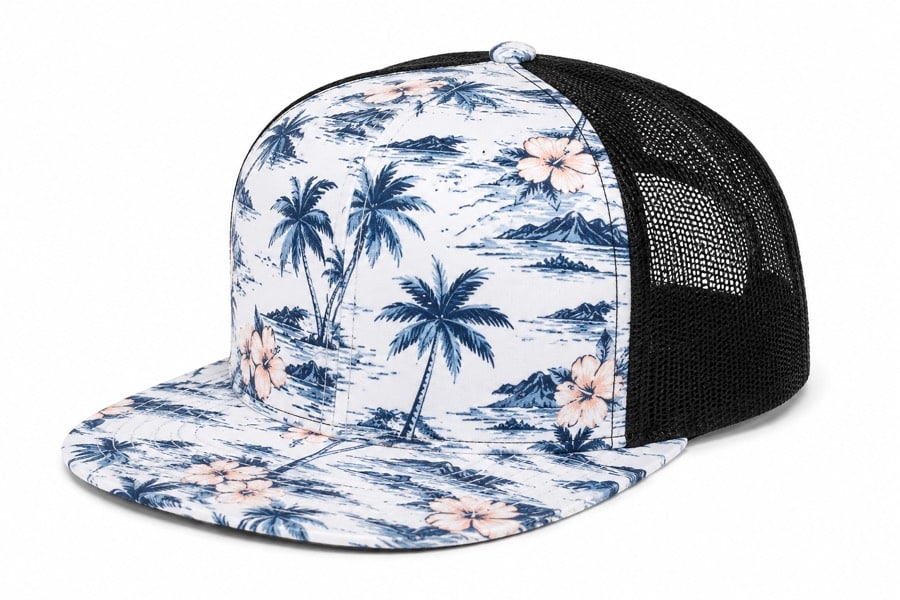
Separate color approval from process approval
Provide reference colors and identify which are essential to the brand. A digital proof can establish placement and layout, but monitor color cannot by itself approve printed output. Ask for a physical color sample on the chosen cap material. If several front colors are planned, confirm whether the same inks or films produce the intended appearance on each one: a white graphic on a dark front and the same graphic on a light front may need separate decisions. Approve the color and the process as two separate decisions, on the same decorated sample, and record both before bulk approval. Decoration routes and placement are set out on the customization page.
Keep the rest of the cap in the decision
Printed artwork should not distract from the details that make the hat wearable. Check the visor profile, mesh against the back of the head, sweatband contact and closure range on the same decorated sample. A graphic on a cap that fits badly will still be returned or left unworn. The closure and fit guide explains how to judge fit and adjustment on a sample before bulk approval. The sample should be assessed by someone who is likely to wear it, not only by someone reviewing brand files — wearer feedback can reveal a crown that sits too high or a band that presses.
Count quantities by style-color line
Count quantities by style-color line, not by total hats. Each line — one style in one color — starts at the standard 100 pieces. Example: one trucker style in two front colors is two lines, so the starting quantity is 200 pieces, and each line carries its own artwork version and print approval. Show the lines in the brief, not only a single total. For a program that mixes front routes, keep each route as its own line even when the artwork is the same. The quantity, color, and size plan guide works through this line-by-line method in full.
Record the decisions in the tech pack
Record the approved decoration method, material, artwork revision and cap style as one production package. The tech pack is the document the order is made from, so it should carry the front construction, the print area and no-print zones, the approved color references, the decoration method and the packing destination — not a description of the hat in general terms. The tech pack explains what a complete pack contains and how to check it before approval. The wholesale trucker hats guide works through the buyer specification — style, construction, decoration and reorder — that a repeatable trucker order starts from. If the supplier proposes a different technique during a reorder, treat it as a change requiring review, not a routine substitution: compare a new decorated sample rather than assuming visual and tactile equivalence.
A printed trucker hat order is ready when the front construction is chosen, the artwork and color are approved on a decorated sample, and the fit is approved on a real wearer. If any of those is still open, the next sample — not the bulk order — is the right step. Share the cap construction, front material and artwork direction through the contact page, and the next sample can address the decisions that matter.
Frequently Asked Questions
Can one artwork file serve both a foam front and a woven front?
Not automatically. Foam and woven fronts present different surfaces, and a print approved on one may look different on the other — in color, fine detail and hand feel. Confirm the material and the print process together, and review the graphic on a decorated sample of each front construction before bulk approval.
How do I check whether the print will hold up in use?
Ask which tests apply to the selected material and method, and check the decorated sample for edge lift, cracking when flexed, and adhesion of any heat-applied element. A sample photograph cannot answer a durability question; the test method and the result belong in the brief, recorded with the approved sample.
What happens if the supplier proposes a different print process for a reorder?
Treat it as a change requiring review, not a routine substitution. Compare a new decorated sample made with the proposed process against the approved sample, and record the approved decoration method, material, artwork revision and cap style as one production package before the reorder is confirmed.