
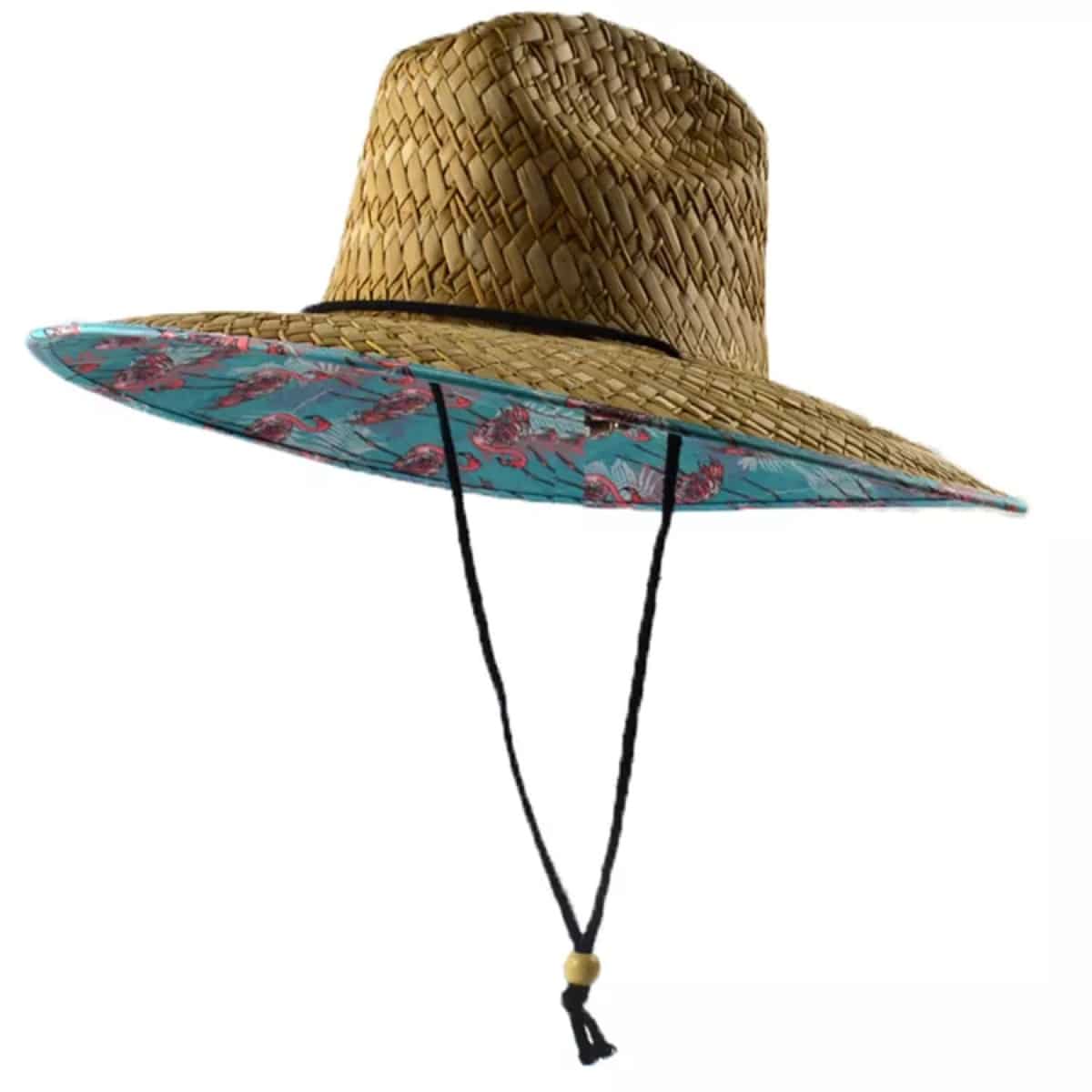
A straw hat can be a strong choice for a resort or outdoor merchandise line, but the bulk order succeeds or fails on details a hero image rarely shows. Buyers should inspect the weave, brim edge, interior contact and the packing. A sample that looks attractive alone may arrive with a different silhouette if the brim is compressed in cartons. Approve the product the way it will arrive: the woven structure named in writing, the brim measured from above and below, the interior parts checked on a wearer, and a packed sample inspected after unpacking. Every style starts at 100 hats per style and color — plan in blocks of 100. Samples take about one week after specifications, artwork and the sample payment are confirmed; bulk takes about 30 days after the sample is approved. Never order bulk before the sample is approved.
This guide keeps the original question — how to buy a straw hat that survives bulk packing — and adds the parts the first version left out: a decision table, a spec checklist, a sample approval list and an acceptance range for natural variation. How a sample becomes the bulk reference is covered in our production process page; this guide only decides what to approve.
Four Decisions, Compared
A straw hat order is four decisions, not one. The table compares the more structured choice against the more open choice for each.
| Decision | More structured option | More open option | Check on the sample |
|---|---|---|---|
| Weave | A tighter, more even weave that holds its shape and reads as a uniform surface | A looser, more open weave that reads as a natural, airy texture | Openness and consistency, especially where crown and brim meet; sharp or loose ends |
| Brim | A firmer brim with binding that holds its curve in the carton | A softer brim that drapes more, and needs more support in packing | Width and shape measured, binding and underside checked, curve held after unpacking |
| Interior band | A lined band with a defined size range and a chin cord or adjuster | A lighter band with less structure, for a hat worn briefly | The band against the skin, the size range on wearers, and trims that do not pull the woven body |
| Packing | Individually supported and boxed, so each hat keeps its silhouette | Nested and stacked, which saves freight volume but risks brim compression | A packed sample approved and inspected after unpacking, before bulk is released |
The table is a planning framework, not a rule: the approved sample is where each decision is proven. The shape and fit logic for warm-weather group programs is compared in our sun hats guide.
Describe the Woven Structure You Are Buying
“Straw” is not a complete material specification. Ask the supplier to identify the actual fiber or construction proposed for the selected sample. Examine the openness and consistency of the weave, especially where crown and brim meet. Check for sharp or loose ends and for variations that would matter in a retail display. Natural-looking materials can vary in tone; decide which variation is acceptable before bulk approval rather than rejecting normal variation after the fact.
Record each item in the spec before sampling:
- Fiber or construction: the actual material proposed for the selected sample, named in writing
- Weave: openness and consistency, checked where crown and brim meet
- Ends: no sharp or loose ends at the crown, the brim edge or the join
- Tone: the acceptable range of tone variation, agreed from the sample — not from the words “premium straw”
- Trims: band, label or patch proposed at actual size, with attachment that does not pull the woven body out of shape
How to write the spec itself is covered in our tech pack guide. Our MOQ guide explains how the 100-unit minimum works per style and color.
Approve the Brim from Above and Below
Measure the width and shape, then look at binding, underside fabric, stitching and the way the brim holds its curve. An underbrim print adds an alignment and edge-finish decision. A dark underside or a wide brim should not be presented as a tested UV-protection claim unless there is relevant evidence for that product.
Check the brim on the physical sample, from both sides: the top for the outline and the weave, the underside for the lining, the binding and the stitching. If an underbrim print is proposed, approve the print alignment and the edge finish together, on the same sample, because the two are decided together.
Check the Parts Touching the Wearer
Review the interior band, size range, chin cord or adjuster and the point where trims attach. A good-looking exterior is not enough if the inner band feels rough or the crown sits too high. Have a few people from the intended audience try the sample on, and inspect the proposed band, label or patch at actual size — attachment must not pull the woven body out of shape.
The interior is where a straw hat fails most quietly: the band is the only part in constant contact with the wearer, and a rough band will be remembered longer than a good weave. Check the band’s finish, the adjuster’s reach and the way the crown sits on different wearers. How bands and closures work together is covered in our closure and fit guide.
Pack to Protect the Approved Silhouette
Ask how hats will be nested, supported and boxed. Approve a packed sample and inspect it after unpacking; record the carton and individual-packing requirements if presentation matters to the buyer. The packaging decision can affect freight volume as well as whether the brim reaches the recipient in the intended shape. Do not assume that a hat that can be bent briefly is safely compressible for a long shipment.
The packed sample is a separate approval from the wearing sample: one proves the hat, the other proves the carton. On the packed sample, check these points before approval:
- Nesting and support: how the hats sit inside the carton, and whether each brim is supported rather than pressed
- After unpacking: the brim outline and crown height once the hat is out of the carton, not only while it is inside
- Carton labeling: cartons marked by style, color and destination, so a mixed shipment does not mix the order
- Individual packing: whether each hat is bagged or wrapped, and whether that wrapping is part of the presentation the buyer expects
The full sequence from sample to bulk is covered in our production timeline guide.
Set an Acceptance Range for Natural Variation
A buyer who expects every woven strand to look identical may be disappointed by a natural-looking product, while a buyer who accepts any variation may lose a coherent retail display. Use the approved sample to discuss acceptable shifts in tone, weave openness, crown height and brim outline. Ask for a small set of representative samples if the material is expected to vary. Keep photographs of accepted and rejected details with the specification; words such as “premium straw” do not define an inspection standard.
The acceptance range is agreed before bulk, not argued after delivery. For each detail, record what is acceptable and what is not. Where several trims or underbrim prints are ordered, identify each combination as a separate SKU, so a small detail — such as a band color or printed lining — is not silently mixed across cartons.
The Buying Decision
If the program needs a straw hat, decide in this order: woven structure first, then brim, then interior parts, then packing — and approve both the wearing sample and the packed sample before the bulk order. A straw hat is a one-shot order: the weave, the brim and the carton arrive together, so the sample is the last chance to catch a mistake in any of them.
Send us photos of the desired weave, the measured brim, the branding details and the delivery presentation through Request a Quote — we reply within one business day. If you have a reference hat that shows the weave and brim you want, send it or its measurements with your inquiry so the development conversation starts with evidence.
Frequently Asked Questions
What does “straw” mean in a quote?
Nothing specific on its own — it is not a complete material specification. Ask the supplier to identify the actual fiber or construction proposed for the selected sample, and record it in the spec.
Can a straw hat be packed flat for shipping?
Do not assume so. A hat that can be bent briefly is not necessarily safe to compress for a long shipment. Ask how the hats will be nested, supported and boxed, approve a packed sample, and inspect it after unpacking before the bulk order is released. The packing decision affects both freight volume and whether the brim arrives in its intended shape.
How do I handle color variation across a bulk order?
Agree the acceptable tone range from the approved sample before bulk, and ask for a small set of representative samples when the material is expected to vary. Keep photographs of accepted and rejected details with the specification. Each trim or underbrim-print combination is its own SKU, so variation is judged per SKU, not across the whole order.